 Blaine
 Deck Replacement Built for Ferndale's Climate
Ferndale sits close enough to the water that decks here take a different kind of beating than decks a hundred miles inland. Salt-laden air off the Strait works into fasteners and metal connectors. Driving rain, pushed sideways by wind off Georgia Strait and Birch Bay, gets up under boards and behind ledger boards where a lot of builders never think to check. And Whatcom County's long, damp shoulder seasons mean moss and algae have months to colonize any wood surface that doesn't drain and dry fast. A deck built to a generic national spec often struggles here within five or six years. A deck built for this specific climate should not.
When we talk about "deck replacement," we mean removing a failing structure down to good framing (or the ground, if the framing has to go too) and rebuilding it correctly for Ferndale conditions — not patching boards over a substructure that's already compromised. That distinction matters more here than in drier parts of the state, because moisture problems in this climate rarely stay isolated. A rotten ledger board or a corroded joist hanger is usually a sign that water has been finding its way into the structure for years, and cosmetic fixes just buy a little time before the same failure shows up again.
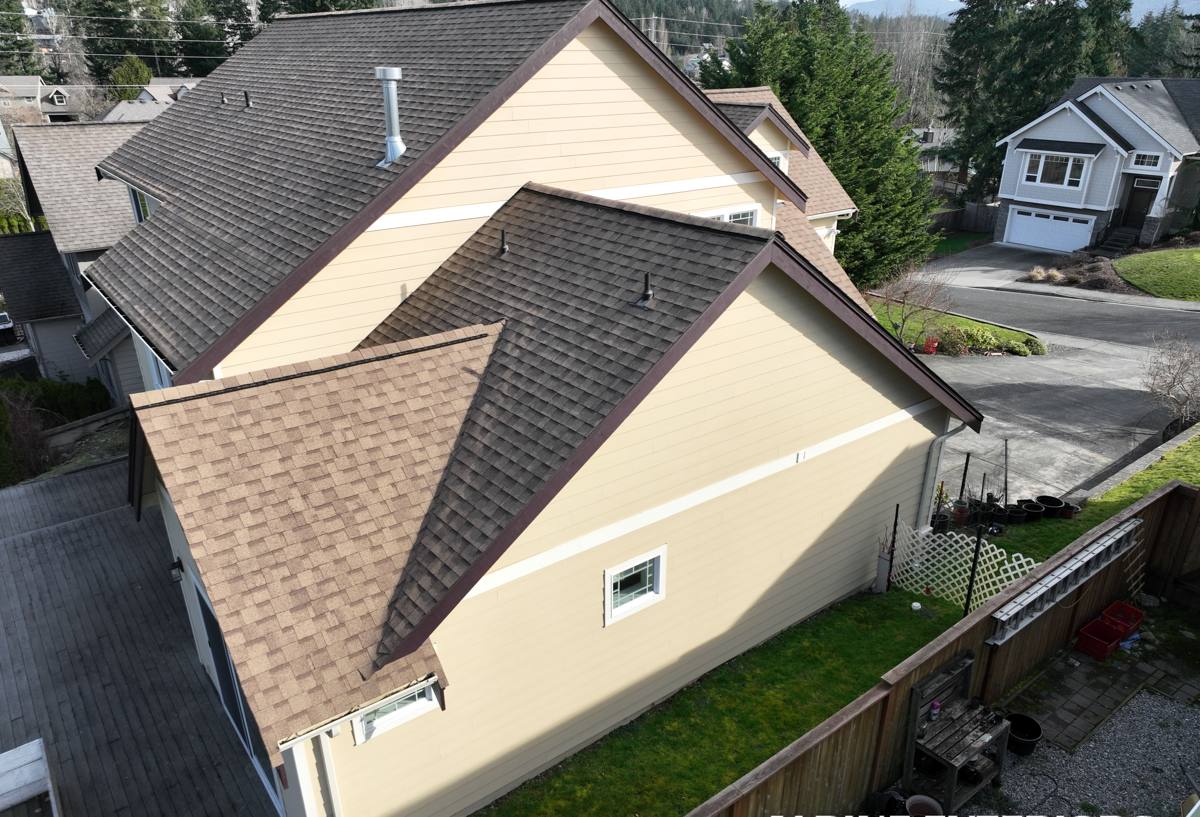
Signs a Ferndale Deck Needs Replacing, Not Repairing
Not every tired-looking deck needs a full rebuild. But there's a point where repair stops making financial sense and starts becoming a way of postponing an inevitable replacement. Here's how we sort that out on a typical visit.
- Soft or spongy spots in the decking that give underfoot, especially near the house or along the rim
- Visible gaps, cracking, or splintering across multiple boards rather than one or two isolated ones
- Rust streaking from fasteners or visible corrosion on joist hangers and structural screws
- Wobble or movement in the railing posts when pushed — a common sign of post-base rot
- A ledger board that's separating from the house, or shows staining/discoloration where it meets the siding
- Persistent moss or black-green staining that comes back within weeks of cleaning, which usually points to a drainage problem underneath, not just a surface one
- Fungal smell or visible fungal growth in the crawlspace or ground contact areas beneath the deck
If what you're seeing is limited to a handful of boards and the framing underneath probes solid with an awl, repair is often the right call. If it's the framing itself — ledger, joists, posts, or footings — that's compromised, replacement is almost always cheaper over a ten-year horizon than chasing repairs on a structure that's already failing.
Where Ferndale Decks Actually Fail
The Ledger Connection
The single most common failure point on any deck attached to a house in this region is the ledger board — the framing member that bolts the deck to the structure. Done wrong, it traps water between the ledger and the house siding, which then rots the rim joist and can migrate into the wall assembly. Done right, it uses proper flashing that sheds water outward, away from the house, with the deck ledger held slightly off the wall or properly flashed and caulked at every penetration. Given how much rain Whatcom County sees over a typical year, and how often it comes in sideways off the water near Ferndale, this is not a place to cut corners on flashing detail.
Fasteners and Hardware
Salt air corrodes standard fasteners faster than most homeowners expect, even a few miles inland from the water. Galvanized hardware that would last decades in a dry inland climate can start showing rust streaks within a handful of years here. We spec stainless steel or heavy-duty coated fasteners rated for coastal and treated-lumber exposure on every rebuild, because the cost difference between a corrosion-rated fastener and a standard one is small compared to the cost of re-decking a structure because the screws failed first.
Ground Contact and Drainage
Low decks, or decks over uneven or poorly graded ground, hold moisture underneath long after a rain event ends. Combined with our shoulder-season damp stretches, that creates ideal conditions for both wood rot and moss establishing itself on the underside of decking. Correct footing height, ground clearance, and in some cases a gravel or drainage layer underneath make a real difference in how long a deck lasts here.
Choosing Decking Material for This Climate
There's no single "best" decking material — there's a best material for your budget, your maintenance appetite, and how exposed your deck is to weather. Here's how the common options stack up for a Ferndale property specifically.
| Material | Moisture Performance Here | Maintenance | Typical Lifespan |
|---|---|---|---|
| Pressure-treated lumber | Good if properly sealed and maintained; treatment resists rot but end cuts and fastener holes need field treatment | Annual cleaning, resealing every 1-3 years | 15-20 years with upkeep |
| Cedar | Naturally rot- and insect-resistant, but softer and more prone to surface checking in constant damp/dry cycling | Regular cleaning, staining or sealing every 2-3 years to hold color and resist moss | 15-20 years |
| Composite decking | Excellent — doesn't absorb water or rot, but board venting and drainage still matter to prevent moss/mildew on the surface | Periodic washing, no sealing or staining required | 25-30+ years |
| PVC/capped polymer | Best moisture resistance of the group, fully impervious core | Lowest — occasional washing | 25-30+ years |
We install all of these depending on what a homeowner wants, but for waterfront or near-waterfront Ferndale properties where salt exposure and moss are a bigger concern, we lean toward recommending composite or capped polymer boards. They cost more up front, but they take the moss-and-moisture problem that defines this climate mostly off the table. For homeowners who want the look and feel of real wood and are willing to stay on top of maintenance, cedar remains a solid, honest choice — we just make sure clients understand the upkeep commitment going in.
What a Correct Replacement Job Actually Involves
- Full removal and inspection. We strip the old decking and, where needed, the substructure, and inspect ledger, joists, posts, and footings for rot, insect damage, or corrosion before deciding what gets reused versus rebuilt.
- Footing and post evaluation. Whatcom County's damp soil conditions mean footing depth and post-base design matter. We check footings against current code depth and drainage requirements rather than assuming the old footings are adequate just because they held up a deck before.
- Ledger flashing done correctly. This is the step most likely to get rushed on a budget rebuild, and it's the one most responsible for long-term failures. We flash it properly every time.
- Framing with corrosion-rated hardware. Joist hangers, structural screws, and post bases matched to the coastal exposure this area sees.
- Decking installation with proper spacing. Board gapping is set to allow for material expansion and, just as important, airflow and drainage underneath — a detail that directly affects how fast moss and algae take hold.
- Railing and stair rebuild to current code. Older decks often predate current railing height and baluster spacing requirements; a full replacement is the natural point to bring those up to code.
- Final walkthrough. We go over the finished deck with the homeowner, including what maintenance (if any) the chosen material needs going forward.
Permits
Most deck replacements in Whatcom County, particularly ones involving structural framing changes, railing height, or stairs, require a building permit. We handle that process as part of the job rather than leaving it to the homeowner, and we build to the current code requirements rather than just matching what was there before — which matters most on older Ferndale homes where the original deck may predate current standards.
Cost Factors Homeowners Should Understand
We don't publish fixed pricing because every deck is different, but these are the variables that actually move the number on a Ferndale deck replacement:
| Factor | Why It Matters |
|---|---|
| Deck size and height | Larger decks and multi-level or elevated decks require more framing, more footings, and more labor |
| Substructure condition | If joists, ledger, or footings need replacing versus just the decking surface, cost increases substantially |
| Decking material chosen | Composite and PVC cost more per square foot than pressure-treated lumber but reduce long-term maintenance cost |
| Railing and stair scope | Full railing and stair rebuilds to current code add material and labor beyond the deck surface itself |
| Site access | Decks with difficult access for material delivery or demolition removal take longer to complete |
| Permit and inspection requirements | Structural changes trigger permitting steps that add time, though not usually major cost |
The honest range for a full deck replacement in this area runs from a modest single-level pressure-treated rebuild on the lower end to a significantly larger figure for a multi-level composite deck with full railing replacement. We'll give you real numbers specific to your deck after a site visit — vague online estimates rarely hold up once we see the actual framing condition.
Maintaining a New Deck in Whatcom County Conditions
Whatever material you choose, a few habits go a long way toward getting the full lifespan out of a Ferndale deck:
- Clear leaves, needles, and debris from between boards before they trap moisture and feed moss growth
- Wash the deck surface at least once a year, more often in shaded or north-facing areas that stay damp longer
- Check under the deck periodically for standing water or poor drainage after heavy rain events
- Reseal wood decking on the manufacturer's recommended schedule — don't wait until it's visibly graying
- Keep planters and other water-holding items from sitting directly on wood decking long-term
- Inspect railing posts and stair connections annually for movement or looseness
Why Local Experience Matters for This Job
Deck replacement isn't a specialty trade the way roofing or window installation can be — plenty of contractors will take the work. The difference shows up in the details that don't get noticed until years later: whether the ledger flashing was actually done right, whether the fasteners were rated for salt exposure, whether the footings account for local soil and drainage conditions. A crew that works Ferndale and the surrounding Whatcom County coastline regularly has already seen what fails here and builds accordingly from the start, rather than learning it on your deck.
We also know the local permitting process, which keeps a replacement moving instead of stalling on paperwork, and we stand behind our work with a crew that's still around and reachable if a question comes up two or three years down the road — not a name that only shows up for the initial sale.
Get a Free Estimate for Your Ferndale Deck
If your deck is showing soft spots, rust streaks, persistent moss, or a ledger board that doesn't look right, it's worth a second opinion before you sink more money into repairs. We'll come take a look, tell you honestly whether repair or replacement makes sense, and put together a clear estimate with no pressure attached. Use the form below to get started.