 Blaine
 Window Installation Built for Everson's Weather, Not a National Average
Everson sits inland from the coast, but that doesn't mean the weather goes easy on your windows. Whatcom County's marine-influenced climate still delivers long stretches of driving rain, heavy humidity off the Nooksack River valley, and a moss season that can run most of the year on north-facing walls. Windows here don't fail because they're old — they fail because water finds a way in through a gap, a cracked seal, or flashing that was never installed correctly in the first place. A window that would hold up fine in a dry climate can start leaking, fogging, or rotting out its frame within a few seasons here if it wasn't installed with local conditions in mind.
We install windows in Everson and the surrounding Whatcom County communities as a regular part of our work, not as an occasional job outside our usual service area. That matters more than people expect, because window installation is one of those jobs where the visible result and the correct result can look identical for the first year or two — and then diverge sharply.
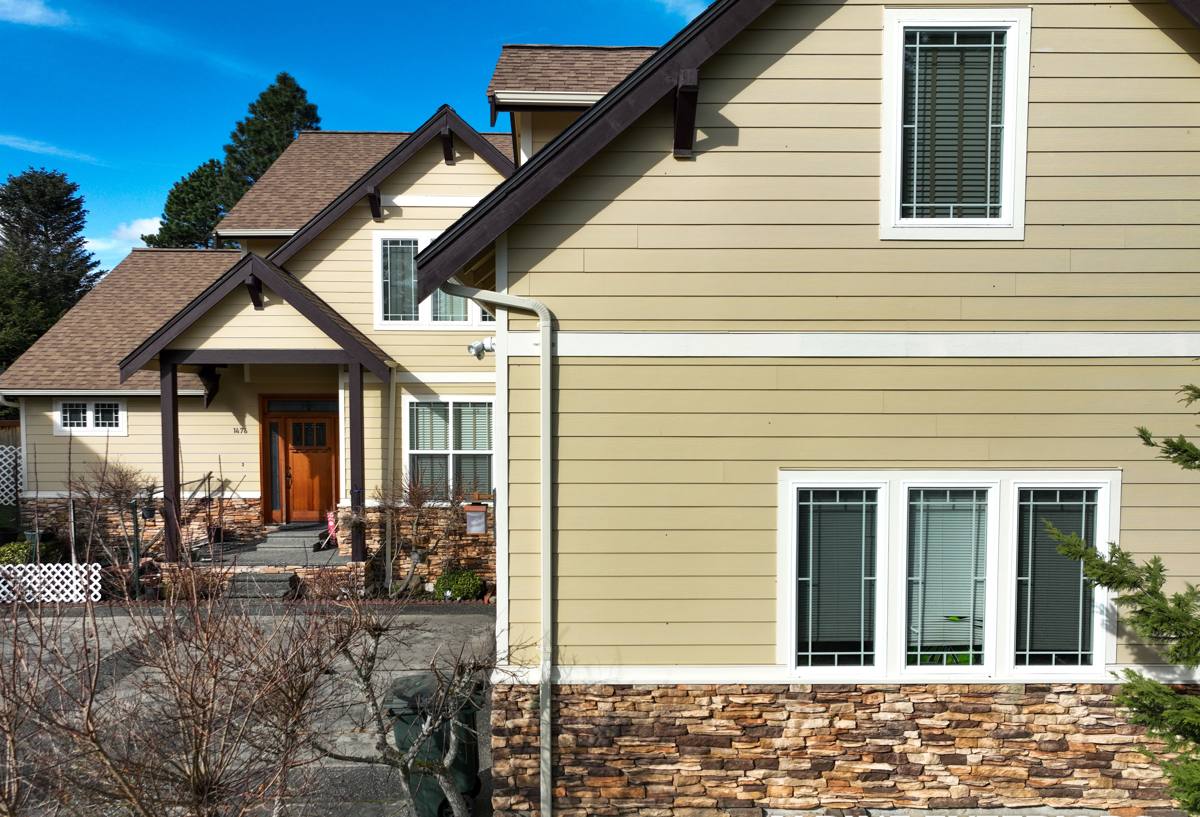
What Everson's Climate Actually Does to Windows Over Time
Moisture Intrusion
Wind-driven rain doesn't just fall straight down — in this part of the county it gets pushed sideways against exterior walls, especially on exposed or west-facing elevations. If a window's flashing and sill pan aren't detailed correctly, water gets pushed up and under the frame instead of shedding down and away from it. That's slow, hidden damage — you often don't see it until there's staining on interior trim or the wall cavity below the window is already soft.
Humidity and Condensation
The river valley and surrounding farmland keep humidity levels high for much of the year. Combined with everyday indoor moisture from cooking, showers, and heating, older or poorly sealed windows tend to fog between the panes or sweat on the interior glass. Persistent condensation is usually a sign the seal has failed or the window was never properly insulated at the frame.
Moss, Mildew, and Organic Growth
A long moss season isn't just a roof problem. Moss and mildew take hold on window sills, tracks, and exterior trim wherever moisture sits instead of draining. Wood-frame windows and painted trim are especially vulnerable — trapped moisture under a coat of paint accelerates rot from the inside out, often faster than it appears from the exterior.
Signs an Everson Home Needs New Windows
- Soft, discolored, or crumbling wood around the frame or sill, inside or out
- Fog or moisture trapped between panes of double-pane glass
- Windows that are difficult to open, close, or lock — often a sign the frame has shifted or swelled
- Visible gaps, cracked caulk, or daylight showing around the frame
- Noticeable drafts or a cold wall area near the window even when it's shut
- Moss, black mildew streaks, or peeling paint concentrated around the window opening
- Rising heating bills without any other clear explanation
What a Correct Window Installation Actually Involves
Swapping an old window for a new one in the same rough opening is the easy part. Doing it in a way that holds up to years of Whatcom County rain is where the job either gets done right or gets done fast. A proper installation includes:
- Removing and inspecting the old window and surrounding framing for hidden rot or water damage before anything new goes in
- Sill pan flashing that creates a sloped, drainable path for any water that does get past the exterior — this is the single most common corner cut on cheap installations
- Integrating the window's flashing with the home's existing weather-resistive barrier, so water sheds over each layer like shingles, not behind them
- Proper shimming and squaring so the window operates smoothly and doesn't stress the seals over time
- Low-expansion foam or mineral wool insulation around the frame — not just caulk — to cut drafts and reduce condensation risk
- Exterior sealant appropriate for our climate, applied only where it should be, since sealing the wrong gap can actually trap water instead of keeping it out
Any one of these steps done wrong doesn't usually cause an immediate problem. It causes a problem in year three or four, after the first real wet winter finds the weak point.
Choosing the Right Frame Material
There's no single "best" window material — it's a trade-off between upfront cost, maintenance, and how the frame handles moisture over time. Here's how the common options compare for a home in this climate:
| Frame Material | Moisture Behavior | Maintenance | General Cost Range |
|---|---|---|---|
| Vinyl | Won't rot; seams and welds need to be quality-made to stay watertight | Low — occasional cleaning | Lower to mid |
| Fiberglass | Very stable, resists swelling and warping in wet-dry cycles | Low | Mid to higher |
| Wood | Handsome, but vulnerable to rot if paint or finish fails | High — repainting/resealing on a schedule | Higher |
| Wood-clad (wood interior, vinyl/aluminum exterior) | Exterior resists weather well; interior still needs care | Moderate | Higher |
For most Everson homes, we lean toward vinyl or fiberglass on exterior-exposed elevations simply because they don't depend on a paint film staying intact to keep water out. That's a maintenance-burden call, not a knock on wood — a well-maintained wood window can last decades, but it asks more of the homeowner every few years.
Our Installation Process
- On-site assessment — we look at each window opening individually, not just the house as a whole, since sun exposure and wind exposure vary wall to wall
- Honest scope discussion — which windows need full replacement now, which can wait, and why
- Measuring and ordering — new-construction or replacement-style windows depending on whether the existing frame and flashing are sound
- Removal and framing inspection — this is when hidden rot or past water damage shows up, and we'll tell you before we cover it back up
- Installation with proper flashing, insulation, and sealant — following manufacturer specs, adjusted for our climate
- Interior and exterior finish work — trim, caulking, and cleanup
- Final walkthrough — every window opens, closes, and locks the way it should before we call it done
Why a Crew That Already Works Everson Matters
Everson has a mix of older farmhouses, mid-century homes, and newer construction, often on lots with different sun and wind exposure than you'd find closer to the coast or in denser parts of Whatcom County. A crew that regularly works this area has already seen how the local building stock tends to be framed, where flashing was commonly skipped in past decades, and what kind of hidden damage to expect when opening up an older wall. That's the difference between a crew that's guessing based on general training and one that knows what's likely behind the trim before the first window even comes out.
It also means we're realistic with timelines and permitting expectations for this part of the county, and we're not treating your job as a side trip outside our normal territory.
Cost Factors Worth Understanding
Window installation pricing varies by opening size, frame material, glass package, and how much framing repair is needed once the old window comes out — which is often the biggest unknown until the wall is actually opened. Broadly, expect costs to scale with:
- Number of windows and whether they're standard sizes or custom
- Frame material chosen (vinyl and fiberglass generally cost less than wood or wood-clad)
- Glass upgrades — double vs. triple pane, low-E coatings
- Extent of any rot or framing repair discovered during removal
- Whether it's a straightforward replacement or a full frame-out new-construction install
We'll always flag additional repair costs before doing the work, not after — a surprise invoice is not how we do business.
After Installation: Keeping Windows Performing in This Climate
New windows still need occasional attention here. Clear debris and moss from sills and tracks a couple times a year, especially after fall leaf-drop and before the wettest winter months. Check exterior caulking annually for cracking or gaps, and keep an eye on interior condensation — a well-installed window shouldn't fog or sweat under normal conditions, so a change there is worth a look.
If you're seeing drafts, moisture damage, or windows that just don't seem to be doing their job anymore, we're happy to take a look and give you a straightforward assessment — no pressure, no upsell. Reach out for a free estimate using the form below and we'll walk your home with you.