 Blaine
 Deck Replacement for Everson Homes
Everson sits inland along the Nooksack River valley, in the farmland stretch of Whatcom County between Lynden and the foothills — a different setting than the coastal towns closer to Blaine and Semiahmoo Bay, but not a different weather system. The same Pacific storm fronts that push salt-tinged marine air and driving rain into the coastal part of the county roll on through the valley too, and a deck built or repaired without that in mind tends to show it within a few winters. We're based out of Blaine and work Everson regularly as part of our regular service area, and a deck replacement here gets the same attention to drainage, fastening, and framing details as one built right on the water.
This page is specifically about replacing a deck that's reached the end of its useful life in Everson — not a brand-new custom build on bare ground. Replacement work has its own set of questions: what's actually wrong with the old structure, what's worth saving versus tearing out, and what needs to change in the rebuild so the same problems don't come back in five years. That's what this page walks through.
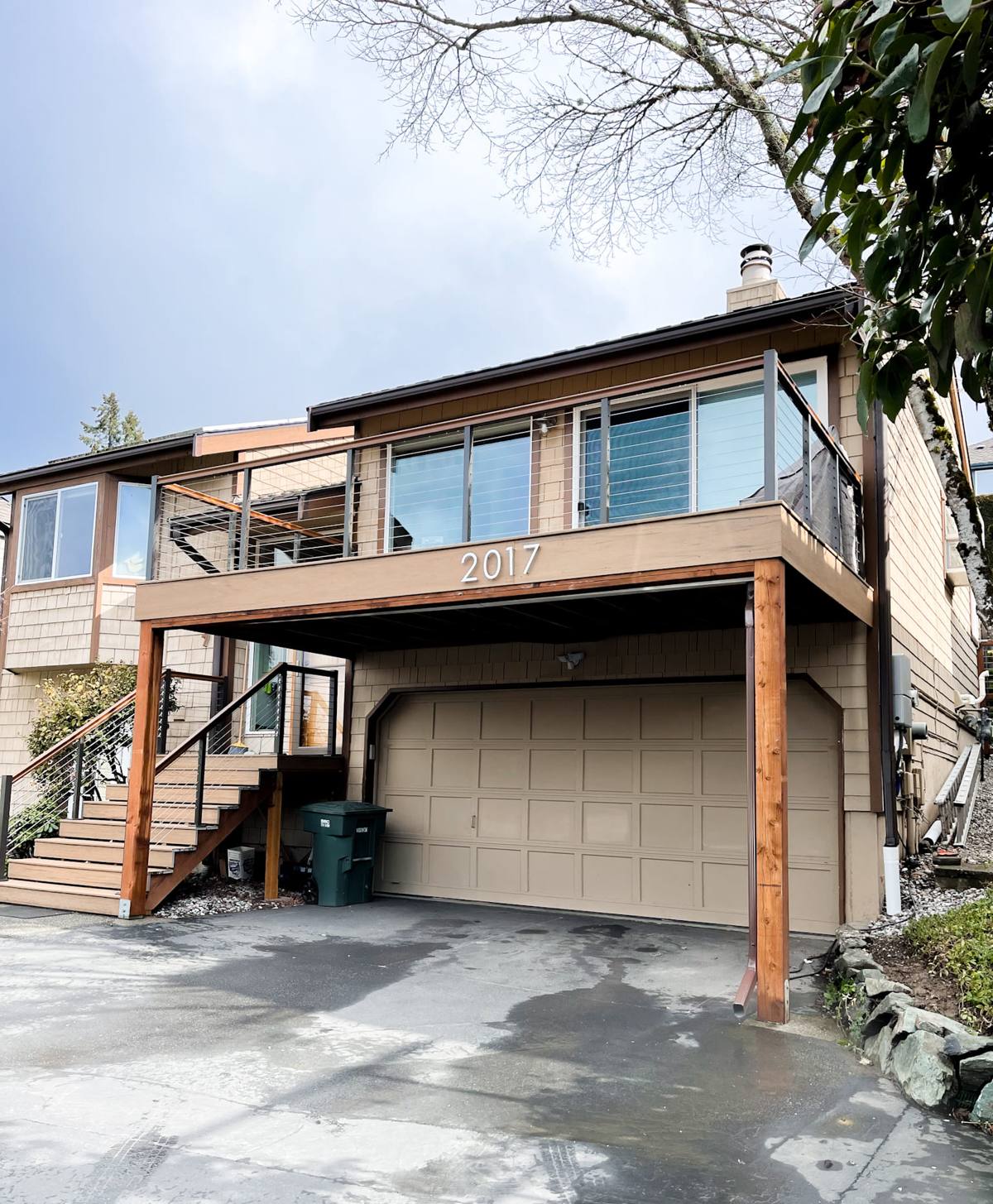
Signs Your Everson Deck Needs Replacing, Not Just Repairing
Homeowners often call about a single soft board or a wobbly railing, and sometimes that really is an isolated repair. But a handful of signs point to a deck that's past the point where patching makes sense, and it's worth knowing the difference before paying for repairs that won't hold.
- Soft, spongy, or spring-feeling decking across more than one or two boards, rather than a single isolated spot
- Visible rot, splitting, or crumbling wood at the ledger board where the deck attaches to the house
- Posts or railings that flex, lean, or feel loose even after hardware is tightened
- Widespread rust staining running down from fasteners, brackets, or joist hangers
- Footings that have shifted, heaved, or settled unevenly, changing the deck's level or pitch
- A structure built before current code requirements for ledger flashing, joist hangers, or guard rail attachment
- Moss or mildew that keeps returning within weeks of cleaning, even on a deck that's otherwise structurally sound
One or two of those, isolated to a small area, might genuinely be a repair job. Several of them together, or any structural sign at the ledger or footings, usually mean the deck's substructure has been compromised for longer than it looks from the surface — and that's a replacement conversation, not a patch-and-paint one.
What This Climate Does to an Aging Deck
Driving Rain and Wind-Driven Moisture
Storms moving through Whatcom County rarely drop straight down; wind pushes rain sideways, and on an aging deck that means moisture gets driven up under railings, into the ledger connection, and between boards that have swelled, cupped, or lost their original gapping over the years. A deck built to shed rain falling straight down can still trap water the moment wind gets involved, and in this part of the state, wind-driven rain is the rule more than the exception during the wet months.
A Moss Season That Runs Most of the Year
Mild temperatures and sustained regional moisture give moss a long growing season here, and horizontal deck surfaces are usually among the first places it takes hold, since they hold water longer than a vertical wall and stay damp between storms. On an older deck, moss doesn't just look bad — it holds moisture directly against boards and framing that have already lost some of their original weather resistance, which speeds up the rot that eventually forces a replacement.
Freeze-Thaw and Frost Movement
Everson's inland, valley-floor setting sees more frequent hard frosts than towns right on the water, and that adds a freeze-thaw dimension that coastal decks deal with less often. Water that's worked its way into a crack, a fastener hole, or a compromised joint expands when it freezes, widening the damage each winter. Combined with footings that may not have been set below frost depth in an older build, that cycle is a common reason a deck's substructure fails well before the decking surface looks obviously bad.
Repair or Replace? A Quick Comparison
There's no universal rule for when a deck crosses from repairable to replace-worthy, but a few factors consistently point one way or the other.
| Factor | Usually Repairable | Usually Calls for Replacement |
|---|---|---|
| Decking boards | A few isolated boards showing wear or minor splitting | Widespread softness, cupping, or splitting across most of the surface |
| Ledger connection | Minor caulking or flashing touch-up needed | Visible rot, gaps, or staining at the house connection point |
| Framing and joists | Framing is sound; issue is limited to surface materials | Soft or spongy joists, sagging spans, or visible rot underneath |
| Footings and posts | Posts are plumb and footings stable | Shifted, heaved, or undersized footings for the current code |
| Age and code status | Built within the last 10-15 years to current standards | Built decades ago, before modern ledger flashing and hardware requirements |
When the surface is worn but the substructure is sound, refinishing or replacing just the decking boards can be a reasonable, less expensive path. Once the framing, ledger, or footings are in question, though, resurfacing over a compromised structure just hides the problem under new boards for a season or two.
What a Correct Deck Replacement Involves
A full tear-out and rebuild is more involved than swapping old boards for new ones, and in a climate that puts real demands on outdoor structures, the parts homeowners don't see are what determine how long the new deck actually lasts. A replacement done right in Everson includes:
- Complete removal of the old decking, railing, and any framing that shows rot, corrosion, or structural compromise
- Inspection and, where needed, replacement of footings — set to proper frost depth and sized for the current load and span
- New ledger board installation with correct flashing where the deck ties into the house, addressing the single most common point of hidden moisture failure on an old deck
- Framing material and fastener grade matched to sustained regional moisture exposure, not just whatever was standard when the original deck went in
- Joist spacing and hardware sized to the new decking product's actual span rating rather than reused from the old layout
- Correct board gapping for drainage and material movement, so wind-driven rain can actually drain and dry between boards
- Guard rail and post attachment that meets current code requirements, which older decks in this area often predate
- Grading and airflow underneath the new deck so moisture doesn't sit against the framing between storms
Skip any one of those during a rebuild and the new deck can still look good on day one — the issues that show up are the same ones that likely brought the old deck down in the first place, just delayed a few more winters.
Decking Material Options for the Rebuild
A full replacement is also the natural point to reconsider the decking material itself, since you're already down to bare framing. The three categories homeowners weigh are wood, capped composite, and cellular PVC.
Wood
Pressure-treated lumber and cedar cost less upfront and give a traditional look, but both need regular sealing or staining to hold up against sustained regional moisture, and both show moss and graying faster than capped products once maintenance lapses. For a homeowner who's diligent about upkeep, wood remains a reasonable choice; for one who isn't, it's usually the first material to need attention again.
Capped Composite
Capped composite boards have a plastic shell around a wood-fiber core, which resists moisture absorption, staining, and fading far better than wood or uncapped composite. In a climate that runs wet for much of the year, that cap layer is doing real work — it's the difference between occasional washing and an ongoing sealing schedule.
Cellular PVC
PVC decking has no wood fiber to absorb moisture at all, even at cut edges or fastener holes, which makes it the most moisture-resistant option available. It costs more than composite and can flex more under heavy point loads, but for a shaded, moisture-heavy deck location, some homeowners find the added cost worth the trade-off.
How Our Deck Replacement Process Works
We start with a site visit to actually assess what's there — probing the ledger, framing, and posts for soft spots or rot rather than just looking at the surface, and checking footing condition and code compliance against current standards. That inspection tells us honestly whether a repair, a partial rebuild, or a full replacement is the right call, and we'll say so even if it means a smaller job than a full tear-out.
Once we've agreed on scope, we handle permitting through Whatcom County as part of the job rather than leaving it to the homeowner. Demolition comes first, followed by footings and framing sized correctly for the site's actual exposure, then decking, railing, and stairs. We finish with a walkthrough covering what your specific decking material needs going forward — for most modern products that's minimal, but it's never nothing in a climate that stays wet as long as this one does.
Why It Matters That We Already Work Everson
A crew based somewhere else can still tear out an old deck and build a new one competently, but a replacement job in Everson has details that don't come up as often in drier or more sheltered parts of the state — frost-depth footings for valley-floor freeze-thaw, fastener and framing choices that hold up to sustained regional moisture, and moss pressure that returns fast if the rebuild doesn't account for drainage and airflow underneath. Working this area and the rest of Whatcom County regularly means we're not guessing at those requirements on your job. We've seen which decking lines and framing details actually hold up here, and which ones are worth the extra time rather than an upsell — and we're straightforward about which category your specific deck falls into before any work starts.
If your Everson deck is showing soft spots, a shifting ledger, or hardware that's rusted through, we're glad to take a look and give you an honest read on repair versus replacement. Reach out below for a free, no-pressure estimate.