 Blaine
 Composite Decking for Everson's River Valley Climate
Everson sits inland from the coast, in the working farmland along the Nooksack River in Whatcom County — a different setting than a bayfront town like Blaine, but one that shares the same underlying weather pattern that shapes exterior work across this part of Washington. Driving rain, long stretches of damp weather, and a moss season that runs longer here than in drier parts of the state all take a toll on anything built to sit outside year-round, and a deck has no roofline or wall to shield it from any of it.
Composite decking exists mainly to solve the problems that wood decking runs into in exactly this kind of climate — moisture absorption, splintering, rot, and the endless cycle of sealing and staining. But not all composite is built the same, and a deck installed correctly for Everson's low-lying, often-shaded lots needs some specific attention to framing, drainage, and material choice that a generic install skips. This page covers what composite decking actually needs to perform here, what a correct installation involves, and how our process works for a composite deck project in this part of Whatcom County.
What Everson's Climate Does to a Deck
Valley Moisture and Low-Lying Ground
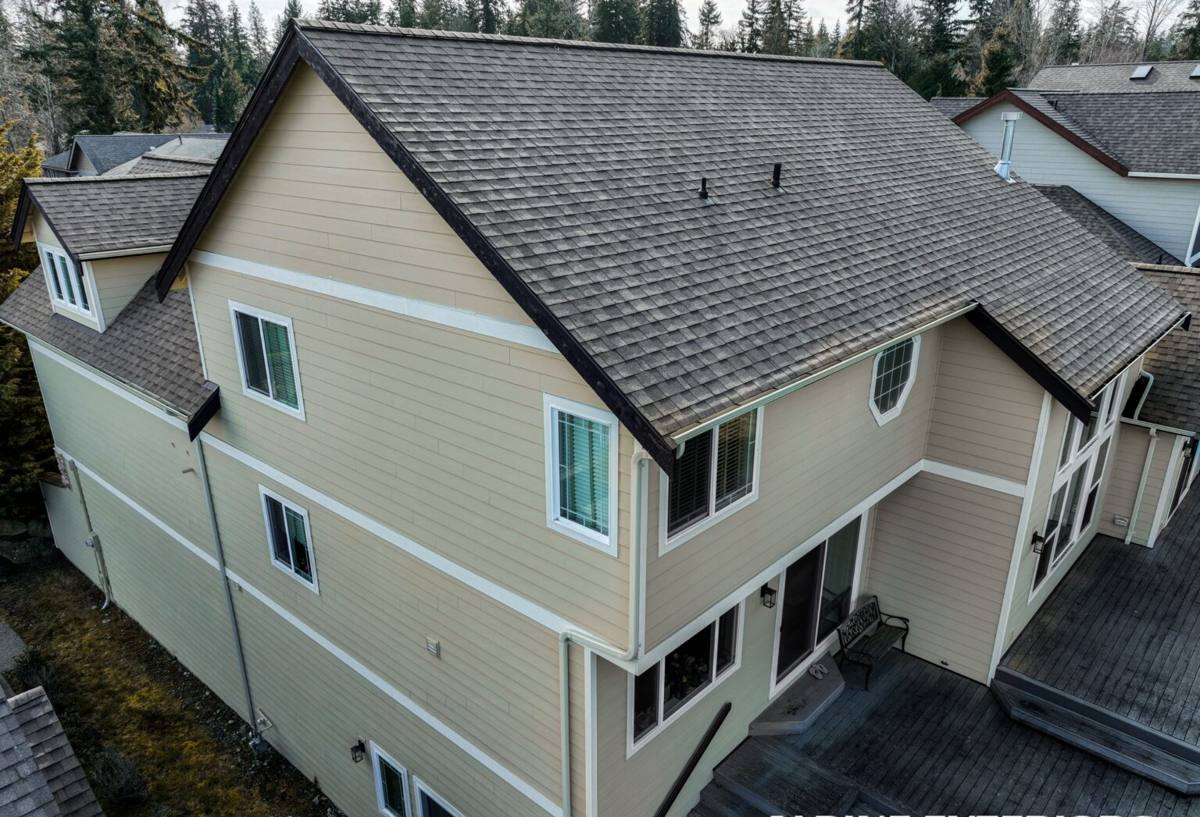
Everson sits in the Nooksack River valley, and low-lying valley ground holds moisture differently than a hillside lot does. Morning fog and standing dampness are common here even between rain events, and a deck built low to the ground or over poorly graded soil ends up sitting in that moisture rather than shedding it. That matters most for the substructure — framing and ledger connections that stay damp longer between storms are the parts of a deck that fail first, long before the visible decking surface shows any wear.
Driving Rain and Long Wet Stretches
Storms moving through Whatcom County don't just drop rain straight down; wind pushes it sideways into railings, ledger boards, and the gaps between decking boards. A deck detailed for calm, dry conditions can look fine on a still day and still trap water the moment wind is involved, which in this region is most of the time during the wet months. The length of the wet season matters as much as the intensity of any single storm — it's sustained exposure, not one hard rain, that eventually finds the weak points in a poorly built deck.
Shade, Tree Cover, and a Long Moss Season
Many Everson properties sit on larger, tree-lined lots, and mature tree cover means more shade, more falling leaves and needles, and less direct sun to dry a deck surface out between storms. That combination gives moss and mildew a long growing season and a head start on any decking material with even a little surface porosity. Shaded and north-facing sections of a deck are usually the first to show green staining, and once organic growth takes hold it holds moisture directly against the board surface, which accelerates whatever damage the material was already prone to.
Why Composite Handles This Better Than Wood
Wood decking — pressure-treated lumber or cedar — is a traditional choice and can look good when new, but it depends entirely on the homeowner keeping up with sealing or staining to hold moisture out. Skip a season or two of that maintenance in a climate like this one, and wood is typically the first material to show graying, splintering, and soft spots, especially in shaded areas that never fully dry out. Composite decking's core is engineered specifically to resist that cycle, which is why it's become the standard recommendation for decks in damp, shaded Pacific Northwest settings rather than a premium upgrade.
| Material | Handling Valley Moisture & Shade | Moss & Mildew Resistance | Upkeep |
|---|---|---|---|
| Capped composite | Strong — cap layer resists moisture absorption | Good on most product lines | Occasional washing |
| Uncapped composite | Moderate — some absorption at exposed fiber | Fair; more prone to buildup over time | Periodic cleaning |
| Cellular PVC | Excellent — no wood fiber to absorb moisture | Strong, smooth non-porous surface | Occasional washing |
| Cedar | Moderate — needs sealing to hold up in shade | Fair when sealed and maintained | Regular oiling or sealing |
| Pressure-treated wood | Weak against sustained valley dampness | Poor without regular treatment | Regular sealing or staining |
Cellular PVC is worth mentioning alongside composite because it shares the same basic advantage — no wood fiber to absorb moisture — and some homeowners on heavily shaded, low-lying lots decide the added cost is worth it. For most Everson properties, though, a good capped composite line gets the moisture and moss resistance that matters here without the higher price tag PVC carries.
Capped vs. Uncapped Composite: Why the Cap Layer Matters Here
Not all composite decking is built the same way, and the distinction matters more in a shaded, damp climate than it does somewhere drier. Capped composite has a plastic shell wrapped around the wood-fiber composite core, sealing that core off from moisture, staining, and UV fade. Uncapped composite, or composite that's only capped on the top face and not the sides, leaves more of that wood-fiber core exposed — usually at the cut ends and fastener holes — and moisture works into those exposed points over time in a climate that rarely lets a deck fully dry out for long.
On a heavily shaded lot, that difference shows up as the gap between a deck that needs an occasional wash and one that starts showing dark staining and soft spots at the board ends within a few years. It's a real performance difference, not a marketing distinction, and it's the main reason we steer homeowners toward fully capped product lines for decks going into Everson's shadier, damper yards.
What a Correct Composite Deck Installation Involves
The decking surface gets most of the attention when homeowners picture a new deck, but in this climate the framing, fasteners, and drainage details underneath are what actually decide how long it lasts. A correct install for an Everson property includes:
- Framing material rated for sustained moisture exposure, sized correctly for the span and load rather than a generic layout
- Corrosion-resistant fasteners throughout, since valley dampness and long wet seasons age standard hardware faster than a drier climate would
- Hidden fastener systems on the decking surface where the product supports them, cutting down on exposed metal and giving a cleaner walking surface
- Correct board gapping for both drainage and composite's normal thermal expansion, so wind-driven rain and standing moisture can actually drain and dry between boards
- Proper ledger flashing where the deck ties into the house — one of the most common points where moisture gets into a poorly built deck
- Joist spacing matched to the specific composite product's span rating, since composite generally needs tighter joist spacing than wood does
- Grading and airflow underneath the deck so ground moisture from low-lying soil doesn't sit against the framing between storms
- Site-specific attention to shaded, tree-covered sections, since those areas need the drainage and airflow details done right more than a sun-exposed section of the same deck
Skip any one of those and the deck usually still looks fine the first year. The problems tend to show up a couple of wet seasons later — a soft joist, a loosening railing post, or moss taking hold in a spot that never got the airflow it needed.
Choosing a Composite Line and Color for a Shaded, Damp Lot
Beyond the capped-versus-uncapped decision, color and finish are worth thinking through for a property with real tree cover. Darker composite colors hide dirt and organic debris better between cleanings, but they also absorb more heat in whatever sun the deck does get, which affects thermal expansion at the board ends. Lighter colors run cooler but show algae and mildew staining more visibly if the deck doesn't get washed regularly. Textured, wood-grain embossed finishes look good and hide minor surface debris well, but a smoother finish is sometimes easier to keep clean on a deck that sits under trees most of the day. None of these are wrong choices — they're trade-offs worth walking through based on how much sun and shade a specific lot actually gets, rather than picking a color off a sample board without that context.
How Our Process Works
We start with a site visit to look at the specifics that actually affect the build: grade and drainage around the deck footprint, how much shade and tree cover the site gets through the day, existing structure condition if it's a replacement, and how low-lying or exposed to standing moisture the ground is. From there we go through composite product options that fit the budget and how the space will get used, along with an honest read on which lines and colors make sense for a shadier lot versus a sunnier one.
Permitting in Everson and the rest of Whatcom County generally follows standard setback, structural, and elevation requirements, and we handle that as part of the job. Once permitted, the build follows the sequence above — substructure and framing sized and fastened for the site's actual moisture exposure, then the composite decking surface, railing, and any stairs or trim. We finish with a walkthrough covering what the specific product you chose needs going forward, which for a good capped composite line is minimal, but not nothing.
Keeping a Composite Deck Looking Right Here
Composite decking is lower-maintenance than wood, not maintenance-free, and a shaded Everson lot asks a little more of a homeowner than a dry, sun-exposed one would. Worth keeping in mind:
- Rinse or wash the deck surface periodically to clear pollen, tree debris, and organic buildup before it works into the surface or cap layer
- Keep the gaps between boards clear of leaves and needles so water and airflow can move through the way the design intends
- Sweep off standing leaves or needles after they fall rather than letting them sit and hold moisture against the surface
- Check railing posts and hardware once a year for loosening or early corrosion, especially heading into the wet season
- Trim back overhanging branches where practical to get more light and airflow across shaded sections of the deck
- Address any soft framing or standing water underneath the deck right away — that's a structural issue, not a cosmetic one
Why It Matters That We Already Work Everson
A crew that mostly builds decks on drier, sun-exposed lots can still put a deck together competently, but an Everson job has variables that don't come up as often elsewhere in the county — low-lying valley ground that holds moisture longer, heavier tree cover on typical lots, and a moss season that gets a head start in the shade. Working this area regularly means we're not guessing at those conditions on your project. We've seen which composite lines actually hold up against sustained shade and valley dampness, and which framing and drainage details are worth the extra time rather than an upsell nobody needs.
That familiarity also shows up in smaller judgment calls — how to grade and vent a deck's substructure for a specific low-lying lot, or being straightforward about what a deck here realistically needs to last versus what's just an extra line item on the estimate.
Get a Straight Answer About Your Deck
Whether you're replacing an aging wood deck, building new, or just want an honest read on what composite decking would take on your Everson property, we're glad to walk the site with you and lay out the options plainly. Reach out below for a free, no-pressure estimate.
```