 Blaine
 Why Point Roberts Decks Wear Out Faster Than You'd Expect
Point Roberts sits on its own peninsula, surrounded by saltwater on three sides, which means every deck built out here is fighting a different battle than one built twenty miles inland. Salt-laden air corrodes metal fasteners and connectors years before their rated lifespan. Driving rain off the Strait of Georgia drives moisture sideways into ledger boards, post bases, and joist hangers — not just down through the decking. And Whatcom County's long, wet shoulder seasons give moss and algae months at a time to colonize any surface that doesn't drain or dry quickly. A deck that would hold up fine in a drier part of the state can start showing corrosion streaks, soft spots, or slick green growth within a few seasons here if it wasn't built with those specific conditions in mind.
None of this means a deck in Point Roberts has to be high-maintenance or short-lived. It means the build has to account for salt exposure, wind-driven moisture, and moss from the framing up — not just the decking boards on top.
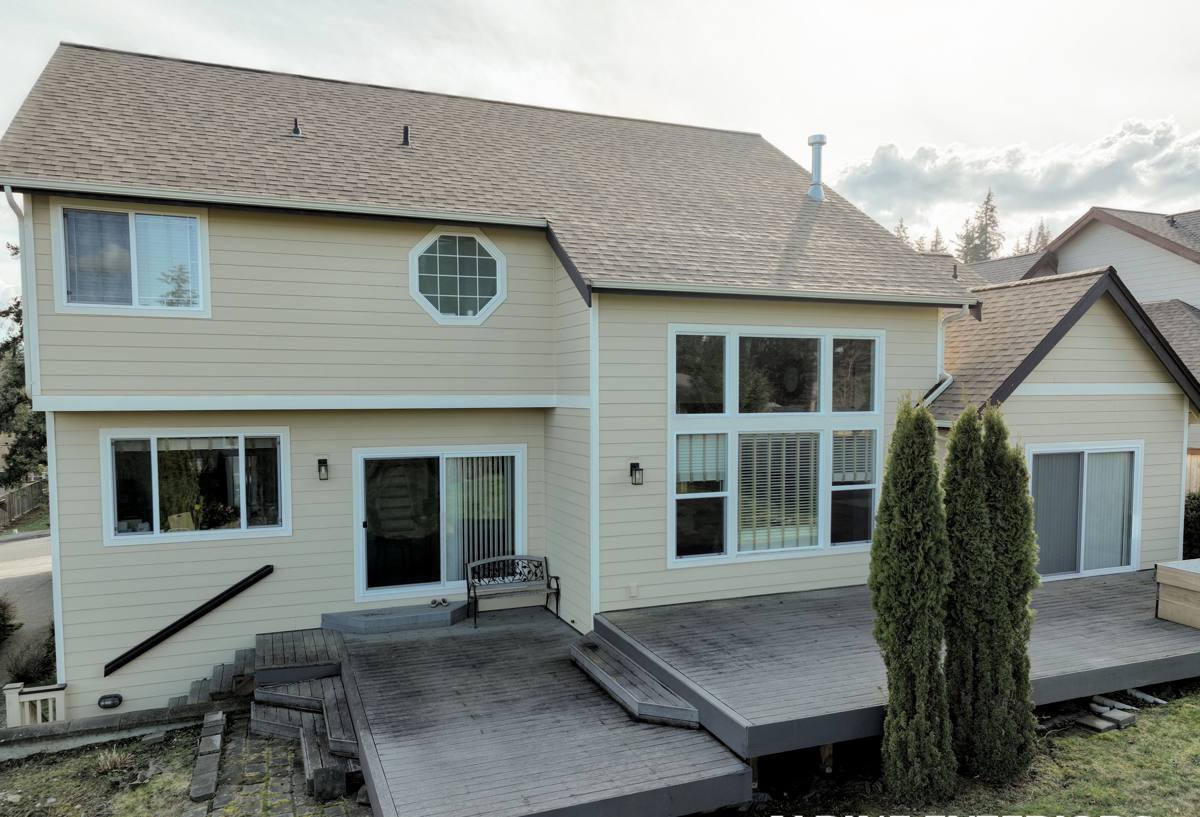
What a Correctly Built Deck Needs Out Here
Fasteners and Hardware
This is the single most common corner cut on decks near the water, and it's the one that causes the most expensive failures later. Standard galvanized fasteners can start rusting within a couple of years in a salt-air environment. We use stainless steel or heavy-duty coated fasteners rated for coastal exposure on every connection point — joist hangers, post bases, ledger bolts, and structural screws — not just the visible deck screws. A deck can look fine on the surface while the hardware holding it together is quietly failing underneath.
Ledger Attachment and Flashing
Where the deck ties into the house is the single highest-risk spot for water intrusion, and it's a spot driving rain punishes hard on an exposed peninsula. Proper ledger flashing — installed so water sheds out and away from the house framing, not into it — is non-negotiable. This is also one of the most commonly skipped or rushed details on lower-bid deck jobs, and it's the one that causes rot you can't see until it's already extensive.
Drainage and Slope
A deck surface needs a slight slope away from the house so water doesn't pool, and gaps between boards need to be consistent enough to let air move and moisture escape. Tight, uneven gaps trap debris and moisture, which is exactly what moss needs to get started. Framing underneath also needs enough clearance and airflow so the joists and beams can dry out between rain events instead of staying damp for weeks at a time.
Choosing Decking Material for a Salt-Air, Moss-Prone Site
There's no single "best" decking material for every home — it depends on how much upkeep you want to do and what look you're after. Here's how the common options actually perform in Point Roberts conditions specifically:
| Material | Salt Air Resistance | Moss/Algae Resistance | Maintenance |
|---|---|---|---|
| Pressure-treated wood | Good if fasteners and coatings are correct | Needs regular cleaning and sealing | Annual cleaning, re-sealing every 1-3 years |
| Cedar | Naturally decent, but finish matters | Prone to graying and moss without upkeep | Regular cleaning, periodic oiling or sealing |
| Composite decking | Very good, doesn't corrode or rot | Better resistance, but still needs washing | Low — periodic washing only |
| PVC/capped decking | Excellent, fully sealed surface | Best resistance of the group | Lowest — occasional rinsing |
Composite and capped PVC products cost more upfront but shed moisture and resist staining better than wood, which matters more here than in a drier climate. Wood costs less initially but demands consistent upkeep to keep moss and rot from getting a foothold — if you're not going to stay on top of cleaning and sealing every year or two, wood is a harder sell this close to the water.
Managing Moss Before It Starts
Moss doesn't need much to establish itself — shade, moisture, and a surface that stays damp are enough. A few build decisions make a real difference in how much moss pressure a deck faces over time:
- Consistent board spacing so water and debris don't collect in tight gaps
- Slight slope and unobstructed drainage so the surface actually dries between rain events
- Framing with enough ground and airflow clearance underneath, not buried low to grade
- Avoiding decking layouts that trap leaf litter and organic debris in corners or against the house
- Choosing a surface texture and material that doesn't hold moisture in the wood grain
None of these eliminate the need for occasional cleaning, but they cut down how often and how aggressively you have to do it. A deck built without these details in mind will need pressure washing multiple times a year just to stay safe underfoot; one built correctly needs far less.
Permits, Setbacks, and Building on an Exclave
Point Roberts falls under Whatcom County jurisdiction, so deck permitting and setback requirements follow the same county process as the rest of the area — but the logistics of actually getting a job done there are different from a typical job in Blaine or Ferndale. Because Point Roberts is a separate peninsula reachable by land only through Canada, material deliveries and crew scheduling take real planning. Lumber, hardware, and specialty decking orders need to be timed and staged correctly, and a crew that hasn't worked out there before can lose days just figuring out logistics that a local crew already has dialed in.
We factor all of that into scheduling upfront, so a Point Roberts project doesn't stall out waiting on materials that should have been ordered a week earlier.
Our Process for a Point Roberts Deck Build
- Site visit and assessment — we look at sun/shade exposure, prevailing wind and rain direction, existing drainage, and how the deck ties into the house.
- Material and design discussion — honest trade-offs between wood and composite/PVC options based on your budget and how much maintenance you want to take on.
- Permitting — we handle the Whatcom County permit process and make sure setbacks and structural requirements are met before framing starts.
- Framing with coastal-grade hardware — stainless or coated fasteners and connectors throughout, proper ledger flashing, and correct drainage slope.
- Decking installation — consistent spacing, correct fastening method for the material chosen, and attention to how the surface will shed water and resist moss.
- Final walkthrough — we go over basic maintenance expectations for the specific material installed so you know what upkeep actually looks like.
Keeping a Point Roberts Deck in Good Shape Long-Term
Even a well-built deck needs some seasonal attention in this climate. A simple annual routine goes a long way:
- Sweep debris off the surface regularly, especially in fall when leaves and needles accumulate
- Rinse or wash the deck at least once a year to interrupt moss and algae before it establishes
- Check hardware and railing connections annually for any early signs of corrosion or loosening
- Re-seal or re-stain wood decking on the schedule the product calls for — don't wait until it's visibly graying
- Keep gutters and downspouts near the deck clear so runoff isn't dumping extra water onto the structure
- Trim back overhanging vegetation that keeps sections of the deck shaded and damp
Why It Matters to Hire a Crew That Already Works Point Roberts
A deck built by a crew unfamiliar with this specific stretch of coastline tends to make the same mistakes: standard hardware instead of coastal-rated fasteners, decking layouts that trap moisture, and logistics that weren't planned for an exclave. Those aren't things you notice at handoff — they show up two or three years later as rust stains, soft framing, or a deck that's perpetually slick with moss no matter how often you clean it.
We've done the work of understanding what actually holds up on a peninsula like this — the fastener grade that doesn't quietly corrode, the flashing detail that keeps driving rain out of the ledger, the drainage and spacing choices that keep moss from taking over. That's the difference between a deck you maintain lightly for decades and one you're fighting with every spring.
Get a Straight Answer on Your Deck Project
If you're planning a new deck or replacing one that hasn't held up to Point Roberts weather, we're happy to take a look and talk through your options honestly — materials, budget, and what upkeep you're actually signing up for. Fill out the form below for a free, no-pressure estimate.