 Blaine
 Roofing Built for Dakota Creek's Climate, Not a Generic Forecast
Dakota Creek sits in a part of Whatcom County where the roof over your head has to deal with more than average Pacific Northwest weather. You've got salt-laden air drifting in off the nearby marine waters, wind-driven rain that doesn't just fall straight down but gets pushed sideways into laps and flashing, and a creek corridor with enough tree cover to keep roofs shaded and damp for weeks at a stretch. Add a moss season that can run most of the year in the shadier spots, and you've got a set of conditions that a roof installed to a generic spec sheet often isn't ready for.
This page is about one thing: doing asphalt shingle roofing correctly for a Dakota Creek home. Not a general rundown of shingle roofing everywhere — the specific choices, details, and maintenance habits that matter for a roof in this part of Blaine.
What Salt Air, Rain, and Moss Actually Do to a Roof
Salt Air and Metal Components
Roofs aren't just shingles. Nail heads, flashing, vent caps, and fastener hardware are all metal, and salt-carrying air speeds up corrosion on anything that isn't rated for it. A roof built with bargain-grade fasteners or unpainted flashing will show rust streaks and weak points years before a roof built with corrosion-resistant hardware. This is a material selection issue more than an installation issue, but it only gets addressed if someone is actually thinking about it during the bid.
Driving Rain and Wind-Driven Water
Straight-down rain is easy for any roof to shed. The problem in this area is rain that comes in at an angle during a windstorm, which pushes water uphill under shingle laps, into fastener holes, and into any flashing seam that isn't sealed or lapped correctly. This is why underlayment quality and flashing detail matter more here than they would in a drier, calmer climate.
Moss, Shade, and the Creek Corridor
Tree cover near the creek keeps roof surfaces shaded and slow to dry, which is exactly what moss and algae need to take hold. Moss doesn't just look bad — it lifts shingle edges as it grows, holds moisture against the roof deck, and works its way into granule loss over time. A roof that gets full sun on one side and heavy shade on the other (common on lots near the creek) will often show two very different aging patterns on the same house.
What a Correctly Installed Asphalt Shingle Roof Includes
A shingle roof is a system, not a single product. Skipping or downgrading any layer shows up as a callback within a few years, usually right around the time a homeowner has stopped thinking about the roof at all.
- Ice-and-water shield at eaves, valleys, and around penetrations — the areas most exposed to backed-up water and wind-driven rain
- A synthetic underlayment across the full deck as the actual water-shedding layer beneath the shingles, not an afterthought under them
- Starter strip at eaves and rakes, installed correctly so the first course of shingles has proper adhesive backup against wind lift
- Correct nailing pattern — the right nail count, placement, and depth for the shingle's wind rating, not just "enough to hold it down"
- Balanced ventilation — intake at the eaves and exhaust at the ridge, sized to actually move air through the attic instead of just checking a box
- Step and counter-flashing at every wall intersection, chimney, and skylight, integrated into the underlayment rather than caulked over the top
Every one of these is invisible once the roof is finished. That's exactly why it matters who's doing the work — nobody can inspect a finished roof and tell you whether the underlayment was lapped correctly or the nail pattern meets the shingle manufacturer's wind rating requirements.
Where Roofing Meets Siding — The Detail Most Roofs Get Wrong
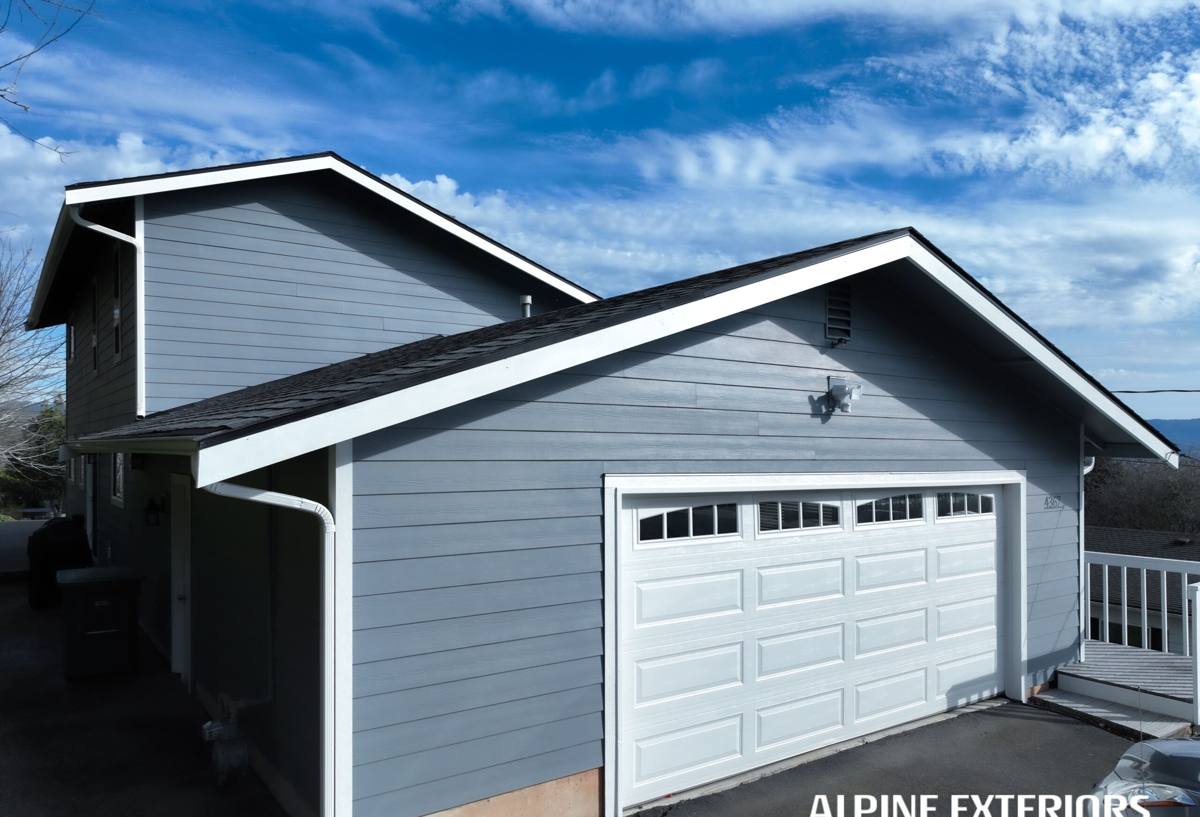
Because we work on both roofing and siding, we see a failure pattern that a roofing-only crew or a siding-only crew each tend to miss: the transition where a roof plane meets a sidewall. This is where a sloped roof section — over a porch, a dormer, or a lower roofline — dumps water directly at a wall instead of off an eave.
Done right, that intersection needs kick-out flashing to divert water away from the wall and into the gutter, plus properly lapped step flashing running up the wall behind the siding. Skip the kick-out, or install it loosely without tying it into the water-resistive barrier behind the siding, and water runs straight down inside the wall assembly. It doesn't show up as a leak in the attic — it shows up years later as rot in the wall sheathing or trim, discovered when siding gets pulled off for an unrelated repair. In a wet, wind-driven climate like Blaine's, this single detail is one of the more common sources of hidden damage we find on older homes.
A crew that only touches the roof has no reason to think about what's happening behind the siding below it. We do, because we install both.
Choosing the Right Shingle for a Coastal Whatcom County Home
Not every shingle product is a good fit for a site with salt air and regular windstorms. The table below is a general guide to the trade-offs — actual product lines and warranty terms vary by manufacturer, so we'll walk through specific options during your estimate.
| Shingle Class | Typical Wind Rating | Typical Lifespan | Trade-offs |
|---|---|---|---|
| 3-tab (standard) | Lower end of the range | Lowest upfront cost; flatter profile; less margin against sustained wind exposure | |
| Architectural / laminate | Mid-to-upper range | Longer | Heavier, dimensional profile sheds water better at laps; the common choice for this area |
| Impact / high-wind rated | Highest available | Longer, backed by stronger warranty terms | Higher material cost; worth it on exposed sites or for owners who want to minimize future wind-related callbacks |
| Algae-resistant (with copper or zinc granules) | Varies by base shingle | Same as base line, but slower cosmetic staining | Slows algae/moss-driven staining; doesn't eliminate the need for periodic moss treatment |
For most Dakota Creek homes, an architectural shingle with algae-resistant granules is the practical middle ground — enough wind performance for regular storms, and slower cosmetic decline under shaded, damp conditions. Fully exposed sites or homes that have had wind damage before are worth a conversation about impact-rated products.
Our Process for a Dakota Creek Roofing Project
- On-site inspection — we look at the existing roof, decking condition, ventilation, and how the roof ties into your siding and trim, not just shingle wear
- Written scope and estimate — materials, flashing details, and any wall-intersection work spelled out before anything is signed
- Tear-off and deck check — old roofing removed, deck inspected for soft spots or rot before new underlayment goes down
- Underlayment and flashing installation — ice-and-water shield, synthetic underlayment, and all step/kick-out flashing installed and properly lapped
- Shingle installation — correct starter strip, nailing pattern, and ventilation components installed to manufacturer spec
- Siding and trim integration — any wall-intersection flashing tied back into the siding correctly, not just caulked at the seam
- Cleanup and walkthrough — site cleared, magnetic sweep for stray fasteners, and a walkthrough so you know what was done and why
Moss and Debris Maintenance After Installation
A correctly installed roof still needs upkeep in a creek-corridor setting with tree cover. None of this is complicated, but skipping it shortens the life of even a well-built roof.
- Clear needles, leaves, and debris from valleys and behind chimneys at least once a year — these spots hold moisture longest
- Keep gutters and downspouts flowing freely so water doesn't back up under the eave line during heavy rain
- Have moss treated (not just power-washed, which can strip granules) before it gets thick enough to lift shingle edges
- Trim back overhanging branches where practical to reduce shade and speed up drying time on north-facing slopes
- Walk the roofline visually after major windstorms and after the first hard freeze of the season for anything obviously out of place
Signs Your Roof Needs Attention
- Granules collecting in gutters or at downspout outlets
- Shingle edges curling, cupping, or lifting, especially on shaded slopes
- Visible moss or dark streaking that keeps coming back after cleaning
- Daylight or water stains visible from inside the attic
- Soft or spongy spots underfoot near valleys or wall intersections
- Rust staining around vent caps, flashing, or fastener heads
Any one of these on its own isn't necessarily an emergency, but they're worth a look before the next big windstorm rather than after.
Why Hire a Crew That Already Works Dakota Creek
Roofing specs written for a dry inland climate don't automatically hold up on a shaded, salt-air site near the water. A crew that regularly works this part of Blaine already knows which slopes on a given lot tend to hold moss, where kick-out flashing gets skipped on older homes, and which fastener and flashing grades actually hold up to the corrosion here. That's not something you can verify from a bid sheet — it comes from having done the work on houses like yours, in this exact stretch of Whatcom County.
If you're planning a re-roof, dealing with moss or staining that keeps coming back, or just want a straight answer on what condition your roof is actually in, we'd be glad to take a look. Reach out for a free, no-pressure estimate — the form below gets you started.