 Blaine
 Roofing in Custer: A Different Kind of Wear
Custer sits close enough to the Salish Sea that homes here take on a mix of weather most inland roofing crews never have to think about. Salt-laden air off the water accelerates corrosion on fasteners and flashing. Driving rain, pushed sideways by wind coming off the water and across open farmland, finds every weak seam in a roof system. And Whatcom County's long, mild, wet stretch from fall through spring gives moss and algae months at a time to take hold on north-facing slopes and anything shaded by fir or cedar. None of this is exotic — it's just persistent. A roof that's installed correctly handles it for decades. A roof that's installed to a generic national standard, without accounting for this specific climate, tends to show problems early: streaking, soft spots at the eaves, granule loss, and shingles that lift in the first real windstorm.
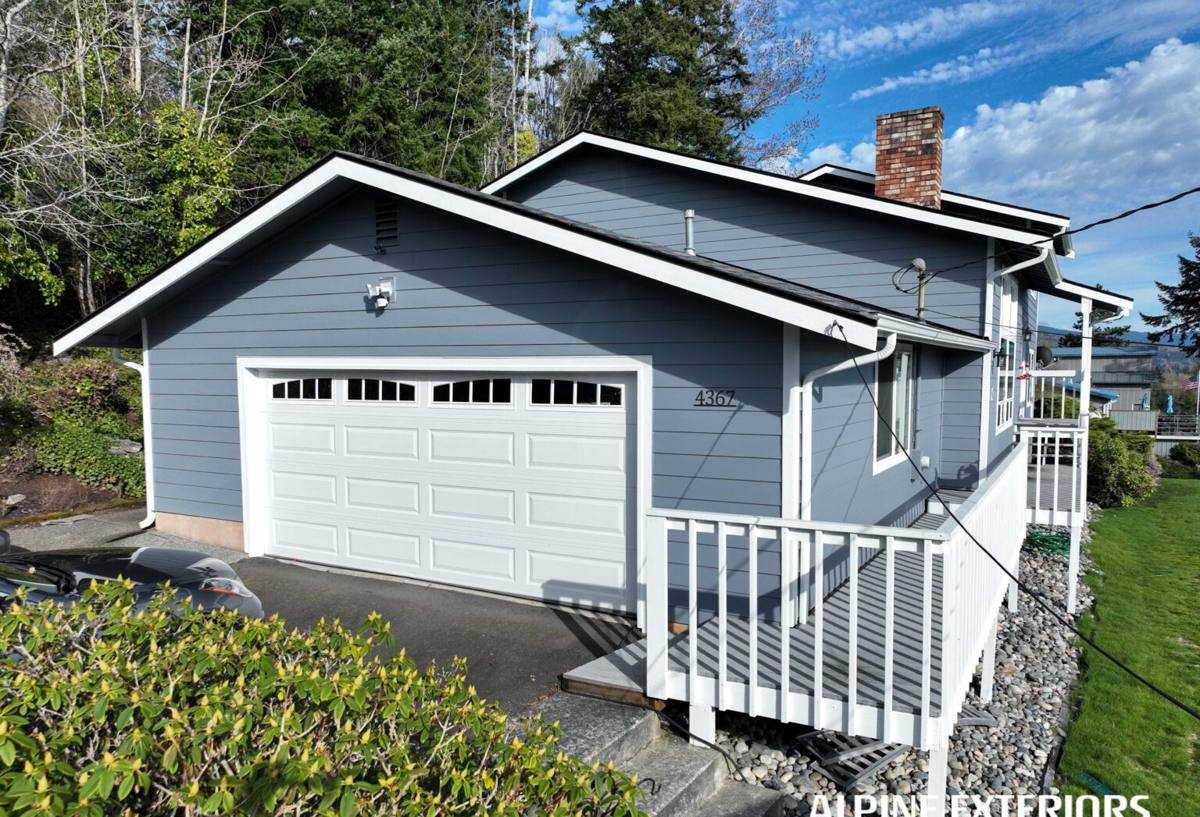
Why Asphalt Shingles Still Make Sense Here
Asphalt shingle roofing remains the most practical choice for the great majority of homes in and around Custer, and for good reason. It's cost-effective relative to metal or premium synthetic products, it's available in a wide range of colors and styles that suit both older farmhouses and newer construction, and when installed with the right underlayment and flashing details, it performs well against everything this climate throws at it. The material itself isn't the weak point in most roof failures we inspect — the installation is. Gaps in ice-and-water shield coverage, reused or undersized flashing, and ventilation that was never sized for the home are what shorten a roof's life, not the shingle brand.
Where Asphalt Isn't the Right Call
We'll say this plainly: asphalt shingles aren't ideal for every roof. Very low-slope sections, roofs with heavy year-round shade and poor airflow, or homes where a metal or standing-seam roof is already part of the design language may call for a different approach. Part of an honest estimate is telling a homeowner when shingles aren't the best fit, rather than installing them everywhere because it's what we sell.
What Custer's Climate Actually Demands From a Roof
A correct shingle roof for this area isn't just "good shingles nailed down." It's a system built around a few specific local pressures:
- Wind-driven rain resistance: proper starter strip placement and sealant activation so shingles bond down tight along eaves and rakes, where sideways rain tries to get underneath.
- Moisture management at vulnerable points: full ice-and-water membrane at eaves, valleys, and around every penetration — not just the code minimum, but enough to handle sustained wet weeks without back-up under the shingle field.
- Moss and algae resistance: product selection and, where it makes sense, zinc or copper strip installation near the ridge to slow regrowth on shaded slopes.
- Corrosion-resistant fasteners and flashing: hardware rated to hold up against salt air over the long term, not the cheapest fastener that meets minimum code.
- Balanced attic ventilation: intake and exhaust sized to the home so trapped moisture doesn't condense under the deck during the wettest months.
Signs a Custer Roof Needs Attention
Homeowners in this area often notice one of a few patterns first. Dark streaking on north-facing slopes is usually algae, and while it's mostly cosmetic early on, it signals a roof that's staying damp longer than it should. Green or gray moss clumps, especially near valleys or under tree cover, are more serious — moss holds moisture against the shingle and lifts tabs as it grows, which is exactly how wind-driven rain gets underneath. Granules collecting in gutters mean the shingle's protective surface is wearing away. And soft spots or sagging near the eaves usually mean water has already gotten past the shingle layer and into the decking. Any one of these is worth a look before it becomes a full tear-off.
What a Correct Installation Involves
A shingle roof is only as good as the layers underneath it that homeowners never see. Here's what we consider non-negotiable on every job in this area:
Tear-Off and Deck Inspection
We remove the old roofing down to the deck rather than layering over it, because you can't properly install ice-and-water membrane, flashing, or ventilation over an existing shingle layer — and you can't check the decking underneath for rot or soft spots without pulling it up. Any damaged sheathing gets replaced before anything new goes down.
Underlayment and Ice-and-Water Shield
Given how much sustained rain this region sees, we extend ice-and-water membrane further up from the eaves and through valleys than the bare minimum, and wrap it around every pipe boot, skylight curb, and chimney. This is the layer that keeps a roof dry when wind pushes rain uphill under the shingle tabs.
Flashing
Step flashing at walls, valley flashing, and drip edge all get replaced with new, corrosion-resistant material — never reused from the old roof. Flashing failure is one of the most common causes of leaks we find on older Custer roofs, usually because it was reused during a prior re-roof to save time.
Shingle Installation
Correct nailing pattern and placement matter more than most homeowners realize — high-nailing or off-pattern nailing is a leading cause of blow-offs in coastal wind events. Starter strips go down first along every eave and rake so the first course has proper adhesive contact.
Ventilation
We check and correct intake and exhaust balance as part of the job, not as an afterthought. A roof can be installed perfectly and still fail early from the inside if the attic can't breathe properly through our wet winters.
Shingle Options: A Straight Comparison
Not every home needs the top-tier product, and not every budget should settle for the bottom one. Here's how the common tiers stack up for this climate specifically:
| Shingle Type | Typical Lifespan | Best For | Climate Notes |
|---|---|---|---|
| 3-Tab Asphalt | 15–20 years | Budget-conscious re-roofs, rentals | Lower wind rating; more prone to early moss buildup without added protection |
| Architectural (Dimensional) | 25–30 years | Most Custer homes | Better wind resistance and algae-resistant granule options; the standard we recommend for this area |
| Premium/Designer | 30+ years | Homes prioritizing appearance and longevity | Heavier profile handles driving rain and wind well; higher upfront cost |
| Impact-Rated (Class 4) | 25–30+ years | Homes wanting hail/impact resistance | Not a major local hail risk, but some insurers offer premium discounts |
Our Process for a Custer Roofing Project
Every job starts with an on-site inspection, not a phone estimate — we want to see the actual slopes, shade patterns, and any moss or moisture damage before quoting anything. From there:
- Written estimate covering material tier, tear-off scope, and any deck repair allowance
- Scheduling that accounts for the local wet-season window, so materials aren't sitting exposed
- Full tear-off and deck inspection, with photos of any damage found before we cover it back up
- Underlayment, flashing, and shingle installation per the details above
- Ventilation check and correction if needed
- Full site cleanup, including a magnetic sweep for stray nails
- Final walkthrough with the homeowner before we consider the job done
Maintenance That Actually Extends Roof Life Here
A correctly installed roof still benefits from basic upkeep in this climate. A short annual checklist we give Custer homeowners:
- Clear gutters and valleys of needles and debris before the fall rains set in
- Trim back overhanging branches to reduce shade and debris buildup on north-facing slopes
- Have moss growth removed gently (never pressure-washed) as soon as it appears, rather than waiting
- Check attic ventilation isn't blocked by insulation at the eaves
- After any major windstorm, do a visual check from the ground for lifted or missing shingles
Why a Crew That Already Works Custer Matters
Roofing crews that mainly work drier, inland climates sometimes under-build for what this area needs — less membrane coverage, standard fastener packages instead of corrosion-resistant hardware, ventilation sized off a generic chart instead of the home in front of them. A crew that regularly works Custer and the surrounding Blaine area already knows which slopes tend to hold moss, how far wind-driven rain can travel under an eave in a real coastal storm, and what Whatcom County's permitting and inspection process actually requires — so there are no surprises mid-project. That familiarity shows up in fewer callbacks and a roof that performs the way it's supposed to for the length of its warranty.
Get a Local Estimate
If your Custer-area roof is showing moss, streaking, granule loss, or you're just planning ahead for a re-roof, we're happy to take a look and give you a straight, no-pressure estimate. Use the form below to get started.