 Blaine
 Birch Bay Decks Deal With a Lot More Than Sun
Birch Bay sits right on the water, and that location is exactly why decks here fail faster than decks fail ten or fifteen miles inland. Salt-laden air off the bay works on metal fasteners and hardware year-round, not just during storms. Driving rain off the Strait pushes water sideways into joints and end grain that a typical rain-shadow deck rarely sees. And Whatcom County's long wet season — often October through April — means a deck surface can stay damp and shaded for weeks at a stretch, which is exactly what moss and mildew need to take hold.
None of that means composite decking is a bad fit for Birch Bay. It means the deck has to be built with those specific conditions in mind, not installed the same way you'd install it in a dry inland yard. The board itself is only part of the equation — the substructure, fasteners, drainage, and airflow underneath matter just as much, and they're the parts homeowners usually can't see once the job is finished.
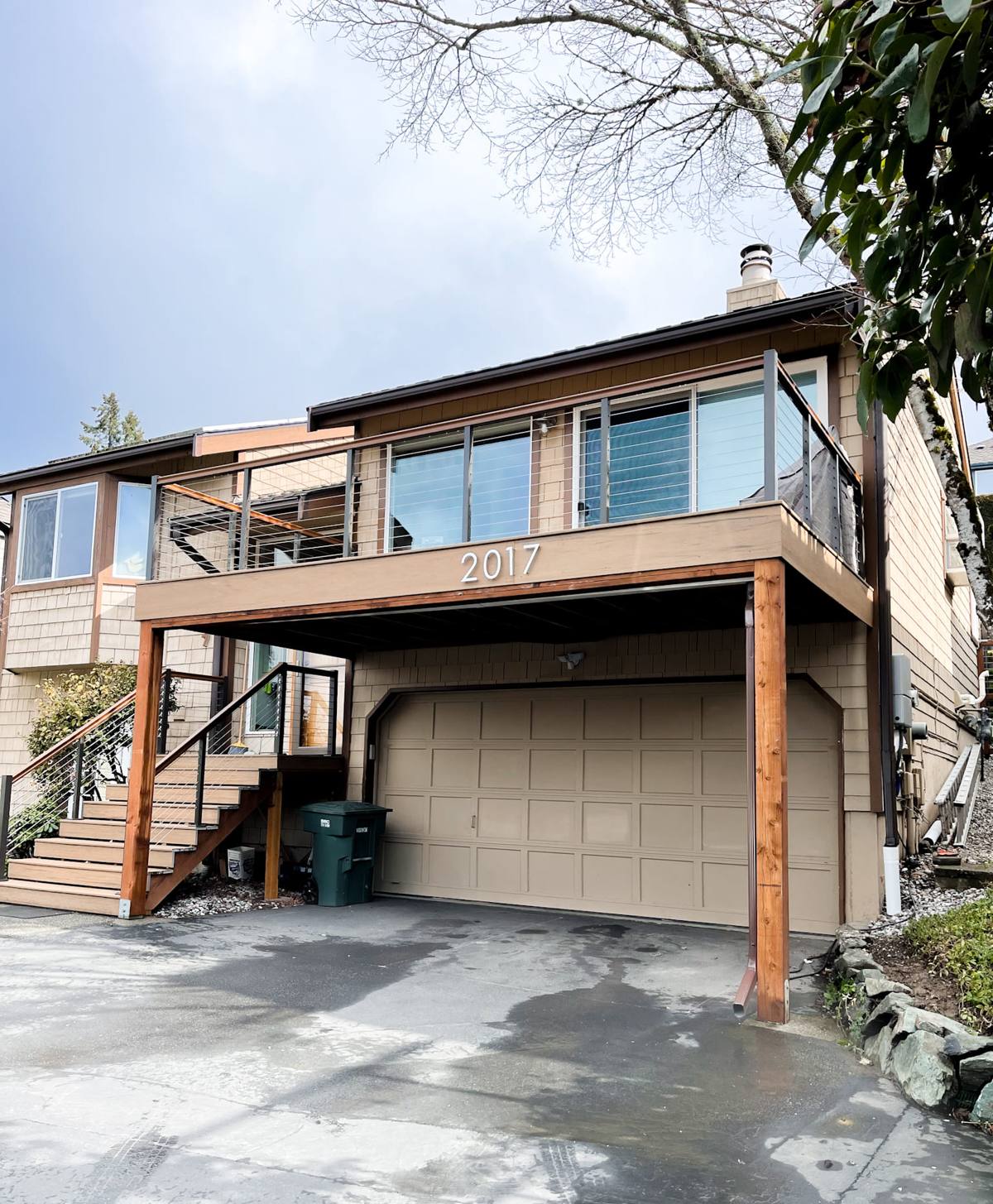
What a Correctly Built Composite Deck Needs Here
It Starts Below the Boards
A composite deck is only as good as what's underneath it. In a salt-air environment, we pay close attention to the framing lumber, the connectors, and the fasteners holding it all together, because that's where corrosion and rot start — long before anyone notices a problem on the walking surface. Standard hardware that's fine in a drier climate can start showing rust streaks within a couple of seasons this close to the water.
Drainage and Airflow Underneath
Composite boards don't rot the way wood does, but the framing under them still can, and trapped moisture underneath a deck is one of the most common causes of a musty smell, soft framing, or premature hardware failure. Proper joist spacing, ventilation gaps, and a slight slope away from the house keep water moving instead of sitting.
Where the Deck Meets the House
The ledger board connection — where the deck attaches to the house — is the single most important flashing detail on the whole structure. Done wrong, it lets water track behind the siding and into the wall framing, which turns a deck problem into a much bigger and more expensive repair. This is exactly the kind of detail that separates a deck that lasts decades from one that causes hidden damage nobody notices until the drywall stains show up.
Choosing the Right Decking Material for This Climate
Not all composite decking behaves the same way in a coastal, high-moisture climate. Here's how the common options compare for a property like one in Birch Bay:
| Material | Moisture/Salt Behavior | Maintenance | Typical Lifespan |
|---|---|---|---|
| Capped composite (PVC cap over composite core) | Best resistance to moisture wicking and salt staining; the cap seals the core | Occasional washing; no sealing or staining | 25-30+ years |
| Uncapped/first-generation composite | More prone to moisture absorption at cut ends and fastener holes over time | Periodic cleaning; more attention to end sealing | 15-20 years |
| Pressure-treated wood | Absorbs and releases moisture constantly; salt air accelerates fastener corrosion and checking | Regular sealing/staining, more frequent board replacement | 10-15 years before major repair |
| Cedar or other natural wood | Attractive but softens and grays faster in salt air and shaded, damp spots | Frequent sealing; sanding for splinters | 10-15 years |
For a Birch Bay property, we generally steer homeowners toward a capped composite product. It's not that other materials can't work — it's that in a marine climate, the extra moisture protection of a capped board earns its keep faster here than it would on a dry inland lot. We're happy to walk through the trade-offs in cost and look for your specific deck rather than push one option.
Fasteners and Hardware: The Detail Most Contractors Skip Over
This is where a lot of decks near the water actually fail first — not the decking boards, but the screws, brackets, and joist hangers holding everything together. Standard galvanized hardware can start corroding within a few years of steady salt air exposure. For decks in Birch Bay and along the rest of the Blaine shoreline, we use stainless steel or heavy-duty coated fasteners and connectors rated for coastal exposure, and we use hidden fastener systems where the product allows for it, which also keeps water from pooling in exposed screw heads on the walking surface.
It's a detail that costs more up front and is invisible once the deck is finished — which is exactly why it's an easy thing for a contractor to cut corners on if they're not used to building this close to salt water.
Moss, Mildew, and the Long Wet Season
Whatcom County's wet season is long, and any shaded or north-facing deck in Birch Bay is going to see moss and algae growth if the surface can't shed water and dry out between rains. A few things make a real difference:
- Proper board spacing so water drains through rather than sitting on the surface
- A textured composite surface, which sheds water better than smooth boards in shaded areas
- Keeping the area under and around the deck clear of debris that holds moisture against the framing
- Routine surface cleaning before moss gets a foothold, rather than after it's established
Composite decking resists rot the way wood can't, but moss and algae will still grow on any surface that stays damp and shaded long enough — the goal in our build is to reduce how long that surface stays wet in the first place.
Our Process for a Birch Bay Deck Install
1. On-Site Assessment
We look at the existing structure (if there is one), the ground conditions, sun and wind exposure, and how close the deck sits to the water. That assessment shapes decisions on footing depth, joist spacing, and fastener selection.
2. Permits and Requirements
Depending on the deck's size, height, and location relative to the shoreline, permitting may fall under Whatcom County or the City of Blaine, and there can be additional shoreline setback considerations for waterfront and near-waterfront lots. We handle the permit process and won't guess on requirements — if a permit or shoreline review applies to your property, we confirm it with the local building department before work starts.
3. Substructure Build or Repair
Footings, posts, joists, and ledger flashing get built or repaired to hold up in this environment specifically, using coastal-rated hardware and fasteners throughout.
4. Decking Installation
Boards are installed with attention to expansion gaps (composite expands and contracts with temperature more than people expect), proper fastening, and clean transitions at stairs, railings, and any picture-frame border detailing.
5. Final Walkthrough
We walk the finished deck with you, cover basic care, and answer questions before we consider the job done.
Signs Your Current Deck Needs Attention
If you already have a deck in Birch Bay, a few warning signs are worth taking seriously before they turn into a bigger repair:
- Boards that feel spongy, springy, or soft underfoot in spots
- Rust staining around screw heads or bracket locations
- Persistent moss or algae in the same spots every year, even after cleaning
- Visible gaps or movement where the deck attaches to the house
- Railing posts that wiggle or feel loose
- A musty smell coming from underneath the deck
Any one of these is worth a look. Several of them together usually means the substructure needs real attention, not just a surface fix.
Maintenance That Actually Matters in This Climate
One of the appeals of composite decking is lower maintenance than wood, but "lower maintenance" isn't "no maintenance," especially this close to salt water. A periodic rinse to clear salt residue and organic debris, keeping gutters and downspouts near the deck clear so runoff doesn't pool against it, and an occasional check of railing hardware for corrosion will keep a well-built composite deck performing the way it's supposed to for decades.
Why Local Experience on This Coastline Matters
Building decks that hold up in Birch Bay isn't the same skill set as building decks fifteen miles inland. A crew that already works this coastline knows which fastener grades actually hold up, how far the salt air problem extends from the water, what the local permitting process looks like, and where deck failures around here actually start. That's not something you can fully substitute with a generic installation, no matter how good the product is.
If you're planning a new composite deck in Birch Bay or want an honest look at whether your current deck needs repair or replacement, we're glad to take a look and give you a straight answer. Reach out for a free, no-pressure estimate using the form below.