 Blaine
 Cherry Point's Climate Puts Real Stress on Siding
Cherry Point sits close to the water along the Whatcom County shoreline near Blaine, and that location comes with a specific set of exterior challenges. Homes here take on salt-laden air moving in off the Salish Sea, wind-driven rain that hits walls at an angle instead of falling straight down, and long stretches of damp, overcast weather that keep moss and algae active for much of the year. None of this is unusual for the region, but it does mean siding here works harder than siding on a home thirty miles inland.
Over time, that combination shows up as premature paint failure, soft or swollen trim, moss colonizing north-facing walls, and caulk joints that crack years before they should. A siding replacement in Cherry Point isn't just a cosmetic upgrade — it's an opportunity to correct the details that let moisture in over the life of the old siding, and to install a product system that's actually built to handle this climate.
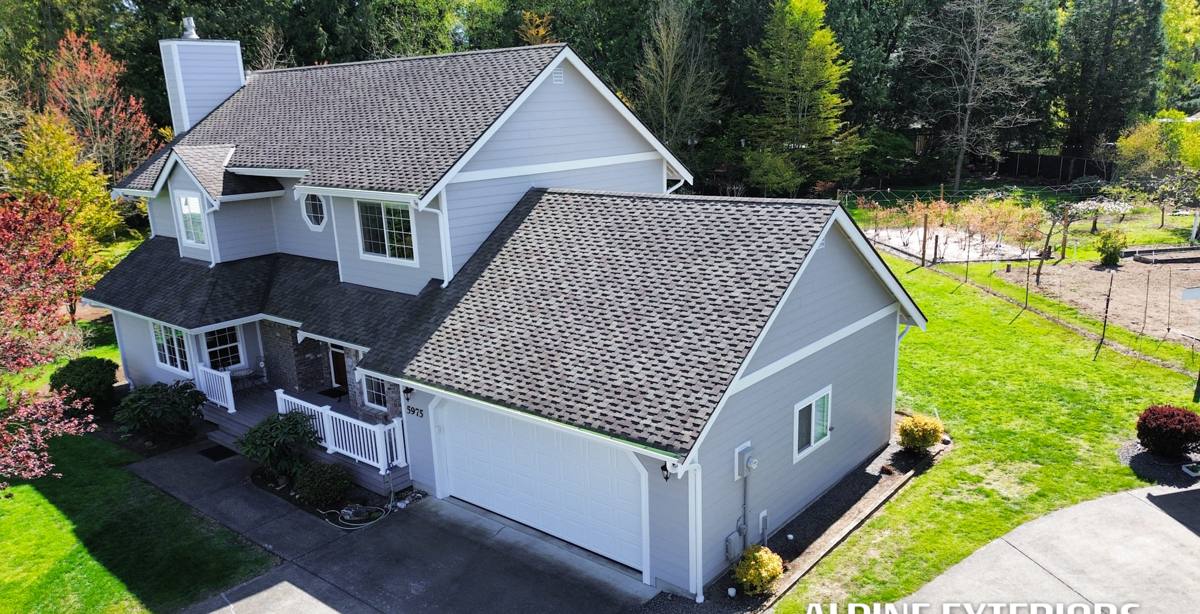
What Salt Air, Rain, and Moss Actually Do to a Wall
Salt in the air accelerates corrosion on exposed fasteners, metal flashing, and hardware. Once corrosion starts at a nail head or a flashing seam, it creates a small point of failure that water can exploit, and that failure grows quietly behind the siding where you can't see it.
Constant moisture cycling — wet, then dry, then wet again — is hard on any wood-based exterior product. Materials that absorb water swell, then shrink back down as they dry, and that repeated movement opens up seams, telegraphs through paint, and eventually leads to warping or soft spots at butt joints and panel edges.
Moss and algae are a separate but related problem. They thrive in the shaded, damp conditions common on north and east-facing walls in this area, and once established they hold moisture directly against the siding surface far longer than the surrounding air would on its own. On a moisture-sensitive substrate, that's a slow path toward rot. On a properly installed fiber cement system, it's mostly a surface cleaning issue.
Signs a Cherry Point Home May Need Siding Replacement
Not every siding problem requires full replacement, but certain signs point to a system that's failed at the substrate level and can't be solved with another coat of paint or a caulk touch-up:
- Soft, spongy, or crumbling siding when pressed, especially near the bottom edges and around windows
- Paint that's peeling or bubbling repeatedly in the same spots within a year or two of repainting
- Visible warping, buckling, or gaps between panels or lap boards
- Persistent moss or dark staining that returns quickly after cleaning
- Soft trim or corner boards, particularly on walls facing prevailing wind and rain
- Rising utility bills or noticeably drafty rooms along exterior walls
- Visible daylight or moisture at the base of the wall where siding meets the foundation
If more than one or two of these show up, it's usually a sign that moisture has already reached the sheathing behind the siding, and that's a conversation worth having with a contractor before deciding on a repair-versus-replace approach.
What a Correct Siding Replacement Job Actually Involves
Full Tear-Off and Sheathing Inspection
A proper replacement starts with removing the old siding entirely, not siding over it. That's the only way to actually see the condition of the sheathing and framing underneath. In a climate like this, it's common to find isolated soft spots around old window flashing or at wall penetrations that need to be repaired before any new material goes up. Skipping this step just seals existing damage behind a new surface.
Moisture Barrier and Flashing Details
The weather-resistive barrier and flashing are what actually keep water out — the siding itself is the second line of defense. Every window, door, and penetration needs properly lapped flashing and correctly integrated house wrap so that any water that does get behind the surface has a clear path back out, rather than pooling against the sheathing.
Installation to Manufacturer Specification
Fiber cement performs the way it's engineered to only when it's installed to spec: correct fastener type and placement, proper gaps at butt joints, and clearance at the bottom edge and any hard surfaces. Shortcuts here are the most common reason a siding job underperforms, regardless of what product was used.
Why We Install Only James Hardie Fiber Cement
We made a deliberate decision years ago to standardize on James Hardie fiber cement siding and stop installing vinyl, LP SmartSide, and wood-based products like cedar or primed spruce. That decision came down to how these products behave over time in a wet, marine-influenced climate like Whatcom County's.
Wood-based siding, even when engineered, still relies on a wood-strand core that can swell if water finds its way past a cut edge, a seam, or a fastener hole — and once moisture gets into that core, it doesn't dry out quickly in a climate that stays damp for months at a stretch. Vinyl holds up to moisture fine on its own, but it's a thin material that can warp or become brittle with temperature swings, and it doesn't offer the impact or fire resistance of fiber cement. Both are reasonable products in the right context — they're just not the standard we're willing to put our name behind here.
James Hardie's fiber cement is non-combustible, dimensionally stable in wet-dry cycling, and available in HZ product lines specifically engineered for climate zones like ours. The factory-applied ColorPlus finish is baked on under controlled conditions rather than field-applied, which means better adhesion and color retention against UV and salt air than a job-site paint job typically achieves. It also carries a strong transferable warranty, which matters to a homeowner who may sell before the siding's functional life is over.
Our Siding Replacement Process
- On-site inspection — we evaluate the existing siding, trim, and visible signs of moisture intrusion, and give you an honest read on what's driving the problem.
- Tear-off and sheathing check — old material comes off completely so we can inspect and repair the substrate before anything new goes up.
- Weather barrier and flashing — house wrap and flashing are installed or upgraded at every window, door, and penetration point.
- Hardie installation — siding, trim, and accessories are installed to manufacturer specification, with attention to fastener pattern, joint gaps, and clearances.
- Caulking and detail work — joints and transitions are sealed with products compatible with the ColorPlus finish.
- Final walkthrough — we go over the finished work with you before calling the job complete.
Cost Factors for Cherry Point Siding Replacement
Every home is different, but the same handful of factors tend to drive the scope and cost of a siding replacement project in this area:
| Factor | Why It Matters |
|---|---|
| Total wall square footage | The largest single driver of material and labor cost |
| Hidden sheathing or framing damage | Rot repair found during tear-off adds time and material beyond the siding itself |
| Trim and detail complexity | Multiple gables, dormers, and corner details take more labor per square foot than a simple rectangular wall |
| Siding profile and finish selection | Lap width, panel style, and ColorPlus color selection affect material pricing |
| Access and site conditions | Tight side yards, second-story walls, and staging needs affect labor time |
The only way to get an accurate number is a walk-through of the actual home, but knowing these drivers ahead of time makes it easier to understand where an estimate's cost is actually coming from.
Why It Matters to Hire a Crew That Already Works in Cherry Point
A contractor who regularly works homes along this stretch of Whatcom County shoreline already understands which elevations tend to take the worst of the wind-driven rain, where moss builds up fastest, and how much additional flashing detail a given exposure warrants. That's not something you can fully substitute with a generic install — it comes from repeatedly seeing how homes in this specific setting hold up over the years. A crew with that local experience is also more likely to catch subtle warning signs during tear-off, rather than treating every home the same regardless of its exposure.
- Ask whether the contractor is a factory-certified James Hardie installer, not just a general siding contractor who occasionally uses it
- Ask how they handle flashing at windows and penetrations specifically, not just siding installation in general
- Ask for their approach to sheathing repair if rot is found during tear-off, and how that's communicated and priced
- Confirm they carry current licensing and insurance appropriate for exterior work in Washington
Protecting Your Investment After Installation
One of the practical advantages of a correctly installed James Hardie system in this climate is how little ongoing maintenance it asks for compared to wood-based alternatives. It doesn't need repainting on the same cycle a field-painted wood product does, and it doesn't swell or rot the way a wood-based core can if moisture gets past a seam. Periodic rinsing to keep moss and salt residue from building up, and a visual check of caulked joints every year or two, is generally all that's needed to keep it performing the way it's designed to for the long haul.
If your Cherry Point home is showing any of the warning signs above, or you're simply planning ahead for a replacement, we're happy to take a look and give you a straightforward, no-pressure estimate — just fill out the form below to get started.