 Blaine
 Cherry Point Homes Face a Tougher Climate Than Most of Whatcom County
Cherry Point sits right on Whatcom County's saltwater shoreline, a few miles outside downtown Blaine. That location is part of what makes it a beautiful place to live, and it's also exactly why siding here takes more abuse than siding a few miles inland. Homes along this stretch of coastline deal with salt-laden wind coming straight off the water, longer stretches of wind-driven rain than sheltered neighborhoods get, and the kind of persistent shade and dampness under mature conifers that keeps moss and algae growing nearly year-round. Add in the broader Pacific Northwest marine climate — well over a hundred wet days a year, mild temperatures that never quite dry a wall out between storms — and you've got conditions that will find every weak point in an exterior wall system eventually.
None of that is a reason to avoid Cherry Point. It just means the siding on these homes has to be chosen and installed with that environment in mind, not treated the same as a house in a dry inland subdivision. That's the whole premise of this page: what Cherry Point homes actually need from their siding, and what it takes to get a James Hardie installation right in this specific setting.
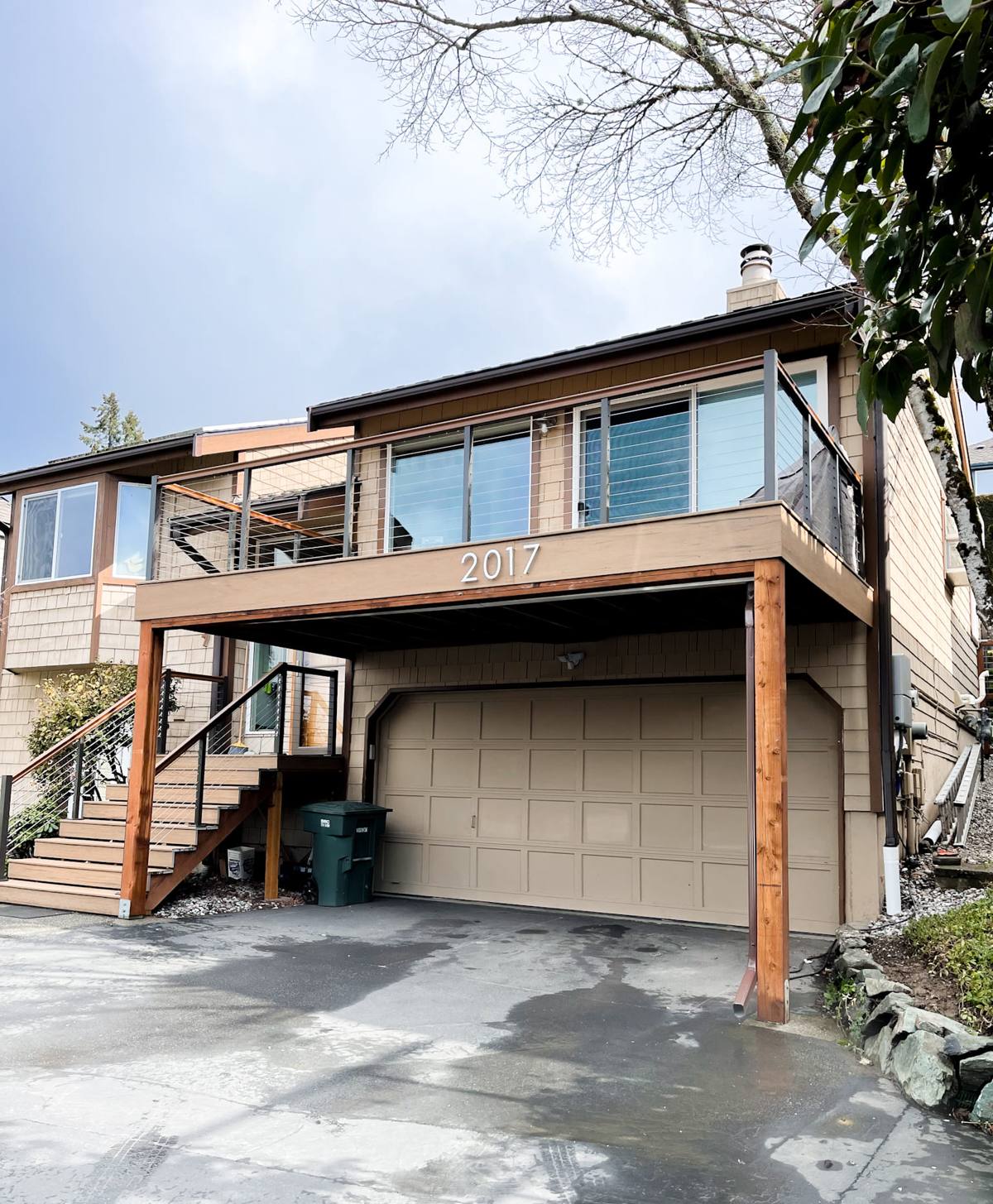
What Salt Air and Constant Moisture Actually Do to a Wall
Salt air is corrosive to exposed metal — fasteners, flashing edges, hardware — and it accelerates the breakdown of paint and coatings faster than inland exposure does. Combine that with frequent wind-driven rain and you get moisture pushed sideways into joints, seams, and butt cracks that would stay dry in calmer weather. On a shaded, north-facing wall or anywhere tree cover blocks the sun, that moisture doesn't get the chance to fully evaporate between storms. That's the setup that grows moss and mildew, and over time, softens whatever the siding is protecting.
Wood-based siding — cedar, primed spruce, engineered wood products like LP SmartSide — depends entirely on an unbroken paint or coating film to keep water out of the wood substrate underneath. Once that film cracks, chips, or gets breached at a fastener hole or joint, water gets into the wood itself, and wood absorbs it. Near open water, with more salt exposure and more standing moisture, that breach happens sooner and the damage spreads faster once it starts. Vinyl siding doesn't rot, but it chalks and fades under UV and salt exposure, it's limited in how aggressively it can be cleaned when moss and algae build up, and lower-grade vinyl can flex, warp, or crack under the stronger, more sustained wind gusts that come with open shoreline exposure.
This is the core reason we standardized on James Hardie fiber cement and stopped installing the alternatives. Fiber cement doesn't rely on an intact paint film to keep water out of its core the way wood does, it holds up to direct salt and UV exposure better than field-painted wood, and it's dimensionally stable enough to hold a factory finish tight against the substrate through repeated wet-dry cycles. In a climate that punishes any weak link, that matters more than it does somewhere drier.
The James Hardie System We Install
We install James Hardie fiber cement exclusively — no vinyl, no LP SmartSide, no Cemplank, no Allura, no primed spruce or cedar. For a shoreline property like a Cherry Point home, that typically means:
- HardiePlank lap siding from Hardie's climate-engineered HZ product line, formulated to hold up in wetter, marine-influenced climates like ours rather than a generic all-climate blend.
- ColorPlus Technology factory finish — a baked-on, multi-coat finish applied under controlled conditions, which resists fading and chalking from UV and salt exposure far better than siding painted in the field after installation.
- HardieTrim boards for corners, window and door surrounds, and fascia, matched to the same finish system so trim and field siding age together instead of one weathering faster than the other.
- HardieSoffit panels in vented or non-vented profiles where eaves and overhangs need moisture- and pest-resistant material that also holds up under condensation.
Color and texture options range from smooth to a cedar-like woodgrain, so a Hardie installation doesn't have to look like a departure from the wood-sided homes common in this area — it just performs differently underneath.
What a Correct Installation Actually Involves
Fiber cement siding is only as good as the installation behind it. This is where a lot of the real-world performance difference between a good job and a mediocre one shows up, especially in a climate that gives water every opportunity to find a way in.
Moisture management behind the siding
A correctly installed water-resistive barrier goes on the sheathing before any siding, with all seams lapped and taped so water that does get past the siding has a drainage plane to run down instead of soaking into the wall assembly. On many Cherry Point jobs, we'll also detail a rain screen gap behind the siding, which lets any moisture that gets behind the boards drain and dry out instead of sitting trapped against the sheathing — a detail that matters more here than it would inland.
Flashing at every penetration
Windows, doors, hose bibs, vents, light fixtures — every single penetration through the siding is a place water can travel if it isn't flashed correctly. Head flashing above windows and doors, proper step flashing at rooflines, and correct kick-out flashing where a roof edge meets a wall are non-negotiable details, not optional upgrades.
Fastening and clearances to spec
James Hardie publishes exact fastener type, spacing, and placement requirements, along with minimum clearances from grade, roofing, and decks. Nailing too high or too low on the board, skipping clearance requirements, or using the wrong fastener are common shortcuts that void warranty coverage and create long-term problems — often not visible until years later.
Joints, caulking, and cut-edge treatment
Every field cut exposes raw fiber cement that needs to be sealed and, where visible, touched up to match the ColorPlus finish. Butt joints need to be treated correctly — caulked or flashed per Hardie's specification — rather than just butted together and left to the elements.
Our Process, Start to Finish
We approach every Cherry Point project the same methodical way, adjusted for what that specific home and lot need:
- Exterior walk and assessment. We look at sun exposure, wind exposure, tree cover, drainage patterns, and existing problem areas — north-facing walls, shaded sections, low-slope roof-to-wall transitions — before pricing anything.
- Tear-off and sheathing inspection. Removing the old siding is also our chance to check the sheathing underneath for hidden rot or moisture damage, which is common on older wood- or vinyl-sided homes in wet coastal spots. Any damaged sheathing gets replaced before new siding goes on, not covered over.
- Water-resistive barrier and flashing installation. This is the layer that does the real waterproofing work, and it goes in before a single piece of visible siding.
- Hardie installation to manufacturer spec. Correct fastening, clearances, joint treatment, and trim detailing, following James Hardie's published installation requirements rather than shortcuts.
- Final walkthrough and cleanup. We review the completed exterior with the homeowner, cover care and maintenance specific to a shoreline property, and leave the site clean.
What Drives the Cost of a Cherry Point Siding Project
Every home is different, so we won't quote a number without seeing the property, but these are the factors that most often move the price up or down:
| Cost Factor | Why It Matters |
|---|---|
| Tear-off and disposal of existing siding | More layers or heavier material (like old stucco or masonry board) adds labor and disposal cost |
| Hidden sheathing or framing repair | Coastal homes with a history of moisture intrusion sometimes need structural repair before new siding goes on |
| Siding profile and trim complexity | Lap siding with simple trim costs less than panel siding with heavy trim detailing, board-and-batten accents, or multiple color changes |
| Home height and accessibility | Multi-story walls, steep lots, or limited equipment access increase labor time and staging needs |
| Soffit, fascia, and trim scope | Replacing eaves and trim alongside the field siding costs more upfront but avoids mismatched materials aging at different rates |
Living With Hardie Siding in a Moss-Prone, Salt-Air Environment
James Hardie siding needs far less maintenance than wood, but "low-maintenance" doesn't mean "no maintenance," especially this close to the water. A little routine care goes a long way toward keeping it looking and performing the way it should for decades:
- Rinse or soft-wash the exterior periodically to remove salt residue, pollen, and organic buildup before it has a chance to feed moss or algae growth.
- Keep gutters and downspouts clear so water isn't overflowing and running down the face of the siding.
- Trim back tree limbs and shrubs that shade a wall or trap moisture against it, especially on the north and east sides of the home.
- Check caulking at trim joints, window and door surrounds, and butt seams once a year, and re-caulk any spots that have shrunk or cracked.
- Watch shaded, low-airflow corners of the exterior for early moss or algae growth and address it before it spreads across a wall.
- Avoid pressure washing at close range or high PSI directly at seams and joints, which can force water behind the siding instead of just cleaning the surface.
Why It Matters That Your Crew Already Works Cherry Point
Siding installation isn't identical from one property to the next, and a shoreline lot in Cherry Point is a different job than a sheltered lot a few miles inland. A crew that already works this stretch of coastline knows to pay closer attention to the walls facing prevailing wind and salt spray, knows which shaded, tree-covered corners of a property are going to be moss magnets before the first board goes up, and has already worked through Whatcom County's permitting and inspection process for exterior work in this area. That familiarity shows up in the details — where the rain screen gap gets used, how flashing is detailed at a roof-to-wall transition, which trim gets extra attention — not in anything you'd notice from the curb until years down the road when a corner-cut installation starts to show its age and a correctly built one doesn't.
Get a Straight Answer on Your Home
If you're weighing a siding replacement or new construction siding for a Cherry Point property, we're happy to walk the exterior with you, point out what your specific walls and exposure need, and give you an honest estimate — no pressure, no upsell to a product we don't stand behind. The form below is the easiest way to get started.