 Blaine
 Cherry Point's Marine Climate Asks More of a Window
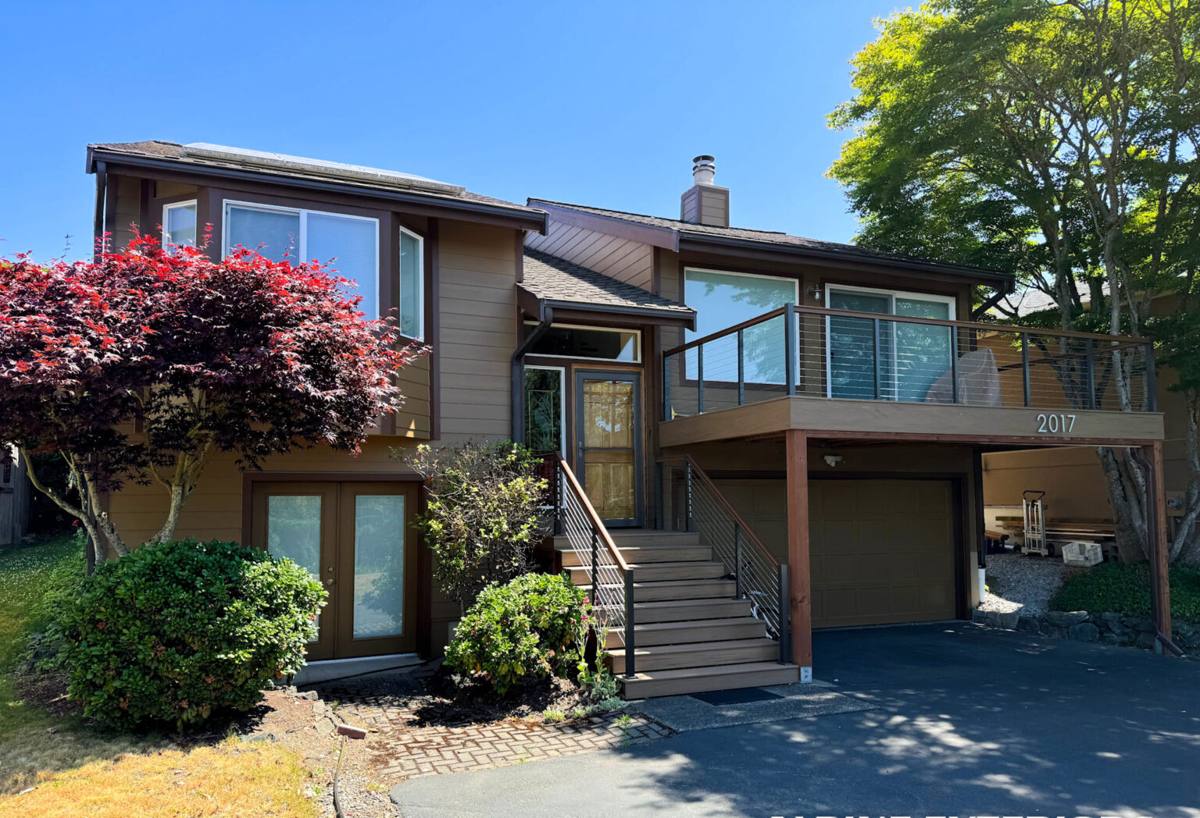
Cherry Point sits along the water in Whatcom County, just south of Blaine and the Canadian border, and homes out here deal with a climate that's different from what you'd find even a few miles inland. The air comes off the water carrying salt, the wind has nothing to slow it down before it reaches a house, and the rain that follows a Pacific storm system doesn't fall straight down — it drives sideways into whatever gap or weak point it can find. None of that is dramatic on its own, but over years it adds up, and windows are one of the first places it shows.
This isn't a climate that tests a window with hard freezes the way you'd see east of the Cascades. It's a climate that tests a window with constant low-grade exposure — damp air for months at a stretch, wind that pushes rain into seals, and salt that works on metal and finishes year-round. A window that's rated fine on a catalog spec sheet can still underperform here if it wasn't built, or installed, with that exposure in mind. That's the gap we're trying to close on this page: not a generic pitch for new windows, but a straight explanation of what this specific stretch of Whatcom County coastline does to a window and what actually holds up against it.
What Salt Air, Driving Rain, and a Long Moss Season Actually Do to a Window
Salt Air and Hardware Corrosion
Salt in the air settles on everything, including window hardware — hinges, locks, balances, and screen frames. Cheaper or poorly finished hardware corrodes faster near the water than it would inland, and once a lock or balance starts to seize, the window becomes harder to operate and the seal around it starts to compress unevenly. This is one of the more overlooked reasons a window fails early in a place like Cherry Point — it's rarely the glass that goes first, it's the hardware holding the sash tight against the frame.
Wind-Driven Rain and Weak Seals
Straight-down rain is easy on a building. Wind-driven rain off open water is not — it gets pushed up and under trim, into nail fins, and behind flashing that wasn't lapped correctly in the first place. Most window leaks aren't actually a failure of the glass unit; they're a failure of the flashing and sealant detail around the frame. In a wind-exposed spot like Cherry Point, that detail has to be right the first time, because the wind will find any shortcut in it eventually.
A Long Moss Season Means Prolonged Moisture Exposure
Whatcom County's moss season is long, and it's a symptom of the same thing that affects windows: months where surfaces stay damp instead of drying out between rain events. Wood sills and jambs that don't get a chance to dry are the ones that eventually soften and rot. Older single-pane and early dual-pane windows are especially vulnerable, since interior condensation forms on the glass and drips onto the sill, adding interior moisture to the exterior moisture already working on the frame from outside.
What "Energy-Efficient" Actually Means for a Window
"Energy-efficient" gets used loosely, but for a window it comes down to a handful of measurable things working together: the glass, the gas fill between the panes, the coating on the glass, the spacer separating the panes, and the frame material itself. Any one of those done well while the others are done poorly still leaves you with a mediocre window. Here's what each piece is actually doing:
| Component | What It Does | Why It Matters Here |
|---|---|---|
| Low-E coating | A microscopically thin coating that reflects heat back into the room in winter and blocks solar heat in summer | Keeps heat inside during the region's long cool, damp stretch without needing dark tinted glass |
| Argon or krypton gas fill | Fills the space between panes in place of ordinary air, which conducts heat more slowly | Reduces heat transfer through the glass unit, especially on wind-exposed walls |
| Warm-edge spacer | The material separating the two panes at the edge of the glass | A poor spacer creates a cold edge where condensation and eventual seal failure start first |
| Frame material | Vinyl, fiberglass, wood, or composite | Determines how the frame insulates and how it holds up to sustained moisture and salt exposure |
| U-factor | Measures how well the whole window resists heat flow — lower is better | The single best number for comparing real-world efficiency between two window products |
U-factor is worth paying more attention to than most of the marketing language on a spec sheet. It accounts for the frame, the glass, and the spacer together, not just the glass in isolation, which is what actually determines how a window performs on your specific house.
Signs Your Current Windows Are Losing the Battle
Most homeowners don't replace windows because a number on a spec sheet convinced them — they replace them because the windows are visibly failing. In a climate like this, the signs tend to show up in a fairly predictable order:
- Fogging or a permanent haze between the panes — the seal has failed and the gas fill is gone
- Visible corrosion, stiffness, or pitting on hinges, locks, or cranks
- Sashes that stick, drag, or won't stay open on their own
- Cold air noticeably moving near the frame on a windy day
- Soft or discolored wood at the sill or lower corners
- Moss or algae staining building up on the sill or exterior trim
- Condensation on the inside of the glass most mornings
- A heating bill that's climbed without any real change in usage
Any one of these on its own isn't necessarily urgent. Several of them together, especially on the walls that face the water and take the worst of the wind, usually means the windows are costing more in comfort and heating than a replacement would cost over time.
Choosing a Frame Material for a Cherry Point Home
Frame material is where a lot of the long-term performance and maintenance burden actually lives. We install different materials depending on the home and the budget, but we're upfront about the trade-offs of each rather than steering every homeowner toward whatever's easiest to sell.
| Frame Material | Moisture & Salt Resistance | Maintenance | Trade-offs |
|---|---|---|---|
| Vinyl | Very good — won't rot or corrode | Low; occasional cleaning | Fixed color and can't be repainted; quality varies a lot between manufacturers |
| Fiberglass | Excellent — dimensionally stable, resists moisture and salt well | Low | Higher upfront cost than vinyl |
| Aluminum-clad wood | Good on the exterior face, but any breach in the cladding exposes the wood underneath | Moderate to high | Attractive interior wood look, but a compromised seal near salt air and rain can lead to hidden rot before it's visible |
| All-wood | Poor to moderate without diligent upkeep | High; needs regular refinishing | We're honest that all-wood frames need more attention in this climate than most owners realistically want to keep up with |
We don't push every product on the market, and that's on purpose. If a frame material needs a level of upkeep that doesn't hold up well to sustained salt air and driving rain, we'll say so before you buy it rather than after it starts failing.
A Note on Warranty Coverage
In this climate, what a warranty actually covers matters more than the number of years printed on it. Seal failure, hardware corrosion, and glass fogging are the failures we see most often near the water, so it's worth asking specifically whether those are covered, for how long, and whether coverage transfers if you sell the house. A long warranty that excludes the exact failures a coastal home is most likely to see isn't worth much in practice.
Why Installation Quality Matters More Than the Window Itself
We've touched on this a couple of times already because it's the most important point on this page: in a wind-exposed, rain-driven spot like Cherry Point, how a window is installed determines its lifespan more than which brand is on the label. A great window installed with a shortcut flashing detail will leak. A modest window installed correctly — with proper flashing, a sill pan, and the right sealant — will outperform it for years.
What a Correct Installation Actually Involves
- Inspecting the rough opening for existing rot or moisture damage before anything goes back in
- Installing a sloped sill pan so any water that gets past the outer seal drains back out instead of sitting on the sill
- Lapping flashing correctly — each layer over the one below it — so water sheds downward and outward, not into the wall
- Shimming the window level and square so it operates correctly and seals evenly for its whole life, not just on install day
- Insulating the gap between the window and framing without overpacking it, which can bow the frame
- Sealing the interior and exterior with a sealant suited to the material and exposure, not just whatever's on hand
- Integrating the new flashing with the existing weather barrier and siding so water is directed out, not trapped behind the wall
Skipping or rushing any one of these is how a window that looks fine on install day ends up with hidden rot behind the trim two or three winters later. Because we work on siding and the exterior envelope as a whole, we treat window flashing as part of the same water-management system as the siding around it, not as an isolated component — a leak at a window rarely stays a window problem for long.
Our Process for a Cherry Point Window Project
- A walkthrough of the home to look at existing windows, framing condition, and exposure on each wall
- Straightforward guidance on frame material and glass package based on your home and budget, not a pitch for the most expensive option on the shelf
- Accurate measurements and ordering, with realistic lead-time expectations
- Old window removal and an inspection of the opening before the new unit goes in, so any hidden moisture damage is caught and addressed rather than covered up
- Installation with proper flashing, sill pan, insulation, and sealant suited to this climate
- Interior and exterior trim work to match the rest of the house
- A final walkthrough where every window is opened, closed, and checked before we consider the job done
Why It's Worth Hiring a Crew That Already Works in Cherry Point
A contractor who mostly works drier, inland jobs can still do a technically correct installation on paper and still miss something specific to a wind-exposed, salt-air site — the direction the prevailing wind and rain actually come from on a given wall, how much salt exposure a certain hardware finish can realistically take, or how long a wood-frame gap can sit open before dampness becomes a problem. A crew that regularly works Blaine and the surrounding Whatcom County coastline has already made those calls on other homes nearby and has a feel for what actually holds up out here, versus what just looks good in a showroom.
There's a practical side to it too. If a question comes up after the install — a seal that needs a second look, a question about what's covered under warranty — you're dealing with a crew that's a short drive away and plans to keep working in this area, not a company that did one job in the neighborhood and moved on.
If your windows are original to the house, showing condensation, corrosion, or drafts, or you're simply planning ahead before the next wet season sets in, we're glad to take a look and give you a straight answer either way. Fill out the form below for a free, no-pressure estimate on energy-efficient window replacement for your Cherry Point home.