 Blaine
 Decks on Cherry Point Take a Different Kind of Beating
Cherry Point sits right on the water, exposed to wind off the Strait and the kind of driving rain that Whatcom County's shoulder seasons are known for. That combination does specific things to a deck that a homeowner further inland doesn't have to think about as much. Salt-laden air accelerates corrosion in metal fasteners and connectors. Wind-driven rain gets pushed sideways into joints and end grain that would normally stay dry. And the long, damp moss season — often stretching from fall through spring here — keeps deck surfaces wet for weeks at a time, which is exactly the condition wood rot and slick, degraded coatings need to take hold.
None of this means a deck in Cherry Point is doomed. It means the repair has to account for how the structure actually fails out here, not how a generic repair guide assumes it fails. That's the difference between a patch that lasts a season and a repair that holds for years.
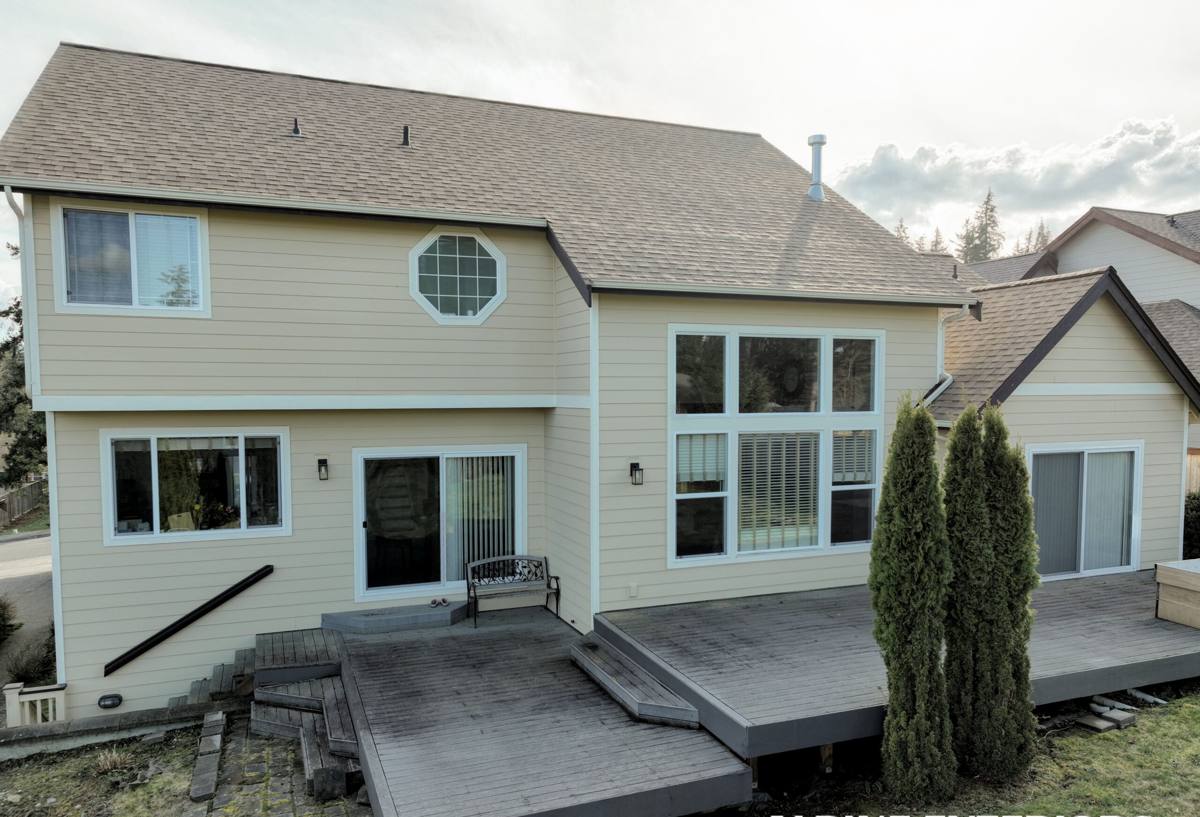
Signs a Deck Needs Repair — Not a Full Rebuild
Most decks don't fail all at once. They show warning signs first, and catching them early is usually what keeps a repair a repair instead of a replacement.
- Soft or spongy spots when you walk across the decking, especially near the house or in shaded corners
- Visible gaps opening up between boards, or boards that have cupped or crowned
- Rust streaks bleeding out from screws, bolts, or joist hangers
- A ledger board (where the deck attaches to the house) that looks separated, discolored, or has water staining on the siding above it
- Railings or posts that wiggle more than they used to
- Persistent moss or algae film that comes back within days of cleaning
- Stairs that feel less solid underfoot than the rest of the deck
Any one of these on its own might be minor. Several together, especially combined with visible moisture, usually means the framing underneath is asking for attention before the surface problem gets worse.
What an Honest Deck Repair Actually Involves
Start Underneath, Not on Top
A repair that only replaces the boards you can see is treating the symptom. The framing — joists, beams, posts, and especially the ledger board connection to the house — is what actually holds the deck up, and it's also the part most likely to be quietly rotting while the surface still looks fine. A correct repair starts by pulling decking where there's any doubt and checking the structure underneath before deciding what needs to be replaced versus what's still sound.
Fasteners Matter More Here Than Most Places
In a salt-air environment, the fastener is often the first thing to fail — not the wood. Standard galvanized screws and nails can corrode from the inside out within a few years this close to the water, leaving decking that looks attached but isn't holding the way it should. Correct repair work means matching fastener and hardware type to the exposure, not just to what's cheapest at the yard.
Flashing and Water Management
Most deck rot doesn't come from rain falling on top of the deck — it comes from water that gets trapped where it can't dry out: behind ledger boards, under post bases, in end-grain cuts that were never sealed. A repair that doesn't address flashing and drainage at these points is a repair that will need to be redone.
Where We Find the Damage on Cherry Point Decks
Every deck is different, but a few problem areas show up repeatedly on decks in this part of Whatcom County:
- Ledger board connections — the joint where the deck meets the house takes the brunt of wind-driven rain and is often under-flashed on older builds
- North- and shade-facing sections — anywhere the sun doesn't reach for long stretches during moss season stays damp longest and grows moss or algae fastest
- Post bases and footings — posts set in or near grade without a proper standoff can wick moisture up from wet ground for months at a stretch
- Fastener heads and hardware — hangers, hurricane ties, and screws exposed directly to salt-carrying wind corrode faster than the same hardware would a few miles inland
- Stair stringers — often overlooked, but they see the same moisture exposure as the deck frame and carry real structural load
Repair vs. Replace: How We Help You Decide
Not every deck problem calls for a full tear-off, but not every problem should be patched either. Here's generally how the decision breaks down:
| Condition Found | Typical Approach | Why |
|---|---|---|
| Isolated board rot, sound framing underneath | Board replacement, fastener upgrade | Structure is fine; surface just needs renewing |
| Ledger board or rim joist rot | Targeted structural repair with proper flashing | Localized but critical — this joint carries real load |
| Widespread joist or beam rot | Partial or full reframe | Patching individual members leaves weak links nearby |
| Failing post bases/footings | Post and footing replacement | Ground contact issues tend to affect multiple posts, not just one |
| Persistent moss with sound structure | Cleaning, drainage correction, surface treatment | Cosmetic and slip-hazard issue, not structural |
| Deck over 20-25 years old with multiple issues | Full replacement often more cost-effective | Piecemeal repairs on old framing rarely outlast a rebuild |
We'll always tell you honestly which category your deck falls into rather than defaulting to the more expensive option.
How Our Repair Process Works
1. Inspection First
We walk the whole deck, probe suspect boards and framing members, and check the ledger connection and post bases specifically — those are the spots most likely to hide a bigger problem than the surface shows.
2. A Clear, Written Plan
You get a straightforward explanation of what's failing, what's still sound, and what it will take to fix — no upsell to a full rebuild if a targeted repair will genuinely hold.
3. Repair Matched to Exposure
Materials and fasteners are chosen for this specific deck's exposure — a fully shaded, wind-facing deck near the water gets specified differently than one tucked against a sheltered wall.
4. Cleanup and a Straight Answer on What's Next
We leave the site clean and tell you what to watch for going forward, including how long the repair should reasonably last given the site conditions.
Material Choices That Actually Hold Up Out Here
In a salt-air, high-moisture environment, a few material decisions make an outsized difference in how long a repair lasts:
Fasteners and Hardware
Stainless steel or high-grade coated fasteners cost more up front than standard galvanized, but they're the difference between hardware that lasts the life of the repair and hardware that needs replacing again in a few years. We treat this as a baseline standard for repair work this close to the water, not an upsell.
Decking Material
Both quality wood and composite decking can perform well here — each has real trade-offs. Wood needs more regular sealing and cleaning to keep moss and moisture at bay, but it's straightforward to spot-repair board by board. Composite resists moisture and moss better but is less forgiving if the substructure underneath isn't properly ventilated and dry. We'll walk you through which fits your deck, your maintenance appetite, and your budget honestly rather than pushing one product line.
Flashing and Sealants
Proper self-adhered flashing tape at the ledger board and post bases, paired with quality end-grain sealant on cut lumber, does more to prevent repeat rot than almost any other single repair detail — and it's often skipped in lower-cost repairs because it doesn't show.
Maintenance That Extends a Repair's Life
A good repair still needs some upkeep, especially given how long moss season runs here. This is what actually makes a difference:
- Sweep debris and standing leaves off the deck regularly through fall and winter — trapped organic matter holds moisture against the boards
- Clean moss and algae off the surface before it builds up a thick mat, using a method appropriate to your decking material
- Check and re-seal end grain and any exposed cut edges every year or two
- Look at fastener heads periodically for early rust streaking
- Keep gutters and downspouts near the deck clear so runoff isn't dumping extra water onto or under it
- Confirm nothing (planters, stored items, debris) is sitting directly against the ledger board or trapping moisture at post bases
Why It Matters That We Already Work in Cherry Point
A crew that repairs decks across a wide territory can still do fine work, but a crew that repairs decks specifically in and around Cherry Point already knows how this stretch of coastline behaves — which sides of a deck stay wet longest through moss season, how much extra corrosion protection the salt air actually calls for, and what kind of ledger and flashing details hold up against the wind-driven rain this area gets. That local pattern recognition means fewer surprises once we open things up, and a repair plan that's built for how your deck will actually age here, not a generic assumption.
Whatcom County's building requirements also come into play for anything touching structural framing, and knowing that process locally keeps a repair from stalling out on paperwork.
Get a Straight Answer About Your Deck
If your deck is showing soft spots, rust streaks, gaps, or moss that won't quit, it's worth getting an honest look before the problem grows underneath the surface. We offer free, no-pressure estimates for deck repair in Cherry Point and the surrounding Blaine area — use the form below and we'll take a look and tell you straight what it needs.