 Blaine
 Cherry Point Decks Live in a Tougher Climate Than Most
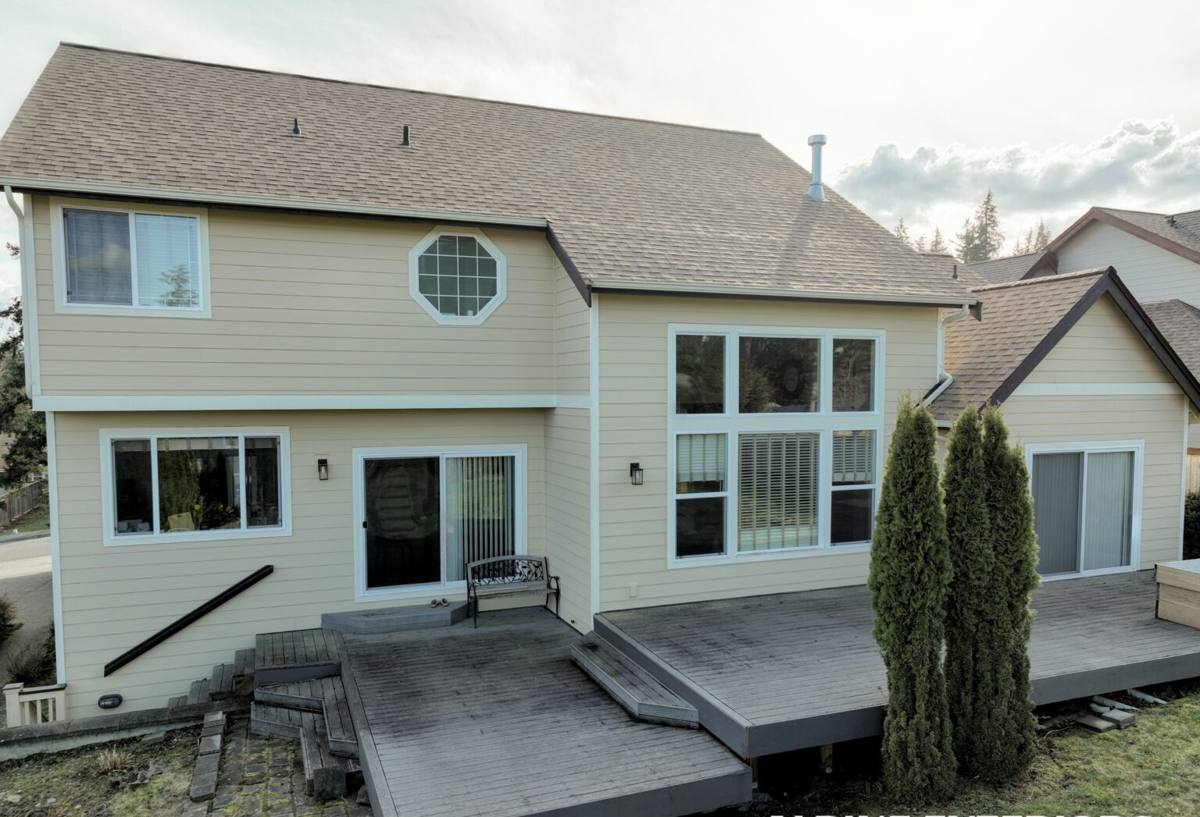
A deck built for a sheltered inland yard and a deck built for Cherry Point are not the same project, even if they look identical on paper. Cherry Point's location on the Whatcom County shoreline near Blaine means homes here deal with salt-laden air, wind-driven rain that comes in sideways off the water, and a moss season that can stretch from fall through spring. Wood, metal, and even some composite products age differently out here than they do a few miles inland.
None of that means a deck can't last for decades in this location. It means the material choices, fastener selection, and drainage details have to be picked for this specific environment rather than pulled from a generic spec sheet. That's the difference between a deck that needs major repair in eight years and one that's still solid in twenty-five.
What Salt Air and Driving Rain Actually Do to a Deck
Salt air is corrosive to unprotected or poorly coated metal. Over time it attacks screw heads, joist hangers, and structural fasteners, especially where a coating has been nicked during installation or where two dissimilar metals touch. Once corrosion starts at a fastener, it's often hidden under the decking board — you don't see the problem until a board feels spongy or a railing post has developed play.
Wind-driven rain is a different kind of problem. On a still day, rain falls straight down and mostly sheds off a deck surface. Near the water, rain regularly comes in at an angle, which means it gets driven under railings, into end-grain cuts, behind ledger boards, and into any gap that a calmer climate could get away with ignoring. Any point where water can collect and sit — rather than drain and dry — becomes the spot where rot or corrosion starts first.
Then there's moss. Constant moisture plus shade from trees or the house itself gives moss and algae a long season to establish on decking, stair treads, and railings. Beyond looking unkempt, moss holds moisture against the surface and makes stairs and walking surfaces slick, which is a real safety issue on a rainy Whatcom County morning.
Why This Matters More at Cherry Point Specifically
Homes set closer to the water or more exposed to prevailing wind take a heavier version of all three of these effects than a deck tucked into a more sheltered part of Blaine. That doesn't call for a different design approach so much as a stricter one — tighter attention to flashing, fastener grade, and drainage detailing on every project we build in this area.
Decking Material Options for a Cherry Point Home
There's no single "correct" decking material for every home — it depends on budget, maintenance appetite, and how exposed the deck is to sun, wind, and salt spray. Here's how the common options actually compare in this climate, not in a showroom.
| Material | How It Handles This Climate | Maintenance | Typical Lifespan Here |
|---|---|---|---|
| Pressure-treated wood | Handles moisture well when properly sealed; can cup or check if coating is neglected | Needs re-staining or sealing every 2-3 years | 15-20 years with upkeep |
| Cedar | Naturally moisture and rot resistant; softer surface, ages to gray without finish | Regular oiling or staining to keep color and protect against moss | 15-20 years with upkeep |
| Capped composite | Excellent moisture resistance; capped shell resists moss staining and doesn't absorb salt spray | Occasional washing; no staining or sealing | 25-30+ years |
| Uncapped composite (older style) | More prone to moisture absorption and moss/mold growth at the surface over time | Periodic cleaning; watch for surface wear near grade | 15-25 years |
| PVC decking | Fully resists moisture absorption and salt exposure; performs consistently in wet climates | Occasional washing | 30+ years |
We don't push one product on every homeowner. A well-built cedar or pressure-treated deck that gets a little routine care will serve a Cherry Point home just fine, and plenty of owners like the look and feel of real wood enough to accept the maintenance. Capped composite and PVC cost more up front but trade ongoing maintenance for consistent performance against moisture and moss — a fair trade for owners who want to spend their weekends doing something other than re-staining a deck.
What's Underneath Matters More Than What's On Top
The decking boards are the part everyone sees, but the framing, fasteners, and flashing underneath are what actually determine how long the structure lasts. This is where a lot of corner-cutting happens on lower-bid jobs, because it's invisible once the boards go down.
Framing and Fasteners
- Structural fasteners and joist hangers rated for exterior, coastal, or ACQ-treated lumber use — not general-purpose interior-grade hardware
- Stainless steel or heavy hot-dip galvanized hardware in areas with the most direct salt exposure, since standard coatings wear through faster here
- Proper ledger flashing where the deck attaches to the house, so wind-driven rain can't work its way behind the band board
- Joist tape or a moisture barrier on top of framing members to keep water from sitting directly on cut lumber
- Consistent, code-correct spacing and blocking so the structure doesn't rely on the decking surface for rigidity
Drainage and Grading
Whatcom County gets sustained periods of rain, not just occasional downpours, so a deck's ability to shed water — both across its surface and away from the house foundation — matters as much as the materials themselves. Proper gapping between boards, correctly sloped ledger connections, and grading that carries water away from footings all reduce the standing moisture that feeds rot and moss growth.
Footings Built for This Ground and This Weather
Footing depth and design need to account for local frost depth requirements and soil conditions, and on sites with any slope or drainage challenge — common on properties near the shoreline — footings need to be sized and placed so they aren't undermined by water movement over time. This is a structural decision, not a cosmetic one, and it's not something to guess at from a generic online span chart.
Our Process for a Cherry Point Deck Project
- On-site assessment. We look at sun and wind exposure, existing drainage patterns, soil conditions, and how the deck will tie into the house before recommending anything.
- Material and layout discussion. We walk through the honest trade-offs between wood and composite options for your budget, maintenance preference, and how exposed the site is.
- Permitting. We handle the permit application and inspections required for the project so you're not left tracking down paperwork.
- Framing and structural work. Footings, posts, beams, and joists go in with fasteners and flashing selected for this climate, not a generic spec.
- Decking, railings, and stairs. Surface material goes down with proper board spacing and edge treatment to manage water and reduce moss buildup.
- Final walkthrough. We go over the finished deck with you, including what maintenance (if any) the material you chose will need going forward.
Permits and Local Requirements
New decks and significant deck replacements in Blaine and unincorporated Whatcom County typically require a building permit, and projects near the shoreline can also involve additional review depending on setback and critical area regulations. Requirements vary by exact location, lot, and scope of work, so we handle the permit process as part of the job rather than leaving it for the homeowner to sort out with the county.
A Realistic Look at Cost Factors
Every deck project is priced around its own size, framing complexity, material choice, and site conditions, so we won't quote a number without seeing the property. As a general sense of range, many deck projects in this area land somewhere between $30 and $70 or more per square foot installed, with the low end typically pressure-treated wood on straightforward framing and the high end reflecting composite or PVC decking, elevated framing, or more complex stair and railing work. Site access, existing drainage problems, and the condition of anything being replaced can all shift that range in either direction.
Keeping a Cherry Point Deck in Good Shape Through Moss Season
Even a well-built deck benefits from a little seasonal attention in a climate like this one. A short annual routine goes a long way toward preventing the small problems that turn into expensive ones.
- Sweep debris and standing leaves off the deck surface regularly, especially heading into fall
- Wash off moss and algae buildup before it stains the surface or makes stairs slippery
- Check that gaps between boards are still clear so water can drain rather than pool
- Inspect railings and stair connections for any looseness, which can signal fastener corrosion underneath
- Re-seal or re-stain wood decking on the schedule appropriate to that product rather than waiting until it visibly fades
- Confirm gutters and downspouts near the deck are directing water away rather than onto the deck or its footings
Signs It's Time to Call a Contractor Instead of Doing It Yourself
Soft or spongy boards, visible rust bleeding from fastener locations, railings with noticeable movement, or a ledger board area that stays damp long after rain has stopped are all signs the issue has moved past routine cleaning and into structural territory. Catching these early is almost always cheaper than waiting.
Why Local Experience in This Area Actually Matters
A contractor who mainly builds decks in drier, more sheltered parts of the region can still build a structurally sound deck — but they may not default to the fastener grade, flashing detail, or drainage planning that this specific stretch of Whatcom County coastline demands. Working regularly on homes exposed to Cherry Point's salt air and weather patterns means we're not guessing at what holds up here; we're applying what we've already seen work and not work on similar properties nearby.
If you're planning a new deck or replacing one that's showing its age, we're happy to take a look and talk through honest options for your property. Reach out for a free, no-pressure estimate using the form below.