 Blaine
 Window Installation in California Creek: Building for the Water's Edge
California Creek sits on the edge of Blaine, close enough to the water that the neighborhood shares in the same demanding weather that shapes exterior work across this whole stretch of Whatcom County — salt air, wind-driven rain, and a moss season that runs long even by regional standards. Homes here don't get a break from any of it just because they're set back from the open water a little; the same marine air and driving storms move through, and low-lying, creek-adjacent lots often hold moisture a little longer than a more open, well-drained site would. Windows sit right at the seam between the inside of a house and all of that weather, which is exactly why so many exterior moisture problems in this area trace back to a window that wasn't installed or flashed correctly the first time.
We install, replace, and repair windows throughout Blaine and the surrounding Whatcom County waterfront, and California Creek is territory we already know. We also handle siding, roofing, and decks, because a window is never really an isolated product — it's one component of a wall assembly that has to work with the siding, flashing, and framing around it, or it becomes the weak point in an otherwise solid house.
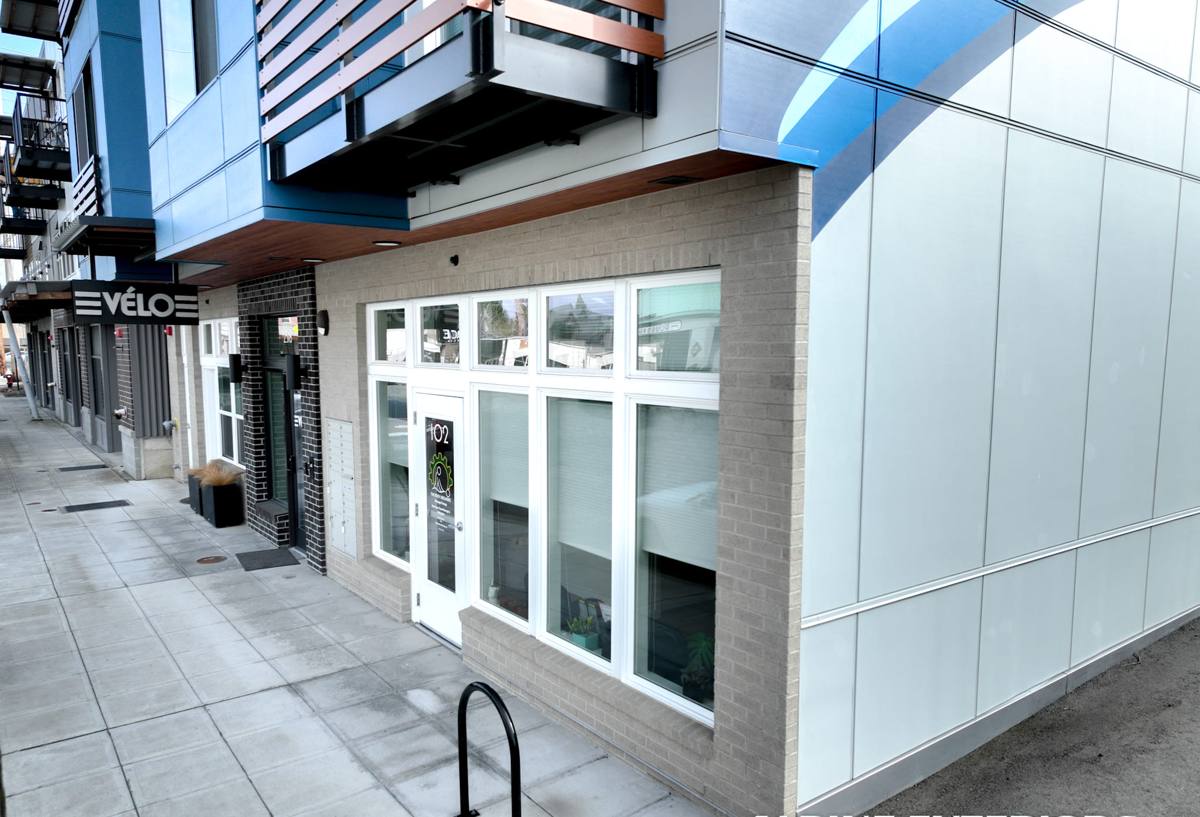
What This Climate Does to California Creek Windows
Salt Air and Corroding Hardware
Proximity to the water means a steadier dose of salt-laden air moving across the neighborhood than inland parts of the county see. Over time that accelerates corrosion on window hardware, screen frames, and lower-grade fasteners, especially on elevations that face prevailing weather. Cheaper hardware finishes tend to show pitting or stiffness first, and it's often the earliest visible sign that a window's finish wasn't built for the corrosion load this location actually delivers.
Driving Rain and Wind Off the Water
Storms coming ashore near Blaine rarely drop rain straight down. Wind pushes it sideways into window flashing, head trim, and the sill pan beneath the frame, and that sideways load is a much bigger test of installation quality than of the window product itself. A well-made window with sloppy flashing will leak; a modest window installed with correct flashing and a properly pitched sill pan usually won't. Most of the water damage we find around windows traces back to the installation detail, not the window.
A Long Moss and Mildew Season
Mild temperatures and near-constant moisture add up to a moss and mildew season that can run most of the year on shaded or north-facing surfaces, and creek-side lots with more tree cover tend to hold that dampness even longer. Window sills and lower corners that don't drain well are some of the first places it shows up, usually as slow paint failure or, on wood-framed windows, softening at the sill long before it's obvious from the outside.
Window Materials: What Actually Holds Up Here
There's no single right answer for every home — budget, sun exposure, and how long you plan to stay in the house all factor in. What matters is understanding the real trade-offs for a climate with this much sustained moisture before you decide.
| Frame Material | Moisture & Corrosion Behavior | Typical Maintenance | Realistic Lifespan Here |
|---|---|---|---|
| Vinyl | Won't rot; seams and welds can degrade if installation quality is poor | Low; occasional track and weep-hole cleaning | 20-30 years |
| Fiberglass | Dimensionally stable, resists moisture and corrosion well | Low | 30-40+ years |
| Wood, painted or clad | Attractive but vulnerable to moisture at joints and sills without diligent upkeep | Higher; regular paint or finish maintenance | 15-30 years depending on upkeep |
| Aluminum | Conducts cold and can corrode over time in salt-influenced air unless well-finished | Moderate | 20-30 years |
We'll walk you through which frame material fits your home's exposure, budget, and the look you want, rather than defaulting to whichever product is easiest to sell. A shaded, creek-facing wall and a sun-exposed street-facing wall on the same house don't always call for the same answer.
Full-Frame Replacement vs. Insert Replacement
One of the first decisions on any window project is whether to do a full-frame replacement, which removes the old window down to the rough opening and rebuilds the flashing from scratch, or an insert replacement, which fits a new window into the existing frame. Insert replacement is faster and less invasive to the surrounding siding and trim, and it works well when the existing frame is structurally sound and properly flashed. Full-frame replacement costs more and takes longer, but it's the honest answer when there's already moisture damage at the sill or jambs, or when the flashing behind the old window was never done correctly in the first place. We'll tell you which situation you're actually in rather than defaulting to the cheaper option and leaving a moisture problem sealed up behind a new window.
Installation Details We Won't Skip
Most window failures in a climate like this aren't failures of the window itself — they're shortcuts in the flashing and sealing details that don't show up until a wet season or two later. On every California Creek job, that means:
- A properly pitched sill pan that sheds water outward instead of letting it pool under the frame
- Head flashing integrated with the housewrap or building paper above the window, lapped correctly for water to shed downward and outward
- Jamb flashing tied into the surrounding wall assembly rather than relying on caulk alone
- Weep holes and drainage paths left clear and functional, not sealed shut during installation
- Corrosion-resistant fasteners and hardware suited to a consistently damp, salt-influenced climate
- Insulation and air sealing around the frame that doesn't trap moisture against the framing
None of these add meaningfully to the cost of a job relative to the window itself, but skipping them is exactly what turns a window that should last decades into one that's leaking behind the wall within a few years.
Signs a California Creek Home Needs Window Attention
- Visible fogging or condensation between panes, which usually means a failed seal on a double- or triple-pane unit
- Drafts or a noticeable temperature difference near a closed window
- Soft, discolored, or spongy trim and sill material, especially on shaded or weather-facing walls
- Difficulty opening, closing, or latching a window that used to operate smoothly
- Peeling paint or bubbling finish on wood-framed windows
- Visible gaps, cracked caulk, or daylight around the frame from inside
- Water staining on interior wall or ceiling surfaces near a window
Any one of these is worth a professional look. Caught early, most point to a repair or resealing job. Left alone through another wet season, several of them point to water damage already working its way into the surrounding wall framing.
Repair, Reseal, or Replace: How We Decide
Not every window problem calls for full replacement, and we don't default to recommending one. We look at the age and condition of the existing window, whether the seal failure or draft is isolated or widespread across the house, and whether there's already moisture damage in the surrounding frame or wall. A single window with a failed seal on an otherwise sound, well-flashed house is often a straightforward repair or reseal. A house with multiple aging windows, visible sill rot, or a history of past leaks is usually more honestly addressed with a broader replacement plan, done in phases if budget requires it, rather than patching individual units one at a time. We'll explain what we find and why, and give you the real trade-offs instead of steering you toward whichever option happens to be more profitable for us.
Why a Crew That Already Works California Creek Matters
A crew that installs and repairs windows in this specific pocket of Blaine through every season sees how salt air, wind-driven rain, and moss actually behave on real houses here over years, not just how a product performs on a spec sheet. That shows up in practical decisions: how much attention a creek-facing wall needs because of tree shade or standing dampness, how a sill pan should be pitched for the amount of water a given elevation actually sees this close to the water, and which flashing details are worth the extra time on install day so you're not dealing with a leak two winters later. It also means showing up already understanding the difference between a low-lying, creek-adjacent lot and a more open, well-drained one nearby, instead of treating every house in Blaine the same way.
Beyond Windows: The Rest of the Exterior
Windows are our focus for this page, but the same climate that wears on a window wears on the rest of the exterior too. We also handle siding, roofing, and deck construction, and on siding specifically we install James Hardie fiber cement as our standard, chosen for how it holds up against sustained moisture and moss compared to lower-cost alternatives. If a window project turns up moisture damage in the surrounding siding or trim, or a roof-to-wall transition that's letting water in above a window, we can address it as part of the same conversation instead of sending you to find a second contractor.
If your California Creek home has windows that are fogging, drafty, hard to operate, or just past their useful life, we're glad to take a look and give you a straightforward, honest read on what it actually needs. Reach out using the form below to schedule a free, no-pressure estimate.