 Blaine
 Why Roofs Near Blaine Harbor Wear Differently
A roof over a home near Blaine Harbor doesn't age the same way a roof does twenty miles inland. Three things stack up on top of each other here: salt-laden air off the water, driving rain that comes in sideways during winter storms, and a moss season that can run eight or nine months out of the year in Whatcom County's mild, wet climate. None of these alone is unusual for Western Washington. Together, on a property close to the water, they shorten the life of flashing, fasteners, and shingle edges faster than most homeowners expect.
Salt air is corrosive to exposed metal — nail heads, flashing seams, vent caps, gutter hardware. Once that metal starts to pit or rust, water finds a way through even a roof that still looks fine from the ground. Add wind-driven rain that gets pushed up and under shingle tabs instead of running straight down, and you get leaks that don't show up where the water actually enters. That mismatch between symptom and source is the single biggest reason DIY patches and quick handyman fixes fail on homes in this area.
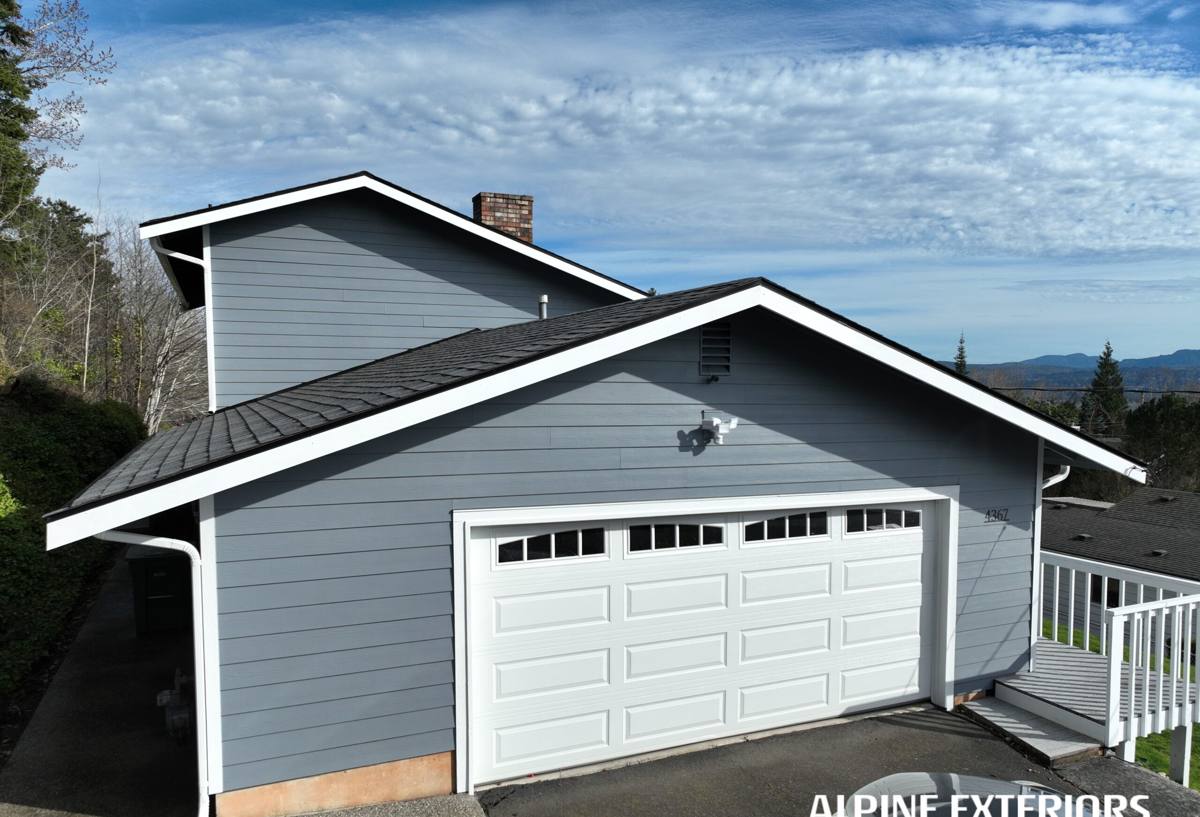
Signs a Blaine Harbor Roof Needs Repair
Most roof repairs get caught early if someone knows what to look for. A few of these you can spot from the ground or the attic; others take a closer inspection.
- Dark streaking or a spongy, green-black buildup on north-facing slopes — early moss and algae growth
- Granules collecting in gutters or at downspout outlets, a sign shingles are losing their protective surface
- Curling, cupping, or lifted shingle edges, especially on roof faces exposed to prevailing wind
- Rust streaks below metal flashing, vent boots, or exposed fasteners
- Water stains on interior ceilings that appear only during or after a windy rainstorm, not a calm one
- Soft or discolored decking visible from the attic near chimneys, skylights, or valleys
- Gutters or downspouts pulling away from the fascia, which lets water run behind the drip edge
Common Trouble Spots
On the homes we've worked on in this part of Whatcom County, the same handful of areas cause most callbacks: valleys where two roof planes meet and funnel a lot of water fast, flashing around chimneys and skylights, and any transition where the roof meets a wall or a lower roofline. These are the places wind-driven rain and moss growth both concentrate, and they're the first places we check on a repair call — even when the reported leak shows up somewhere else in the house.
What a Correct Roof Repair Actually Involves
A roof repair that holds up here isn't just "find the hole, cover the hole." It's a diagnostic process first, then a fix that matches the original roofing system.
Finding the Real Source
Because wind-driven rain can travel several feet under shingles before it finds a gap in the underlayment, the stain on your ceiling is often not directly below the leak. We trace water paths from the interior out, checking attic framing, insulation, and decking for moisture patterns before we ever step on the roof. Cutting into shingles based on a guess usually means paying for the same leak twice.
Matching Materials, Not Just Colors
A patch that doesn't match the existing shingle's profile, weight, or exposure will telegraph as a visible seam and can behave differently in wind and rain than the surrounding roof. When we can't get an exact match — common on older roofs — we explain the trade-off up front rather than installing something that looks close but performs differently.
Flashing Before Shingles
Most leaks near the coast trace back to flashing, not field shingles. Reusing old, pitted flashing to save a step is one of the most common shortcuts we see from prior repairs, and it's usually why the leak came back. Correct repair means replacing flashing at valleys, chimneys, and wall transitions with new material and proper fastening, not caulking over what's already failing.
Moss, Algae, and the Long Wet Season
Whatcom County's moss season isn't a two-week nuisance — shaded, north-facing, and low-slope roof sections can stay damp for most of the year, which gives moss and algae a long runway to establish. Moss holds moisture directly against the roofing surface, which accelerates granule loss and, on wood or older composition roofs, can work under tabs and lift them. It also adds weight, and in a heavy, saturated mat, that weight can stress fasteners and decking over time.
Repair work in moss-prone areas isn't complete if it only patches the leak and leaves the moss in place. Where moss has caused or contributed to damage, we remove it correctly — brushing rather than aggressive scraping that can strip granules — and address the conditions that let it take hold, such as overhanging branches or a shaded microclimate the roof can't easily shed water from.
Repair or Replacement? How to Tell
Not every problem calls for a full re-roof, and not every leak is fixable with a patch. The honest answer depends on the roof's age, how widespread the damage is, and what's underneath the surface layer.
| Factor | Points Toward Repair | Points Toward Replacement |
|---|---|---|
| Roof age | Under roughly 15 years, or a newer roof with an isolated failure | Near or past the manufacturer's expected service life |
| Extent of damage | Localized to one flashing point, valley, or storm-damaged section | Multiple areas failing independently, or widespread granule loss |
| Decking condition | Solid, dry decking under the damaged area | Soft, delaminated, or water-stained decking in multiple spots |
| Moss/algae history | Recent growth with no structural impact yet | Long-term moss damage that's compromised shingle integrity broadly |
| Material availability | Matching shingles or panels still available | Discontinued product with no reasonable match |
Most of the time this is a straightforward call once we're actually on the roof and in the attic. A single flashing failure on an otherwise sound roof is often a modest repair — commonly a few hundred to a couple thousand dollars depending on scope and access. A roof with damage in several unrelated areas, or decking that's gone soft in more than one place, usually means repair dollars are better put toward a replacement instead of chasing leaks one at a time.
Roofing Materials in a Marine Climate
What a roof is made of affects how well it holds up to salt air and constant moisture, and it affects how a repair should be approached.
| Material | How It Handles This Climate | Repair Considerations |
|---|---|---|
| Asphalt composition shingle | Good performance when properly ventilated; algae-resistant granule options help in shaded, damp areas | Widely available for matching; flashing and fastener corrosion are the usual failure points |
| Standing seam metal | Sheds moss and water well on steeper slopes; long service life if coating is intact | Requires exact seam and fastener matching; coating touch-up matters near salt air |
| Cedar shake | Traditional look but needs consistent airflow underneath to resist moss and rot in a wet climate | Individual shake replacement is labor-intensive; we're upfront that ongoing moss management is part of ownership |
| Low-slope membrane (TPO/EPDM) | Common on additions or porches; seams are the vulnerable point in driving rain | Seam and penetration repair requires membrane-specific technique, not general roofing patches |
We don't push one material as universally "best." Each has a maintenance profile, and our job on a repair is to work within what's already on your roof and give you a straight answer about what that material will ask of you going forward.
Our Roof Repair Process
- Inspection. We look at the roof surface, flashing, attic, and decking — not just the spot you called about.
- Honest assessment. You get a clear explanation of what's failing, why, and whether it's a repair or a signal of bigger issues ahead.
- Written scope. A specific plan for what gets replaced, matched, and re-flashed, so there's no ambiguity about the work.
- Correct repair. Flashing, underlayment, and shingles or panels are replaced to match existing roofing, not patched over.
- Cleanup and check. Debris and old material removed, gutters cleared of anything dislodged during the repair, and the area re-checked before we call it done.
Why a Crew That Knows Blaine Harbor Matters
A roofer who works this stretch of the Whatcom County coast regularly knows which roof orientations take the worst of the wind-driven rain, how fast moss re-establishes on shaded slopes near the water, and which flashing details tend to fail first on homes with this kind of salt-air exposure. That's not something you get from a general repair crew passing through once. It shows up in fewer callbacks, because the fix accounts for conditions specific to this area rather than a generic playbook.
It also matters for timing. Storm damage here tends to cluster around the same weather systems, and a local crew can usually respond faster and prioritize based on what they're already seeing on other roofs nearby.
After the Repair: Keeping It Fixed
A good repair buys you time, but a few habits extend it further in this climate.
- Have gutters cleared at least twice a year — clogged gutters push water back under the roof edge
- Trim back branches that keep a section of roof shaded and slow to dry
- Have moss treated before it establishes a thick mat, not after
- Walk the attic after major windstorms and check for new staining
- Get flashing and fastener condition checked every few years, since that's where salt-air corrosion shows up first
If you're dealing with a leak, storm damage, or just want an honest read on a roof near Blaine Harbor before it becomes a bigger problem, we're happy to take a look. The estimate is free, there's no pressure to sign anything on the spot, and you'll get a straight answer about what the roof actually needs.