 Blaine
 Building Decks for Blaine Harbor's Waterfront Climate
Blaine Harbor sits right where a deck earns its keep. Homes here look out over the water, which is exactly why so many owners want a deck in the first place — and exactly why that deck takes more abuse than one built ten miles inland. Salt-laden air rolls off the water daily, driving rain comes in sideways during winter storms, and the shaded, damp stretches of a lot stay wet long after the sun comes out. A deck built for a dry inland yard in another part of the country will not hold up the same way here, and a deck built without the harbor in mind won't either.
This page is about one service in one part of Blaine: custom deck design and installation for Blaine Harbor properties. It's not a general "we build decks everywhere" pitch. The material choices, fastener specs, and framing details below are specific to what a deck needs to survive this stretch of Whatcom County waterfront.
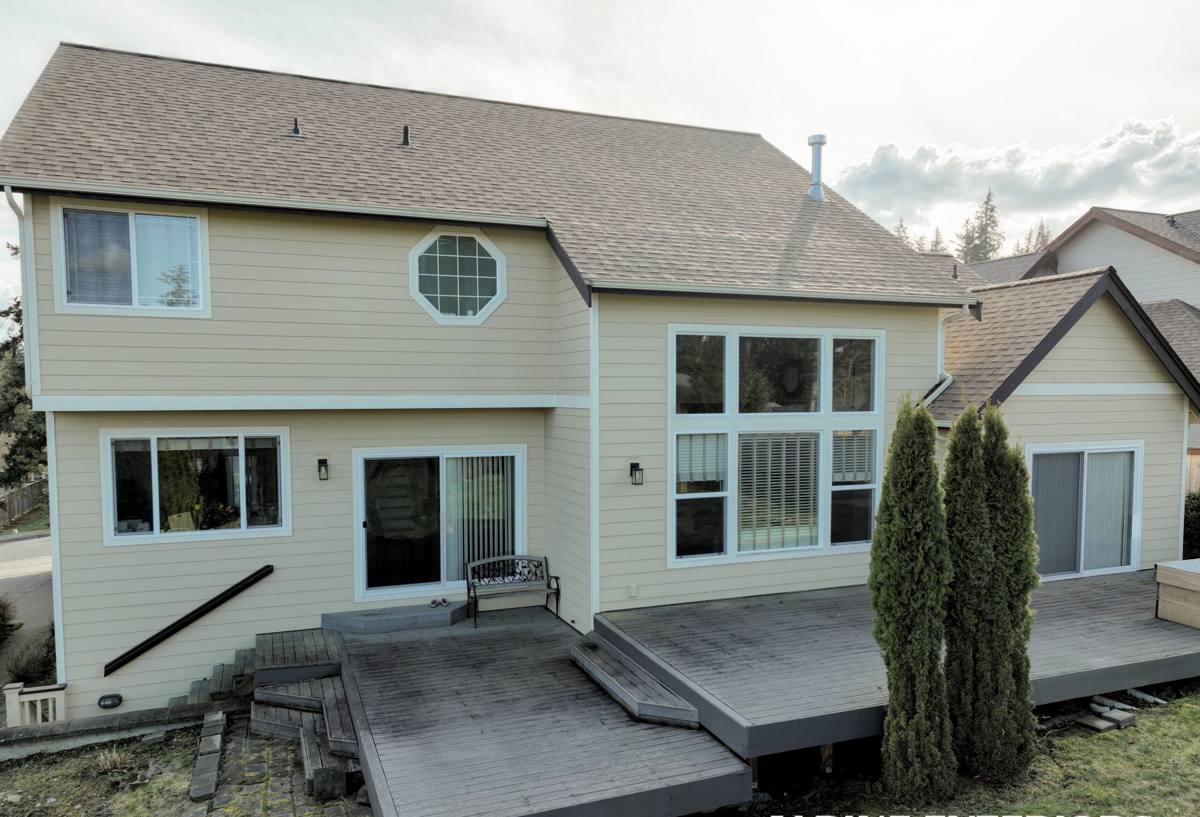
What Salt Air, Rain, and Moss Actually Do to a Deck
Three things wear down a Blaine Harbor deck faster than they wear down a deck built somewhere drier or further from the water:
Salt Air
Airborne salt doesn't need direct ocean spray to do damage — it travels on the wind and settles on every exposed surface, including metal hardware, fasteners, and railing components. Over time it accelerates corrosion on anything that isn't rated for a marine or coastal environment. Standard hot-dip galvanized screws and brackets that work fine inland can start rusting and staining decking within a few seasons this close to the water.
Driving Rain
Winter storms in this part of Washington don't just drop rain straight down — wind pushes it sideways and up under railings, ledger boards, and stair stringers. Any gap, seam, or fastener hole that isn't properly flashed or sealed becomes a path for water to get into wood framing, where it doesn't dry out quickly in our climate.
Moss and Algae
Shaded areas, north-facing decks, and spots that stay damp for days at a time grow moss and algae readily. Beyond looking bad, moss holds moisture against the deck surface and makes boards slick and dangerous underfoot — a real concern on stairs and near doorways.
Decking Materials: What Holds Up in a Harbor Environment
There's no single "best" decking material for every project — it depends on budget, how much upkeep an owner wants to take on, and how exposed the deck is to weather. Here's how the common options actually perform in a salt-air, high-rain setting like Blaine Harbor:
| Material | Moisture & Salt Behavior | Maintenance | Typical Lifespan Here |
|---|---|---|---|
| Pressure-treated wood | Resists rot when sealed regularly; end grain and cut edges are vulnerable if not treated | Needs re-staining or sealing every 1-3 years | 15-20 years with upkeep |
| Cedar | Naturally rot- and insect-resistant, but softer and more prone to weathering gray without maintenance | Regular sealing to hold color and prevent splitting | 15-20 years with upkeep |
| Composite decking | Doesn't absorb water or rot; resists moss growth better than wood but can still get slick when wet | Occasional washing, no staining or sealing | 25-30+ years, manufacturer-warrantied |
| PVC decking | Fully moisture-resistant, does not rot or support mold growth in the board itself | Lowest maintenance of the group | 25-30+ years, manufacturer-warrantied |
For a lot of Blaine Harbor homeowners, composite or PVC decking makes sense specifically because of the maintenance factor — nobody wants to be re-sealing a deck every year in a climate that gives you a short dry-weather window to do it in. That said, wood is still the right call for owners who want that traditional look and are willing to keep up with sealing. We'll walk through the honest trade-offs for your specific deck rather than push one product across the board.
Framing and Fasteners: The Part Nobody Sees But Matters Most
The decking surface is what you notice. The framing underneath is what determines whether the deck is still solid in fifteen years. In a salt-air environment, this is where corners cut on a build show up first — usually as rust streaks, loosening railings, or soft spots around the ledger before the surface boards show any wear at all.
What we hold as standard practice on Blaine Harbor builds:
- Stainless steel or coated fasteners rated for coastal/marine exposure, not standard interior-grade hardware
- Joist tape or a comparable moisture barrier on top of framing members to keep water out of end grain and fastener holes
- Proper flashing at the ledger board where the deck attaches to the house — the single most common source of hidden rot on any deck
- Post bases and structural connectors rated for outdoor, high-moisture use
- Adequate spacing between deck boards for drainage and airflow underneath
None of this is visible once the project is finished, which is exactly why it matters to have it done right the first time. Re-decking a deck with rotten framing underneath means tearing the whole thing apart again.
Railings, Stairs, and Hardware Near Saltwater
Railings take a lot of abuse in a harbor setting — they're handled constantly, they're often the first thing to catch driving rain, and their metal components are the most exposed to salt air of anything on the deck. We spec railing hardware and fasteners the same way we spec the framing: rated for coastal exposure, not general-purpose outdoor use. Aluminum and properly coated steel railing systems tend to hold up well; untreated or lower-grade metal components corrode noticeably faster this close to the water.
Stairs deserve their own attention because they're where moss and slickness actually become a safety issue rather than just a cosmetic one. Board spacing, tread material, and even which side of the house the stairs face all factor into how much moss buildup you'll deal with over a wet Whatcom County winter.
Drainage and Moisture Management
A deck that sheds water well needs far less maintenance and lasts longer, full stop. On Blaine Harbor projects we pay particular attention to:
- Ledger board flashing and the seal where the deck meets the house
- Grading and drainage underneath the deck so water doesn't pool against posts or footings
- Gaps between boards sized correctly for airflow without becoming a hazard
- Keeping structural wood components away from constant standing water or vegetation that traps moisture
These details matter more here than they would somewhere with a longer dry season, because a Blaine Harbor deck simply doesn't get as many chances to fully dry out between rain events for much of the year.
Our Process for a Blaine Harbor Deck Project
Every property is a little different, but the process generally looks like this:
- On-site assessment — we look at sun exposure, wind direction, drainage, and how close the deck will be to salt spray, since these all affect material and hardware recommendations.
- Design and material selection — we walk through decking, railing, and layout options with honest pros and cons for your budget and maintenance preferences.
- Permitting — decks that exceed certain heights or are attached to the structure typically require a permit; we handle that coordination.
- Framing and structural work — built with coastal-rated fasteners, flashing, and moisture barriers from the start.
- Decking, railing, and finishing — installed to manufacturer spec so warranties stay intact.
- Final walkthrough — we go over care and maintenance specific to the materials you chose.
Maintenance Checklist for Blaine Harbor Decks
Whatever material you choose, a little seasonal attention goes a long way in this climate:
- Sweep debris and standing water off the deck surface regularly, especially in shaded areas
- Rinse off salt residue periodically, particularly after storms with strong onshore wind
- Check railing hardware and fasteners annually for early signs of rust or loosening
- Treat moss growth early rather than letting it establish — it's much easier to prevent than remove
- Reseal or re-stain wood decking on schedule rather than waiting until it looks worn
- Keep gutters and downspouts near the deck clear so runoff isn't draining directly onto or under it
Why Local Experience in Blaine Harbor Matters
A crew that mostly builds decks in drier, inland parts of the country isn't necessarily thinking about salt-rated hardware or ledger flashing as a first priority — because where they usually work, it isn't as urgent. Building along the Whatcom County waterfront day in and day out means those decisions are second nature, not an afterthought. That's the difference between a deck that looks good for a season and one that's still solid, and still worth the view it was built for, well into its second decade.
If you're planning a new deck or replacing one that's showing its age, we're happy to take a look and talk through what makes sense for your property. Reach out for a free, no-pressure estimate using the form below.