 Blaine
 Why Birch Point's Exposure Is Tough on Siding
Birch Point sits out on the water on the Whatcom County coastline, just south of the Canadian border and a short drive from downtown Blaine. Homes here take a different kind of beating than houses a few miles inland. Wind comes straight off the water and carries salt spray with it. Rain doesn't just fall here, it gets driven sideways into walls, soffits, and anything with a seam or a gap. And the long, gray, damp stretch of the year that Whatcom County is known for gives moss, algae, and mildew months at a time to take hold on anything that stays wet.
None of that is unusual for the area. What matters is whether the siding on your house was actually installed to handle it. A lot of siding failures we get called out to look at were not caused by a bad product. They were caused by an installation that didn't account for wind-driven rain, salt-air corrosion, or shaded, slow-drying wall sections. On a Birch Point home, those details aren't optional extras. They're the difference between siding that looks good for decades and siding that starts showing problems in five or six years.
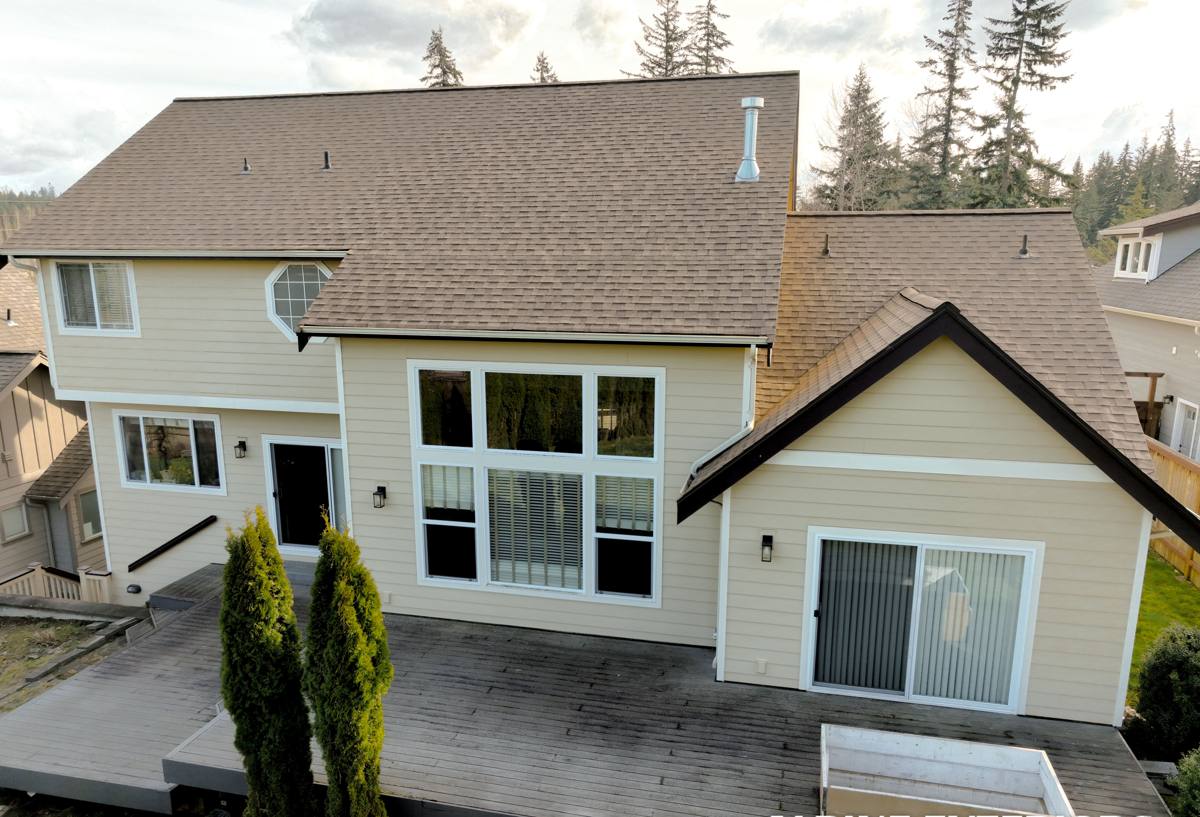
What a Correct Fiber Cement Siding Job Has to Do Here
Fiber cement is a strong material, but it's only as good as the water management and fastening behind it. On a waterfront-exposed property, three things have to be right.
Water Management Comes First
Every wall needs a drainage plane behind the siding so any water that does get past the surface has somewhere to go besides your sheathing. That means a correctly lapped weather-resistive barrier, a rain screen or drainage gap where the wall assembly calls for it, and flashing at every window, door, and penetration that actually sheds water outward instead of behind the cladding. Skip this step and you won't see the consequences until there's rot in the sheathing or framing behind a wall that looked fine from the outside.
Fastening for Coastal Wind Exposure
Standard fasteners corrode faster in salt air. We fasten with corrosion-resistant, hot-dip galvanized or stainless steel fasteners and follow the fastening schedule for the wind exposure the home actually faces, not a generic inland spec. Nail placement, spacing, and embedment all matter more when the wall is regularly hit by wind-driven rain trying to work its way behind a lap.
Details That Prevent Moss and Staining
Moss and algae need moisture and shade to take hold, and Birch Point has plenty of both for a good part of the year. Proper clearance between siding and grade, decking, or roof lines, along with drip edges that actually direct water away from the wall, keep siding drying out between storms instead of staying damp. Shaded, tree-covered elevations need this attention even more than a wall in full sun.
The James Hardie Lines We Use for This Climate
We install James Hardie fiber cement exclusively. We don't install vinyl, LP SmartSide, primed spruce, cedar, or other fiber cement brands, and we're upfront about why: none of them match Hardie's combination of climate-engineered formulation, factory-applied finish, and non-combustible material in a coastal setting like this one.
Hardie's HZ5 product line is engineered specifically for regions like ours, with freeze-thaw cycling and moisture exposure built into the formulation rather than treated as an afterthought. The ColorPlus factory finish is baked on under controlled conditions and holds up against salt air and UV exposure far better than a field-applied paint job, which is important here since sun, salt, and moisture are all working against a painted surface at the same time. Fiber cement also doesn't feed mold or insects the way wood-based products can, which matters on a wall that stays damp longer than it would a few miles inland.
Birch Point Exposure Factors and How We Handle Them
| Exposure Factor | What It Does to Siding | How We Address It |
|---|---|---|
| Salt-laden wind off the water | Accelerates corrosion of exposed fasteners and trim metal | Corrosion-resistant fasteners and flashing, fully concealed fastener heads where the product allows it |
| Wind-driven rain | Forces water sideways and upward under laps and around penetrations | Correct lap exposure, sealed penetrations, and a drainage plane behind the cladding |
| Long damp, shaded season | Promotes moss, algae, and mildew growth on siding and trim | Proper ground and roof-line clearance, drip edges, and airflow at shaded elevations |
| UV and salt exposure on finish | Fades or breaks down field-applied paint faster than inland walls | Factory-applied ColorPlus finish rather than site-painted siding |
Our Process for a Birch Point Job
We start with an honest look at what's actually there. That means checking the condition of the existing siding, but more importantly, checking the sheathing and framing underneath once it's exposed. Wet or compromised sheathing has to be dealt with before new siding goes on, not covered up and hoped for the best. If we find deterioration, we'll show you what we found and talk through the repair before moving forward.
From there, the work follows the same sequence on every job: remove the old siding and trim, address any sheathing repairs, install the water-resistive barrier and drainage plane correctly lapped from the bottom up, flash every window, door, and penetration, then install the Hardie siding to the fastening and clearance specs appropriate for a coastal exposure. We caulk and seal transitions where the product calls for it, not everywhere out of habit, since over-caulking can trap moisture just as easily as under-caulking lets it in. We finish with a walk-through so you know what was done and why.
- Moisture check of sheathing before any new siding goes on
- Correctly lapped water-resistive barrier and drainage plane behind the cladding
- Flashing at every window, door, and wall penetration
- Corrosion-resistant fasteners installed to the correct wind-exposure schedule
- Proper clearance from grade, decks, and roof lines to keep siding drying out between storms
- ColorPlus factory finish rather than field-applied paint
- A final walk-through so you understand what's behind the new siding, not just what it looks like
What Affects the Cost of Your Project
Every Birch Point home is different, so we don't quote a number until we've actually looked at the house. That said, the same handful of factors drive cost on nearly every project we bid.
| Factor | Why It Matters |
|---|---|
| Home size and number of stories | More wall area and harder access both add labor time |
| Condition of existing sheathing | Repairs found during tear-off are addressed before siding goes back on |
| Amount of trim, windows, and detail work | Flashing and cutting around openings takes more time than flat wall runs |
| Lap vs. panel siding choice | Different Hardie products carry different material and labor costs |
| Site access and exposure | Wind and access conditions on waterfront lots can affect scheduling and setup |
We walk through these factors with you during the estimate so you understand where the number comes from, not just what it is.
Why Hire a Crew That Already Works Birch Point
A crew that only occasionally works this close to the water tends to treat every job the same way, using a generic spec regardless of exposure. A crew that regularly works Birch Point and the surrounding Blaine waterfront knows this exposure isn't generic. We know to plan around wind when scheduling exterior work, we know which elevations on a coastal property need extra attention to drainage and airflow, and we're familiar with the permitting and inspection process in Whatcom County and the City of Blaine, so there are no surprises mid-project.
That familiarity also shows up in the small decisions that don't make it into a written estimate: which fastener to use where, how much clearance to leave at grade on a lot that sits close to the water, or when to hold off on caulking a joint that needs to breathe. Those are judgment calls, and they're easier to get right when a crew has made them on other houses in this exact setting.
Living With Fiber Cement Siding in a Salt Air, Moss-Prone Climate
Correctly installed Hardie siding is low-maintenance, but low-maintenance isn't no-maintenance, especially this close to the water. A periodic rinse to clear salt residue and organic buildup goes a long way, particularly on shaded or north-facing walls. Keep gutters clear so water isn't overflowing onto siding below, and keep vegetation trimmed back from walls so air can actually reach the surface and dry it out between storms. It's also worth a visual check every year or two on caulking and flashing at windows and penetrations, since those are the spots most likely to need attention before a small issue becomes a bigger one.
If you'd like an honest, no-pressure look at what your Birch Point home actually needs, we're happy to come take a look and walk you through it. Fill out the form below for a free estimate.