 Blaine
 Board & Batten Siding Around Birch Point
Birch Point sits close enough to the water that the siding on a home isn't just a style choice — it's the first line of defense against everything Whatcom County's coastline throws at a house. Board and batten has become a popular look here for good reason: the tall, vertical lines suit the cottage and craftsman character common in shoreline and near-shoreline neighborhoods, and the pattern reads clean against evergreen backdrops and gray winter skies alike. But the same features that make board and batten attractive also make it unforgiving if it's built with the wrong material or the wrong details. A vertical board pattern has more seams, more batten-to-panel joints, and more places for water to find a way in than a standard lap siding job.
This page is about doing board and batten correctly for homes in and around Birch Point specifically — not board and batten in general. The climate here, the exposure many of these homes have to wind off the water, and the realities of what grows on a north-facing wall in this part of Blaine all shape how this siding should be built, fastened, and maintained.
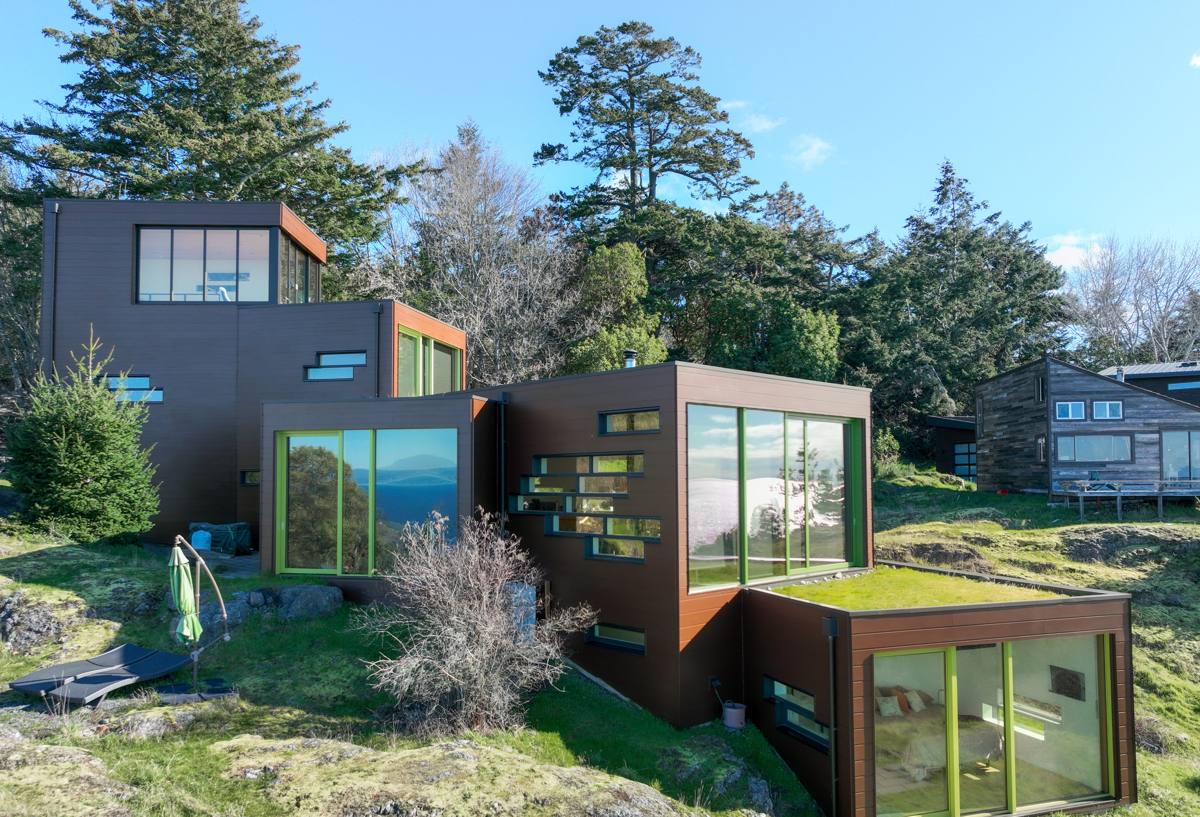
What Blaine's Coastal Climate Does to Vertical Siding
Three things define the wear pattern on Birch Point homes: salt-laden air, wind-driven rain, and a long stretch of the year where shaded surfaces stay damp. Board and batten siding interacts with all three differently than a standard horizontal lap profile does.
Salt Air and Fastener Corrosion
Homes within reach of salt spray see accelerated corrosion on anything metal — fasteners, flashing, trim screws. On a board and batten wall, the battens themselves are typically face-nailed or blind-nailed through the panel below, which means there are more exposed fastener points per square foot of wall than on lap siding. If those fasteners aren't corrosion-resistant, you get rust streaking bleeding through the finish within a few years, well before the siding itself is due for any attention.
Wind-Driven Rain and Vertical Seams
Rain that comes in sideways off the water doesn't just run down a wall — it gets pushed into every horizontal joint and batten seam it can find. Vertical board and batten has more vertical seams than lap siding, and if those seams aren't detailed with the right gap, backing, and drainage path behind them, water gets pushed behind the cladding during a hard blow rather than shedding off the surface.
Moss Season on Shaded Walls
Whatcom County's long wet season means moss and algae get a real foothold on any wall that doesn't dry out quickly — north-facing elevations, walls shaded by trees, and areas tucked behind fences or under eaves. Board and batten's vertical battens create small ledges and shadow lines that can hold moisture and organic growth longer than a flat panel if the material underneath doesn't handle repeated wetting and drying well.
Why We Only Build Board & Batten in James Hardie Fiber Cement
Board and batten can be built out of several materials — engineered wood, vinyl, primed wood, or fiber cement — and each one behaves differently once it's exposed to the conditions above. We install this siding exclusively in James Hardie fiber cement, and we don't install engineered wood products, vinyl board and batten, or bare wood battens, even though all of them are available and all of them get sold in this market.
Engineered wood siding relies on a resin-treated wood substrate with a protective coating. It performs well when that coating stays intact, but any breach — a fastener hole, a cut edge, a scuff during handling — exposes wood fiber that swells when it takes on moisture repeatedly, which is exactly the cycle a salt-air, high-rainfall site like Birch Point puts a wall through year after year. Vinyl board and batten is low-maintenance in the sense that it doesn't need repainting, but it's a thin material that flexes with temperature and wind load, and the vertical battens are typically just cosmetic strips over a flat panel rather than a true built-up profile — it doesn't hold up visually to close inspection and it isn't repairable in sections the way fiber cement is. Bare or primed wood board and batten looks great new but demands a repainting and caulk-maintenance schedule that most homeowners underestimate, especially on a home that's taking spray and driving rain regularly.
James Hardie fiber cement is non-combustible, dimensionally stable across wet and dry cycles, and available with a factory-applied ColorPlus finish that's baked on rather than field-painted, which matters directly for corrosion and weathering resistance in this environment. Hardie's HZ5 product line is engineered specifically for climates with extended damp exposure and freeze-thaw cycling, which fits the Whatcom County coast better than a generic siding formulation. For board and batten specifically, we build the look either with Hardie's vertical panel and batten system or with the Artisan Collection's dedicated board and batten profile, depending on the home's design and budget — both are true fiber cement, engineered as a system rather than a coating over a substrate.
What a Correct Board & Batten Installation Involves
The material is only half the equation. Board and batten fails prematurely almost as often from installation shortcuts as from material choice. On every Birch Point project, our installation includes:
- A drainage gap (rainscreen) behind the siding so any moisture that does get past the cladding has somewhere to go, rather than sitting against the wall sheathing
- Stainless or hot-dip galvanized fasteners rated for coastal exposure, sized and spaced to Hardie's fastening schedule
- Batten spacing and fastening pattern that lets the panel and batten move independently rather than binding, which prevents cracking at the joints
- Correct flashing at every window, door, and roofline penetration — the majority of siding leaks we're called to diagnose trace back to flashing details, not the siding field itself
- Factory-primed and factory-finished cut edges sealed in the field, since a raw cut edge is the fastest way to compromise a fiber cement panel's weather resistance
- Caulk used only where Hardie's install specs call for it — over-caulking seams that are meant to allow drainage traps water instead of shedding it
Any one of these done wrong won't show up as a problem in the first year. It shows up three, five, or eight years later as staining, buckling, or a soft spot behind a batten — by which point it's a repair job instead of a five-minute fix during installation.
Comparing Board & Batten Materials for a Coastal Site
| Material | Salt Air / Moisture Resistance | Moss & Algae Resistance | Maintenance Burden | Typical Lifespan |
|---|---|---|---|---|
| James Hardie fiber cement | High — engineered for damp coastal climates, non-combustible | Good — factory finish resists organic growth better than raw wood | Low — occasional wash, no repainting cycle | 30+ years with proper install |
| Engineered wood | Moderate — vulnerable once coating is breached | Moderate — wood substrate can support growth if damp | Moderate — coating needs monitoring at cuts and fasteners | Variable, coating-dependent |
| Vinyl board & batten | Moderate — won't rot, but flexes and can loosen in high wind | Fair — smooth surface, but seams can trap debris | Low, but limited repairability | 20-25 years typical |
| Bare or primed wood | Low — absorbs moisture at every cycle | Poor without frequent treatment | High — repainting and caulk maintenance on a recurring schedule | Highly maintenance-dependent |
Our Process for Birch Point Projects
We start with a walk-around assessment of the specific elevations that take the most weather — usually the water-facing and prevailing-wind sides of the house — and check the condition of the existing wall sheathing and trim before ever discussing panel selection. Board and batten profiles and reveal widths get chosen to match the home's existing lines rather than applied as a one-size template. From there, installation follows the fastening, flashing, and drainage-gap standards above on every wall, not just the ones a homeowner is likely to inspect closely. We finish with a walkthrough so the homeowner sees the seam and trim details before we consider the job done.
Living With Board & Batten on the Whatcom County Coast
Once it's installed correctly, James Hardie board and batten asks very little of a homeowner. An occasional rinse to knock loose salt residue and organic buildup, especially on shaded or north-facing walls, is generally the extent of routine care. Keep an eye on caulking at trim joints and around penetrations during a yearly walk-around, since that's the one spot on any siding system that can dry out and need attention over time — the field of the siding itself shouldn't need caulk maintenance if it was detailed correctly to begin with.
Why Local Experience on Birch Point Homes Matters
A crew that has actually worked in and around Birch Point knows which elevations on a typical home here take the worst of the wind-driven rain, how quickly moss establishes on shaded siding in this specific stretch of coastline, and what corrosion-resistant hardware actually holds up rather than just what's rated for it on paper. That's the difference between a board and batten installation that looks right for the first year and one that's still tight and clean a decade in. It also means a shorter conversation about permitting, code requirements, and the practical realities of working a home close to the water in Whatcom County.
If you're weighing board and batten for a home in Birch Point, we're glad to walk the exterior with you and put together a straightforward, no-pressure estimate — no upsell script, just an honest look at what your specific walls need. Use the form below to get started.