 Blaine
 Why Birch Bay Roofs Wear Differently Than Roofs Inland
Birch Bay sits close enough to the water that homes here take a different kind of beating than a roof ten or fifteen miles inland in Whatcom County. Salt-laden air off the bay accelerates corrosion on anything metal — fasteners, flashing, vent caps, gutter hardware. Add in driving rain that comes in sideways during winter storms, and you get water intrusion at points a roof further from the coast might never test. Then there's moss season, which in this part of Washington isn't really a season at all — it's most of the year. Shaded, north-facing slopes and roofs under overhanging trees stay damp long enough for moss and algae to take hold and start working their way under shingle edges.
None of this means Birch Bay homes need exotic materials or scare-tactic upsells. It means the repair has to account for exposure conditions that a generic roofing checklist doesn't cover. That's the difference between a patch that lasts a season and a repair that holds for years.
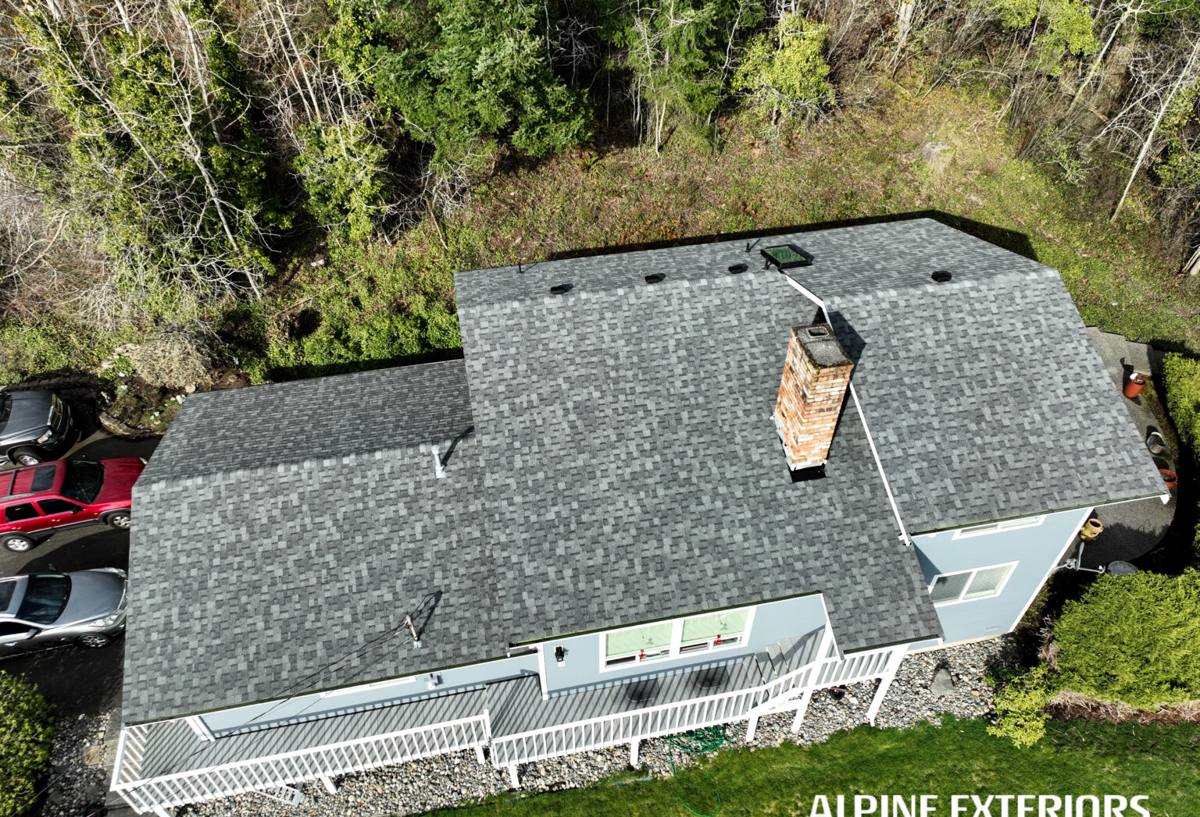
The Repair Issues We See Most Often in This Area
Salt-Air Corrosion on Metal Components
Galvanized fasteners, exposed nail heads, and older flashing corrode faster near the bay than they would a few miles inland. Corrosion doesn't just look bad — a rusted-through nail or a flashing seam that's lost its coating stops sealing properly, and that's usually where a leak starts.
Wind-Driven Rain at Flashing and Penetrations
Storms coming off the water don't just drop rain straight down — they push it sideways and upward under laps and edges that were never designed to shed water from that angle. Chimney flashing, skylight curbs, vent boots, and roof-to-wall transitions are the usual failure points.
Moss and Algae Damage
Moss holds moisture against the roof surface and, as it grows, physically lifts shingle edges. Once water can get under a shingle, it doesn't matter how good the shingle itself is — the leak path is already there. Long moss seasons mean this damage builds slowly and often goes unnoticed until there's a stain on a ceiling.
Aging Ridge Vents and Boots
Rubber vent boots and ridge vent seals degrade with UV and moisture cycling. In a marine climate this happens a bit faster, and a cracked boot is one of the most common single-point leak sources we find on repair calls.
What an Honest Roof Repair Actually Involves
A proper repair starts with figuring out where water is actually getting in — not just patching where a stain shows up inside. Water travels along rafters and sheathing before it ever shows on a ceiling, so the visible damage point and the entry point are often several feet apart. Skipping this step is the most common reason repairs fail and homeowners end up paying for the same leak twice.
Diagnosis Before Materials
We look at the roof from both sides where possible — the surface and, if accessible, the attic or interior sheathing — to trace the actual water path. Moss lift, cracked boots, corroded fasteners, and lifted or cupped shingles all get checked, not just the one spot that's leaking.
Matching Materials, Not Guessing
Shingle color and profile change over the years, and a mismatched patch stands out and can also shed water differently than the surrounding field. Where an exact match isn't available, we're upfront about it rather than pretending it won't be visible.
Flashing Gets Redone, Not Caulked
Caulk over old flashing is a temporary fix, not a repair. Correct flashing work means removing the compromised piece and reinstalling proper step flashing, counter-flashing, or vent boot hardware so water sheds the way it's supposed to — this matters more here than in drier climates because wind-driven rain will find any shortcut.
Signs Your Birch Bay Roof Needs Repair Now
- Dark streaking or green/black growth on north-facing or shaded slopes
- Granules collecting in gutters or at downspout outlets
- Shingles that look cupped, curled, or lifted at the edges
- Rust staining below metal flashing, vents, or fasteners
- A ceiling stain that appears or grows after a windy rainstorm specifically
- Daylight visible through the roof deck from inside the attic
- Soft or spongy spots when walking the roof (a sign of saturated decking)
Repair or Replace? How We Help You Decide
Not every leak means a new roof, and not every roof past a certain age is automatically a lost cause. The honest answer depends on how much of the roof is affected, how old the existing material is, and whether the damage is isolated or spread across multiple areas.
| Factor | Favors Repair | Favors Replacement |
|---|---|---|
| Extent of damage | Isolated to one section or penetration | Multiple leak points across the roof |
| Roof age | Well within expected material lifespan | At or beyond typical service life for the material |
| Underlying decking | Solid, dry sheathing | Soft, delaminated, or rotted sheathing found |
| Moss/algae condition | Surface growth without shingle lift | Widespread moss with granule loss and lifted edges |
| Material match availability | Close match available for a clean patch | Discontinued material with no reasonable match |
We'll always recommend the repair when it's the honest fix. If a roof is genuinely past the point where a repair makes financial sense, we'll explain why in plain terms rather than push a replacement it doesn't need.
How Our Process Works
1. On-Site Inspection
We walk the roof and check the attic or interior where accessible, looking for the actual entry point rather than just the visible symptom.
2. A Clear, Written Scope
You get a plain description of what's failing, what we're fixing, and what materials will be used — no vague line items.
3. The Repair Itself
Work is done to match the existing roof system's slope, ventilation, and flashing details, not just patched over the top of the problem.
4. Cleanup and Walkthrough
Debris and old material get hauled off, and we walk you through what was done and what to watch for going forward.
Roofing Materials on Birch Bay Homes
Most homes in this stretch of Whatcom County are roofed in asphalt composition shingle, with a smaller number of metal roofs and some older cedar shake still in service. Each has different repair considerations near the bay.
| Material | Repair Consideration Near the Coast |
|---|---|
| Asphalt composition shingle | Most common; moss lift and granule loss are the primary repair triggers |
| Metal roofing | Fastener and seam corrosion from salt air needs regular checking, even though the panels themselves hold up well |
| Cedar shake (older homes) | Moisture retention in a marine climate shortens lifespan; repairs require matching aged wood tone and thickness |
We don't push one material over another as a blanket rule — the right call depends on the existing roof, the home's exposure, and what the homeowner actually wants to maintain long-term. Where a product has real trade-offs, like cedar's higher moisture sensitivity in a wet marine climate, we'll say so plainly rather than let it become a surprise later.
Why Local Experience in Birch Bay Actually Matters
A roofer who's worked on plenty of homes on this stretch of coastline already knows which flashing details tend to fail first in salt air, which slopes hold moss longest given the local tree cover, and how wind off the bay tends to drive rain into places a standard repair playbook wouldn't anticipate. That's not a marketing point — it changes what gets checked during an inspection and how a repair is detailed. A crew unfamiliar with marine exposure might do technically correct work that still fails here in a year or two because it wasn't built for this specific set of conditions.
We also know the practical side: permitting expectations in Whatcom County, typical roof ages and materials in this area, and how to schedule around the wetter months so a repair isn't rushed between storm systems.
Maintaining Your Roof After the Repair
A repair holds longer with a little basic upkeep, especially given how long moss season runs here.
- Keep gutters and downspouts clear so water doesn't back up under roof edges
- Trim back overhanging branches to reduce shade and debris buildup on the roof surface
- Have moss treated before it spreads, rather than after it's lifted shingles
- Do a visual check after major windstorms for lifted shingles or displaced flashing
- Schedule a periodic roof check even without an active leak — small issues are cheaper to fix early
If you're dealing with a leak, moss buildup, or storm damage on a Birch Bay roof, we're happy to take a look and give you a straight answer on what it actually needs. The estimate is free, there's no pressure to sign anything on the spot, and you can use the form below to get started.