 Blaine
 Deck Replacement for Birch Bay Homes
Birch Bay sits right on the water, and that changes what a deck has to survive. Salt-laden air off the bay, wind-driven rain that gets under railings and ledger boards, and a moss season that can run from October through May all work against wood decking faster than they would a few miles inland. If your deck is graying, springing, or growing a green film every winter no matter how often you scrub it, that's not a maintenance failure on your part — it's the environment doing what it does here. A properly built replacement deck accounts for that from the framing up, not just the surface boards.
We're a Blaine-based crew and Birch Bay is part of our regular service area, not a once-in-a-while trip. That matters for a project like deck replacement, where the difference between a deck that lasts and one that doesn't often comes down to details you can't see once it's finished — flashing at the ledger, gaps for drainage, fastener choice for a marine-air environment.
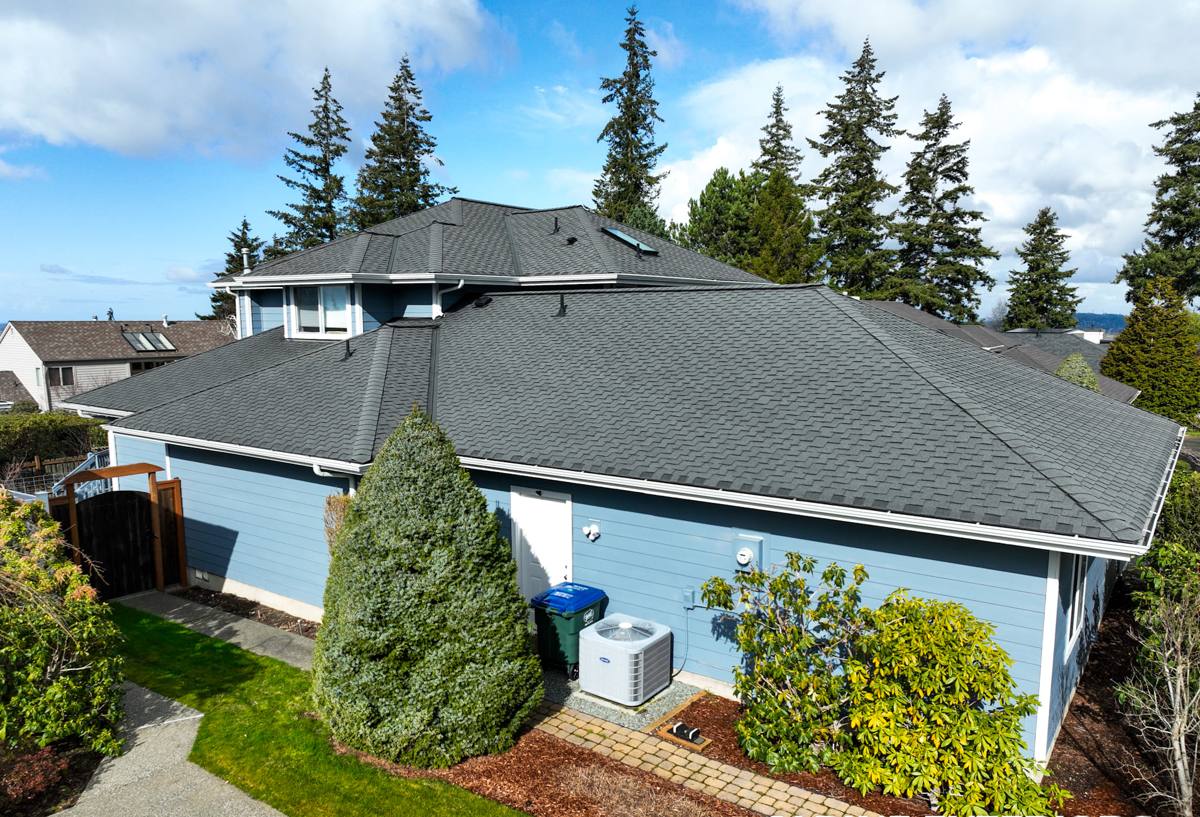
What Birch Bay's Climate Actually Does to a Deck
Salt Air and Metal Fasteners
Ordinary galvanized screws and joist hardware corrode faster this close to salt water. Once fasteners start rusting, they weaken, stain the wood around them, and eventually fail — usually at the worst possible time, like when someone leans on a railing. Decking built for Birch Bay needs stainless or coated hardware rated for coastal exposure, not the standard-grade fasteners that work fine 20 miles inland.
Driving Rain and Trapped Moisture
Whatcom County storms don't just fall straight down — wind pushes rain sideways, under rail caps and into board gaps that aren't spaced right. Wood that stays damp for days at a time is exactly what starts rot at the ledger board, the post bases, and anywhere two pieces of decking sit too close together.
Moss and Algae
A long, wet, mild winter is moss's favorite season, and Birch Bay gets a full one. Moss holds moisture against the deck surface, and on wood it can work its way into the grain. On composite or lower-quality boards without real anti-microbial protection, it just sits on top and stains. Either way, if your current deck disappears under green film every year, that's worth addressing in the rebuild — not just in your cleaning routine.
What a Correct Deck Replacement Involves
Deck replacement isn't just pulling up old boards and screwing down new ones. Done right, it starts underneath, where most of the problems actually live.
- Full removal of old decking, railings, and any framing that's soft, split, or rot-damaged — not just the parts that are visibly bad
- Inspection and, where needed, replacement of ledger board attachment and flashing — this is the single most common source of hidden rot on Birch Bay decks
- Joist and beam sizing checked against current span tables, not just matched to whatever was there before
- Post bases set to keep wood off standing water, with proper drainage away from the foundation or crawlspace
- Board spacing calculated for expansion and drainage, not just eyeballed
- Fasteners and structural hardware rated for coastal/marine exposure
- Railings that meet current code height and baluster spacing, especially important if the old deck predates current requirements
- A final walk-through with the homeowner before we call it finished
Choosing Decking Material for This Location
There's no single "best" decking material — there's a best material for your budget, your maintenance appetite, and your exposure to the elements. In Birch Bay specifically, exposure to salt air and moisture pushes the decision harder toward low-maintenance, moisture-resistant products than it would in a drier, more sheltered part of the county.
| Material | How It Handles Birch Bay Conditions | Maintenance | Typical Lifespan |
|---|---|---|---|
| Pressure-treated wood | Affordable, but needs consistent sealing to resist moisture and moss; salt air accelerates fastener corrosion if hardware isn't upgraded | Annual cleaning and re-sealing | 10-15 years with upkeep |
| Cedar | Naturally moisture- and insect-resistant, ages to gray if left unfinished; still benefits from periodic sealing near the water | Sealing every 1-2 years to hold color, or let it gray naturally | 15-20 years |
| Composite decking | Resists moisture absorption and moss staining far better than wood; quality varies a lot by brand and product line | Occasional washing, no sealing or staining | 25-30 years |
| PVC/capped composite | Fully sealed board resists moisture and staining best of the options here; higher upfront cost | Occasional washing | 30+ years |
We'll walk you through the real trade-offs for your specific deck — sun exposure, how close you are to the water, and what you actually want to spend time maintaining — rather than pushing one product as the answer for everyone.
A Note on Composite Decking Choices
Not all composite boards perform the same in a coastal environment. Lower-tier composite products can absorb moisture at cut edges if they're not properly capped, which leads to swelling and mold over time — right in the conditions Birch Bay provides. We install boards with full moisture-resistant capping on all sides, and we treat cut ends correctly during install, because an uncapped edge exposed to driving rain is where problems start.
Our Process for a Birch Bay Deck Replacement
- On-site assessment: We inspect the existing deck, framing, ledger attachment, and post footings to see what's actually salvageable versus what needs to come out.
- Material and design discussion: We talk through decking material, railing style, and layout based on your budget and how you use the space.
- Permitting: Deck replacements of most sizes require a permit through the local jurisdiction; we handle that paperwork so you don't have to chase it down.
- Demolition and framing: Old structure comes out, new framing goes in sized and fastened for the site conditions.
- Decking, railing, and finish work: Boards, railings, stairs, and any trim details get installed to spec.
- Final walk-through: We go over the finished deck with you before we consider the job done.
Why a Local Blaine Crew Matters for This Job
A deck replacement in Birch Bay is a different job than the same replacement done in a dry, inland neighborhood. A crew that works this area regularly already knows which framing details hold up to salt air and which fastener grades are worth the upcharge, because we've seen what happens when a deck is built to a generic inland spec and installed a few blocks from the water. That's not something you can fully substitute with a general contractor who's never worked this stretch of Whatcom County before.
Being based in Blaine also means we're not driving in from Bellingham or further for a callback if something needs a look after a big storm. That's part of standing behind the work — being close enough that it's not a hassle to come back.
Signs Your Birch Bay Deck Needs Replacing, Not Repairing
- Soft or spongy spots in the decking boards, especially near the house or around post bases
- Rot or staining at the ledger board where the deck meets the house
- Railings or posts that wobble or flex under normal weight
- Persistent moss or algae growth that returns within weeks of cleaning
- Rusted, popped, or stained fasteners across large sections of the deck
- A deck that's more than 15-20 years old and has never had structural framing inspected
If you're only seeing one or two of these signs in a limited area, repair may still be the right call — we'll tell you honestly if that's the case rather than pushing a full replacement you don't need. If several of these show up together, especially anything at the framing or ledger level, replacement is usually the more cost-effective long-term choice over patching the same spots repeatedly.
Cost Factors to Expect
Every deck is different, so we don't publish blanket pricing, but a few factors consistently drive the cost of a Birch Bay deck replacement up or down:
| Factor | Impact on Cost |
|---|---|
| Deck size and shape (multi-level, angles, stairs) | More linear footage and complexity means more labor and material |
| Decking material chosen | Pressure-treated wood is the lowest upfront cost; capped composite and PVC run higher but need less upkeep over time |
| Framing condition | If joists, beams, or ledger attachment need full replacement rather than reuse, that adds cost but is not optional if they're compromised |
| Railing style and code requirements | Cable rail and custom railing systems cost more than standard baluster railing |
| Height and access | Elevated decks and difficult site access add labor time |
If your Birch Bay deck is showing its age, we're glad to come take a look and give you a straightforward, no-pressure estimate — what it needs, what it'll cost, and what your material options actually are for a deck this close to the water. Use the form below to get started.