 Blaine
 Why Window Installation in Bellingham Isn't a Generic Job
Bellingham sits close enough to the water, and gets enough wind-driven weather off the Strait and the bay, that window installation here has to account for things a lot of general contractors skip past. This isn't a page about windows in the abstract — it's about what actually holds up on homes in this part of Whatcom County, where salt-laden air, long stretches of driving rain, and months of low sun and moss growth all put steady pressure on anything installed on the exterior of a house.
A window is only as good as the opening it's sealed into. Most window failures we get called out for aren't because the glass or vinyl gave out — they're because the flashing, sealant, or sill pan around the window failed first, and water found its way behind the frame. That's the part of the job that matters most in this climate, and it's the part that's easiest for an installer to rush.
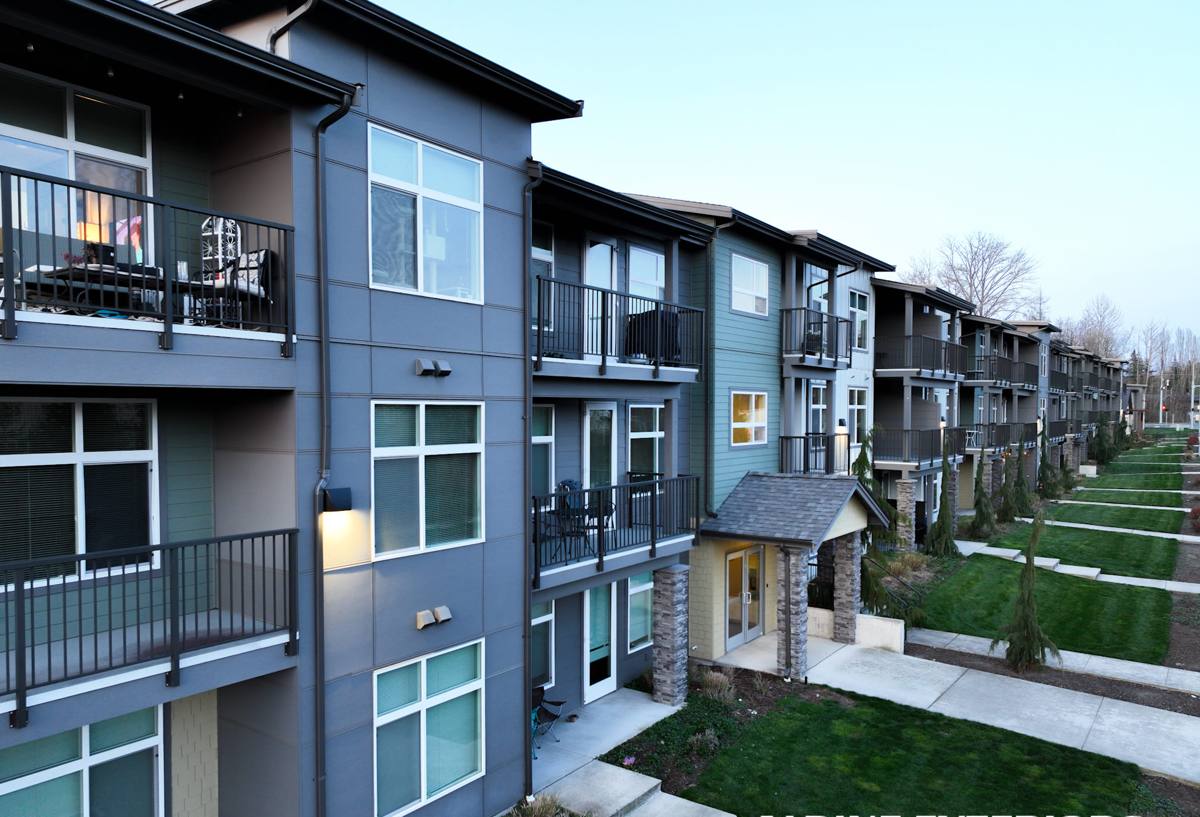
What Coastal Whatcom County Weather Does to Windows
A few climate realities shape how we approach every installation in and around Bellingham:
- Salt air from the coast accelerates corrosion on hardware, fasteners, and lower-grade metal components — cheap screws and unprotected flashing corrode faster here than they would inland.
- Driving rain, especially in wind events off the water, pushes moisture sideways and upward against window openings, not just straight down. A flashing detail that would be fine in a drier, calmer climate can fail here.
- A long moss and algae season keeps surfaces damp for extended stretches, which means any gap, unsealed joint, or trapped moisture pocket around a window has more time to do damage before it dries out.
- Cool, humid winters mean condensation risk is real — poorly installed or poorly rated windows fog, sweat, and can feed mold growth on interior sills and trim.
None of this means Bellingham homes need exotic materials. It means the installation details — flashing sequence, sealant choice, drainage path — have to be done correctly every time, because the climate doesn't forgive shortcuts the way a drier region might.
Signs Your Current Windows Are Losing the Fight
Homeowners usually notice a problem well before they think about calling a contractor. Watch for:
- Visible fog or moisture trapped between the panes of a double-pane window (a failed seal)
- Soft, discolored, or spongy wood trim or sill around the window frame
- Drafts you can feel with your hand near the frame edge on a windy day
- Windows that are hard to open, close, or lock — frames can shift as wood swells and shrinks with moisture cycles
- Paint or caulk that's cracking, peeling, or pulling away from the frame
- Rising heating bills without any other explanation
- Moss or dark streaking building up on the sill or the wall just below the window
Any one of these is worth a look. Several at once usually means the window opening itself — not just the window unit — needs attention.
What a Correct Window Installation Actually Involves
Swapping a window sounds simple, and the unit itself can go in fast. The work that actually determines whether it lasts is mostly invisible once the job is done.
Removing the Old Window Without Making Things Worse
We check the condition of the framing and sheathing as soon as the old window is out. This is often the first real look anyone's had at that wall cavity in years, and it's the best chance to catch hidden rot or water damage before it's sealed back up behind a new window for another couple of decades.
Flashing and Drainage, Not Just Caulk
Caulk is a backup, not a strategy. A correct installation uses a proper flashing sequence — sill pan flashing, side flashing, and head flashing layered so water is directed out and down, never trapped behind the window. In a climate with as much driving rain as Bellingham gets, this sequencing is the single biggest factor in whether a window stays dry for the next 20-plus years.
Air Sealing and Insulation Around the Frame
The gap between the window frame and the rough opening needs to be insulated and air-sealed correctly — not overpacked with rigid foam (which can bow the frame) and not left loose (which lets air and moisture through). Getting this right affects both comfort and energy bills.
Level, Plumb, and Square
A window that's out of square will bind, won't lock properly, and will put uneven stress on the seals over time. This is basic, but it's also where rushed installs go wrong.
Choosing Windows and Frame Materials for This Climate
There's no single "best" window material — the right choice depends on the home, the budget, and how much upkeep you want to take on. Here's how the common options stack up for a coastal Whatcom County home:
| Frame Material | Moisture / Salt Air Resistance | Maintenance | Typical Lifespan |
|---|---|---|---|
| Vinyl | Good — won't corrode or rot, handles humidity well | Low — occasional cleaning | 20–30 years |
| Fiberglass | Very good — dimensionally stable, resists warping and salt exposure | Low | 30–40+ years |
| Wood (unclad) | Poor without diligent upkeep — vulnerable to rot in wet, salty conditions | High — regular painting/sealing required | Varies widely with maintenance |
| Wood-clad (aluminum or vinyl exterior) | Good — exterior shell protects the wood core | Moderate | 25–35 years |
| Aluminum | Fair — can corrode near salt air unless properly finished; conducts cold | Low | 20–30 years |
We install to a professional standard, which in practice means steering most Bellingham homeowners away from unclad wood on any wall that takes direct weather, simply because the maintenance burden is high and the failure mode — hidden rot behind paint that looks fine — is hard to catch early. That's a trade-off call, not a knock on wood as a material; plenty of homes use it well in protected locations with a real maintenance routine behind it.
How Our Process Works
- On-site assessment — we look at your current windows, the framing behind them where visible, and how the house is oriented to wind and rain exposure.
- Honest scope and options — we walk you through material and style options with real cost ranges, not a pressured upsell.
- Careful removal — old units come out without damaging surrounding siding or trim any more than necessary.
- Inspect the opening — any rot, damage, or moisture issue found gets flagged and addressed before anything new goes in.
- Flash, insulate, and set the window — following a sequence built for wind-driven rain, not a generic checklist.
- Seal and finish — exterior trim, caulking, and interior finish work completed to match the rest of the house.
- Walkthrough — we check operation, locks, and seals with you before we consider the job done.
Energy Efficiency and Washington's Building Code
Washington's energy code sets minimum performance requirements for replacement windows, generally referencing U-factor (how well the window resists heat loss) rather than just glass type. A correctly rated, correctly installed window makes a real difference in a house that's heated through a damp Whatcom County winter — not just on the energy bill, but in reducing cold spots and condensation near the glass. We spec windows that meet or exceed current code requirements as a baseline, not an upsell option.
Why a Crew That Already Works Bellingham Matters
Bellingham has a real mix of housing stock — older homes with original wood-frame openings that have settled and shifted over decades, alongside newer construction with different framing standards. A crew that works this area regularly has already seen how local houses behave: which neighborhoods tend to have moisture issues in older sills, how wind exposure varies block to block near the water, and what permit and inspection expectations look like locally.
That familiarity shows up in small ways that matter: knowing to check for a specific rot pattern in older single-pane openings before quoting a job, or recognizing when a house's exposure calls for extra attention to flashing details rather than a standard install. It also means we're not learning the region's climate behavior on your house — we're applying what we already know from the Blaine and Bellingham area to it.
Before You Book: A Practical Checklist
- Note which windows are drafty, foggy, hard to operate, or visibly damaged — this helps us scope the job accurately
- Check for soft or discolored trim around window frames from both inside and outside
- Think about whether you want full-frame replacement or an insert replacement (we'll explain which fits your situation)
- Have a rough sense of your priorities — energy efficiency, noise reduction, ease of cleaning, appearance — so we can match products to what actually matters to you
- Ask any contractor you're considering how they handle flashing and moisture barrier details, not just what brand of window they sell
Maintenance After Installation
A properly installed window in this climate still benefits from basic upkeep: rinsing off salt residue and moss buildup on frames and sills a couple of times a year, checking that weep holes (the small drainage openings on the bottom of the frame) stay clear of debris and moss, and keeping an eye on caulking at the trim joints so it can be touched up before it fails outright. None of this is heavy work, but skipping it shortens the life of even a well-installed window.
If you're weighing window replacement for a home in Bellingham or elsewhere in the Blaine service area, we're happy to take a look and give you a straight assessment — no pressure, no inflated scope. Fill out the form below for a free estimate.