 Blaine
 Bellingham's Climate Is Harder on Siding Than Most Homeowners Realize
Bellingham sits close enough to the Salish Sea that salt-laden air is a constant, low-grade stressor on every exterior surface of a house. Add Whatcom County's long, wet fall-through-spring stretch of driving rain, and a moss season that can run eight months or more in shaded, north-facing yards, and you have a climate that quietly works against whatever is on your walls. Most siding failures we see in this area aren't dramatic — no storm damage, no single bad event. They're the slow result of moisture finding a way in, year after year, until paint fails, seams swell, or panels start to separate from the wall.
Homes closer to the water tend to show wear first: chalky or pitted paint, corroding fasteners, and trim that stays damp longer after a rain. Homes tucked under trees or on shaded lots fight a different battle — moss and algae holding moisture against the siding surface for days at a time. Either way, the siding on a Bellingham home is doing more work than siding on a home fifty miles inland, and it needs to be installed and maintained with that in mind.
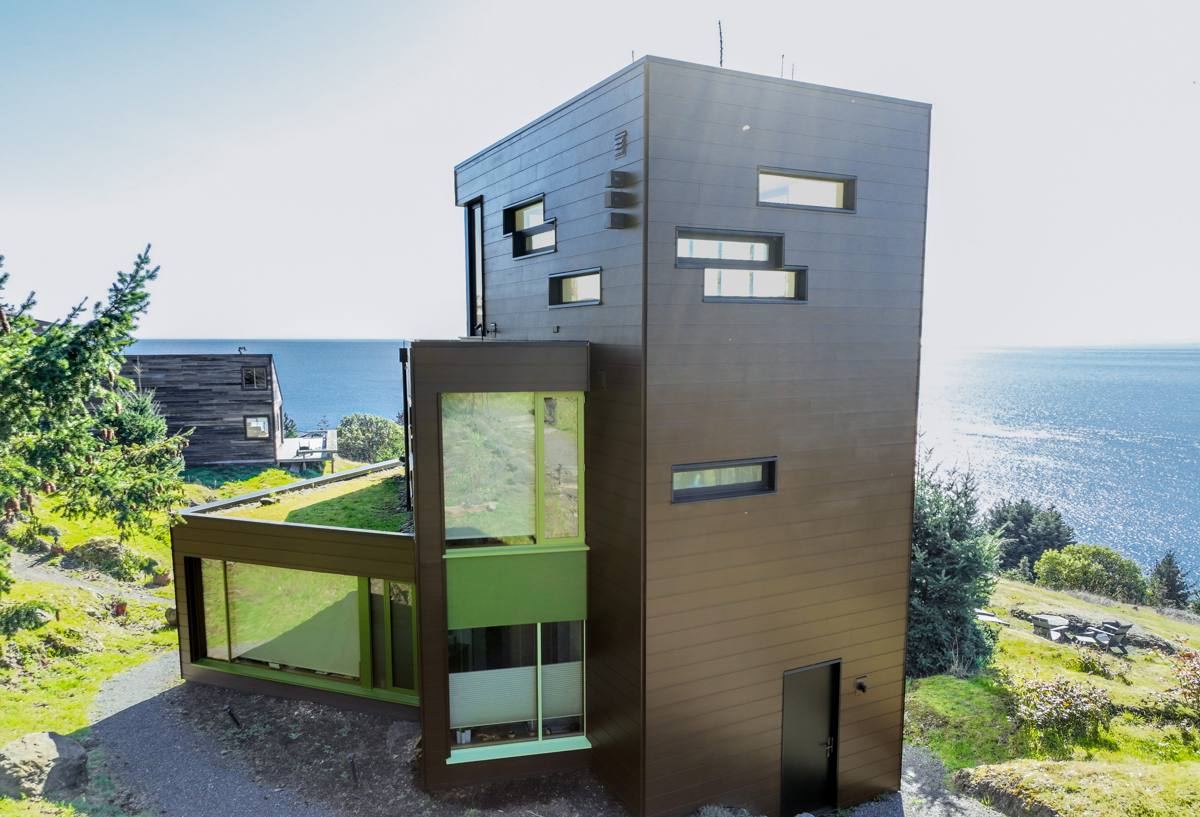
Signs a Bellingham Home Is Due for Siding Replacement
Siding rarely fails all at once. It gives warning signs first, and catching them early is the difference between a straightforward replacement and a repair job that also has to deal with rotted sheathing underneath.
- Paint that's peeling, bubbling, or chalking heavily, especially on walls facing prevailing weather
- Soft or spongy spots when you press on siding, particularly near the bottom courses and around window trim
- Persistent moss or dark streaking that comes back within weeks of cleaning
- Visible gaps, warping, or cupping in individual boards or panels
- Cracking at butt joints or corners where caulking has failed
- Rising energy bills that suggest the wall assembly behind the siding is no longer doing its job
- A musty smell in interior rooms along an exterior wall
Any one of these on its own might just need a repair. Several at once, or any sign of soft sheathing, usually means it's time to talk about full replacement rather than patching.
What a Correct Siding Replacement Actually Involves
It Starts Underneath the Siding, Not With It
The siding itself is the least important part of doing this job right in a marine climate. What matters more is everything behind it: a continuous water-resistive barrier, correctly lapped and taped seams, and flashing at every window, door, and roofline intersection that could otherwise let water track behind the wall. In a climate that gets as much horizontal, wind-driven rain as Bellingham does, gaps in that barrier are where long-term rot starts — usually invisible from the outside until the damage is already extensive.
Fastening and Gaps Matter More Here Than Elsewhere
Fiber cement siding has manufacturer-specified nailing patterns, minimum gaps at butt joints and corners, and clearances at the bottom edge to keep it off grade, decks, and roof lines. Skipping those details doesn't show up as a problem in year one. It shows up in year five or eight, when trapped moisture has been working on the wall assembly the whole time. A correct install also caulks and paints cut edges before they're closed up, since exposed cut edges are one of the most common places moisture gets in on any fiber cement job.
Tear-Off Is Also an Inspection
Removing old siding is the one chance to see the sheathing, framing, and window flashing underneath before it's covered up again. Any soft sheathing, rusted flashing, or evidence of past leaks needs to be dealt with before new siding goes on — not painted over or hidden behind it.
Siding Materials in a Marine Climate: A Straight Comparison
We get asked why we standardized on one product line instead of offering several. The honest answer is that in a climate like Bellingham's, some materials simply carry more long-term maintenance risk than others.
| Material | How It Handles Salt Air & Rain | Moss/Algae Resistance | Long-Term Maintenance |
|---|---|---|---|
| Vinyl siding | Doesn't rot, but can warp or fade under UV and temperature swings; seams can allow water behind panels | Moss and algae grow on the surface like any plastic; needs regular washing | Low upfront upkeep, but limited repair options and shorter realistic lifespan in wet climates |
| LP SmartSide (engineered wood) | Wood-based core is vulnerable if any seam or cut edge stays wet | Susceptible to moss and mildew if not kept clean and dry | Depends heavily on perfect caulking and paint maintenance being kept up over time |
| Cedar / primed spruce | Natural wood, moisture-sensitive; performs only as well as its finish is maintained | High — organic material that moss and algae readily colonize | Frequent refinishing needed in a wet, shaded climate |
| James Hardie fiber cement | Non-combustible, dimensionally stable, engineered moisture resistance | Resists moss/algae growth better than wood-based products; factory finish sheds dirt | Factory ColorPlus finish is designed to go long stretches without repainting |
None of these products are "bad" — vinyl and engineered wood siding both have legitimate uses and plenty of homes carry them without issue. But for a company installing siding on homes exposed to this much salt air and rain, we decided the trade-offs on moisture sensitivity and long-term maintenance weren't ones we wanted to build our name on.
Why We Install Only James Hardie Fiber Cement
James Hardie's HZ product line is engineered specifically for climate zones like the Pacific Northwest — accounting for moisture exposure that's different from what a house in Arizona or Texas deals with. It's non-combustible, holds paint and color far longer than wood-based alternatives because the ColorPlus finish is baked on at the factory rather than applied on site, and it doesn't swell, rot, or feed moss the way organic siding materials can.
It's also backed by a strong, transferable manufacturer warranty — useful for homeowners who may sell in the years ahead, since new owners inherit the coverage rather than starting from zero. None of this makes fiber cement maintenance-free. It still needs correct installation, caulking, and periodic cleaning like anything on the outside of a house in this climate. But it gives Bellingham homeowners a material that starts from a stronger position against the specific conditions this area throws at it.
Our Process for Bellingham Siding Replacement Projects
- On-site assessment. We walk the exterior, check for soft spots, moss buildup, and trouble areas around windows and rooflines, and talk through what we find.
- Written estimate. A clear scope of work and cost breakdown — no vague allowances, no surprise change orders for things we should have caught up front.
- Tear-off and inspection. Old siding comes off, sheathing and framing get inspected, and any hidden moisture damage gets addressed before anything new goes up.
- Weather barrier and flashing. A continuous water-resistive barrier and properly lapped flashing at every penetration, built to shed Bellingham's driving rain rather than trap it.
- Hardie installation to spec. Correct nailing patterns, gaps, and clearances, with cut edges sealed before they're closed up.
- Final walkthrough. We review the finished job with you and go over basic care — mainly keeping an eye on moss and cleaning as needed.
Why a Crew That Already Works in Bellingham Makes a Difference
Whatcom County's building departments, typical lot conditions, and weather patterns are things a crew learns by doing the work here repeatedly — not by reading a manual. A crew that already handles siding replacement in and around Bellingham knows what moisture patterns to expect on a shaded, tree-covered lot versus a more exposed property closer to the water, understands local permitting expectations, and isn't guessing about which details matter most in this specific climate.
There's also a practical side to hiring locally based in Blaine: shorter response times if a warranty question comes up, and a crew with a real, ongoing reputation in the area rather than a name that only shows up during a sales pitch. For a job that's supposed to protect your home for decades, that kind of accountability matters as much as the material going on the wall.
Ready to Talk About Your Siding?
If your Bellingham home is showing any of the wear signs above, or you're just planning ahead for a replacement, we're happy to take a look and give you a straightforward, no-pressure estimate. Fill out the form below and we'll get back to you to schedule a time to walk the property together.