 Blaine
 Why Bellingham Homes Need Siding Built for This Climate
Bellingham sits close enough to the water that salt-laden air is a constant, low-grade stressor on anything mounted to the outside of a house. Add Whatcom County's long wet season, driving rain off the Strait, and the shade-and-moisture combination that keeps moss thriving on roofs and siding for much of the year, and you have a climate that is genuinely harder on exterior materials than most of the country deals with. Siding here isn't just a cosmetic choice — it's the first line of defense against a specific, repeatable set of problems: moisture intrusion, coastal corrosion of fasteners and trim, and organic growth that traps dampness against the wall assembly.
We install James Hardie fiber cement siding exclusively, and Bellingham is a good example of why. Fiber cement doesn't rot, doesn't feed mold or moss the way wood-based products can, and holds up to repeated wet-dry cycling without warping or delaminating. That matters more here than in a drier inland market.
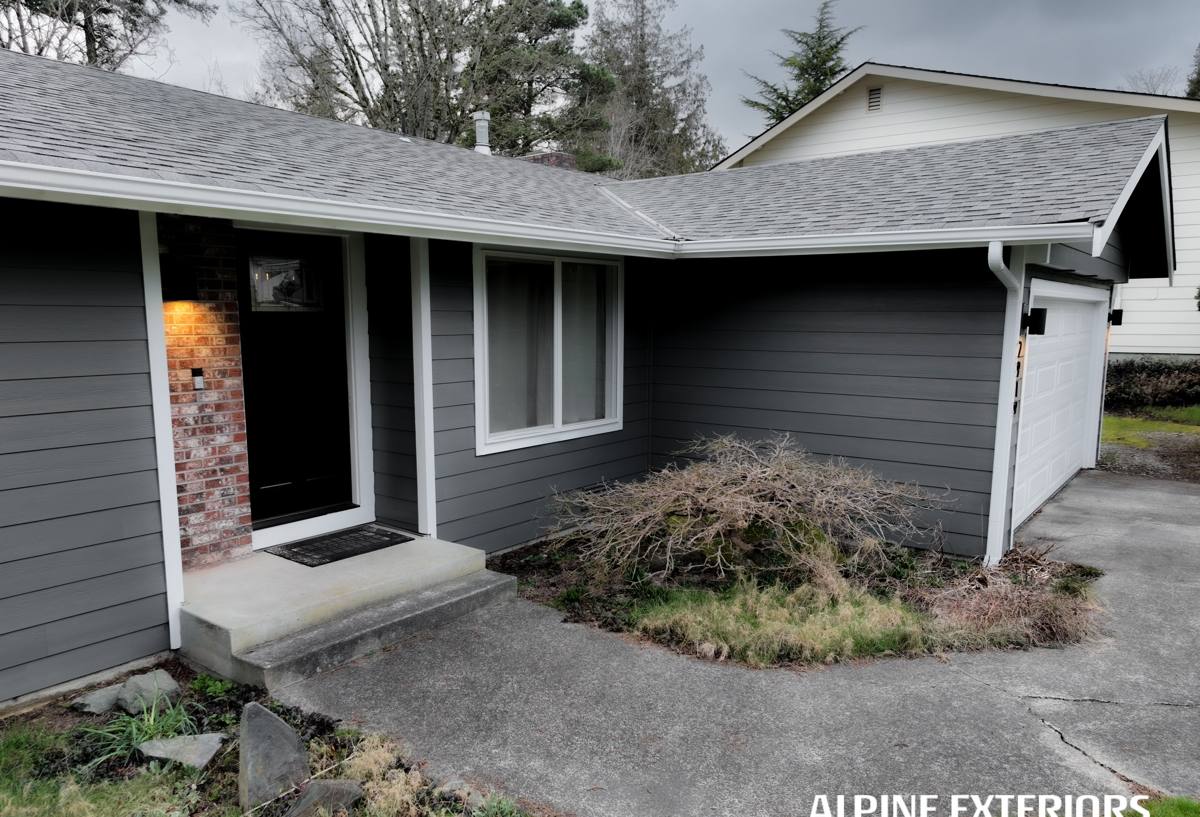
What "Correct" Looks Like for a Bellingham Installation
A James Hardie install that's right for this area isn't just about the siding panels themselves — it's about how the whole wall assembly is built to shed water and resist salt air over decades, not just years.
Water Management Behind the Siding
Every correct Hardie installation starts with a weather-resistive barrier and properly flashed openings, but in a high-rainfall coastal area we pay particular attention to a few details that get skipped on cheaper jobs:
- A drainable house wrap or rainscreen gap so any moisture that gets behind the siding has somewhere to go instead of sitting against the sheathing
- Proper head, jamb, and sill flashing at every window and door, lapped correctly so water is directed out and down, never trapped
- Kick-out flashing at roof-to-wall intersections, which is one of the most common missed details on older Bellingham homes and a frequent source of hidden rot
- Consistent minimum clearance between the bottom of the siding and grade, decks, or roof lines, so splash-back and standing moisture don't sit against the plank
Fasteners and Trim That Won't Fight the Salt Air
Coastal salt exposure is hard on fasteners. We use corrosion-resistant fastener specifications appropriate for the exposure, and we don't mix metals in ways that invite galvanic corrosion at trim and flashing joints. This is a detail that's invisible on install day and expensive to ignore ten years later when streaking and fastener failure show up around windows and corners.
Sealed and Factory-Finished Surfaces
James Hardie's ColorPlus factory finish is baked on and warranted separately from the substrate, which matters in a climate where field-painted siding gets more UV and moisture cycling than the manufacturer's finish is tested against. Cut edges get properly primed and sealed, and joints are caulked with a product rated for the exposure — small steps, but they're the difference between siding that looks good at year one and siding that still looks good at year fifteen.
The Moss Problem, Specifically
Moss doesn't damage fiber cement siding the way it can damage wood or degrade the surface of some engineered products, but it does trap moisture against a wall and can stain a finish over time if it's allowed to establish and spread, particularly on shaded north- and west-facing walls that are common in Bellingham's tree-covered lots. A few things reduce moss pressure on a Hardie installation:
- Adequate rainscreen ventilation so the wall surface can dry between rain events instead of staying damp
- Trim and caulk lines that don't create ledges where organic debris and moisture collect
- Keeping vegetation trimmed back from the siding so airflow and sun exposure aren't fully blocked
Occasional gentle washing (never pressure-washing directly into seams or under panels) keeps ColorPlus finishes looking clean without damaging the coating.
Our Process for a Bellingham Project
1. Assessment and Measure
We look at the whole envelope, not just the siding: existing moisture damage, flashing condition, window and door detailing, and how the specific lot's sun and wind exposure will affect the new siding long-term. Bellingham lots vary a lot block to block — a heavily treed, shaded property behaves very differently than an open lot closer to the water, and the install plan should reflect that.
2. Product and Line Selection
James Hardie makes climate-engineered HZ product lines specifically because a house in a wet coastal region and a house in a hot dry region face different stresses. We spec the product line, plank style, and finish appropriate to the exposure and to the look the homeowner wants — lap siding, board-and-batten, or a mix with accent trim.
3. Tear-Off and Wall Prep
Old siding comes off, the sheathing gets inspected for hidden rot or moisture damage (common on older Whatcom County homes that were originally sided with wood or vinyl), and any needed repairs happen before a single new panel goes up. This is the step that gets rushed on lower-bid jobs, and it's the step that determines whether the siding lasts.
4. Weather Barrier and Rainscreen Installation
This is where the long-term water management strategy gets built in — the part of the job nobody sees again once the siding is on, and the part that matters most in a climate like this one.
5. Siding Installation to Manufacturer Spec
Correct fastener pattern, correct nailing zones, correct gaps at butt joints and trim for expansion, correct flashing integration at every penetration. James Hardie's warranty depends on installation to their published specifications, and we install accordingly.
6. Final Walkthrough
We walk the finished job with the homeowner, check caulking and trim lines, and make sure everything meets both our standard and the manufacturer's.
Why Hire a Crew That Already Works Bellingham
Fiber cement installation is detail-sensitive, and the details that matter shift by region. A crew that mostly installs in dry inland climates may not think twice about rainscreen gaps or kick-out flashing because their local conditions don't punish those omissions as quickly. A crew working Whatcom County regularly has already seen what happens when those details are skipped — the callbacks, the hidden rot behind poorly flashed windows, the streaking from mismatched fasteners — and builds every job to avoid repeating it. Familiarity with local permitting, typical framing conditions in older Bellingham-area homes, and the specific weather window for installation also keeps a project on schedule instead of getting stalled by conditions an out-of-area crew didn't plan for.
Cost Factors for a Bellingham James Hardie Project
Every home is different, but the factors that move the price on a local Hardie installation are consistent. We provide firm numbers only after an on-site assessment — broad ranges below are for planning purposes.
| Factor | Why It Matters Here |
|---|---|
| Extent of hidden damage found at tear-off | Older homes near the water often have moisture damage behind original siding that isn't visible until removal |
| Wall assembly upgrades (rainscreen, drainable wrap) | More critical in high-rainfall coastal exposure than in drier climates, adds labor and material |
| Number and complexity of window/door openings | Each opening needs full flashing detail; more openings and dormers mean more labor |
| Siding profile and trim complexity | Board-and-batten, mixed profiles, and heavy trim packages cost more than straight lap siding |
| Roofline intersections and multi-story walls | Kick-out flashing, staging, and access all add time on complex rooflines |
| Site access and vegetation clearing | Treed Bellingham lots sometimes need clearance work before crews can safely work the walls |
A Practical Pre-Project Checklist
- Ask any contractor for their specific plan for moisture management behind the siding, not just the siding brand they install
- Confirm whether they install a rainscreen or drainable wrap system, standard practice for this climate
- Ask how they handle kick-out flashing at roof-to-wall intersections
- Get the James Hardie product line and profile specified in writing, not just "Hardie siding"
- Confirm whether tear-off includes sheathing inspection and what happens if hidden damage is found
- Ask about fastener specification for coastal/salt-air exposure
- Get clarity on what's covered by the manufacturer's product warranty versus the installer's workmanship warranty
What We Don't Install, and Why
We don't install vinyl, LP SmartSide, Cemplank, Allura, or bare wood siding, and in a climate like Bellingham's the reasons are sharper than in a milder market. Vinyl can warp and doesn't hold up structurally to driving wind-driven rain intrusion the way a properly flashed fiber cement assembly does. Wood-based and engineered wood products carry ongoing maintenance and moisture-sensitivity burdens that are harder to manage in a region that stays wet for much of the year. We standardized on James Hardie because it's non-combustible, factory-finished with a coating designed to hold color and resist the elements, backed by a strong transferable warranty, and simply performs better over the long run in exactly the kind of wet, coastal, moss-prone conditions Bellingham homes face.
If you're planning a siding project in Bellingham and want a straight answer about what your home actually needs, we're happy to take a look. Reach out for a free, no-pressure estimate — we'll walk the exterior with you and tell you what we see, no obligation.