 Blaine
 Ferndale's Climate Is Harder on Siding Than It Looks
Ferndale sits close enough to the Salish Sea that salt-laden marine air is a daily fact of life, not an occasional weather event. Add Whatcom County's driving winter rain and a moss season that can stretch from fall through spring, and you have a climate that quietly tests every seam, fastener, and finish on a home's exterior. Siding here doesn't fail because of one dramatic storm — it fails because of thousands of ordinary days where wind-driven rain finds a gap, moisture sits a little too long in a shaded corner, or a coating that looked fine in the showroom starts to chalk and fade under constant damp.
Salt Air and Driving Rain
Salt air accelerates corrosion on fasteners, flashing, and any metal trim that isn't rated for coastal exposure, and it can also degrade lower-grade paint films faster than a homeowner would expect. Combine that with rain that regularly comes in sideways off the water rather than straight down, and you get moisture pushed into places a standard installation might not fully protect — under trim, behind poorly lapped seams, and around window and door openings that weren't flashed with a coastal climate in mind.
The Long Moss Season
Whatcom County's mild, wet winters and shaded, tree-heavy lots are ideal conditions for moss, algae, and mildew to take hold on exterior surfaces. Once organic growth establishes itself on siding, it holds moisture against the surface far longer than open air would, which is exactly the kind of sustained dampness that breaks down wood-based products and stresses paint films. A siding system's ability to shed water and resist that growth — not just look good on installation day — is one of the most important, least talked-about factors in how long a Ferndale home's exterior actually lasts.
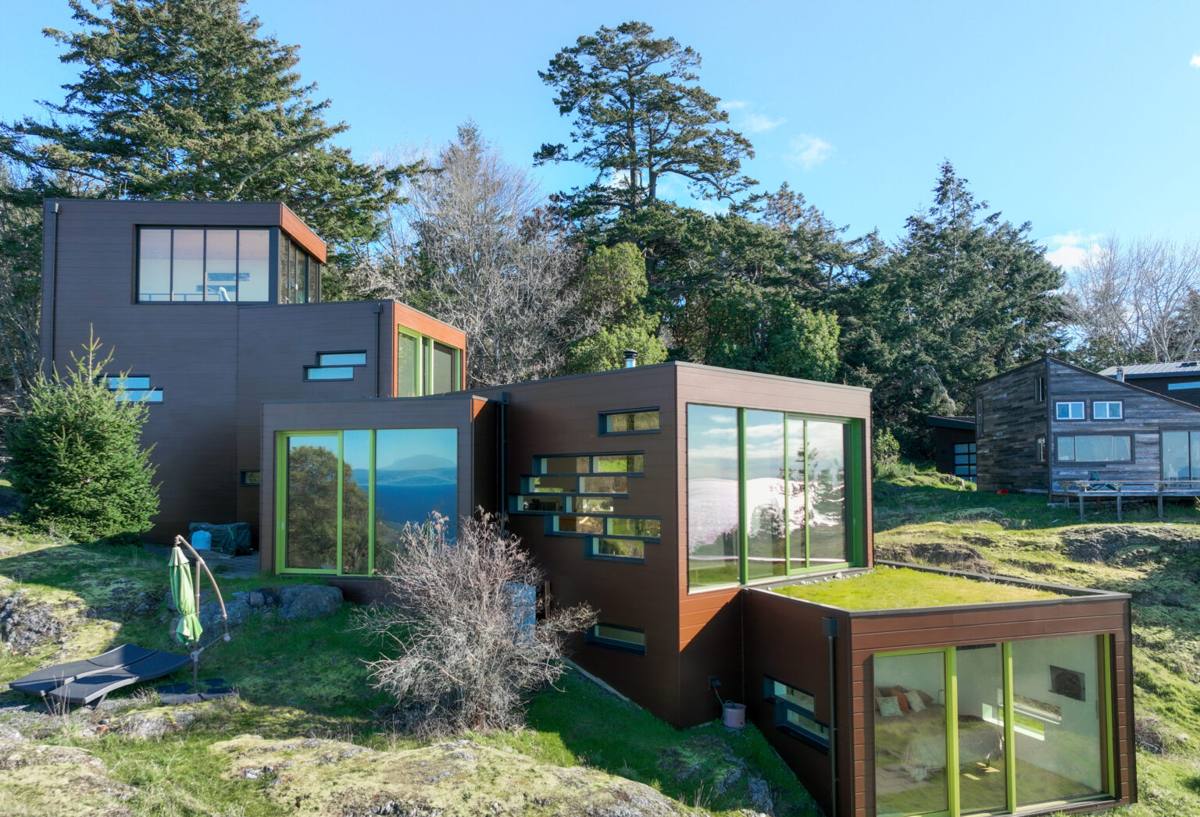
What Correct Siding Installation Actually Involves
Siding is a system, not a single product. The board or panel you see is only one layer of protection; underneath it is a weather-resistive barrier, flashing details at every penetration, and a fastening pattern that either works with the climate or fights it for the next 30 years. Getting any one of these wrong doesn't usually cause an immediate problem — it causes a slow one that shows up as staining, soft spots, or paint failure a few years down the road.
Weather-Resistive Barrier and Flashing
A correctly installed weather-resistive barrier goes on before the siding and is lapped so that water is always directed outward and downward, never trapped behind the cladding. Flashing at windows, doors, and any roof-to-wall intersection has to be integrated with that barrier in the right order — flashing under the barrier at the top, over it at the bottom — so water sheds past every opening instead of pooling at it. In a market like Ferndale's, where driving rain puts real pressure on vertical surfaces, these details matter more than they would in a drier climate.
Fastening, Clearances, and Caulking
Fiber cement siding has specific fastening requirements — nail placement, spacing, and depth all affect how the boards perform over time, and over-driven or under-driven fasteners are a common cause of premature failure. Proper ground clearance keeps the bottom edge of the siding away from splashback and standing moisture near grade, and caulking should be used sparingly and correctly, not as a substitute for good flashing. A crew that treats caulk as the primary defense against water, rather than a secondary seal, is cutting a corner that will show up later.
Why We Install Only James Hardie Fiber Cement
We made a decision as a company to install James Hardie fiber cement siding exclusively, and we don't treat that as a marketing line — it's a standard we hold ourselves to on every job, including every Ferndale project. Hardie's fiber cement is non-combustible, holds its factory-applied ColorPlus finish far longer than field-applied paint typically lasts, and is engineered in climate-specific HZ formulations that account for moisture exposure rather than treating every region the same. It also carries a strong, transferable manufacturer warranty when installed to spec, which matters to us because we're the ones doing the installing — a warranty is only as good as the workmanship behind it.
We won't install vinyl, LP SmartSide, Cemplank, Allura, primed spruce, or cedar, and we're upfront with homeowners about why. Each of those products has legitimate strengths and a place in the market — but each also comes with trade-offs in moisture behavior, maintenance burden, or long-term appearance that we're not willing to put our name behind in a climate like this one. That's a professional standard, not a knock on anyone who chooses differently.
Comparing Siding Options for a Whatcom County Climate
The table below reflects general, honest trade-offs between common siding materials in a marine, high-moisture climate like Ferndale's. It's meant to help homeowners understand why material choice matters here specifically, not to make blanket claims about every product on the market.
| Factor | James Hardie Fiber Cement | Vinyl | Wood / Primed Spruce |
|---|---|---|---|
| Moisture resistance | Engineered for wet climates (HZ product lines) | Sheds water but can trap moisture behind panels | Absorbs moisture; prone to rot without diligent upkeep |
| Finish durability | Factory ColorPlus finish, long fade resistance | Color is through-body but can fade and chalk | Field-applied paint needs regular recoating |
| Fire resistance | Non-combustible | Combustible, can warp near heat | Combustible |
| Moss/algae resistance | Good when finish is maintained | Fair; can trap moisture that feeds growth | Poor; organic material feeds growth directly |
| Typical maintenance | Periodic washing, repaint on a longer cycle | Low upfront, but panels crack and can't be easily repaired | Frequent painting/sealing to prevent rot |
| Warranty structure | Strong, transferable manufacturer warranty | Varies widely by manufacturer and grade | Typically no manufacturer warranty on the material itself |
Our Installation Process, Start to Finish
Every Ferndale project follows the same sequence, because skipping steps is exactly how moisture problems get built into a wall. The checklist below reflects what a correct install actually requires, not a simplified version of it.
- On-site assessment of existing siding, sheathing condition, and any moisture damage before a bid is finalized
- Removal of old siding and inspection of the sheathing underneath for rot or soft spots
- Repair or replacement of any compromised sheathing before the new system goes on
- Installation of a continuous, properly lapped weather-resistive barrier
- Flashing integration at every window, door, and roof-to-wall intersection
- Installation of starter strips and James Hardie panels or planks per manufacturer fastening specifications
- Correct ground clearance and gap details at trim, corners, and penetrations
- Final walkthrough covering caulking, touch-up, and cleanup before the job is called complete
Signs Your Ferndale Home's Siding Needs Replacing
Not every issue means a full replacement, but these are the signs that tend to point that direction rather than toward a simple repair:
- Persistent moss or dark streaking that returns quickly after cleaning
- Soft, bubbling, or visibly warped sections, especially near ground level or under windows
- Paint that's peeling or chalking heavily rather than just fading evenly
- Gaps, cracked caulking, or separated seams at corners and trim
- Rising energy bills that suggest the wall assembly behind the siding is no longer performing
- Visible rot or staining on interior walls near exterior corners, which often points to a siding or flashing failure
Living With Moss and Moisture: What Ongoing Care Looks Like
Even the right siding system benefits from basic upkeep in this climate. Gentle periodic washing to remove moss and organic buildup — rather than aggressive pressure washing that can drive water behind panels or strip finish — goes a long way. Keeping gutters clear and downspouts directed away from the foundation reduces the splashback and standing moisture that feed algae growth at the base of a wall. Trimming back vegetation that shades siding and keeps it damp longer than it needs to be is a small habit that meaningfully extends how long a finish holds up. None of this is complicated, but in a marine climate like Ferndale's, skipping it for years at a time is how minor issues become expensive ones.
Why a Crew That Already Works in Ferndale Matters
A crew that regularly works in and around Ferndale and greater Whatcom County has already seen how this specific climate treats siding over time — which details of an installation actually get tested by the weather here, and which shortcuts show up as callbacks two or three winters later. That's different from general siding experience picked up in a drier or more sheltered region. Local familiarity also means realistic scheduling around this area's wet-season stretches, straightforward access to James Hardie materials and the specific trim and flashing components that pair with them, and a crew that's answerable if a question comes up after the job is done — not a name from a national lead-generation site with no track record in this county.
If your Ferndale home's siding is showing its age or you're planning ahead for a replacement, we're happy to take a look and walk you through what your home specifically needs. Reach out for a free, no-pressure estimate using the form below.