 Blaine
 Why Semiahmoo Homes Wear Out Siding Faster Than You'd Expect
Semiahmoo sits on the water, and that location is exactly what makes siding replacement here a different job than it is a few miles inland. Homes facing Semiahmoo Bay and Drayton Harbor take on salt-laden air almost year-round, along with wind-driven rain that hits siding at an angle instead of falling straight down. Add Whatcom County's long, damp shoulder seasons — where surfaces stay wet for days at a time — and you get conditions that push ordinary siding toward failure well before its rated lifespan.
Salt air is corrosive to fasteners and trim metal, and it accelerates the breakdown of finishes that aren't built for coastal exposure. Wind-driven rain finds every gap in flashing, every under-caulked seam, and every place where siding wasn't lapped correctly. And the moss and algae that thrive in this region's wet, shaded microclimates don't just look bad — they hold moisture against the wall assembly, which is where real damage starts.
What This Means in Practical Terms
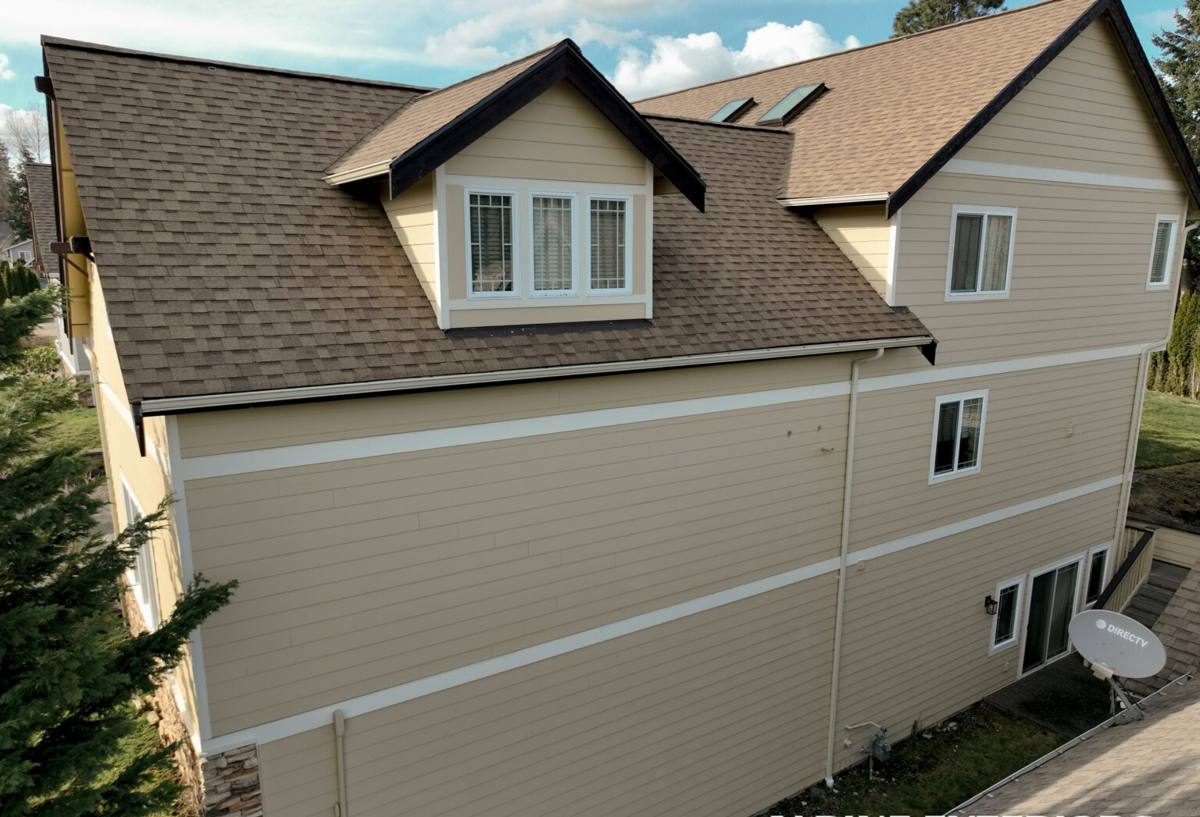
For a Semiahmoo homeowner, this isn't abstract. It shows up as paint that fails years early on the water-facing side of the house, soft trim boards, staining that keeps coming back no matter how many times it's cleaned, and siding that looks fine from the street but is quietly rotting where it meets windows, corners, or the ground. Replacement done right has to address the exposure, not just swap old boards for new ones.
Signs Your Semiahmoo Home May Need Siding Replacement
Some warning signs are obvious. Others are easy to miss until they've caused real damage underneath. On coastal Whatcom County homes, we look for a specific pattern of wear tied to sun, wind, and moisture exposure.
- Paint or finish failing faster on the side of the house facing the water or prevailing wind
- Soft, spongy, or crumbling spots when you press on siding or trim boards
- Persistent moss, algae, or dark staining that returns quickly after cleaning
- Visible cupping, warping, or delamination in older wood-based or composite siding
- Cracked or missing caulk at joints, corners, and window and door trim
- Gaps or separation where siding meets flashing, especially at roof lines and decks
- Rising utility bills or drafts that suggest the wall assembly is no longer sealing properly
- Visible corrosion on fasteners, trim, or hardware near the siding
Any one of these can be a minor repair. Several at once, especially on an older home, usually means the siding system as a whole has reached the point where patching stops making sense.
What a Correct Siding Replacement Actually Involves
Siding replacement is not just cosmetic. The siding itself is the last line of defense, but the water-resistive barrier, flashing, and fastening details behind it do most of the real work of keeping a home dry. On an exposed site like Semiahmoo, getting those details right matters more than it would on a sheltered inland lot.
Tear-Off and Inspection
Removing the old siding is also the chance to inspect the sheathing and framing underneath for hidden rot, especially around windows, corners, and low points where wind-driven rain tends to collect over time. Any soft or damaged sheathing needs to be addressed before new siding goes on — covering it up only hides the problem.
Water-Resistive Barrier and Flashing
A weather-resistant barrier goes over the sheathing, followed by properly integrated flashing at every window, door, deck ledger, and roofline penetration. This is the layer that actually stops water intrusion; siding sheds most of the water, but flashing and the barrier behind it handle what gets past the surface. On coastal properties, we treat these details as non-negotiable, not optional upgrades.
Correct Fastening and Clearances
Fastener choice matters in a salt-air environment — corrosion-resistant fasteners installed to the manufacturer's spec reduce the chance of streaking, loosening, or premature failure. Proper clearance between siding and grade, decks, and roof surfaces also keeps moisture from wicking up into the material, which is a common failure point we see on older coastal homes.
Why We Install Only James Hardie Fiber Cement
We don't install vinyl, LP SmartSide, primed wood, cedar, or other fiber cement brands. That's a deliberate standard, not a sales pitch. Vinyl can warp and fade under sustained sun and wind exposure and doesn't hold up well to impact in coastal wind events. Wood and wood-based composite sidings are the most vulnerable to the moisture and moss issues that define this climate, and they demand ongoing maintenance to stay ahead of rot. Other fiber cement brands may perform reasonably, but we've standardized on one product line so our crews install it correctly every time, and homeowners get one manufacturer's warranty rather than a patchwork of products and promises.
James Hardie fiber cement is non-combustible, doesn't support moss or algae growth the way wood does, and its ColorPlus factory finish is baked on rather than field-applied, which matters in a climate where field-applied paint fails fastest. Hardie's HZ5 product line is specifically engineered for climates with the freeze-thaw and moisture cycling common in the Pacific Northwest, which fits Semiahmoo's conditions well.
Comparing Siding Options for a Coastal Semiahmoo Home
| Factor | Vinyl | Wood / Cedar | James Hardie Fiber Cement |
|---|---|---|---|
| Salt air resistance | Fades and can become brittle over time | Vulnerable to moisture and salt-driven decay | Engineered for coastal and marine-layer exposure |
| Moss and algae resistance | Can trap moisture behind panels | Highly susceptible without constant upkeep | Resists moisture absorption and organic growth |
| Finish durability | Color molded in, but can chalk and fade | Requires repainting or staining every few years | Factory-applied ColorPlus finish, warrantied against fading and peeling |
| Fire resistance | Can melt or deform near heat sources | Combustible | Non-combustible material |
| Typical maintenance | Low, but limited repair options if damaged | High — regular sealing, painting, and repair | Low — occasional washing and caulk checks |
Our Process for Semiahmoo Siding Replacement Projects
Every siding replacement follows the same core sequence, but a coastal Semiahmoo property gets extra attention at the points where this climate causes the most trouble.
- On-site assessment of existing siding condition, wall assembly, and exposure to wind and water
- Identification of any sheathing or framing damage that needs repair before new siding is installed
- Selection of the appropriate James Hardie product line and profile for the home's exposure and style
- Tear-off, sheathing inspection and repair, and installation of a water-resistive barrier
- Flashing integration at every window, door, deck, and roofline transition
- Siding installation to manufacturer clearance and fastening specifications
- Final trim, caulking, and walkthrough to confirm details are sealed and finished correctly
We size crews and schedules around the reality of working near the water — wind and rain windows can shift a project timeline, and we plan for that rather than rushing details to hit a date.
Cost Factors for Semiahmoo Siding Replacement
Every home is different, but the same handful of factors drive most of the cost variation we see on siding replacement projects in this area.
| Factor | Why It Affects Cost |
|---|---|
| Extent of hidden sheathing damage | Rot found during tear-off adds repair scope before new siding can go on |
| Home size and wall complexity | More corners, dormers, and trim details increase labor and material needs |
| Siding profile and accessories | Trim boards, soffit, and specialty profiles add to material cost |
| Site access and staging | Waterfront lots and tighter properties can affect equipment and material staging |
| Existing siding removal | Multiple layers or difficult-to-remove old siding adds tear-off time |
We provide a detailed, itemized estimate after the on-site assessment so you know exactly what's driving the number before any work begins.
Why It Matters to Hire a Crew That Already Works in Semiahmoo
A crew that regularly works Blaine and the surrounding Whatcom County waterfront knows the difference between a standard inland install and one that needs to hold up against salt air, sustained wind, and a moss season that runs longer here than in drier parts of the region. That experience shows up in the small decisions — fastener selection, flashing sequencing, where to add extra attention around window and deck transitions — that determine whether a siding job lasts fifteen years or fifty.
It also means fewer surprises during the project. A contractor familiar with this stretch of coastline has already seen how these homes fail and what it takes to get ahead of it, rather than learning on your project.
Get a Straightforward Estimate for Your Semiahmoo Home
If your siding is showing wear from salt air, wind-driven rain, or moss, it's worth getting an honest look before small problems become expensive ones. We offer a free, no-pressure estimate — walk us through what you're seeing, and we'll give you a clear picture of what your home actually needs. Use the form below to get started.