 Blaine
 Sandy Point Is Not an Average Window Job
Sandy Point sits right up against the water, and that changes what a window has to survive. Homes here take a steady diet of salt-laden air, wind-driven rain coming off the Strait, and a long, damp moss season that inland Whatcom County homes barely deal with. A window that performs fine in Bellingham or even a few miles inland in Blaine proper can start showing problems within a few years out here — pitted hardware, fogged glass, soft trim, sashes that stick or won't seal. Custom windows for a Sandy Point property aren't about fancy shapes or oversized glass, though we do plenty of that too. They're about matching the window — frame material, glazing, hardware, and installation detail — to a coastal exposure that's genuinely tougher on materials than most of the county.
We've been doing exterior work in and around Blaine long enough to know which products hold up out here and which ones look great for a couple of years and then start failing quietly, behind trim you can't see. This page is about what that actually looks like in practice.
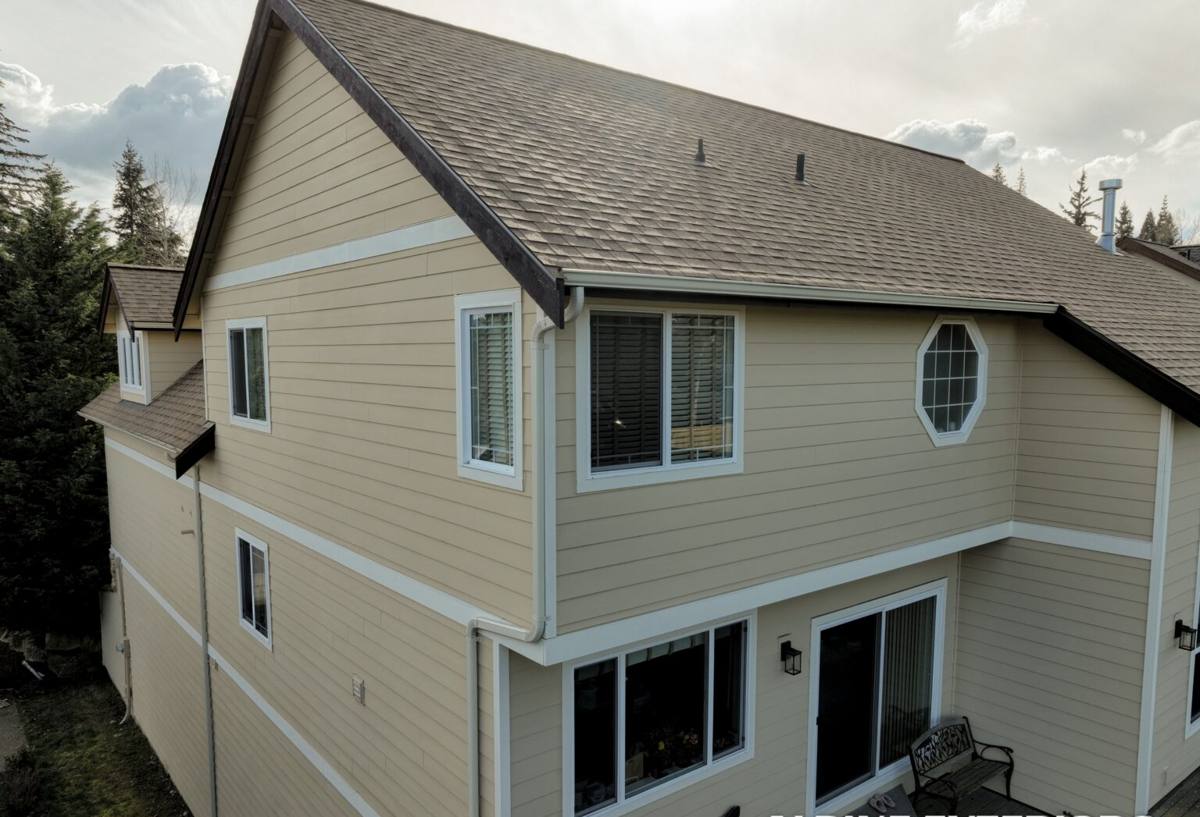
What "Custom" Actually Means for This Job
Custom doesn't mean expensive for its own sake — it means the window is specified for the opening and the exposure, not pulled off a generic size chart. That matters more on a waterfront or near-waterfront lot than almost anywhere else in the region.
Sizing and Fit
Older Sandy Point homes, especially cabins and cottages that have been added onto or upgraded over the decades, rarely have perfectly standard rough openings. Custom-sized units mean we're not forcing a stock window into an opening with shims and extra caulk to make up the difference — every gap you fill with sealant instead of solid material is a future leak point.
Exposure-Specific Specs
A window on the water-facing side of a Sandy Point home needs different hardware finishes, different sealant classes, and often different glazing than one on the sheltered side of the same house. We spec each opening based on which direction it faces and how much direct salt spray and rain it actually takes.
Frame Materials: What Holds Up Near the Water
This is where most of the long-term difference in coastal window performance comes from. There's no single "best" material for every situation, but there are real trade-offs worth understanding before you choose.
| Frame Type | Salt Air Performance | Maintenance | Our Take |
|---|---|---|---|
| Vinyl | Good — won't corrode or rot | Low; occasional cleaning | Solid, cost-effective choice for most Sandy Point homes; confirm UV and impact rating |
| Fiberglass | Very good — dimensionally stable, resists pitting | Low | Our default recommendation for direct water-facing exposures |
| Aluminum-clad wood | Fair to good if detailing is done right | Moderate — watch the clad-to-wood transition | Beautiful interior wood look, but installation quality matters more here than with any other option |
| Bare wood | Poor without disciplined upkeep | High — repaint/reseal cycle | We generally steer clients away from unclad wood on direct-exposure walls; it's a maintenance commitment, not a one-time purchase |
| Uncoated aluminum | Poor — prone to salt pitting and corrosion over time | Moderate to high | We don't recommend it for this exposure; the long-term corrosion risk outweighs the upfront savings |
None of these choices is wrong for every home — a sheltered wall facing away from the water can carry a wood-clad window just fine for decades. The point is matching the material to where it's actually going, not defaulting to whatever's cheapest or whatever a catalog pushes hardest.
Glass and Hardware
Dual-pane, argon-filled units with a quality low-E coating are the baseline we'd recommend for almost any Sandy Point install — they cut condensation risk and hold up to temperature swings between damp mornings and cold nights off the water. For hardware, we push clients toward stainless or coated marine-grade hinges, locks, and cranks. Standard hardware finishes can start showing surface corrosion within a couple of seasons this close to salt water; it's a small cost difference upfront that saves a callback later.
Installation Details That Matter More Here Than Inland
A good window that's installed poorly will fail long before its rated lifespan — and the failure usually shows up as water damage behind the wall, not an obvious problem with the window itself. On a driving-rain coast like this one, installation quality is arguably more important than the window brand.
Flashing and Water Management
Every opening gets flashed so that any water that does get past the exterior cladding is directed back out, not into the wall cavity. This is standard building practice everywhere, but on a wall that regularly takes wind-driven rain, we're not cutting corners on lap sequence or house wrap integration — it's the single biggest factor in whether a window install lasts.
Sealant Selection and Placement
Not all sealants are rated for constant salt spray and UV exposure. We use products specified for exterior marine or coastal exposure where the window meets the siding, and we don't rely on sealant alone to do a flashing detail's job — sealant is the backup, not the primary water barrier.
Shimming and Squaring
A window that isn't shimmed square puts uneven stress on the frame, which can compromise the weatherstripping seal over time — exactly the kind of slow failure that's hard to notice until you've got a drafty or leaking window a few years in.
Moss, Mildew, and the Long Whatcom Damp Season
Whatcom County's moss season runs long, and Sandy Point's shaded, moisture-heavy microclimate can make it worse on north- and west-facing walls. Moss and mildew growth around window trim isn't just cosmetic — trapped moisture against wood trim or under failing caulk lines is exactly how rot gets started. Part of a correct custom window job is detailing the trim and sill so water sheds cleanly and nothing sits wet against the building for weeks at a time.
- Sills should pitch outward slightly so water doesn't pool against the glass or frame
- Trim materials on shaded elevations should be chosen for moisture resistance, not just appearance
- Gaps where moss and organic debris can collect against the frame should be minimized in the design, not left for future cleaning
- Drip caps above the window should be sized to actually shed water past the trim below
Signs Your Current Windows Are Already Struggling
If you're not sure whether it's time for an upgrade, these are the signs we see most often on Sandy Point homes before an owner calls us:
- Fogging or a visible haze between the panes — the seal has failed and the gas fill is gone
- Hardware that's stiff, corroded, or won't lock cleanly anymore
- Soft or discolored trim and sill material around the frame
- A noticeable draft or cold spot near the window on windy days
- Visible gaps where old caulk has cracked, shrunk, or pulled away from the frame
- Moss or dark staining building up in the corners of the trim
Any one of these on its own might just need a repair. Several together, especially on a water-facing wall, usually means the window's water management has broken down and full replacement is the more honest recommendation.
How We Approach a Sandy Point Window Project
Every job starts with an on-site look at the actual openings and exposures, not a phone estimate. From there:
- We assess each opening individually — exposure, condition of existing framing, and any moisture damage already present behind the trim
- We recommend frame material and glazing per opening based on which direction it faces, not a one-size answer for the whole house
- We remove old units carefully and check the rough opening and sheathing for hidden rot or damage before anything new goes in
- We flash, install, and seal to a coastal-exposure standard, not a minimum-code standard
- We walk the finished install with you and explain what maintenance, if any, the specific products you chose will need going forward
Why Local Experience in Sandy Point Actually Matters
A crew that mostly works inland jobs can install a technically correct window and still get it wrong for this location — the wrong sealant class, hardware that isn't rated for salt exposure, or trim detailing that traps moisture instead of shedding it. We work this stretch of Blaine and the surrounding Whatcom County coastline regularly, so the material and installation choices described above aren't theoretical — they're what we've seen actually hold up, and what we've seen fail, on homes with the same wind, rain, and salt exposure yours has. Some Sandy Point properties also have community guidelines worth checking before exterior work begins; we're happy to work with whatever review process applies to your property.
If your windows are drafty, foggy, or just due for an honest look, we'll come out, walk the exposures with you, and give you a straightforward, no-pressure estimate — no upsell on products that don't make sense for your home's specific location.