 Blaine
 Roofing a Home Right on the Water in Sandy Point
Sandy Point sits about as close to the elements as a Whatcom County neighborhood gets. The homes here face open water, near-constant wind, and a level of moisture exposure that inland Blaine properties simply don't deal with. An asphalt shingle roof that would perform fine a few miles inland can wear out faster here if it isn't specified, installed, and maintained with that exposure in mind. This page covers what actually matters for asphalt shingle roofing on a Sandy Point home — not generic roofing advice, but the specifics that make the difference between a roof that holds up and one that needs premature repairs.
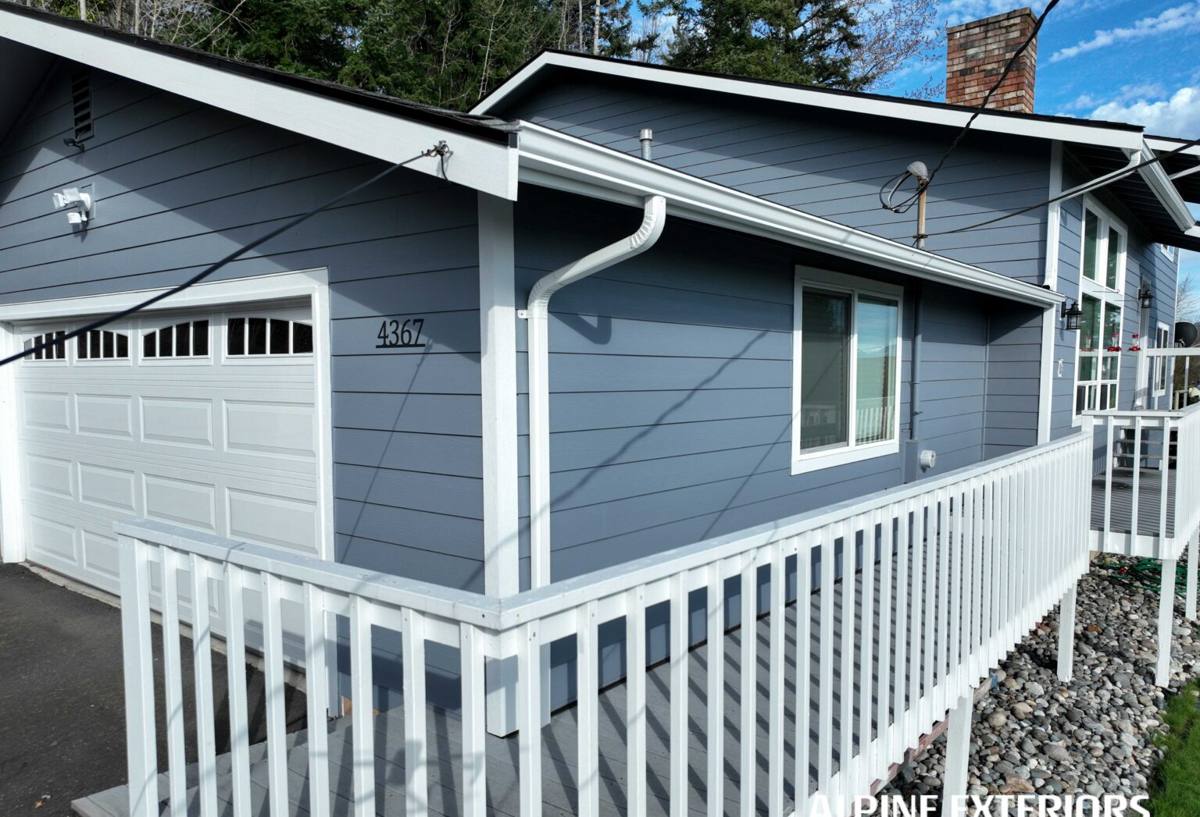
What Sandy Point's Climate Does to a Roof
Three things drive almost every roofing problem we see out here: salt-laden air, driving wind-blown rain, and a long moss season. Each one attacks a roof differently, and a correctly installed system has to account for all three at once.
Salt Air and Metal Fatigue
Airborne salt accelerates corrosion on any exposed metal — flashing, fasteners, vent caps, and drip edge. On a home a short distance from the water, standard galvanized fasteners and thin flashing can start showing rust well before the shingles themselves are due for replacement. Once flashing corrodes, water finds its way underneath the shingle field even if the shingles look fine from the ground.
Driving, Wind-Blown Rain
Sandy Point gets rain that doesn't fall straight down. Wind off the water pushes rain sideways and up under shingle tabs, into vents, and along any edge that isn't properly sealed or lapped. A roof detail that would never leak in a calmer inland setting can leak here if the underlayment, flashing laps, and shingle sealant aren't installed to handle wind-driven water specifically.
Moss, Shade, and a Long Wet Season
Western Whatcom County's damp, mild climate gives moss a long growing window, and roofs with any shade or north-facing slope are especially prone to it. Moss holds moisture against the shingle surface, lifts tabs as it grows, and shortens the life of the granule layer that protects shingles from UV and weather. Left unaddressed, moss growth is one of the most common reasons we see roofs fail years ahead of their rated lifespan.
Choosing the Right Asphalt Shingle for This Environment
Not every asphalt shingle product is built the same way, and for a Sandy Point roof, the differences matter more than they would on a sheltered inland lot. We look at wind rating, algae resistance, and how the shingle is designed to seal down in gusty conditions.
| Shingle Type | Typical Wind Rating | Algae/Moss Resistance | Best Fit for Sandy Point |
|---|---|---|---|
| Standard 3-tab | Lower wind rating, lighter profile | None unless specified | Generally not recommended this close to the water |
| Architectural (laminated) | Higher wind rating, better seal-down | Available with algae-resistant granules | Our standard recommendation for most Sandy Point homes |
| Impact- and high-wind-rated architectural | Highest available rating | Available with algae-resistant granules | Worth the upgrade for fully exposed, waterfront-facing roofs |
We generally steer Sandy Point homeowners toward a laminated architectural shingle with algae-resistant (copper- or zinc-infused) granules as a baseline, and toward a higher wind-rated line for roofs that face open water or sit on an unshielded lot. It's a modest cost difference upfront that pays for itself in fewer moss treatments and less risk of blow-off during a winter storm.
What a Correct Installation Actually Involves
The shingle brand gets most of the attention, but the components underneath it are what actually keep a coastal roof dry. A shingle is only as good as what's beneath and around it.
- Ice-and-water shield at eaves, valleys, and around every penetration — not just the minimum code requirement, but extended coverage given how much wind-driven rain this area sees.
- Synthetic underlayment across the full deck as a secondary water barrier, in case wind ever drives moisture past the shingle layer itself.
- Corrosion-resistant flashing at every wall, chimney, and roof-to-roof transition — we don't rely on standard galvanized flashing this close to salt air.
- Stainless or coated fasteners rather than standard galvanized nails, so the fastener isn't the first thing to fail.
- Proper nailing pattern matched to the shingle manufacturer's high-wind installation instructions, not just the standard pattern — this is often what separates a roof that holds through a windstorm from one that doesn't.
- Sealed, balanced ventilation so moist air escapes the attic instead of condensing against the underside of the deck.
Skipping any one of these doesn't show up on day one. It shows up two or three years later as a leak, a soft spot in the decking, or shingles lifting at the tabs — and by then the fix is more involved than it would have been to do it right the first time.
Ventilation Matters More Here Than People Expect
A shingle roof depends on airflow underneath it as much as it depends on the shingles themselves. In a damp, salt-air climate like Sandy Point's, an attic that can't properly vent moist air will trap condensation against the roof deck. Over time that moisture degrades the decking from below — the shingles can look perfectly fine while the wood underneath is quietly failing. We check intake at the eaves and exhaust at the ridge or gables on every roofing job, and we won't install a new shingle roof over a ventilation setup we know is inadequate. It's cheaper to fix the airflow during a re-roof than to chase a rot problem two years later.
Our Process for a Sandy Point Roofing Job
Every property here has its own wind exposure, tree cover, and roof geometry, so we start with an actual look at the roof rather than a phone estimate.
1. On-Site Inspection
We walk the roof (or use a ladder and lift when steep or wet conditions call for it), check the decking condition, existing ventilation, flashing points, and how exposed the roof is to wind and moisture. We'll also check the attic from inside where accessible.
2. Straightforward Written Estimate
You get a clear scope of work — shingle line, underlayment, flashing approach, and any deck repair or ventilation correction — with pricing broken out so you know what you're paying for and why.
3. Tear-Off and Deck Assessment
We remove the old roofing down to the deck and inspect for soft or rotted sheathing before anything new goes down. Any deck repair is priced and discussed before we cover it up, not discovered after the fact.
4. Installation to Manufacturer High-Wind Specs
Underlayment, flashing, and shingles go down following the manufacturer's high-wind installation requirements, which is what keeps the warranty intact and the roof performing the way it's rated to.
5. Cleanup and Walkthrough
We clear debris, run a magnetic sweep for stray nails, and walk the finished roof with you so you know what was done and what to watch for going forward.
What Asphalt Shingle Roofing Costs in Sandy Point
Every roof is different, but the same handful of factors drive most of the price difference between one Sandy Point job and another.
| Cost Factor | Why It Matters Here |
|---|---|
| Roof size and number of planes | More area and more valleys/hips mean more flashing work and labor time |
| Deck condition | Salt-air and moisture exposure can mean hidden rot that needs repair before shingles go on |
| Shingle tier chosen | Standard architectural vs. high-wind-rated lines carry a real but modest price gap |
| Ventilation corrections | Adding or upgrading intake/exhaust vents adds labor but prevents deck damage later |
| Access and site conditions | Steep pitch, tree cover, or limited driveway/staging access on a given lot affects labor and disposal logistics |
We'd rather walk your specific roof and give you real numbers than quote a broad range that doesn't mean much for your property. The estimate is free either way.
Maintaining a Shingle Roof in a Salt-Air, Moss-Prone Setting
A well-installed roof still needs some upkeep in this environment. A few habits go a long way toward getting the full service life out of the shingles you paid for.
- Have moss and debris cleared from the roof surface before it accumulates, rather than after it's already lifted shingle tabs.
- Keep gutters and valleys clear so wind-driven rain has a clear path off the roof instead of backing up under the edge.
- Watch for rust staining around flashing, vent boots, or fasteners — an early sign that metal components are corroding faster than expected.
- Trim back tree limbs that shade sections of the roof and keep them damp longer than the rest of the surface.
- Get a roof looked at after any major windstorm, even if nothing looks obviously wrong from the ground.
Why Hire a Crew That Already Works Sandy Point
A roofer who mainly works drier, more sheltered parts of Whatcom County can still do competent work, but they may not default to the flashing grade, fastener choice, or ventilation approach that a waterfront-facing Sandy Point roof actually needs. We spec every roofing job out here for salt air and wind exposure from the start — it's not an upgrade we suggest after the fact, it's the baseline. That familiarity also means fewer surprises with access, staging, and working around the tighter, close-set lots common in this kind of shoreline community.
If you're weighing a repair against a full replacement, or just want an honest read on how much life is left in your current roof, we're glad to take a look. Reach out for a free, no-pressure estimate — there's a form below to get started.