 Blaine
 Composite Decking for Nooksack Homes: What the Local Conditions Demand
Homes in and around Nooksack deal with a specific combination of weather that most decking material was never designed for: salt-laden air drifting in off the water, long stretches of driving rain, and a moss season that can run from fall through spring. A deck built for a dry inland climate will not hold up the same way here. Boards cup, fasteners corrode, and anything with exposed end grain starts wicking moisture within the first couple of winters. Composite decking, installed correctly for this specific climate, is one of the few systems that consistently holds up without turning into a yearly maintenance project.
This page is about one thing only: composite deck installation for homes in the Nooksack area, done by a crew that already works this part of Whatcom County. We're not going to give you a generic rundown of composite decking in general terms — we want to walk through what actually matters here, what a correct installation looks like, and what to expect from the process.
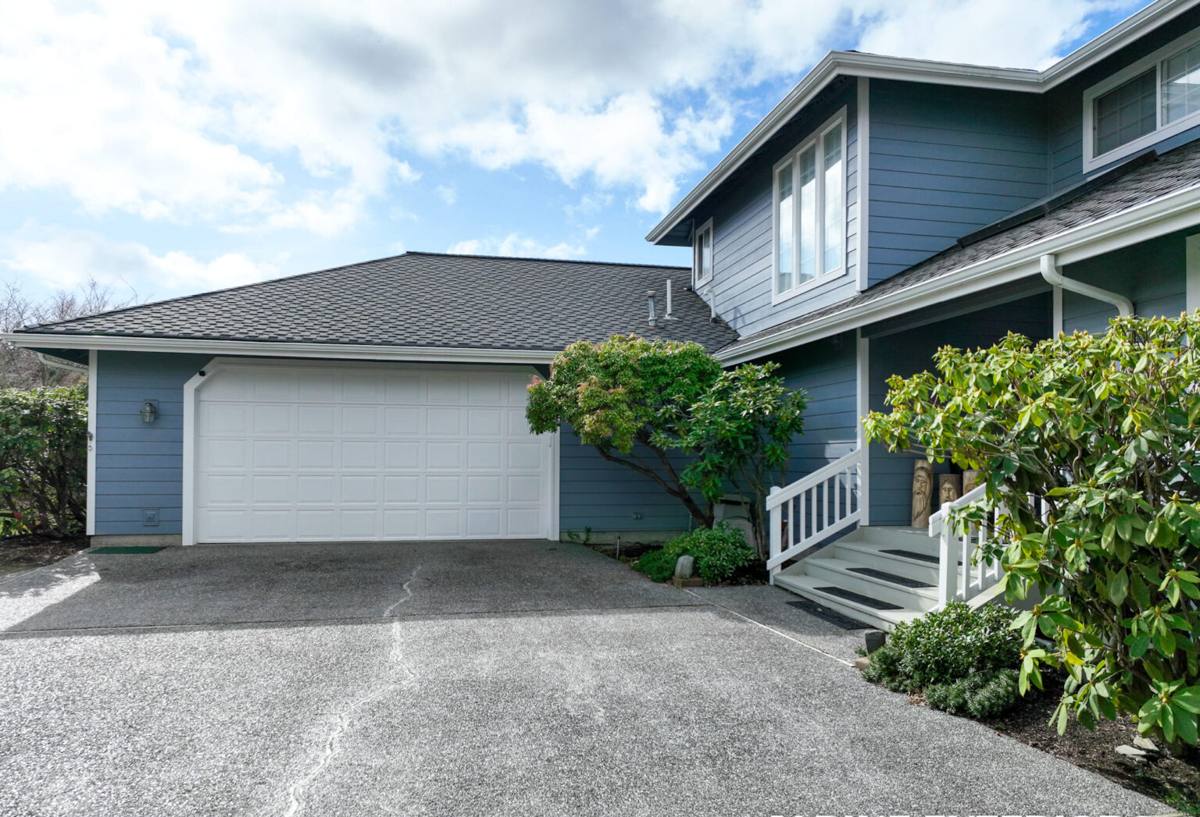
What Whatcom County's Marine Climate Does to a Deck Over Time
Three things drive almost every deck problem we see out this way:
Salt Air and Corrosion
Even a few miles inland from Semiahmoo Bay and the Strait of Georgia, airborne salt accelerates corrosion on anything metal. Cheap or exposed fasteners rust, streak the decking, and eventually loosen. This is one of the most overlooked failure points in decks that "should have lasted longer."
Driving Rain and Standing Moisture
Rain here doesn't just fall straight down — wind-driven rain gets under rail caps, into end grain, and behind ledger boards if flashing wasn't done right. Composite boards themselves don't rot, but the framing underneath, the fasteners, and any wood trim absolutely can if water is allowed to sit.
Moss, Algae, and Shade
Long wet seasons and tree cover mean moss and algae growth on any horizontal surface that doesn't dry out between rains. On a deck, that shows up as green or black film on boards, slippery footing, and — on lower-quality composite — surface staining that's hard to fully remove.
None of this means composite decking is a bad fit for Nooksack. It means the material choice and the installation details both have to account for these three things specifically, not just meet a generic building code minimum.
Composite vs. Wood vs. PVC: How They Actually Hold Up Here
We get asked to compare materials often enough that it's worth laying out plainly. This isn't about which product is "best" in the abstract — it's about which one behaves well under salt air, rain, and moss.
| Material | Moisture Behavior | Maintenance in This Climate | Typical Lifespan Here |
|---|---|---|---|
| Pressure-treated wood | Absorbs moisture, swells and shrinks seasonally | Annual cleaning, periodic sealing/staining | 10-15 years before major repair or replacement |
| Uncapped composite | Some moisture absorption at cut ends and surface | Regular cleaning to prevent mold/algae staining | 15-20 years |
| Capped composite | Moisture-resistant shell, minimal absorption | Occasional washing, low upkeep | 25+ years |
| Solid PVC | Fully moisture-resistant | Low upkeep, but can feel less like natural wood underfoot | 25+ years |
For most Nooksack-area homes, capped composite hits the right balance: it resists the moisture and staining problems that come with the local climate, without the higher material cost or different feel of full PVC. We steer clients away from uncapped composite and untreated wood in this specific climate not because those products are bad everywhere, but because the maintenance burden they create here is disproportionate to what most homeowners want to sign up for.
What a Correctly Built Composite Deck Actually Includes
The composite boards themselves get all the attention, but they're maybe a third of what determines whether a deck performs well in this climate. The rest is in the details underneath and around them.
- Proper joist spacing — many composite products require tighter joist spacing than traditional lumber, especially on diagonal or picture-frame layouts; building to the manufacturer's spec (not just code minimums) prevents bounce and long-term sagging.
- Corrosion-resistant fasteners — stainless steel or coated fasteners rated for coastal/marine exposure, not standard galvanized hardware that will streak and corrode faster in salt air.
- Hidden fastening systems — where the product allows it, hidden clips reduce surface penetration points where water and grime can collect, and keep the deck surface cleaner-looking longer.
- Proper ledger board flashing — the single most common source of hidden rot on a deck attached to a house; correct flashing keeps wind-driven rain from tracking behind the house siding at the attachment point.
- Ventilation under the deck — enough airflow beneath the structure so the framing can dry out between rain events instead of staying damp for weeks at a time.
- Proper end-grain treatment on cut boards — cut composite boards need sealed or capped ends where required by the manufacturer's warranty terms, especially on stair stringers and picture-frame borders.
Skip any one of these and the deck can still look fine for a year or two — the problems that show up from cutting corners in this climate are usually structural or hidden, not cosmetic, which is exactly why they're easy for a homeowner to miss when comparing quotes.
Our Installation Process for Nooksack Properties
1. Site Visit and Drainage Assessment
Before we talk board colors, we look at how water currently moves around the site — grading, gutter discharge, and how close the deck will sit to grade. A deck built over poor drainage will have problems regardless of what decking material sits on top.
2. Framing and Structure
We build or verify the substructure to the decking manufacturer's actual spec for this product line, not a generic "deck framing" standard. This is where joist spacing, footing depth, and ledger attachment get set.
3. Decking Installation
Boards go down with corrosion-resistant fasteners or the appropriate hidden-fastener system, with attention to expansion gaps — composite still moves slightly with temperature, and gaps that are too tight can cause buckling.
4. Railing, Fascia, and Trim
Rail posts and fascia get the same moisture-management attention as the deck field itself — these are common spots for water to collect if they're treated as an afterthought.
5. Final Walkthrough
We walk the finished deck with the homeowner, cover basic care for the specific product installed, and point out anything worth knowing about how it will behave through the first wet season.
Maintaining a Composite Deck Through a Nooksack Winter
Composite decking is low-maintenance, not no-maintenance — especially in a climate with this much moss pressure. A little seasonal upkeep goes a long way:
- Sweep or blow off leaves and debris regularly in fall — trapped wet leaves are the number one cause of surface staining on composite.
- Rinse the deck periodically through the wet season, especially in shaded areas prone to moss and algae buildup.
- Use a soft-bristle brush and a cleaner rated for composite decking if moss or algae does develop — pressure washing on the wrong setting can damage the board's cap layer.
- Keep gutters and downspouts near the deck clear so runoff isn't dumping extra water onto or under the deck surface.
- Check railing posts and fastener points once a year for any early signs of corrosion staining.
- Clear snow with a plastic shovel, not metal, to avoid scratching the surface.
What Affects the Cost of a Composite Deck
Costs vary enough by project that we won't quote a number without seeing the site, but these are the factors that move the price most:
| Factor | Why It Matters |
|---|---|
| Deck size and shape | Complex shapes, angles, and multiple levels add labor and material waste compared to a simple rectangle |
| Height above grade | Taller decks need more substantial footings, framing, and railing, plus stairs |
| Composite product tier | Entry-level capped composite vs. premium lines with deeper wood-grain texture and longer warranties |
| Substructure condition | Replacing or reinforcing an existing frame costs less than a full tear-out and rebuild |
| Railing and trim style | Composite or aluminum railing systems cost more than basic wood but need far less upkeep |
| Site access | Tight side-yard access or sloped lots common in this area can add labor time |
Why a Crew That Already Works in Nooksack and Blaine Matters
Decking contractors who mostly work drier, inland climates sometimes underbuild for what this area throws at a structure — lighter fastener specs, less attention to ventilation, or flashing details that are fine in Eastern Washington but not here. A crew that regularly works Whatcom County properties already knows to build for salt air and sustained wet weather as the default, not as an upgrade.
There's also a practical side to being local: familiarity with the permitting expectations in this part of Whatcom County, realistic scheduling around the wetter months, and being reachable after the job is done if a question comes up during the first winter. That matters more with an exterior structure than with most home projects, since a lot of the real test happens months after installation, not on the day it's finished.
Questions Worth Asking Before You Hire
Whoever you hire to build your deck, a few questions will tell you a lot about how they actually work, not just what they say in a sales pitch:
- Are you licensed and bonded to do this work in Washington State, and can you show proof?
- What fastener and hardware spec do you use, and is it rated for coastal/marine exposure?
- Will you build to the composite manufacturer's structural spec, or to code minimum?
- How do you handle ledger board flashing where the deck attaches to the house?
- What's covered under the manufacturer's warranty versus your own workmanship warranty?
A contractor who can answer these clearly and specifically, without dodging into generalities, is a good sign. One who can't explain their fastener spec or flashing approach probably hasn't thought much about this climate specifically.
If you're weighing a new composite deck or replacing an aging one in the Nooksack area, we're glad to take a look and give you a straightforward, no-pressure estimate — just fill out the form below.