 Blaine
 Storm Damage Roof Repair for Lynden Homes
Lynden sits inland from the water, but that doesn't spare it from the weather that defines this corner of Whatcom County. Marine air pushes in off the Strait of Georgia and Puget Sound, storms track through on a regular winter rotation, and the open farmland around Lynden gives wind nothing to slow it down before it hits a roofline. Add in a wet season that can stretch from October well into May, and you have a climate that is genuinely hard on roofs — not because any one storm is dramatic, but because the cumulative exposure never really lets up.
When we talk about storm damage roof repair in Lynden, we're talking about a specific kind of job: diagnosing what a wind event, a heavy rain, or months of standing moisture actually did to a roof system, then fixing it correctly instead of just patching what's visible from the ground. That distinction matters more here than in drier climates, because a roof that looks fine from the driveway can still be taking on water underneath.
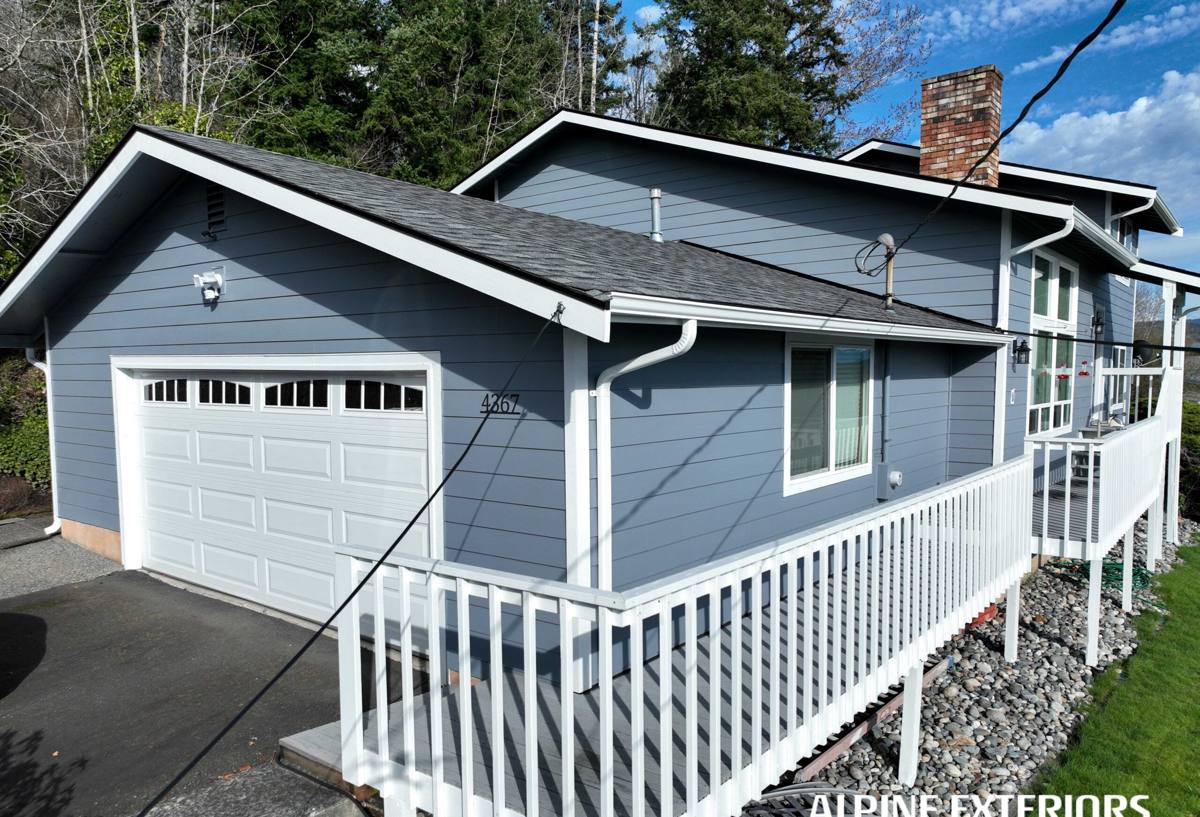
What Whatcom County Weather Does to a Roof Over Time
Most storm damage in this area isn't a single catastrophic event — it's an accumulation. Understanding the mechanism helps explain why repairs need to go deeper than a quick shingle swap.
Wind
Winter windstorms are common through this part of Washington, and Lynden's exposed, low-relief terrain means gusts often arrive with little to break them up. Wind doesn't just tear shingles off outright — more often it lifts an edge just enough to break the seal, or works a fastener loose over several storms before a piece finally lets go. By the time a shingle is visibly missing, the surrounding material has usually already been flexed and weakened.
Driving Rain
Rain that comes in at an angle, pushed by wind, behaves very differently than rain falling straight down. It gets under lifted shingle edges, around poorly sealed flashing, and into any gap that wouldn't matter in calm weather. This is why storm damage repair has to include flashing, valleys, and penetrations (vents, chimneys, skylights) — not just the field of the roof.
Moss and Prolonged Moisture
The long wet season here supports a moss growing period that can run most of the year. Moss holds moisture against the roofing material, works its way under shingle tabs as it grows, and can lift edges enough to let wind and rain do more damage than they would on a clean roof. A roof already carrying moss going into a storm is more vulnerable, not less.
Signs Your Roof May Have Storm Damage
Some damage is obvious. A lot of it isn't, especially from ground level. Here's what we tell Lynden homeowners to check after any significant wind or rain event:
- Shingles that look curled, cracked, or lifted at the edges, even slightly
- Granules collecting in gutters or at downspout outlets — a sign of accelerated shingle wear
- Visible gaps or shiny new metal around chimneys, vents, or skylights (flashing shifted or pulled)
- Water stains on interior ceilings or upper walls, even faint ones
- Sagging or uneven spots when viewed along the roofline from the yard
- Moss buildup concentrated on one side of the roof (usually the north-facing, shadiest slope)
- Debris — branches, needles — packed into valleys or against a chimney base, trapping moisture
- Any shingles found in the yard after a storm, even a few
None of these guarantee a major problem. But any one of them is a reasonable trigger for an inspection, especially before the next storm rolls through.
What a Correct Storm Damage Repair Actually Involves
A rushed repair replaces what's obviously missing and stops there. A correct repair follows the water. Here's what that means in practice:
Inspection Before Repair
We look at the full roof system, not just the damaged section — the field, the flashing, the valleys, the underlayment where it's exposed, and the decking underneath where access allows. Storm damage rarely stays confined to one shingle; wind and water travel.
Matching Materials, Not Just Covering Gaps
Replacement shingles need to match the existing roof in type, weight, and ideally age-appropriate color, so the repair doesn't stand out as an obvious patch and so the new material performs the same way the surrounding roof does in wind.
Flashing and Underlayment Get Checked, Not Assumed
If flashing around a chimney or vent has shifted, it gets re-seated and re-sealed properly — not just caulked over. Caulk is a temporary fix at best against driving rain; it's not a flashing repair.
Decking Assessment Where Water Has Been Present
If there's any sign water reached the decking, that gets addressed before new shingles go down. Roofing over damp or soft decking is one of the most common ways a "repair" fails within a year or two.
Our Storm Damage Repair Process
- Assessment — We walk the roof (weather permitting) and document the actual extent of damage, not just what's visible from the ground.
- Honest scope — We tell you plainly whether this is a targeted repair, a larger section replacement, or something that should be flagged for insurance. We don't upsell a repair into a full roof job that isn't needed.
- Written estimate — Clear on materials, scope, and price before any work starts.
- Repair — Matched materials, proper flashing work, and attention to the details that determine whether the fix lasts through the next storm season or just the next dry week.
- Walkthrough — We show you what was done and what to watch for going forward.
Repair vs. Replacement: How We Help You Decide
Not every storm-damaged roof needs to come off. The right call depends on the roof's age, how widespread the damage is, and what condition the material is in beyond the storm event itself.
| Factor | Points Toward Repair | Points Toward Replacement |
|---|---|---|
| Roof age | Under 12-15 years, otherwise sound | Nearing or past expected service life |
| Damage extent | Isolated section or single slope | Multiple areas, or damage found on inspection beyond the storm site |
| Decking condition | Dry, solid where checked | Soft spots or water staining found underneath |
| Shingle condition elsewhere | Granule loss minimal, tabs still sealing | Widespread granule loss or brittle shingles found roof-wide |
| Moss history | Light, recently addressed | Heavy, long-term moss with likely underlying moisture damage |
We'd rather do an honest repair on a roof that has years left in it than talk someone into a replacement they don't need — and we'd rather tell you a repair is temporary than let you think it's a long-term fix when it isn't.
Storm Damage Repair Cost Factors
Every roof and every storm is different, so we won't quote a number without seeing the roof. What we can tell you is what actually drives cost up or down on a repair like this:
| Factor | How It Affects Cost |
|---|---|
| Size of damaged area | A single section costs far less than multi-slope damage |
| Roof pitch and access | Steeper or harder-to-reach roofs take more time and setup |
| Flashing work required | Chimney, skylight, and valley flashing repairs add labor beyond shingle swaps |
| Decking replacement | Adds material and labor if water reached the wood beneath |
| Shingle matching | Discontinued or uncommon shingle types may cost more to source |
| Moss removal | Heavy buildup needs careful removal before repair work can proceed safely |
Insurance and Storm Damage Claims
Many storm damage repairs in this area are at least partly covered under homeowners insurance, depending on your policy and the cause of damage — wind and falling debris are commonly covered; long-term wear, neglect, and moss damage typically are not. We're not insurance adjusters and we don't promise a claim outcome, but we can document damage clearly with photos and a written scope that you can bring to your insurer, and we're happy to talk through what we're seeing in plain terms.
Why a Local Whatcom County Crew Matters for This Job
Storm damage repair isn't a specialty product — it's a judgment call made on-site, repeatedly, about what's actually wrong versus what just looks wrong. A crew that regularly works roofs in Lynden and the surrounding Whatcom County area has seen how this specific climate ages a roof: which slopes hold moss longest, how driving rain from a typical winter storm track tends to find its way in, and what "normal" wear looks like here versus a genuine storm-caused problem. That local pattern recognition is what keeps a repair from being either overkill or insufficient.
It also means faster response after a storm, when timing matters — a damaged roof left exposed for days invites more water intrusion, not less. Working with a crew that's already familiar with this area and can get on the roof promptly is part of what makes the repair hold up.
Maintenance Steps That Reduce Future Storm Damage
A repair addresses what already happened. These habits reduce how much storm damage accumulates going forward:
- Schedule a roof check after any major wind event, even without visible signs of damage
- Keep gutters and downspouts clear so water isn't backing up under roof edges
- Address moss while it's light — waiting until it's heavy means more damage underneath
- Trim back branches that overhang the roof, reducing both debris and abrasion during wind
- Have flashing checked every few years, since it fails quietly and often before shingles do
If a recent storm has you wondering whether your roof came through it clean, we're glad to take a look. We offer free, no-pressure estimates for storm damage assessment and repair in Lynden and throughout the surrounding area — just fill out the form below and we'll get in touch.