 Blaine
 Living This Close to the Water Changes What Your Siding Has to Survive
Homes in the Peace Arch area of Blaine sit about as close to the water and the international border as it gets in Whatcom County, and that location comes with a specific set of demands on exterior materials. Salt-laden air drifts in off the water, wind-driven rain hits siding sideways during winter storms, and the tree cover and dampness that make this part of Washington beautiful also make it one of the harder places in the state to keep moss and algae off a house. Siding here isn't just cosmetic — it's the first and most exposed layer of defense against a coastal climate that works on a building year-round, not just during a rainy season.
We install James Hardie fiber cement exclusively, and across our work in Blaine and Whatcom County, we've come to think of Peace Arch as one of the more demanding pockets to build for. That's not a knock on the area — it's just an honest read of what salt air, driving rain, and a long moss season do to a home's exterior over ten, twenty, and thirty years.
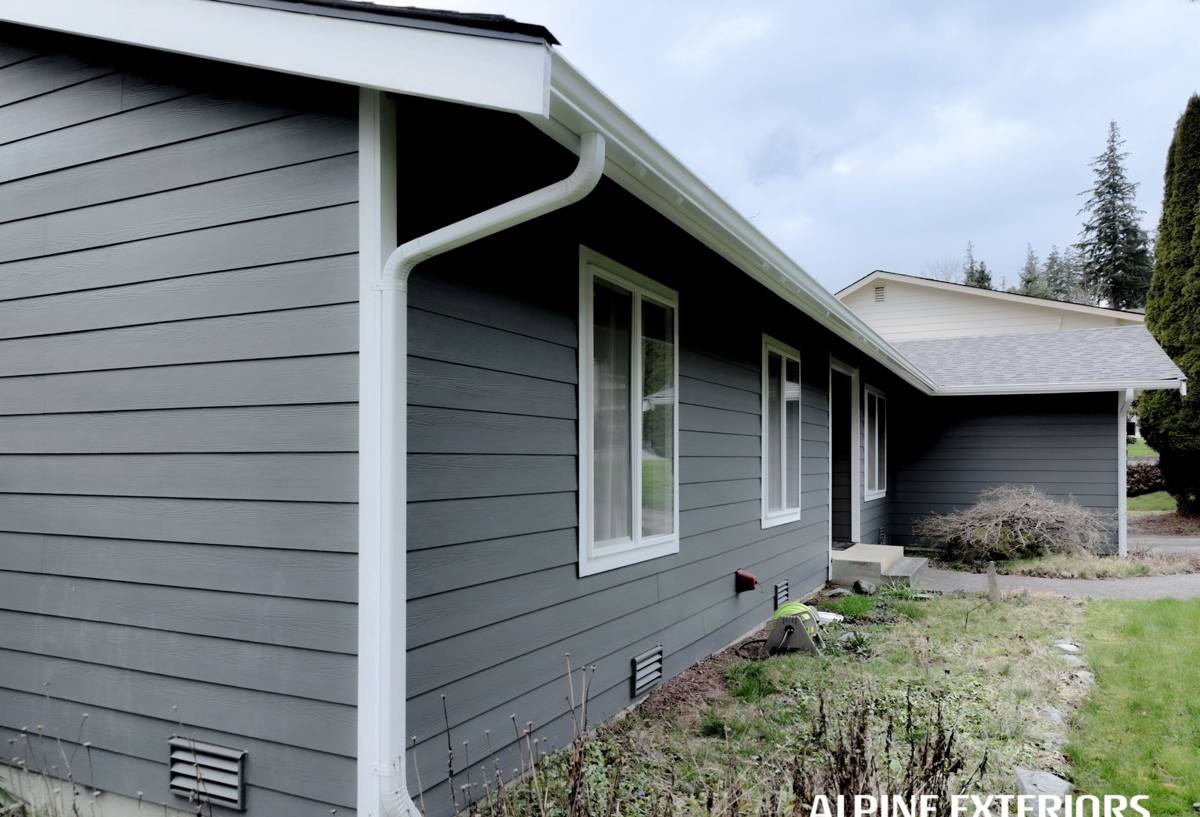
What Salt Air, Rain, and Moss Actually Do to Siding Over Time
Salt Air and Corrosion
Airborne salt doesn't just affect boats and metal railings. It settles on siding surfaces, fasteners, and trim, and over years it accelerates the breakdown of paint films, corrodes lower-grade fasteners, and can dull or discolor finishes that weren't engineered with a marine environment in mind. Homes closer to open water get more of this exposure, but salt-bearing air moves with the wind and settles well beyond the waterfront itself.
Driving Rain and Moisture Intrusion
Blaine's winter storms don't just drop rain — they push it sideways. Wind-driven rain finds every gap, seam, and fastener hole that isn't properly flashed and sealed, and once moisture gets behind siding, it has nowhere to dry out quickly in a climate this damp. That's when you start seeing rot in sheathing, trim, and framing that stays invisible from the street until the siding itself starts to fail.
Moss, Shade, and Trapped Dampness
The same tree cover and cloud cover that give this area its character also mean long stretches where siding, especially on north-facing and shaded walls, simply doesn't get enough sun or airflow to dry out between rains. Moss and algae take hold in those conditions, and on the wrong material, that growth holds moisture against the surface and shortens its useful life.
Why We Only Install James Hardie in This Environment
James Hardie fiber cement was engineered specifically for climates like this. It's a cement-based product, not wood or wood-derived, which means it doesn't feed rot the way wood-based sidings can, and it holds up to repeated wet-dry cycling without swelling, delaminating, or losing its shape. For a coastal climate like Blaine's, that matters more than almost any other performance factor.
The HZ5 Product Line
Hardie's HZ5 formulation is engineered for wetter, colder climates like the Pacific Northwest, with moisture and freeze-thaw performance built into the product rather than added after the fact. We spec HZ5 as the standard for Peace Arch projects rather than a version built for a drier region.
ColorPlus Factory Finish
Hardie's ColorPlus finish is baked on in a controlled factory environment, with UV-cured coats and a bond that resists the fading, chalking, and peeling that field-applied paint struggles with in a salty, wet climate. On a home exposed to constant coastal moisture, a factory finish engineered to hold color and adhesion is worth more than it looks like on paper.
Non-Combustible and Built to Last
Fiber cement doesn't burn, doesn't attract wood-boring insects, and won't warp the way some wood-based and engineered wood sidings can when they take on and release moisture repeatedly. Combined with a manufacturer warranty that transfers to a new owner, it's the product we're comfortable standing behind on homes that will face this climate for decades.
What a Correct Install Requires in Peace Arch Specifically
James Hardie siding performs the way it's supposed to only when it's installed to spec — the material is engineered well, but a sloppy install defeats most of that engineering. In a high-exposure area like this, a few details matter more than they would somewhere drier and calmer.
Weather Barrier and Flashing
A continuous, properly lapped weather-resistive barrier behind the siding, correct flashing at every window, door, and roofline intersection, and proper drainage planes are non-negotiable here. Wind-driven rain will find any shortcut in this step, and it's the single biggest factor in whether a home stays dry behind its siding.
Fastening and Clearances
Hardie specifies fastener types, spacing, and minimum clearances from grade, roofing, and other surfaces for a reason — those clearances keep siding out of standing water and splash zones, and correct fasteners resist the corrosion that salt air accelerates. Skipping or fudging these specs is exactly how a good product ends up with an early, avoidable failure.
Caulking, Gaps, and Field Finish Touch-Up
Joints and butt seams need the right sealant, applied correctly, and any field-cut edges need to be primed and touched up so the factory finish isn't compromised at the one point it's most vulnerable. In a moss-prone, damp climate, an unsealed seam is an invitation for both water intrusion and growth.
Our Process for a Peace Arch Siding Project
The steps below are the same core process we use across Blaine and Whatcom County, but each one gets adjusted for the specific exposure — sun, shade, wind direction, proximity to water — of the individual home.
- On-site assessment: we walk the exterior, check current siding and sheathing condition, and identify moisture, moss, or rot issues before quoting anything.
- Product and color selection: we help you choose the right Hardie plank, panel, or shingle profile and a ColorPlus color that will hold up to this specific light and salt exposure.
- Tear-off and prep: old siding comes off, sheathing gets inspected and repaired as needed, and a new weather barrier goes on correctly rather than reusing the old one.
- Installation to manufacturer spec: fastening, flashing, and clearances follow Hardie's published requirements, not shortcuts.
- Final walkthrough: we inspect seams, trim, and touch-up work with you before we consider the job finished.
How James Hardie Compares to Other Siding Options in This Climate
We only install James Hardie, but homeowners deciding on a siding replacement deserve an honest look at how the alternatives hold up in a salt-air, high-rain, high-moss environment like Peace Arch.
| Material | Salt Air Exposure | Driving Rain / Moisture | Moss and Shade |
|---|---|---|---|
| James Hardie fiber cement (HZ5) | Resists corrosion-driven finish failure; factory-cured finish holds up well | Doesn't swell or rot; performs well when flashed and installed correctly | Non-organic material doesn't feed moss growth the way wood-based products can |
| Vinyl siding | Can fade, chalk, and become brittle faster under salt and UV exposure | Sheds bulk water but seams and panels can allow moisture behind the material | Moss and algae can still take hold on the surface in shaded, damp areas |
| LP SmartSide (engineered wood) | Finish and edges are more sensitive to salt and moisture cycling over time | Wood-based core is more vulnerable to swelling and edge damage if water gets in | Organic wood content is more susceptible to moss and rot in shaded, wet conditions |
| Cedar / primed spruce | Requires ongoing refinishing to resist salt-driven weathering | Prone to cupping, splitting, and rot without diligent maintenance | Natural wood is the most susceptible to moss, mildew, and rot of this group |
Cost Factors for a Peace Arch Hardie Siding Project
Every home is different, and we won't quote a number without seeing the house, but the factors below are the main things that move a Peace Arch project's cost up or down.
| Factor | Why It Matters Here |
|---|---|
| Current siding and sheathing condition | Hidden moisture or rot found during tear-off adds repair scope before new siding can go on |
| Home size and wall complexity | More corners, dormers, and trim details mean more flashing, cutting, and labor |
| Product line and profile | Plank, panel, and shingle profiles carry different material and labor costs |
| Color and finish selection | Standard ColorPlus colors versus premium or custom-matched finishes affect pricing |
| Site exposure and access | Wind exposure, shaded and hard-to-reach walls, and equipment access can add labor time |
A Maintenance Checklist for This Climate
James Hardie siding is low-maintenance compared to wood or engineered wood, but "low-maintenance" isn't "no-maintenance" in a climate that stays damp for much of the year. A short list of habits keeps it performing the way it's designed to:
- Rinse siding once or twice a year to clear salt residue, pollen, and organic buildup before it accumulates
- Check and clear gutters and downspouts regularly so water isn't running down or pooling against siding
- Keep shrubs and trees trimmed back from exterior walls to improve airflow and sun exposure on shaded sides
- Inspect caulking at trim, seams, and penetrations annually and have gaps resealed before they let water in
- Look for early moss or algae growth on north-facing and shaded walls and address it before it spreads
- Have flashing and fasteners checked periodically, especially after major windstorms
Why It Matters That We Already Work in Peace Arch
A crew that already builds and repairs siding in this specific pocket of Blaine has already seen how these homes weather — which walls take the worst of the wind-driven rain, which sides stay shaded and damp longest, and how quickly salt air affects finishes here compared to more sheltered parts of Whatcom County. That familiarity shows up in small decisions: where we add extra flashing attention, which color finishes we steer people toward for long-term fade resistance, and how we sequence a project around this area's weather windows rather than a generic install schedule.
It also means we're not learning the local permitting and inspection process on your project. We know what Blaine's building department expects to see at inspection, and we build to that standard from the first day of tear-off, not just the final walkthrough.
If your Peace Arch home's siding is showing its age, or you're planning ahead before the next storm season, we're happy to walk the exterior with you and talk through what a correct James Hardie installation would look like for your specific home — no pressure, no obligation, just a straight answer. Use the form below to request a free estimate.