 Blaine
 Siding That Has to Work in California Creek's Climate
California Creek sits close enough to Semiahmoo Bay and Drayton Harbor that salt-laden air is a daily fact of life for the homes out here, not an occasional inconvenience. Add in the driving rain that blows off the Strait of Georgia through the fall and winter, plus the shade and dampness that keeps moss growing on roofs and siding for a good chunk of the year, and you've got one of the tougher exterior environments in Whatcom County. Siding in this part of Blaine isn't just a cosmetic choice — it's the first line of defense against three separate stressors working on the house at once.
Salt air accelerates corrosion on fasteners, trim, and any metal flashing that isn't properly rated or protected. Driving rain, especially when it's coming sideways off the water, finds every gap, seam, and poorly caulked joint and pushes water behind the cladding instead of just running down the face of it. And moss — which thrives in the moisture and filtered light common to the wooded and creek-adjacent lots around here — holds water against a wall surface far longer than open sun-exposed siding would ever see. Each of these problems is manageable on its own. Stacked together, they're exactly why we standardized on one product system instead of installing whatever a homeowner asks for.
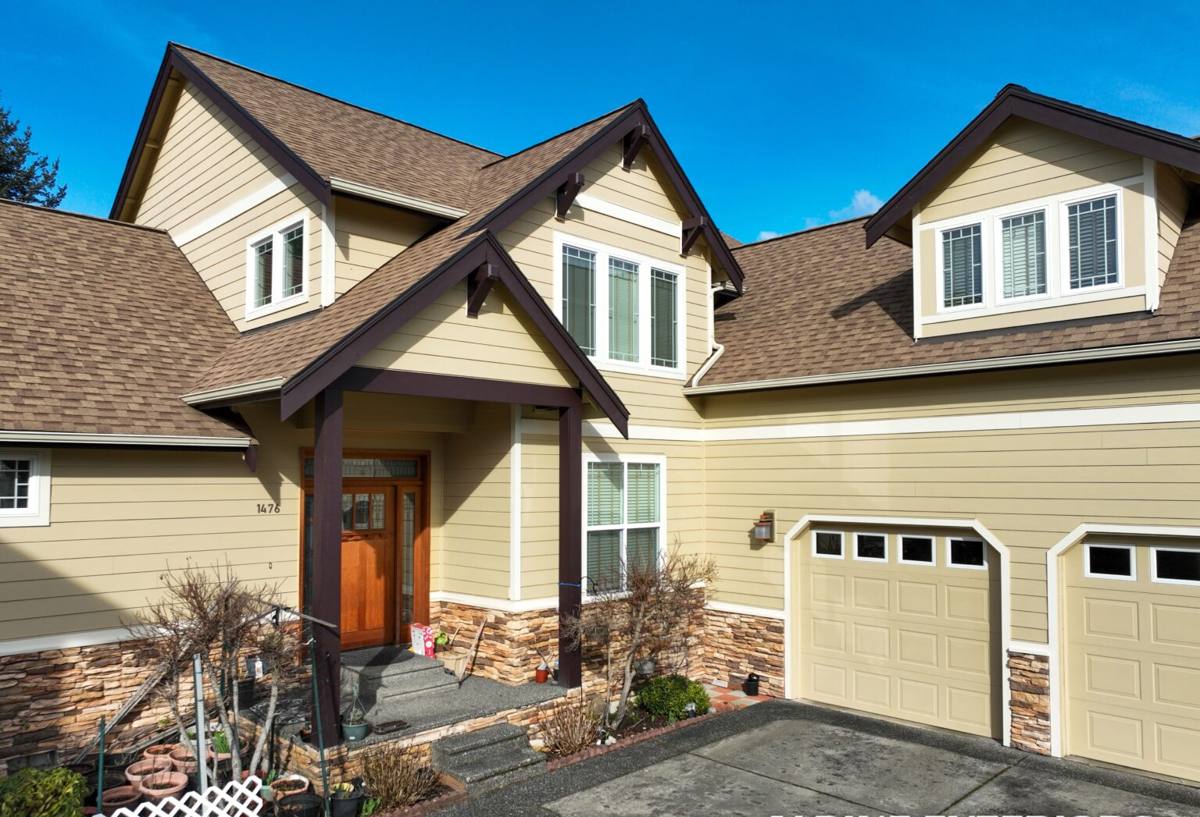
Why We Install Only James Hardie Fiber Cement
We don't install vinyl, LP SmartSide, cedar, primed spruce, or other fiber cement brands like Allura or Cemplank. That's not a marketing position — it's a decision based on what actually holds up in a climate like California Creek's. Vinyl expands and contracts with temperature swings and can warp or crack under wind-driven rain over time, and its seams are a weak point for the kind of moisture intrusion this area sees. Wood and wood-based products like LP SmartSide and primed spruce are organic materials in a climate that grows moss on everything that sits still — that's a maintenance commitment most homeowners don't want to sign up for indefinitely. Other fiber cement brands may be reasonable products, but we've chosen to build our installation expertise, warranty relationships, and supply chain around one system so we can do it right every time rather than spreading ourselves across several.
James Hardie fiber cement is non-combustible, engineered specifically for wet coastal climates through its HardieZone system, and finished at the factory with ColorPlus Technology, which resists fading and chipping far better than field-applied paint. It also carries a strong transferable warranty that protects the investment if a home changes hands, which matters in a community like California Creek where waterfront and near-waterfront properties tend to hold their value and change ownership over the years.
What "HardieZone" Actually Means Here
James Hardie engineers its products for two climate zones — HZ5 for freeze-prone regions and HZ10 for wetter, milder coastal regions like ours. Blaine and the surrounding Whatcom County coastline fall squarely into HZ10 territory: high humidity, heavy rainfall, and a long damp season rather than deep freeze cycles. HZ10 products are formulated with that moisture exposure in mind, which is one more reason substituting a generic fiber cement product isn't something we're willing to do on a California Creek home.
What a Correct Installation Involves
Fiber cement siding is only as good as the installation behind it. A beautiful ColorPlus finish over a poorly flashed wall will still let water in — and once water gets behind siding in a salt-air, high-rainfall environment like this one, it doesn't dry out quickly. Correct installation in California Creek means paying close attention to the details that generic installs skip:
- A continuous weather-resistant barrier installed behind the siding, with all seams properly lapped and taped to shed water downward
- Rain-screen gapping where conditions call for it, so any moisture that does get behind the siding has a path to drain and dry rather than sitting against the wall sheathing
- Corrosion-resistant fasteners and flashing — a real consideration this close to salt water, where standard hardware corrodes faster than inland installs would ever show
- Proper clearance between the siding's bottom edge and grade, decks, patios, and roof lines, so splashback and standing water don't sit against the material
- Correctly sized gaps at butt joints and trim, sealed with a high-quality, paintable, flexible sealant rated for exterior use — not caulked tight, which traps moisture
- Fastener placement and spacing that follows Hardie's published installation instructions, which is what keeps the manufacturer's warranty valid
Skipping any one of these doesn't show up as a problem on day one. It shows up two or three winters later as staining, soft trim, or paint failure — usually right around the areas most exposed to wind-driven rain.
Our Process for a California Creek Siding Job
We approach every siding project out here the same methodical way, adjusted for the specific exposure of the lot — whether it's more open to wind off the water or more sheltered and shaded, which changes the moss and moisture picture.
- On-site assessment. We look at the home's orientation, existing siding condition, trim and flashing details, and any trouble spots — areas with visible moss buildup, staining, or soft wood are usually a sign of a moisture issue we need to address as part of the job, not just cover up.
- Tear-off and sheathing check. Once the old siding is off, we inspect the sheathing underneath for rot or water damage. This is the point where hidden problems from years of moisture exposure get caught and repaired before anything new goes on.
- Weather barrier and flashing. We install a continuous, correctly lapped weather-resistant barrier and flash every window, door, and penetration before siding goes up. This step matters more here than almost anywhere else in the county given the rain exposure.
- Hardie installation to spec. Panels or lap siding go up following James Hardie's installation guidelines exactly — fastener spacing, gapping, and clearances included — because that's what keeps the manufacturer warranty intact.
- Trim, caulking, and finish detailing. Joints are sealed with the right sealant, not overfilled, and every trim piece is checked for proper drainage.
- Final walkthrough and cleanup. We walk the finished job with the homeowner, and the site is cleaned of debris and old material before we call it done.
Comparing Siding Materials for This Climate
| Material | Salt Air Resistance | Moss / Moisture Behavior | Maintenance Burden |
|---|---|---|---|
| James Hardie Fiber Cement | Strong — non-combustible, factory finish resists corrosion-driven wear | Doesn't feed moss growth; sheds water well when installed with proper gapping | Low — occasional wash, repaint on a much longer cycle than wood |
| Vinyl | Can become brittle and discolor faster in salt-exposed, sun-and-wind conditions | Seams can trap moisture; doesn't breathe | Low labor, but limited repair options if damaged |
| Cedar / Primed Spruce | Vulnerable — organic material affected by salt and moisture over time | Prime moss and mildew substrate in shaded, damp settings | High — regular sealing, staining, and moss treatment |
| LP SmartSide | Engineered wood strand product; edge and seam sealing is critical near moisture | Requires diligent sealing to resist moisture wicking | Moderate to high — depends heavily on install quality |
What Fiber Cement Siding Costs to Install
Every home is different, but a few factors consistently drive the price on a California Creek project more than others:
| Cost Factor | Why It Matters Here |
|---|---|
| Tear-off and sheathing repair | Moisture-related sheathing damage is more common on homes with a history of wind-driven rain exposure or neglected maintenance |
| Siding profile and trim complexity | Lap siding, panel systems, and shingle-style Hardie products all price differently, and homes with more trim detail take more labor |
| Flashing and weather barrier scope | Doing this correctly for a salt-air, high-rainfall site takes more material and labor than a basic re-side |
| Home size and story height | Larger and taller homes require more scaffolding, staging, and material |
| Color and finish selection | ColorPlus factory finishes vs. field-painted finishes carry different material costs |
We give a firm, itemized quote after walking the property — not a rough number over the phone — because the condition of what's underneath the existing siding matters as much as the siding itself.
Living With Fiber Cement in a Moss-Prone Area
One advantage homeowners in California Creek notice quickly after switching to Hardie: it doesn't feed moss and algae the way wood-based siding does. Moss still grows on organic debris that lands on any siding surface, but Hardie's cement composition doesn't give it the same foothold that cedar or engineered wood does, and the factory finish holds up better against pressure washing when it's time to clean things off. A simple annual rinse and a visual check of caulk lines and trim is typically all it takes to keep it looking right through Blaine's long damp season.
- Rinse siding annually to clear moss spores, salt residue, and organic debris before they build up
- Keep trees and shrubs trimmed back from siding to improve airflow and sun exposure on shaded sides of the house
- Check caulking at trim and joints every year or two, since UV and moisture cycling will eventually wear sealant down
- Watch downspouts and grading near the foundation — misdirected water is one of the most common causes of localized siding damage
- Address any soft trim or staining early rather than waiting, since moisture problems compound quickly in this climate
Why Local Experience in California Creek Matters
A siding crew that mostly works inland or in drier parts of the state doesn't naturally think about rain-screen gapping, corrosion-resistant fasteners, or the specific flashing details that a salt-air, high-rainfall property near the water demands. Those aren't optional upgrades out here — they're the difference between siding that looks good for two years and siding that performs for decades. Working regularly in and around Blaine and Whatcom County's coastal communities means we've already seen how houses in this specific microclimate age, where they tend to develop problems, and what details prevent those problems in the first place.
That local pattern recognition shows up in small decisions throughout a job — how tight to run a gap, where extra flashing is worth the material cost, which corners of a house need the most attention on a windy, water-facing lot. It's the kind of judgment that only comes from doing this work in this exact kind of climate, over and over.
A Quick Checklist Before You Re-Side
- Ask whether your contractor installs to the manufacturer's published specifications — this is what keeps your warranty valid
- Confirm what weather barrier and flashing details are included, not just the visible siding material
- Ask how fastener and hardware corrosion resistance is handled for a salt-air site
- Get a written, itemized quote after an in-person assessment, not a rough estimate sight unseen
- Ask what happens if sheathing damage is found once the old siding comes off
If you're weighing a re-side in California Creek, we're happy to walk your property, take an honest look at what's underneath your current siding, and put together a clear, no-pressure estimate. There's no obligation — just a straight answer on what your home actually needs.