 Blaine
 Why Sandy Point Decks Wear Differently Than Decks Inland
Sandy Point sits right on the water at the edge of Whatcom County, and that location changes what a deck has to survive. A deck built the same way ten miles inland in Blaine or Ferndale can hold up fine for years with basic maintenance. A deck at Sandy Point is dealing with salt-laden air blowing off the water almost every day, wind-driven rain that gets pushed sideways under railings and against fascia, and a shoulder season — fall through spring — where the wood and ground around the deck barely dry out. None of that means a deck can't be built to last here. It means the build has to account for those conditions from the framing up, not just at the surface.
A lot of the deck problems we get called out to look at in this neighborhood aren't failures of the decking boards themselves — they're failures of the parts underneath that nobody thinks about until something feels soft, a railing post wiggles, or fasteners start bleeding rust through the boards.
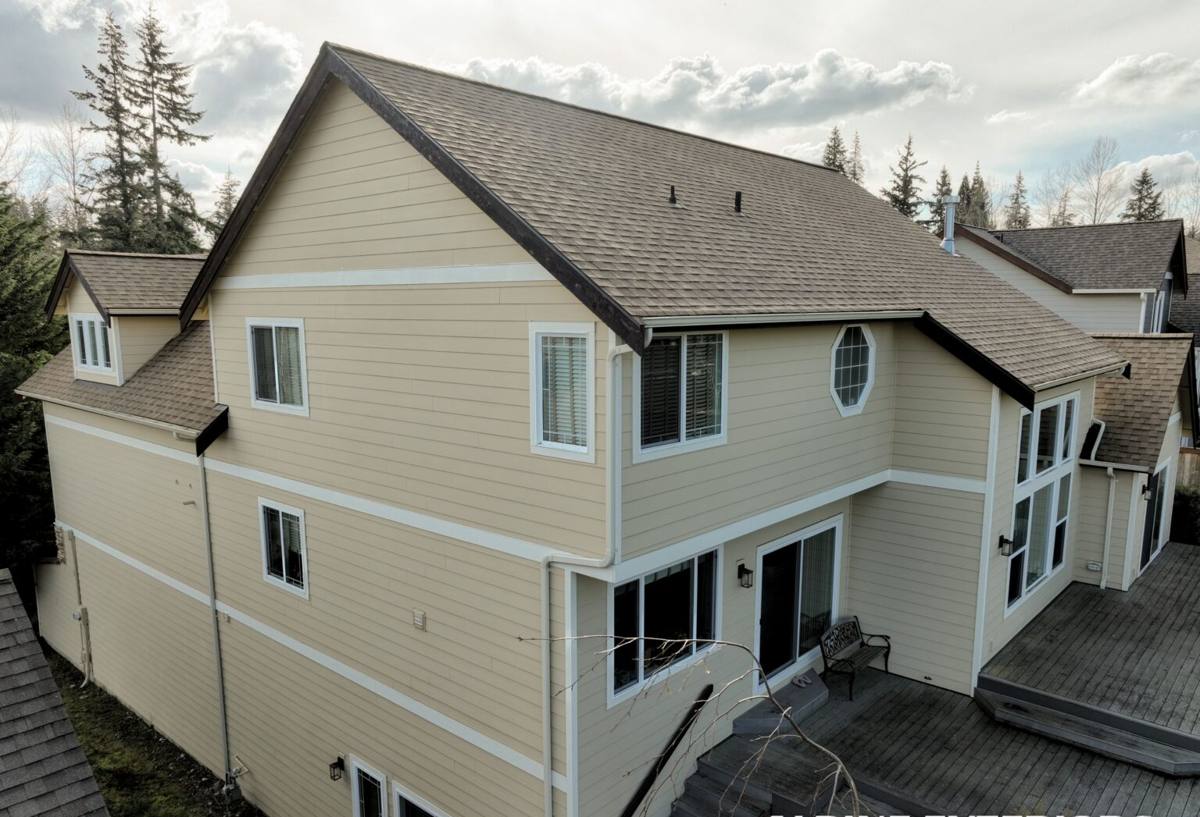
What Salt Air Actually Does to a Deck
Salt air doesn't just sit on the surface — it works its way into every metal connection point on a deck over years of exposure. The practical effects show up as:
- Corrosion at screw heads, joist hangers, and bolts, especially with hardware not rated for coastal or treated-wood exposure
- Faster breakdown of cheaper aluminum railing systems and lower-grade fasteners
- Accelerated weathering on unfinished or poorly finished wood surfaces
- Salt residue that holds moisture against the deck surface longer after rain, slowing dry-out time
None of this is dramatic on its own. It's cumulative. A deck built with standard-grade hardware might look fine for the first couple of years at Sandy Point and then start showing problems all at once around year four or five, right as those small corrosion points finally catch up with each other.
Moss Season Adds a Second Problem
Whatcom County's wet season is long, and on a shaded or partially shaded lot near the water, moss and algae growth on deck surfaces can start well before winter and hang on into spring. Moss holds moisture directly against the decking surface, which is bad news for wood and can even affect the surface texture and slip resistance of some composite products over time. A deck that's built with the right slope, gapping, and airflow underneath sheds water faster and gives moss less to hold onto in the first place.
Framing and Fasteners: The Part Nobody Sees
The decking boards get all the attention because they're what you look at and walk on, but the framing and fasteners are what determine whether a deck is still solid in ten years. For a Sandy Point build, that means:
- Stainless steel or coated fasteners rated for coastal and treated-lumber exposure, not standard interior-grade hardware
- Joist hangers and structural connectors matched to the fastener spec, since mixing metals accelerates corrosion at the contact point
- Properly treated or naturally durable framing lumber, with attention to any spots where end grain is exposed to standing water
- Ledger board flashing and waterproofing done correctly where the deck ties into the house, since this is one of the most common points for hidden rot to start
None of this shows once the deck is built, which is exactly why it's worth asking a contractor directly what hardware and framing spec they use before work starts, rather than finding out later.
Choosing Decking Material for a Sandy Point Lot
There's no single "best" decking material for every home — it depends on budget, how much maintenance you want to do, and how close and exposed your lot is to the water. Here's how the common options actually compare under Sandy Point conditions:
| Material | How It Handles Salt Air & Moisture | Maintenance | General Cost Range |
|---|---|---|---|
| Pressure-treated wood | Needs consistent sealing to resist moisture and salt residue; can gray and check faster near the water without upkeep | Annual cleaning and periodic re-sealing | Lowest upfront cost |
| Cedar | Naturally rot-resistant but still benefits from finish protection in coastal air; softer surface | Regular cleaning, periodic finish renewal | Mid-range |
| Capped composite | Strong resistance to moisture and salt exposure; some early composite products were more prone to surface mold in constant damp shade | Occasional washing, no sealing or staining | Mid to upper-mid |
| PVC / cellular decking | Fully moisture-resistant, doesn't absorb water or salt residue, holds up well in shaded damp spots | Occasional washing | Highest upfront cost |
We don't push one brand or product line as "the" answer, because the right call depends on your specific lot and how much of the year the deck sits shaded and damp. What we do insist on is being straight with you about the maintenance trade-off of each option — a lower upfront cost material that needs yearly attention isn't necessarily cheaper over a ten-year span than a higher upfront material that doesn't.
Drainage, Slope, and Keeping Moss From Getting a Foothold
A correctly built deck sheds water instead of holding it. That comes down to a few basics that are easy to get wrong if they're rushed:
- A slight slope away from the house so water doesn't pool near the ledger or foundation
- Correct board spacing so water and debris pass through instead of sitting on the surface
- Clearance underneath the deck for airflow, which speeds drying and discourages moss
- Gutter and downspout coordination so roof runoff isn't dumping directly onto or under the deck
On shaded Sandy Point lots especially, airflow underneath the deck makes a real difference in how much moss and algae you'll be dealing with by the second or third fall.
Railings, Fascia, and Where Corrosion Shows Up First
Railings and fascia boards take the brunt of driving rain because they're the vertical surfaces facing the weather. Post connections, baluster hardware, and any exposed metal brackets are also where salt-air corrosion tends to show up earliest, since they're constantly exposed and harder to keep dry. When we spec railing systems and fascia trim for a build in this area, we're looking at the same coastal-rated hardware standard as the framing underneath — there's no point building a solid frame and then bolting the railing on with hardware that won't hold up to the same conditions.
Our Process for a Sandy Point Deck Build
Every deck we build follows the same general process, adjusted for the specific lot:
- On-site assessment of sun exposure, drainage, existing structure (if replacing a deck), and how close the lot sits to salt-air exposure
- Material and hardware recommendations based on that assessment, with honest trade-offs explained rather than a single default pitch
- Permit handling through Whatcom County or the applicable local jurisdiction before any work begins
- Proper ledger flashing and framing with corrosion-rated fasteners and hangers
- Decking installation with attention to spacing, slope, and airflow underneath
- Railing and fascia installation matched to the same hardware standard
- Final walkthrough so you understand what maintenance, if any, your specific decking material needs going forward
Quick checklist if you're comparing quotes for a Sandy Point deck build:
- Ask what fastener and hardware grade they use, specifically for coastal/salt-air exposure
- Ask how they handle ledger flashing where the deck meets the house
- Ask about slope and under-deck airflow, not just the decking material
- Get the maintenance expectations for your chosen material in writing, not just the sales pitch
- Confirm the permit is being pulled and inspected properly, not skipped
Permits and Local Requirements
Deck construction in and around Blaine generally requires a building permit depending on size and height, and Whatcom County or the applicable jurisdiction will have specific requirements for footings, railing height, and guardrail spacing that a proper build needs to meet regardless of which decking material you choose. Skipping this step, or hiring someone who skips it, can turn into a real problem at resale or insurance time. We handle the permit process as a normal part of the job rather than treating it as optional.
Why Local Experience on This Specific Stretch of Coast Matters
A crew that mostly builds decks inland isn't necessarily going to default to coastal-rated hardware or think through under-deck airflow the way a crew that works Sandy Point regularly will. It's not that the work is more difficult — it's that the standard has to be set higher from the start, because the conditions here don't forgive shortcuts the way a drier inland lot might. Building decks across Blaine and the surrounding Whatcom County coastline means we're used to speccing for salt air and long wet seasons as a baseline, not as an upgrade.
If you're planning a new deck or replacing an aging one at Sandy Point, we're happy to take a look at your lot and put together a straightforward, no-pressure estimate — just fill out the form below.