 Blaine
 Building a Deck That Actually Holds Up in Birch Bay
Birch Bay sits right on the water, and that changes what a deck has to survive compared to a deck built twenty miles inland. Salt-laden air moves off the bay and settles on every exposed surface, driving rain comes in sideways during winter storms, and the long stretch of gray, damp months between fall and spring gives moss and algae plenty of time to take hold on anything that stays wet. A deck built to a generic spec sheet will show its age fast here — loose fasteners, soft spots at the ledger, slick green boards by February. A deck built for this specific stretch of Whatcom County coastline holds up for decades instead of years.
This page covers what a custom deck actually needs to survive Birch Bay's conditions, how we build to that standard, and what to expect if you're planning a new deck or replacing one that's already failing.
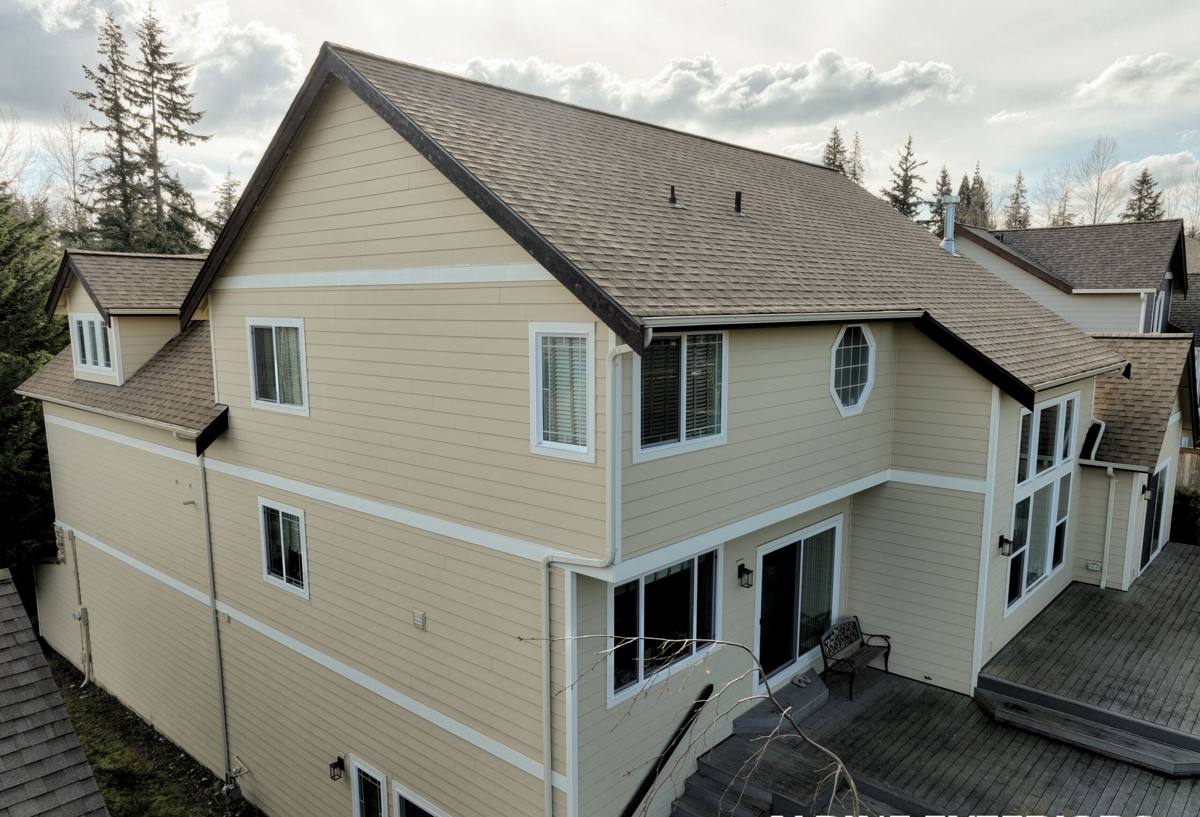
What Salt Air and Coastal Moisture Actually Do to a Deck
Corrosion You Can't See Until It's a Problem
Salt air is the biggest hidden threat to a deck near Birch Bay's shoreline. It doesn't just sit on the surface — it works into any fastener, bracket, or connector that isn't rated for coastal exposure. Standard interior-grade screws and joist hangers will start rusting from the inside out within a few seasons, and by the time you see rust bleeding through the decking, the structural connection underneath may already be weakened. This is the single most common failure point we find when we're called out to look at an older deck in this area.
Driving Rain and Trapped Water
Wind-driven rain off the bay doesn't fall straight down — it gets pushed sideways and up under railings, fascia boards, and ledger connections. If flashing details and gaps between boards aren't done correctly, water gets trapped against the house or against the framing instead of running off, and that's where rot starts. This matters more here than in most parts of Whatcom County because Birch Bay gets more sustained wind-driven rain events than sheltered inland lots.
The Long Moss Season
Between the shade many Birch Bay lots have from surrounding trees and the extended damp season, horizontal deck surfaces can stay wet for days at a time. That's exactly the environment moss and algae need. Beyond making a deck slippery and unattractive, moss holds moisture against the board surface, which accelerates wood decay and can void warranties on some composite products if drainage wasn't built in correctly from the start.
What a Correctly Built Deck for This Area Requires
Ledger Attachment and Flashing
The ledger board — where the deck attaches to the house — is the single most important structural and waterproofing detail on any deck, and it's the spot most likely to be done wrong on a low-bid job. It needs proper flashing that directs water away from the house wall, a gap or drainage plane behind the ledger so trapped moisture can escape, and structural fasteners sized and spaced to current code, not just "enough screws to hold it up." Done wrong, this is where hidden rot starts, often behind siding where you won't see it until there's a real problem.
Fastener and Hardware Selection
Every screw, bolt, joist hanger, and post base on a coastal deck should be stainless steel or hot-dip galvanized rated for ground contact and salt exposure — not the standard galvanized hardware that's fine forty miles inland but starts failing here within a few years. This is a small percentage of total project cost and one of the easiest places for a contractor to cut corners you'll never notice until the hardware starts letting go.
Decking Material Choices
There's no single "best" decking material for Birch Bay — it depends on your budget, how much upkeep you're willing to do, and how close to the water your lot sits. Here's how the common options actually perform in this climate:
| Material | Coastal Performance | Maintenance | Trade-offs |
|---|---|---|---|
| Pressure-treated wood | Good if properly sealed and re-coated on schedule | Annual cleaning, re-sealing every 1-2 years | Lowest upfront cost, most upkeep, shortest lifespan near salt air if neglected |
| Cedar | Naturally rot-resistant but still needs sealing near the water | Regular cleaning and periodic finish renewal | Better looks and smell than treated pine, still requires real maintenance |
| Composite decking | Very good — resists moisture and doesn't feed rot | Occasional washing to prevent surface algae/moss buildup | Higher upfront cost, some boards can get slick when mossy if not cleaned |
| PVC/capped polymer | Excellent — fully sealed surface, no wood fiber to rot | Lowest maintenance, occasional rinse | Highest material cost, feels different underfoot than wood |
Substructure, Drainage, and Ventilation
What's under the decking matters as much as what's on top. On a lot with poor drainage or a low deck near grade — common on flatter Birch Bay properties — we pay close attention to footing depth, ground clearance, and airflow under the deck so moisture doesn't sit trapped against the joists. Post bases should keep wood off the ground and out of standing water, and joist spacing should account for the extra weight composite and PVC boards can hold when wet or covered in moss during the winter months. Skipping proper ventilation under a low deck is a common shortcut that shows up as soft framing five or six years later.
Railings, Fascia, and Finish Details
Railings and fascia take the brunt of wind-driven rain because they're the most exposed vertical surfaces on the structure. We use fasteners and connectors matched to the same coastal-rated standard as the rest of the deck, and we detail fascia boards so water sheds away from end grain and seams instead of soaking in. On open, wind-exposed lots closer to the bay, we also look at railing post attachment more carefully — wind load on a deck near open water is a real design factor, not an afterthought.
Our Process for a Birch Bay Deck Project
- On-site assessment — we look at your existing structure (if replacing a deck), lot drainage, sun/shade exposure, and how exposed the site is to wind and rain off the bay.
- Design and material selection — we walk through decking, railing, and hardware options honestly, including trade-offs on cost and maintenance, based on what you actually want to spend time doing after it's built.
- Permitting — most new and replacement decks in unincorporated Whatcom County, including Birch Bay, require a permit depending on size, height, and attachment to the house. We handle this as part of the process rather than leaving it to you to sort out.
- Build — footings, framing, ledger flashing, decking, and railings, built to the coastal-rated standard described above, not a generic inland spec.
- Final walkthrough — we go over the finished deck with you, including basic care so it holds up through its first wet season.
Maintaining a Deck Through Whatcom County's Wet Months
A well-built coastal deck still needs some seasonal attention. This isn't a heavy maintenance list — it's the handful of things that actually matter for a deck exposed to salt air and driving rain:
- Sweep debris off the deck surface regularly, especially in fall — trapped leaves hold moisture against boards
- Rinse or wash the deck a couple of times a year to knock back early moss and algae growth before it takes hold
- Check railing posts and stair connections annually for movement or corrosion at the hardware
- Keep gutters and downspouts near the deck clear so roof runoff isn't dumping extra water onto or under the structure
- Re-seal wood decking on schedule if you chose wood — don't wait until it's visibly gray and dry
- Watch for soft spots near the ledger connection, which is the first place hidden rot tends to show up
Cost Factors Worth Understanding Before You Get Quotes
Deck pricing varies a lot based on size, material, and site conditions, so we won't quote a number here that doesn't apply to your project. What we can tell you is what actually drives the cost up or down:
| Factor | Why It Affects Cost |
|---|---|
| Decking material | Pressure-treated wood costs less upfront than composite or PVC; composite/PVC cost more but need less upkeep over time |
| Height above grade | Taller decks need more substantial footings, framing, and railing engineering, plus stairs |
| Site access | Tighter lots or difficult equipment access can add labor time |
| Ledger and flashing complexity | Older homes or unusual wall assemblies can require more work to flash correctly |
| Railing style | Cable, glass, or custom railing systems cost more than standard wood or composite balusters |
| Permit requirements | Size and attachment type determine what Whatcom County requires, which affects design and timeline |
Why Local Experience on Birch Bay Decks Matters
A contractor who mostly works inland can still build a technically sound deck, but they may not think about salt-rated hardware by default, may not have a feel for how much wind a railing needs to handle on an open bay-facing lot, or may not budget drainage detailing the way it needs to be done here. A crew that already works regularly in Birch Bay and the surrounding Whatcom County coastline treats coastal-rated fasteners, proper ledger flashing, and drainage as the standard build, not an upgrade you have to ask for. That's the difference between a deck that needs real repair work in five years and one that's still solid in twenty.
If you're planning a new deck or need to replace one that's showing its age, we're happy to take a look and give you a straightforward, no-pressure estimate. Fill out the form below and we'll follow up to schedule a time to see your property.