 Blaine
 Building a Deck That Actually Holds Up in Custer
Custer sits close enough to the water that salt air is a daily fact of life, and far enough into Whatcom County's marine weather pattern that decks here deal with a long, wet, low-sun season every year. A deck built to a generic spec sheet — the kind that works fine in a dry inland climate — tends to show its age fast out here: rusting fasteners, soft spots where water pooled, and a green film of moss that never fully goes away once it takes hold. A deck built for Custer specifically holds up very differently, and that difference comes down to a handful of decisions made before the first board goes down.
This page is about that one job — custom deck construction and replacement for homes in and around Custer — and what it actually takes to get it right in this specific stretch of coastline.
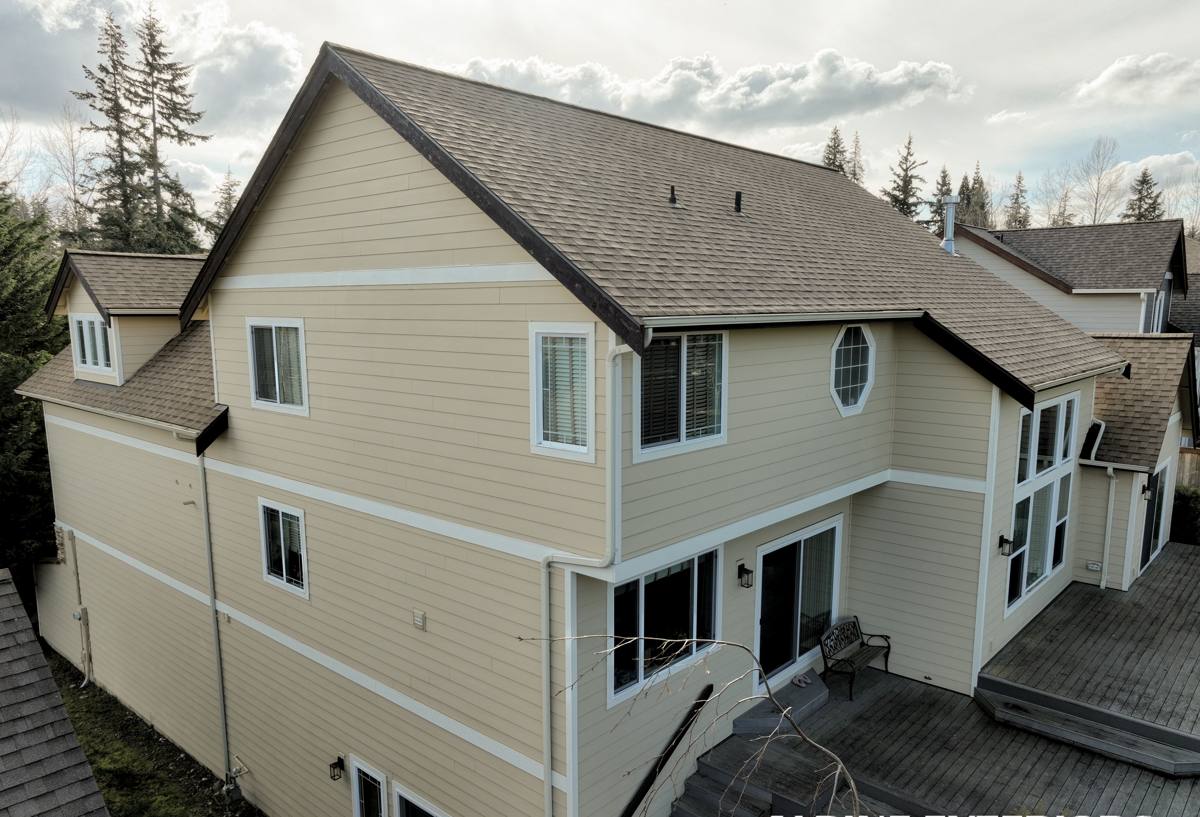
What the Local Climate Actually Does to a Deck
Salt Air
Airborne salt corrodes exposed metal steadily over years, not overnight. Standard zinc-coated deck screws and joist hardware will eventually rust, streak the decking, and weaken at the exact points holding the structure together — usually the fasteners you can't see once the boards are down. This is the single most common reason we get called to look at a deck that's only 8-10 years old and already failing structurally while looking fine on top.
Driving Rain
Rain here doesn't just fall straight down — wind-driven rain gets pushed sideways into ledger connections, railing posts, and stair stringers. Any gap in flashing or any spot where water can sit against wood instead of running off becomes a rot starting point, usually hidden from view until the damage is well underway.
Moss Season
Low sun angle, shade from mature trees, and near-constant moisture from fall through spring add up to a long moss season on horizontal surfaces. Moss holds moisture against the decking material, and on wood that means accelerated rot; on any surface it means a slip hazard on stairs and walkways.
What a Correct Deck Build Involves Here
Footings and Framing
Footings need to go below frost depth and bear on solid, well-drained soil — not fill dirt or a wet spot in the yard, which is more common on Custer lots than people expect given how flat and low-lying much of the area is. Framing lumber should be pressure-treated rated for ground contact where it's within a few inches of soil or in a damp crawlspace, and joists need real airflow underneath, not a tight enclosure that traps humidity against the wood.
Ledger Attachment
The ledger board — where the deck ties into the house — is the single most safety-critical connection on the whole structure, and it's also the spot most exposed to wind-driven rain running down the siding. Proper flashing (installed in the right order relative to the house's water-resistive barrier) and corrosion-resistant lag bolts or through-bolts at correct spacing are non-negotiable here, not upgrades.
Fasteners and Hardware
This is where most of the long-term difference between a deck that lasts and one that doesn't gets decided. Our standard for Custer builds is stainless steel or heavy hot-dip galvanized fasteners and structural hardware throughout — joist hangers, post bases, screws, the works. It costs more up front than standard coated hardware. It's also the difference between a deck that's still tight in 15 years and one where you're chasing rust stains and loose boards in 6.
Choosing a Decking Material for Custer Conditions
There's no single "right" decking material — it depends on how much upkeep you want to do and what you're trying to get out of the deck. Here's the honest comparison for this climate specifically:
| Material | How it handles salt air & rain | Moss/mildew behavior | Upkeep |
|---|---|---|---|
| Pressure-treated wood | Good if sealed and maintained; lowest upfront cost | Needs regular cleaning and re-sealing to resist moss and mildew staining | Annual cleaning, re-stain/seal every 2-3 years |
| Cedar | Naturally rot-resistant, ages well with exposure | Still needs cleaning; moss will grow on shaded, damp boards like any wood | Periodic cleaning and oil/sealer to hold color and resist splitting |
| Composite decking | Excellent — doesn't absorb water or corrode | Won't rot, but moss and algae can still grow on the surface in shaded, damp spots and needs washing | Occasional washing; no sealing or staining |
| PVC decking | Excellent — fully water-resistant, handles salt air well | Same as composite — surface growth is a cleaning issue, not a material failure | Occasional washing only |
Composite and PVC cost more per square foot but remove wood rot from the equation entirely, which matters more in Custer's moisture load than in a drier climate. We'll walk you through actual product options and pricing for your project rather than push one material — the right call depends on your budget, how much sun the deck gets, and how it'll be used.
Drainage and Moss Prevention Built In
A deck that fights moss and standing water starts with design decisions, not just cleaning habits after the fact:
- Proper board spacing so water drains through instead of pooling on the surface
- Slight slope away from the house on any solid surface (like under-deck drainage systems) so runoff doesn't sit against the ledger
- Joist tape or flashing over structural framing members to keep fasteners and wood from sitting in trapped moisture
- Clearing overhanging branches where possible to cut down on the shade and leaf litter that feed moss growth
- Choosing surface materials and finishes with the shade/sun exposure of your specific yard in mind, not a one-size-fits-all spec
None of this eliminates the need for occasional cleaning — nothing does, in this climate — but it's the difference between a quick seasonal wash and a deck that's constantly slick and green no matter how often you clean it.
Railings, Stairs, and Hardware Details
Railing posts and stair stringers take the same wind-driven rain exposure as the ledger, often worse since they're fully exposed with no roof overhang above them. We use corrosion-resistant connectors at every post base and stringer, and we pay close attention to end-grain sealing on wood components, since end grain absorbs water many times faster than the face of a board and is where wood posts most often start to fail from the bottom up.
Our Process for a Custer Deck Project
- On-site visit — we look at your yard's drainage, sun/shade exposure, soil condition, and how the deck will tie into the house before recommending anything.
- Design and material walkthrough — honest pros/cons on wood vs. composite/PVC for your specific site, with real cost ranges, not just a catalog pitch.
- Permitting — Whatcom County and local permit requirements handled as part of the job, not left for you to sort out.
- Build — footings, framing, ledger flashing, decking, and railings, with corrosion-resistant hardware throughout as our standard, not an upsell.
- Final walkthrough — we go over the finished deck with you, including what maintenance it actually needs and on what schedule.
Why a Crew That Already Works Custer Matters
A deck built by a crew that hasn't worked this specific stretch of coastline tends to under-spec the things that don't show up until year 5 or 10: standard hardware instead of corrosion-resistant, a ledger flashed for a drier climate, decking chosen without accounting for how much shade and moisture a particular yard actually gets. We work Blaine and the surrounding Whatcom County communities regularly, which means we're not guessing at how salt air, driving rain, and moss season interact with a given design — we've seen what holds up and what doesn't, on decks a few miles from where yours will sit.
What a Deck Project Typically Costs
Exact pricing depends on size, material, height off grade, and site access, but here's what tends to move the number most:
| Factor | Why it affects cost |
|---|---|
| Decking material | Pressure-treated wood costs least upfront; composite/PVC costs more but needs far less upkeep over time |
| Deck height and footings | Taller decks need deeper footings, more framing, and stair complexity, all adding labor and material |
| Site access | Tight yards, slopes, or limited equipment access add labor time |
| Railings and stairs | Custom railing styles and multi-flight stairs add both material and labor |
| Hardware standard | Stainless/heavy-galvanized hardware costs more than standard coated hardware but is what we use as our baseline in this climate |
We'll give you real numbers for your specific project during the estimate — not a ballpark that changes once we see the yard.
Maintenance That Actually Keeps a Custer Deck Looking Good
- Sweep off leaves and debris regularly, especially in fall — trapped organic matter feeds moss and holds moisture against the surface
- Wash the deck at least once or twice a year with a deck-safe cleaner to interrupt moss and mildew before it sets in
- Check railing posts and stair connections annually for movement or rust staining at hardware points
- Re-seal or re-stain wood decking every 2-3 years (more often on heavily shaded sections)
- Keep gutters and downspouts near the deck clear so runoff isn't dumping extra water onto the structure
If you're planning a new deck or replacing one that's showing its age, we're happy to come take a look and give you a straightforward, no-pressure estimate — just fill out the form below.