 Blaine
 Birch Bay's Climate Is Harder on Siding Than It Looks
Birch Bay sits right on the water, and that proximity is exactly what makes siding decisions here different from siding decisions ten miles inland. Homes facing the bay take on salt-laden air almost daily, which accelerates corrosion on fasteners, trim, and any siding product with a finish that isn't built to resist it. Add Whatcom County's long, wet winters, and you get driving rain that gets pushed sideways into wall assemblies during winter storms, plus a moss and algae season that can stretch for most of the year on shaded, north-facing walls.
None of this is exotic weather. It's the normal cycle of a Pacific Northwest waterfront community. But it means siding that performs fine in a drier, inland climate can fail early in Birch Bay — cupping, swelling, losing its finish, or growing a permanent green tint that no amount of pressure washing fully removes. Any product recommendation for this neighborhood has to start with that reality, not with a generic siding pitch.
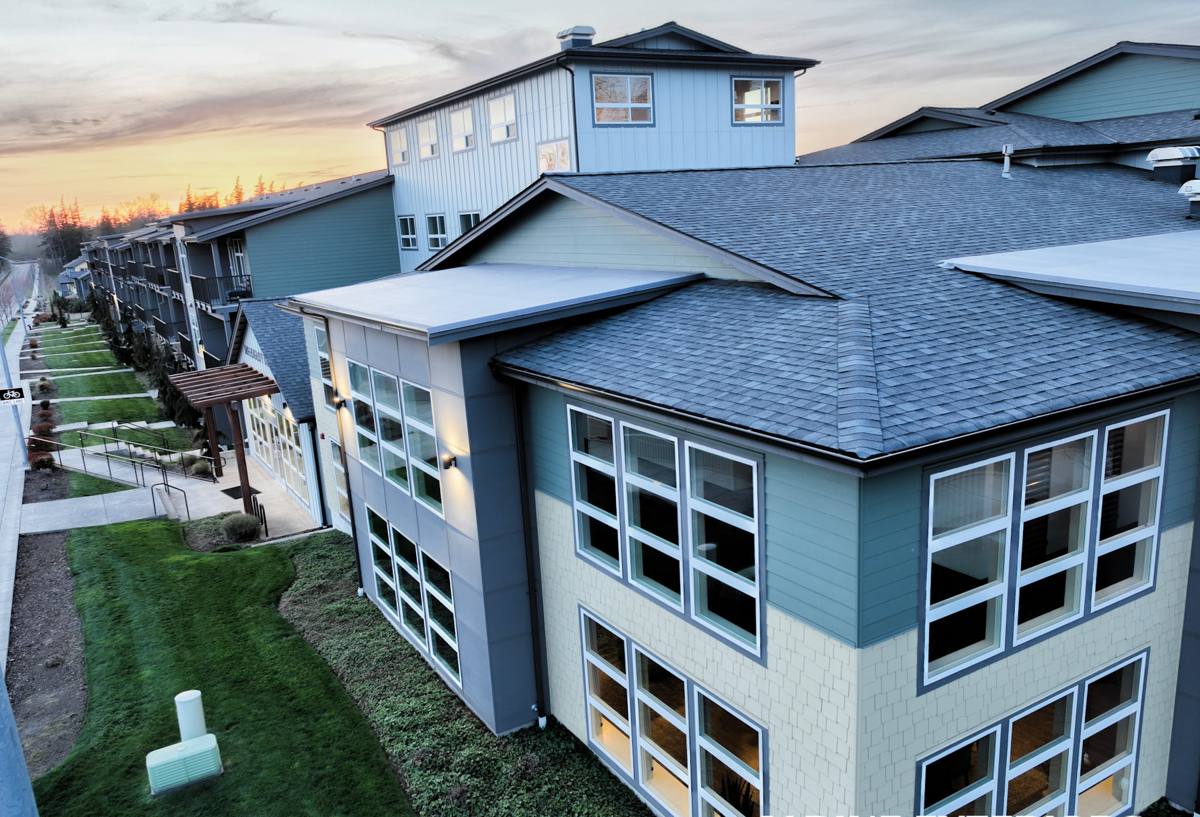
Why We Install Only James Hardie Fiber Cement
We don't install vinyl, LP SmartSide, primed wood, cedar, or other fiber cement brands. That's a deliberate standard, not a marketing line, and it's worth explaining honestly rather than just asserting it.
What the alternatives get right
Vinyl is inexpensive and low-maintenance in mild conditions. Engineered wood products like LP SmartSide have a real fan base and install quickly. Cedar has genuine curb appeal and a long history in this region. None of these are bad products in the abstract — they're just not the products we're willing to put our name behind in a salt-air, high-moisture environment like Birch Bay.
Why we still say no to them here
Vinyl softens and can warp under sustained heat and UV exposure, and its butt joints and J-channels give wind-driven rain more places to work behind the cladding. Engineered wood siding relies on factory sealing and careful field caulking to keep water out of its wood-strand core; once moisture gets past a compromised seal, swelling follows and it doesn't reverse. Cedar and primed wood need a repainting and caulking cycle that, on a bay-front home taking direct salt spray, comes around faster than most owners expect. James Hardie fiber cement is inorganic — it has no wood fiber to swell, rot, or feed moss the way organic siding surfaces can — and its factory-applied ColorPlus finish is engineered to hold color and resist the kind of salt and UV exposure that fades and chalks lesser finishes early.
Choosing the Right Hardie Line for a Bay-Front Home
James Hardie makes climate-specific product formulations, and for anything within reach of salt air and driving rain — which covers essentially all of Birch Bay — the HZ5 formulation designed for wetter, harsher climates is the right baseline, not an upgrade.
Plank profiles
HardiePlank lap siding is the standard choice for most Birch Bay homes, available in various exposures and textures (smooth, cedarmill) to match traditional or more modern exteriors.
Panel and shingle options
HardiePanel vertical siding and HardieShingle staggered-edge panels work well for accent walls, gables, or a full shingle-style look, and both carry the same HZ5 durability where salt and moisture exposure call for it.
Trim and soffit
HardieTrim boards finish out corners, window and door casings, and fascia. Matching trim to the field siding matters more on a coastal property than an inland one, because trim end cuts and joints are frequent water entry points — get the trim system wrong and the best siding in the world won't save the wall behind it.
What a Correct Installation Actually Involves
Fiber cement siding is only as good as the wall assembly behind it. This is where most siding failures actually start, Hardie included, and it's especially unforgiving in a climate that pushes rain sideways.
- A continuous weather-resistant barrier (housewrap or building paper) installed shingle-style so every layer drains outward and down, never inward
- Correct flashing at every window, door, and roof-to-wall intersection, with kick-out flashing wherever a roofline meets a sidewall
- A minimum clearance between the bottom of the siding and grade, decks, or roof surfaces, per Hardie's installation instructions
- Proper fastener type, spacing, and embedment — corrosion-resistant fasteners matter more here than almost anywhere inland, given the salt exposure
- Correctly caulked and back-primed field-cut edges, since factory-primed ColorPlus edges are the weak point if left exposed
- Adequate gapping at butt joints and around penetrations to allow for expansion without trapping water
Skip any one of these steps and you can end up with premature paint failure, staining, or moisture intrusion behind siding that otherwise looks fine from the curb — a problem that shows up in inland installs too, but shows up faster and worse on a home absorbing salt spray and near-constant winter rain.
Hardie vs. the Alternatives in a Coastal Whatcom County Climate
| Factor | James Hardie Fiber Cement (HZ5) | Vinyl | Engineered Wood / Cedar |
|---|---|---|---|
| Salt air resistance | Non-combustible, inorganic — doesn't corrode or feed rot | Can chalk, warp, and become brittle over time | Vulnerable if the sealed coating is breached |
| Moisture behavior | Does not swell or rot; engineered for wet climates | Doesn't absorb water, but joints allow water behind panels | Wood core swells and delaminates once moisture gets in |
| Moss and algae | Factory finish resists staining better than raw or painted wood | Can trap moisture behind panels where moss thrives unseen | Organic surface is a food source for moss and algae |
| Finish life expectancy | ColorPlus factory finish, long warranted color retention | Color is molded-through but fades and chalks with UV/salt | Needs repainting/resealing on a recurring cycle |
| Fire performance | Non-combustible | Combustible, can melt or deform near heat sources | Combustible |
What This Costs, and What Drives the Price
We don't quote pricing without seeing the house, but a few factors consistently move the number on a Birch Bay project:
| Factor | Why it matters here |
|---|---|
| Existing siding removal | Tear-off and disposal of old cedar, vinyl, or damaged siding adds labor before installation starts |
| Wall sheathing condition | Water damage found behind old siding on wave-exposed walls sometimes requires sheathing repair before re-siding |
| Trim and detail complexity | Gables, dormers, and multiple roof-to-wall intersections mean more flashing and trim work |
| Product line and profile | Plank exposure, texture, and any shingle or panel accent areas affect material cost |
| Site access | Waterfront lots with limited staging space or steep grades can add labor time |
Our Process on a Birch Bay Job
We start with an on-site walk-around to check the current siding, look for signs of moisture behind it at trim and penetrations, and assess the wall assembly, not just the surface. From there we put together a written scope covering product line, color, trim details, and a realistic timeline that accounts for our marine-influenced weather window. During installation we follow Hardie's fastening and clearance specifications to the letter — not as a formality, but because those specs are what keep a bay-front wall dry ten years out. We finish with a walkthrough so you know exactly what was done and why.
A Homeowner's Pre-Project Checklist
- Ask what wall barrier and flashing details will be used, not just what siding brand
- Confirm the specific Hardie product line (HZ5 vs. standard) being quoted for your exposure
- Get the fastener type specified in writing — corrosion resistance matters this close to salt water
- Ask how existing moisture damage, if found, will be handled and priced
- Confirm what warranty coverage transfers with the home if you sell
Why a Crew That Already Works Birch Bay Matters
Salt air, wind exposure, and moss aren't things you learn about from a manual — they're things you learn from having flashed enough bay-front gables and dealt with enough moisture-damaged sheathing to know where the real risk is before you open the wall. A contractor who mostly works drier inland neighborhoods can still install Hardie correctly on paper, but the judgment calls around extra flashing at a wave-exposed corner, or where to add clearance on a low wall near the water, come from local experience. That's the difference between siding that looks right at handoff and siding that's still performing the way it should after a decade of Whatcom County winters.
If you're planning a siding project in Birch Bay, we're glad to walk the exterior with you, look at what your home is actually dealing with, and talk through what correct James Hardie installation looks like for your specific site. Reach out for a free, no-pressure estimate using the form below.