 Blaine
 Bellingham Decks Take More Punishment Than Most
A deck in Bellingham does not live an easy life. It sits under a lid of gray sky for months at a stretch, catches salt-laden air rolling off Bellingham Bay, and spends a good chunk of the year damp enough for moss to take hold on anything that isn't sealed or sloped correctly. None of that is unusual for Whatcom County — it's just the trade-off for living this close to the water. But it means a deck built the way you'd build one in a drier inland climate is going to show problems early: soft spots, black streaks, rusted fasteners, boards that cup or crown.
We build decks for homes in this area regularly, and the patterns repeat. The decks that hold up are the ones where the builder planned for moisture from the ground up — not just picked a nice-looking board and called it done. This page walks through what that actually looks like, so you know what to expect and what to ask for.
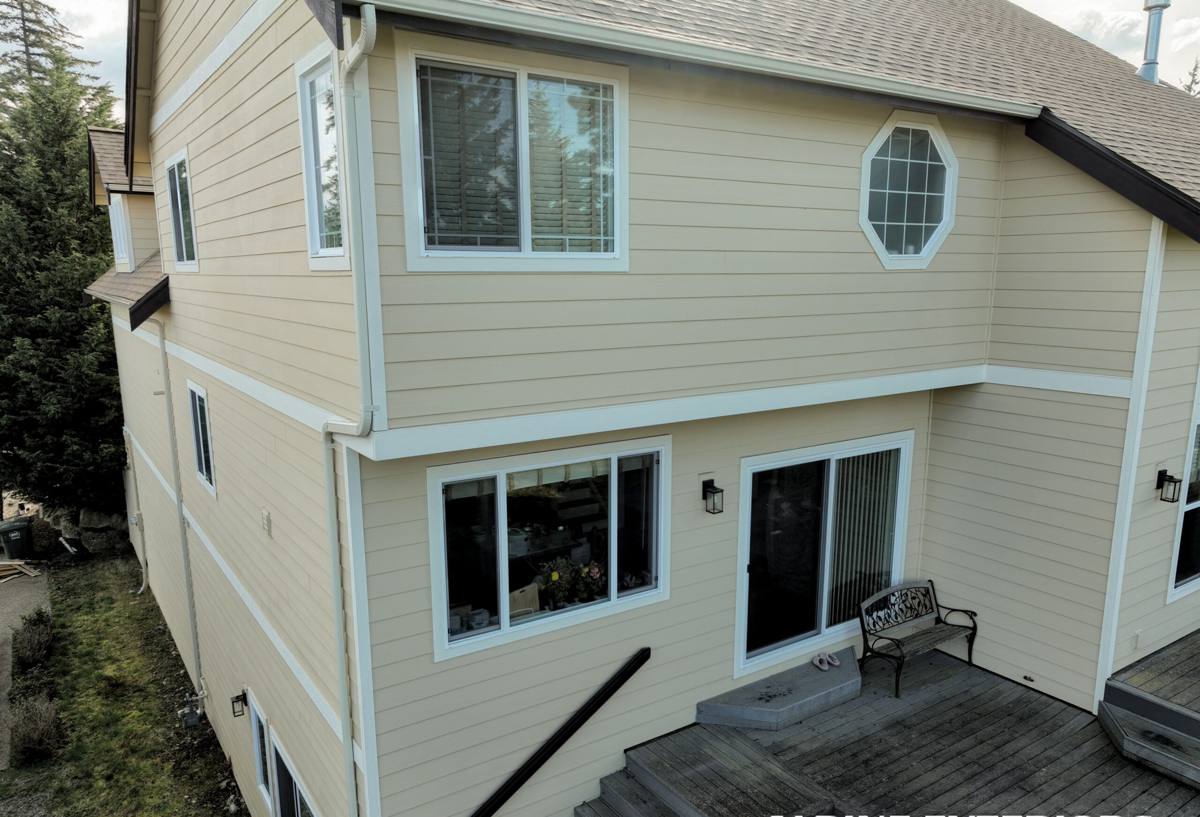
What Salt Air, Rain, and Moss Actually Do to a Deck
Salt Air
Being near the Bay means airborne salt settles on everything outdoors, including your deck. Salt speeds up corrosion in metal hardware and can accelerate wear on certain finishes. It's a slow, cumulative effect — not something that ruins a deck in one season, but something that shortens the life of a deck built with the wrong fasteners or a thin, low-grade finish.
Driving Rain
Rain that comes in sideways, which is common here, gets up under railings, into end-grain cuts, and behind ledger boards if flashing wasn't done right. Standing water is the real enemy — not the rain itself, but water that has nowhere to go and sits against wood or fastener heads.
Moss Season
Whatcom County's moss season runs long — basically anytime it's cool and damp, which is most of the year. Moss needs shade, moisture, and a surface to grip. Decks with poor airflow underneath, tight board spacing, or north-facing exposure are the first to show green film and black staining, and once moss gets a foothold it holds moisture against the deck surface, which makes everything else worse.
What a Deck Built for This Climate Actually Needs
None of this requires exotic materials — it requires getting the basics right, consistently, in every part of the build. That includes:
- Correct board spacing and slope so water sheds off the surface instead of pooling
- Ventilation underneath the deck so air can move and dry out the framing
- Stainless steel or coated fasteners rated for exterior, coastal-adjacent use
- Proper ledger board flashing where the deck attaches to the house
- Footings set below frost depth and sized for the actual load, not guessed at
- A finish or material choice matched to how much sun (or shade) the deck actually gets
Skip any one of these and the deck will still look fine on day one. The problems show up in year two or three, usually as soft framing, streaking, or hardware that's already rusting through.
Framing and Structure: What's Underneath Matters More Than What's On Top
Homeowners naturally focus on the decking boards — the part they walk on and look at. But the framing underneath is what determines whether the deck is safe and long-lasting. In a wet climate, that framing needs to be pressure-treated for ground or moisture contact where relevant, properly spaced for airflow, and protected from standing water at every joist and beam connection. Joist tape or a similar barrier over the top of joists helps keep water from wicking into the wood through fastener holes — a small step that makes a real difference in a climate that stays damp as long as this one does.
Footings are the other piece people don't think about. Whatcom County soil and frost conditions mean footings need to be dug to the correct depth and sized to the deck's actual load — not just poured to whatever looked deep enough. This is also where local permitting comes in, which we'll get to below.
Choosing the Right Decking Material for This Climate
There's no single "best" decking material — there's a best material for your budget, your sun exposure, and how much maintenance you're willing to do. Here's how the common options stack up specifically against Bellingham's conditions:
| Material | Moisture Resistance | Moss/Mildew Behavior | Maintenance | Rough Lifespan |
|---|---|---|---|---|
| Pressure-treated wood | Good if sealed regularly | Prone to staining if not maintained | Annual cleaning, resealing every 1-3 years | 10-15 years |
| Cedar | Naturally decent, degrades if unsealed | Can stain but often cleans up well | Regular sealing to keep appearance and resistance | 15-20 years |
| Composite decking | Very good, doesn't absorb water like wood | Surface film possible in deep shade, cleans off easily | Periodic washing, no sealing required | 25-30 years |
| Capped composite / PVC | Excellent, essentially non-absorbent | Least prone to staining, easiest to keep clean | Occasional washing | 25-30+ years |
Wood costs less up front and has a natural look many homeowners want, but it asks for more attention every year to keep moisture and moss from getting ahead of you. Composite and capped composite cost more initially but shed water and resist staining much better in a climate like this, which is why we see more homeowners in this area moving toward them for decks that get heavy shade or face the weather directly. There's no wrong answer here — it's a real trade-off between upfront cost and ongoing upkeep, and we'll walk through it honestly based on your deck's exposure.
Railings, Fasteners, and Hardware
Hardware failure is one of the most common — and most preventable — deck problems we see. Standard fasteners can corrode faster near salt air, and once a fastener starts rusting, it weakens and can stain the surrounding wood or composite with dark streaking that doesn't clean off easily. We use stainless steel or coated fasteners rated for exterior and coastal-adjacent exposure throughout the structure, not just on visible surfaces. Railing posts and connections get the same attention, since they take direct weather exposure and also carry a structural load — this isn't a place to cut corners.
Living With the Deck: Realistic Maintenance
Even a well-built deck in this climate needs some seasonal attention. The goal isn't zero maintenance — it's manageable maintenance that keeps small issues from becoming expensive ones. A reasonable annual routine looks like:
- Sweep off debris and standing leaves regularly, especially in shaded corners where moss takes hold first
- Rinse or wash the surface at least once or twice a year to knock back early moss and mildew growth
- Check railings and stair connections for looseness once a year
- Reseal wood decking on the manufacturer's recommended schedule — don't wait until it looks dry and gray
- Look underneath periodically for standing water, blocked drainage, or signs of soft framing
Composite and capped composite decking cut this list down considerably, which is part of why they've become popular here — but no material is completely maintenance-free in a climate this wet.
Permits and Local Considerations
Deck permitting in Whatcom County depends on the size, height, and attachment of the structure — a low, freestanding deck may fall under different rules than a raised deck attached to the house. Setbacks from property lines and footing depth requirements are also part of the review. We handle the permitting conversation as part of the process so you're not left guessing what's required, and so the finished structure is actually built to what gets approved rather than adjusted after the fact.
Our Process, Start to Finish
- On-site visit to look at sun exposure, drainage, existing structure (if replacing a deck), and how the space will actually be used
- Honest walkthrough of material options and trade-offs for your specific site — not a one-size-fits-all pitch
- A clear written estimate before any work starts, so there are no surprises
- Permitting handled as part of the job where required
- Framing built to proper spacing, ventilation, and fastening standards for this climate
- Decking, railings, and finishing work completed and inspected before we call it done
We don't upsell materials you don't need, and we don't cut corners on the parts you can't see once the decking is down — the framing, the flashing, the fasteners. Those are the parts that determine whether a deck lasts 10 years or 25.
Why a Crew That Already Works in Bellingham Matters
A deck building crew that already works this stretch of Whatcom County has already seen what actually goes wrong here — which corners of a lot stay shaded and grow moss first, which fastener types hold up and which don't near the Bay, what the permitting office actually wants to see. That local pattern recognition is worth more than a generic build spec, because it means fewer surprises during construction and a deck that's built for the conditions it will actually face, not for a climate somewhere else.
If you're thinking about a new deck or replacing one that's past its prime, we're glad to come take a look and give you a straightforward, no-pressure estimate. Fill out the form below and we'll get in touch.