 Blaine
 Asphalt Shingle Roofing Built for Nooksack's Climate
Nooksack sits inland from Blaine along the Nooksack River in Whatcom County, but it still gets the same weather pattern that batters the rest of the county: long wet winters, heavy fog and dew cycles, and a marine air mass that pushes salt and moisture off the Strait of Georgia and Puget Sound farther than most homeowners expect. Add in the shade from mature fir and cedar cover common on rural and river-adjacent lots, and you have a near-perfect environment for moss, algae streaking, and slow granule loss on a roof that isn't installed with this specific climate in mind. A shingle roof that would last two decades in a dry inland climate can start showing real wear in half that time here if the underlayment, ventilation, and flashing details aren't right.
This page is about one job in one place: asphalt shingle roofing for homes in and around Nooksack. Not a general overview of shingle types, not a sales pitch for a specific brand — just what actually matters for a roof that has to survive this stretch of Whatcom County year after year.
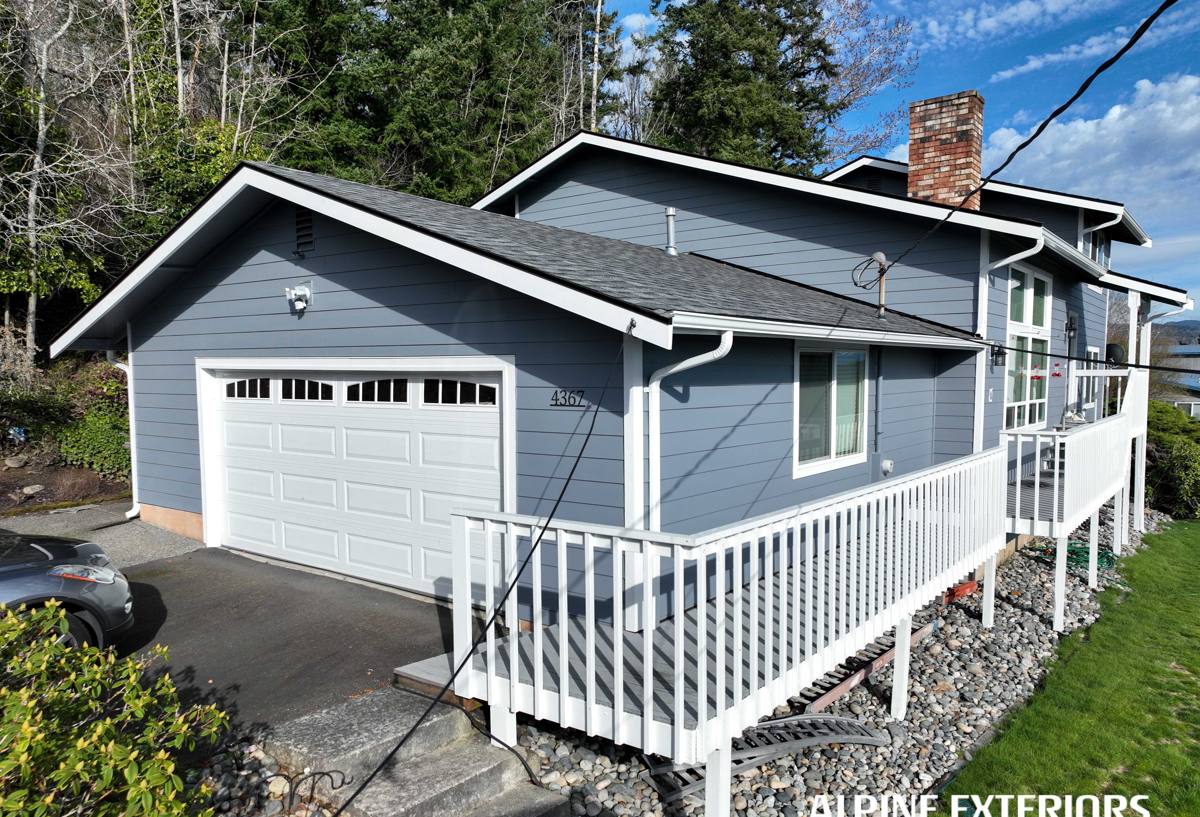
What Nooksack Roofs Are Actually Up Against
Moss and Organic Growth
Whatcom County's moss season isn't a month — it's most of the year. Shaded slopes, north-facing pitches, and roofs under tree canopy stay damp long after a rain event has passed. Moss doesn't just sit on top of shingles; it works into the granule layer, holds moisture against the mat, and lifts shingle edges over time. Left unchecked for a few seasons, moss growth shortens the effective life of an otherwise sound roof.
Driving Rain and Wind-Driven Water
Storms coming off the Strait don't always arrive straight down. Wind-driven rain finds its way under poorly sealed shingle tabs, undersized starter courses, and flashing that was installed to save time rather than to shed water. On a river-valley property like Nooksack, wind can funnel and gust in ways that catch roofs installed without local wind-exposure in mind.
Salt Air Corrosion
Blaine and the surrounding coastal parts of Whatcom County sit close enough to salt water that airborne salt affects exposed metal — nail heads, flashing, vent stacks, and fastener coatings all corrode faster here than in inland Washington. Nooksack, while a bit further from the water, still sits within that regional air pattern, and it shows up over years in premature rust bleed and metal fatigue on cheaper components.
Temperature Swings and Freeze-Thaw
Winter in this part of Whatcom County brings repeated freeze-thaw cycling rather than deep, sustained cold. That cycling stresses shingle seals and any trapped moisture in the roof deck, which is part of why proper ventilation and a sound underlayment system matter as much as the shingle itself.
What a Correct Asphalt Shingle Job Actually Involves
A shingle roof is a system, not a single product. Skipping or downgrading any one layer is where roofs in this climate fail early.
- Tear-off and deck inspection: Full removal down to the deck so rot, soft spots, and old fastener damage can actually be found and repaired — not covered over.
- Ice-and-water shield at vulnerable points: Eaves, valleys, and penetrations get self-adhering waterproof membrane, not just felt, because these are the spots wind-driven rain and ice damming target first.
- Synthetic underlayment across the field: A water-resistant secondary barrier under the shingles so a single failed shingle seal doesn't mean an active leak.
- Balanced ventilation: Intake at the eaves and exhaust at the ridge, sized to the attic, so moisture doesn't get trapped under the deck and accelerate rot or mold from the inside.
- Corrosion-resistant flashing and fasteners: Given the regional salt exposure, we don't cut corners here — cheap galvanized components are a false economy in this air.
- Proper nailing pattern and shingle exposure: Manufacturer nailing specs followed exactly, since under-nailing is one of the most common causes of wind lift and warranty denial.
- Ridge, hip, and valley detailing: These transition points see the most water volume and the most wind stress on any roof — they get matched ridge cap product and correct overlap, not shortcuts.
Why We Standardize on Certain Products — and Skip Others
We install architectural (laminate) asphalt shingles rated for high wind exposure as our standard for this area, rather than economy three-tab shingles. It's not that three-tab shingles are defective — it's that their thinner profile and lower wind rating make them a poor fit for a climate with regular wind-driven rain and gusty valley weather. We also favor synthetic underlayment over old-style felt because felt absorbs moisture and can wrinkle under sustained damp conditions, which is common given how long roofs here stay wet after a storm. These are professional standards based on how materials behave in this specific environment, not claims about any one manufacturer's quality.
Comparing Shingle Options for This Climate
| Option | Wind Rating | Moss Resistance | Typical Lifespan Here | Best Fit |
|---|---|---|---|---|
| Economy 3-tab shingle | Lower | Standard granules only | 12–18 years | Budget-driven, low-exposure roofs |
| Standard architectural shingle | Moderate–High | Standard granules only | 20–25 years | Most Nooksack homes |
| Algae-resistant architectural shingle | Moderate–High | Copper-infused granules slow regrowth | 25–30 years | Shaded lots, north-facing roofs, tree cover |
| Impact-rated / high-wind shingle | High | Varies by product line | 25–30+ years | Exposed, wind-heavy sites |
For most Nooksack properties — especially those with tree cover or a north-facing slope — the algae-resistant architectural option earns its modest upcharge back in reduced moss treatment and a longer realistic service life. We'll walk through your specific roof's exposure and shading before recommending one.
How Our Process Works
1. On-Site Inspection and Honest Assessment
We walk the roof (weather permitting) or inspect from the deck and attic, checking deck condition, ventilation, flashing points, and how much moss or granule loss is already present. We tell you plainly what's failing, what's still sound, and what's just cosmetic.
2. Written Scope and Straightforward Pricing
You get a scope that spells out tear-off, deck repair allowance, underlayment type, shingle product, flashing, and ventilation work — no vague line items. Broad cost ranges depend heavily on roof size, pitch, deck condition, and access, so we price your specific roof rather than quoting a generic per-square rate.
3. Scheduling Around Whatcom County Weather
We plan install windows around realistic dry stretches rather than forcing a tear-off into a system rolling in off the water. A roof torn open and left exposed overnight in a driving rain is how small problems become expensive ones.
4. Tear-Off, Deck Repair, and Install
Full removal, deck inspection with photos of anything replaced, then the layered system described above — underlayment, flashing, shingles, ridge — installed to manufacturer spec so warranty coverage stays intact.
5. Final Walkthrough and Cleanup
Magnetic sweep for stray fasteners, full site cleanup, and a walkthrough covering what was done and what maintenance (if any) to expect given your roof's shading and slope.
Maintenance That Actually Extends Roof Life Here
A well-installed roof still benefits from basic upkeep in this climate. This isn't a sales list — it's what genuinely matters for asphalt shingles in a moss-prone, salt-air, high-rain area like Nooksack:
- Keep gutters clear so water doesn't back up under eave shingles during heavy rain events.
- Have visible moss growth treated or gently removed before it works into the granule layer — don't pressure-wash shingles, which strips granules and voids most warranties.
- Trim back overhanging branches where possible to reduce shade, debris buildup, and abrasion during wind.
- Check attic ventilation isn't blocked by insulation, since blocked intake or exhaust vents undercut the roof system's moisture management.
- Have flashing around chimneys, vents, and skylights checked every few years — these are the first place slow leaks start, long before the shingle field shows a problem.
Why It Matters to Hire a Crew That Already Works Nooksack
Roofing crews that mostly work drier, inland climates tend to under-spec ventilation and underlayment because they don't see the moss and moisture problems that show up here within a few years. A crew that already works Whatcom County's coastal and river-valley properties knows to default to algae-resistant products on shaded lots, to over-build flashing details against wind-driven rain, and to specify corrosion-resistant fasteners as standard rather than upgrade options. That local pattern recognition is the difference between a roof that needs moss treatment and attention every year and one that just quietly does its job through Blaine-area winters.
We also know the practical side: realistic weather windows for tear-offs in this region, what deck condition tends to look like under older roofs on area homes, and how to sequence a job so your property isn't sitting exposed when a system rolls in off the Strait.
Get a Straight Answer on Your Roof
If your Nooksack home has visible moss, granule loss in the gutters, or a roof that's simply getting up in years, it's worth an honest look before small problems turn into deck damage. We offer a free, no-pressure estimate — walk us through what you're seeing, and we'll tell you plainly what your roof actually needs. Use the form below to get started.