 Blaine
 Board & Batten Siding in Sumas: Built for This Corner of Whatcom County
Sumas sits right up against the border in one of the wettest, greenest pockets of Whatcom County, and that shows up on the outside of every house in town. Board and batten siding — vertical wide boards with narrow strips (battens) covering the seams — has a farmhouse and craftsman look that fits Sumas's rural, small-town character better than a lot of the horizontal lap siding you see closer to the coast. But the look only holds up if the material and installation underneath it are built for the conditions Sumas actually gets: long stretches of damp weather, moss and algae pressure that never really lets up, and driving rain that hits walls sideways during winter storms.
We install board and batten siding for homeowners in Sumas using James Hardie fiber cement exclusively. This page walks through what that means in practice — what the climate demands, what a correct board and batten installation actually involves, and why the installer matters as much as the material.
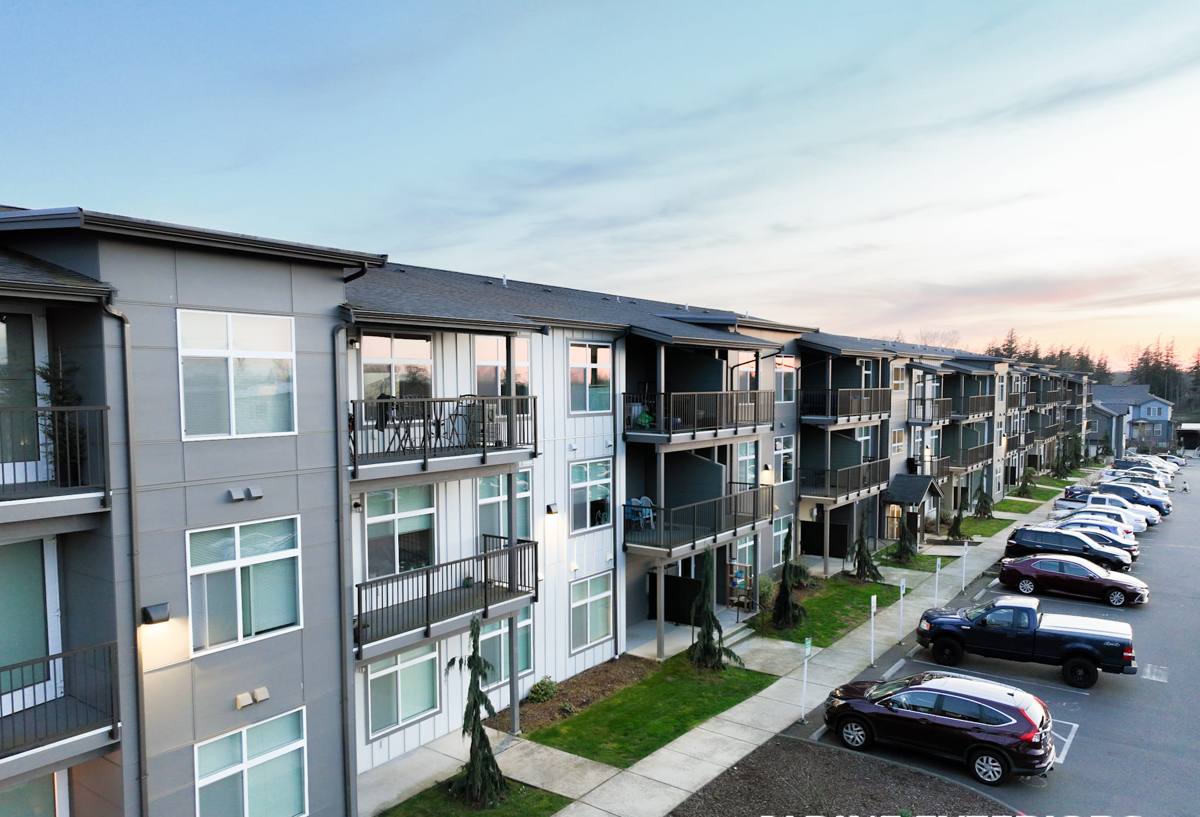
Why Sumas's Climate Is Hard on Vertical Siding
Board and batten's vertical seams are its defining look, but they're also where water problems start if the product or the install is wrong. A few things about the local climate make this a real consideration rather than a hypothetical:
- Driving rain: Storms moving through the Fraser Valley funnel wind and rain sideways against exterior walls, which pushes water into any gap, seam, or fastener hole that isn't properly sealed or shingled.
- Salt-tinged, moisture-heavy air: Even away from the immediate coastline, the marine air layer that sits over this part of Whatcom County keeps humidity elevated for much of the year, which is exactly the environment mold, mildew, and moss spores need to take hold.
- A long moss season: Shaded walls, north-facing elevations, and anything near trees or fences can stay damp for months at a stretch, giving moss and algae a long runway to establish themselves on siding surfaces and in the vertical batten channels.
- Freeze-thaw cycling: Whatcom County winters aren't brutal, but they do dip below freezing often enough that any water trapped behind siding or in a wood substrate can freeze, expand, and accelerate rot or cracking.
None of this is unique to Sumas, but the combination — sustained dampness, seasonal freeze cycles, and long moss exposure — is a tougher test for siding than a drier inland climate would be.
Why This Matters More for Board and Batten Specifically
Horizontal lap siding sheds water downward by design; every course overlaps the one below it. Board and batten relies more heavily on the batten strips and the water-resistive barrier behind the boards to manage moisture, especially at the vertical seams. If the boards are a moisture-sensitive material, or if the battens and flashing details aren't installed correctly, water finds those seams eventually — and in a climate like this one, "eventually" doesn't take long.
What a Correct Board & Batten Job Involves
A board and batten installation that's going to hold up in Sumas isn't just nailing boards to the wall. There's a sequence that has to happen underneath and behind the visible siding:
1. Water-Resistive Barrier and Flashing
Every board and batten job starts with a properly lapped weather-resistive barrier over the sheathing, with flashing integrated at every penetration — windows, doors, hose bibs, light fixtures, and anywhere else something breaks the plane of the wall. This layer is what actually keeps bulk water out of the wall assembly; the siding on top is the second line of defense, not the only one.
2. Furring or Rain Screen Strategy
Because board and batten is often installed vertically over a flat wall plane, proper furring strips or a rain screen gap behind the boards help any moisture that does get past the surface drain and dry out instead of sitting against the sheathing. This detail matters more in a climate with Sumas's sustained humidity than it would in a drier region.
3. Correct Fastening
Board and batten panels need to be fastened per the manufacturer's engineering — correct nail or screw type, spacing, and penetration depth. Fasteners driven too shallow, too deep, or at the wrong spacing are one of the most common causes of premature siding failure, and it's not something you can see from the ground once the job is finished.
4. Batten Placement and Sealing
The battens covering the seams need consistent spacing and correct fastening so they don't work loose or trap water behind them. Sealant, where specified, has to be a product rated for the exposure and applied at the joints the manufacturer actually calls for — not just wherever a gap looks like it needs caulk.
5. Trim, Corners, and Transitions
Where board and batten meets trim boards, corner boards, soffits, or foundation lines, those transitions need proper flashing and clearance — siding that sits too close to grade, a deck, or a roofline is a moisture problem waiting to happen, regardless of what it's made of.
Why We Only Install James Hardie for This Application
Board and batten shows up in several materials — cedar, primed wood, vinyl, engineered wood, and fiber cement among them. We install James Hardie fiber cement exclusively, and in a climate like Sumas's, the reasoning is straightforward:
| Factor | Why It Matters in Sumas |
|---|---|
| Moisture stability | Fiber cement doesn't swell, warp, or rot the way wood-based products can when exposed to sustained damp conditions and long moss seasons. |
| Non-combustible | Hardie board is a fiber cement product, which carries different fire performance characteristics than wood-based sidings — a factor increasingly relevant across the region. |
| Factory-applied ColorPlus finish | A baked-on finish resists fading and holds up to UV and moisture exposure better than field-applied paint, reducing repaint cycles. |
| Engineered for the Pacific Northwest | Hardie's HZ5 product line is specifically engineered for regions with the kind of moisture exposure and freeze-thaw cycling Whatcom County sees. |
| Transferable warranty | A strong, transferable manufacturer warranty protects the investment for the current owner and adds value at resale. |
We don't install vinyl, LP SmartSide, Cemplank, Allura, primed spruce, or cedar board and batten. Each of those has legitimate strengths — cedar has real character, vinyl is inexpensive, engineered wood products have their fans — but each also comes with a maintenance burden, moisture vulnerability, or installation sensitivity that we're not willing to put our name behind in a climate this consistently damp. Hardie's fiber cement composition and PNW-specific engineering are why it's the only board and batten product we put on Sumas homes.
Our Process for a Sumas Board & Batten Project
- On-site assessment: We look at your home's specific exposure — which walls face prevailing wind and rain, which stay shaded and damp longest, and what the existing wall assembly and trim look like.
- Removal and inspection: If you're replacing existing siding, we pull it off and inspect the sheathing underneath for rot or water damage before anything new goes up — covering a compromised wall with new siding just hides the problem.
- Barrier and flashing installation: Weather-resistive barrier, window and door flashing, and any furring or rain screen components go in before a single board is hung.
- Board and batten installation: Hardie panels and battens are installed to manufacturer spec — fastener type, spacing, and penetration all matched to the product and your wall's specific engineering requirements.
- Trim and detail work: Corners, transitions, and penetrations get finished and sealed correctly, with particular attention to any spot where water could collect or drain incorrectly.
- Final walkthrough: We walk the finished job with you so you know what was done and why, and what (if any) simple maintenance keeps it looking right.
What to Ask Before You Sign With Anyone
- Is the crew installing to the manufacturer's published fastening and clearance specifications, or just "how we've always done it"?
- Will they inspect and address the wall assembly underneath, not just the visible siding?
- Do they have experience specifically with vertical board and batten details, not just horizontal lap siding?
- What warranty applies to the material, and what applies to the labor — and are those two different documents?
- Have they worked in Sumas or nearby Whatcom County communities, and do they understand the moisture and moss conditions specific to this area?
Why Hiring Local Experience Matters
A crew that already works in and around Sumas has seen how this specific stretch of Whatcom County behaves — which elevations hold moisture longest, how far driving rain travels under eaves, and where moss tends to establish first. That's not something you get from a general specification sheet; it comes from doing the work here repeatedly. It also means a crew that understands local permitting expectations and can plan around this area's weather windows rather than working around unfamiliar conditions on the fly.
Maintaining Board & Batten Siding in a Moss-Heavy Climate
Even correctly installed, low-maintenance siding benefits from a bit of routine attention in a climate like this one:
- Rinse shaded or north-facing walls periodically to slow moss and algae buildup before it takes hold.
- Keep gutters clear so overflow doesn't run down wall surfaces and feed moisture problems at the top of the siding.
- Trim back vegetation and tree limbs that keep walls shaded and damp longer than they need to be.
- Have caulking and sealant at trim and penetration points checked every few years, since sealant wears out well before the siding itself does.
If you're weighing board and batten siding for a home in Sumas and want a straightforward, honest look at what your specific walls need, we're glad to walk the property with you and put together a free, no-pressure estimate.