 Blaine
 Why Birch Point Siding Wears Differently Than Siding Inland
Birch Point sits close enough to the water that homes here take a different kind of beating than a house twenty minutes inland in Whatcom County. Salt-laden air moves off the water and settles on exterior surfaces daily, not just during storms. Combine that with wind-driven rain that hits siding at an angle instead of falling straight down, and you get a building envelope that's under near-constant moisture and salt exposure for most of the year. Add a long, damp shoulder season where moss and algae get a real foothold on north- and west-facing walls, and it's easy to see why siding that performs fine in a drier part of the state can start failing early out here.
This isn't a scare story — it's just the physical reality of building near the Strait of Georgia and Semiahmoo Bay. Homes in this stretch of Blaine need siding that's engineered for coastal exposure, installed with the flashing and drainage details that actually matter in this climate, and maintained by a crew who understands what "normal wear" looks like here versus what's actually a problem starting.
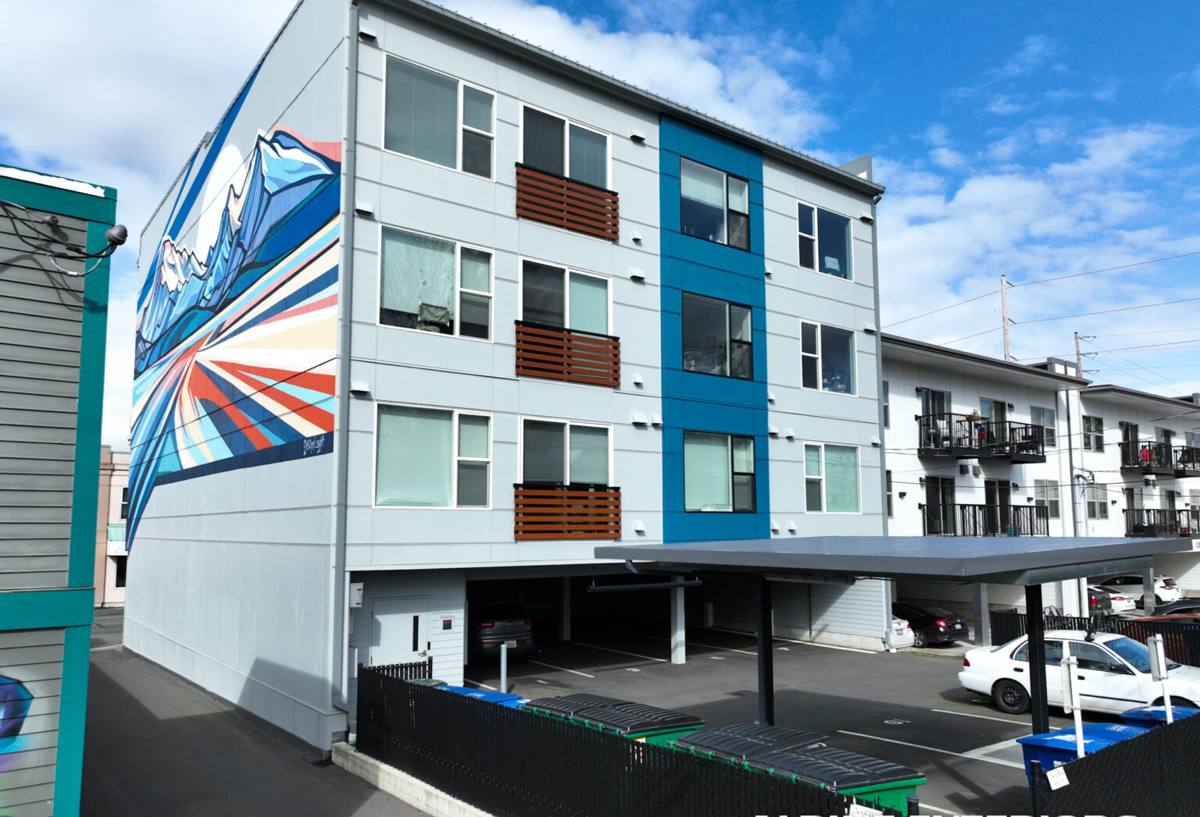
What Salt Air Actually Does to Siding Over Time
Salt air is corrosive to anything metal and slowly degrading to most exterior finishes. On a Birch Point home, that shows up in a few predictable ways:
- Fasteners and flashing that aren't corrosion-resistant start rusting from the inside out, often before any staining is visible on the surface
- Paint and factory finishes on lower-grade products chalk, fade, or lose adhesion faster near the water than the same product would a few miles inland
- Caulk joints dry out and crack sooner, opening small gaps where wind-driven rain can get behind the cladding
- Wood-based and wood-adjacent siding products absorb moisture at the end grain and edges, which is where rot typically starts
None of this means a house near the water is doomed to constant repairs. It means the material choice and the installation details matter more here than they would somewhere drier and further from the shoreline.
Why We Only Install James Hardie Fiber Cement
We install exclusively James Hardie fiber cement siding, and Birch Point is exactly the kind of location that explains why. Fiber cement is made from cement, sand, and cellulose fibers — it doesn't rot, it isn't a food source for moss or algae the way wood-based products can be, and it holds up structurally in damp, salt-exposed conditions far better than wood, primed spruce, or engineered wood siding.
James Hardie's ColorPlus factory-applied finish is baked on under controlled conditions, which gives it better adhesion and color retention than field-applied paint — a real advantage when the exterior is getting hit with salt air and UV for years without a repaint. Hardie also makes climate-engineered HZ product lines specifically formulated for different moisture and temperature zones, which is the kind of detail that matters on a coastal Whatcom County property. The combination of a non-combustible material, a durable factory finish, and a strong transferable warranty is why we standardized on this one product line instead of offering a menu of options with very different long-term outcomes.
How Hardie Compares to Other Common Choices
| Material | Moisture Behavior Near Water | Moss/Algae Resistance | Long-Term Finish |
|---|---|---|---|
| James Hardie fiber cement | Does not rot or swell; engineered for damp climates | Not an organic food source; cleans easily | Factory-baked ColorPlus finish, long color retention |
| Vinyl siding | Can warp or buckle with temperature swings; seams can let moisture behind panels | Moderate — traps moisture behind panels in damp conditions | Field color only, fades over time, cannot be repainted easily |
| Cedar / primed spruce | Absorbs moisture at joints and end grain; prone to rot near the coast | Organic surface, more prone to moss and algae growth | Requires ongoing painting/staining maintenance |
| LP SmartSide / engineered wood | Better than raw wood but still wood-based; edge and cut-end sealing is critical | Better than cedar but still an organic substrate | Field or factory finish, maintenance still required |
What Correct Installation Looks Like on a Birch Point Home
Fiber cement siding is only as good as the installation behind it. On a coastal property, the details that get skipped on a rushed job are exactly the details that cause problems in three to five years. A correct James Hardie install includes:
Water Management Behind the Cladding
Every wall assembly needs a drainage plane — a weather-resistant barrier with proper overlaps, plus a rainscreen gap in most coastal applications so any moisture that does get behind the siding can drain and dry instead of sitting against the sheathing. Skipping this step is the single most common shortcut we see undone from prior installs, and it's the one most responsible for hidden rot when a home finally gets opened up.
Flashing at Every Penetration
Windows, doors, hose bibs, light fixtures, and vents all need proper flashing integrated with the water-resistive barrier — not just caulk. Caulk is a maintenance item that will eventually fail; flashing is the permanent line of defense. Given how much wind-driven rain a Birch Point exterior sees, this is not an area to cut corners on.
Fastener and Trim Selection
Corrosion-resistant fasteners are non-negotiable this close to the water. We also follow Hardie's specified nailing patterns and clearances — gaps at butt joints, proper clearance from grade, roof lines, and decks — because those clearances are what keep the bottom edge of the siding from wicking up moisture.
Manufacturer-Specified Gaps and Sealant
James Hardie has specific requirements for joint gaps, caulking, and paint touch-up at cut edges. Following the spec exactly is also what keeps the manufacturer's warranty valid — an install that deviates from spec can put warranty coverage at risk even if the product itself is sound.
Signs Birch Point Homeowners Should Watch For
If your current siding is wood, primed spruce, cedar, or an older vinyl or engineered wood product, here's what tends to show up first in this climate:
- Persistent green or black staining on north- and west-facing walls that comes back quickly after cleaning
- Soft spots, especially near the bottom courses, around window sills, or at butt joints
- Paint that's peeling or bubbling rather than just fading evenly
- Visible gaps opening up at trim boards or corner boards
- Rust streaking below fasteners or metal flashing
- A musty smell near exterior walls inside the home, which can indicate moisture has already worked its way behind the cladding
Any one of these on its own isn't necessarily an emergency, but on a coastal property they tend to compound faster than homeowners expect. A wall that looks "mostly fine" from the driveway can have real moisture damage behind it once you pull a section of siding.
Our Process for a Birch Point Siding Replacement
Because every coastal property is a little different depending on how exposed it is to wind and water, we start with an actual walk-around, not a form estimate.
- On-site inspection. We look at current siding condition, sheathing where accessible, existing flashing details, and how exposed each elevation is to prevailing wind and rain.
- Scope and product selection. We recommend the appropriate James Hardie product line and profile for the home's exposure and style, and walk through color and finish options.
- Tear-off and sheathing check. Old siding comes off and we assess the sheathing underneath for any hidden rot or damage before anything new goes up — this is often where we find out whether prior work included a proper water-resistive barrier.
- Water-resistive barrier and rainscreen installation. This is the step that protects the home for the next several decades, and it happens before a single piece of siding is hung.
- Flashing integration. Windows, doors, and penetrations get properly flashed and tied into the barrier system.
- Hardie installation to manufacturer spec. Correct fasteners, gaps, clearances, and finishing details, done to keep the warranty intact.
- Final walkthrough. We go over the finished work with you before calling the job done.
Quick Reference: What to Ask Any Siding Contractor Near the Water
- Do you install a rainscreen or drainage gap on coastal homes, or just a standard barrier?
- What fasteners do you use, and are they corrosion-resistant?
- How do you flash windows, doors, and penetrations — and is it more than caulk?
- Will the installation meet the manufacturer's spec closely enough to keep the warranty valid?
- Have you worked on homes in this specific area before, and do you understand the exposure here?
Why Local Experience in This Area Matters
A crew that mostly works drier, inland neighborhoods can still do a technically fine install and miss the details that matter most a few blocks from the water. Wind direction, salt exposure, and how long moisture lingers on a north wall in this part of Whatcom County aren't things you learn from a manual — they're things you learn from working on houses in this exact area, season after season. That local pattern recognition shows up in small decisions: which elevations get extra attention to flashing, where a rainscreen gap earns its keep, and which trim details are worth the extra time given what this specific stretch of coastline does to a house.
We work throughout Blaine and the surrounding Whatcom County coastline, and Birch Point's combination of salt air, driving rain, and a long moss season is a climate profile we plan for specifically, not something we treat as a generic "coastal upcharge."
Cost Factors for a Birch Point Siding Replacement
Every home is different, but a few factors consistently move the price on a project like this:
| Factor | Why It Affects Cost |
|---|---|
| Current siding material | Wood and engineered wood tear-off is more labor-intensive than removing vinyl |
| Sheathing condition | Hidden rot found during tear-off may need repair before new siding goes on |
| Home size and complexity | More corners, dormers, and trim details mean more labor and material |
| Product line and profile | Hardie offers multiple plank widths, textures, and panel styles at different price points |
| Exposure level | Elevations facing prevailing wind and rain may need extra flashing or detailing work |
We give honest, itemized estimates after seeing the actual home — not a ballpark over the phone — because on a property this close to the water, the condition behind the existing siding can genuinely change the scope.
If you're weighing a siding replacement for a Birch Point home, we're happy to take a look and walk you through what we find, no pressure and no obligation. Fill out the form below to schedule a free estimate.