 Blaine
 Siding Repair for Lynden Homes, From a Crew That Already Works This County
Lynden sits inland from the water compared to some of the towns we serve, but that doesn't mean the siding on Lynden homes gets an easy ride. Whatcom County weather doesn't respect town lines. The same weather system that pushes salt-laden air off Semiahmoo Bay and Drayton Harbor rolls east and drops driving rain on Lynden roofs and walls for months at a stretch, and the same damp, shaded conditions that grow moss on siding in Blaine grow it just as readily here. If you own a home in Lynden and you've noticed soft spots, peeling paint, or green streaks creeping up your siding, you're not dealing with a freak problem — you're dealing with what this climate does to exterior siding over time, and it's fixable when it's caught and repaired correctly.
We're based in Blaine and we work Lynden regularly. That matters more than it might seem. A contractor who only passes through once in a while doesn't have a feel for how a particular town's siding ages — how early moss shows up on a north-facing wall here, how a Lynden winter's freeze-thaw cycle behaves differently than a coastal one, or which repair shortcuts fail within a year in this specific climate. A crew that works the area consistently sees the same failure patterns over and over and knows exactly what a correct repair looks like versus a patch job that buys you eighteen months.
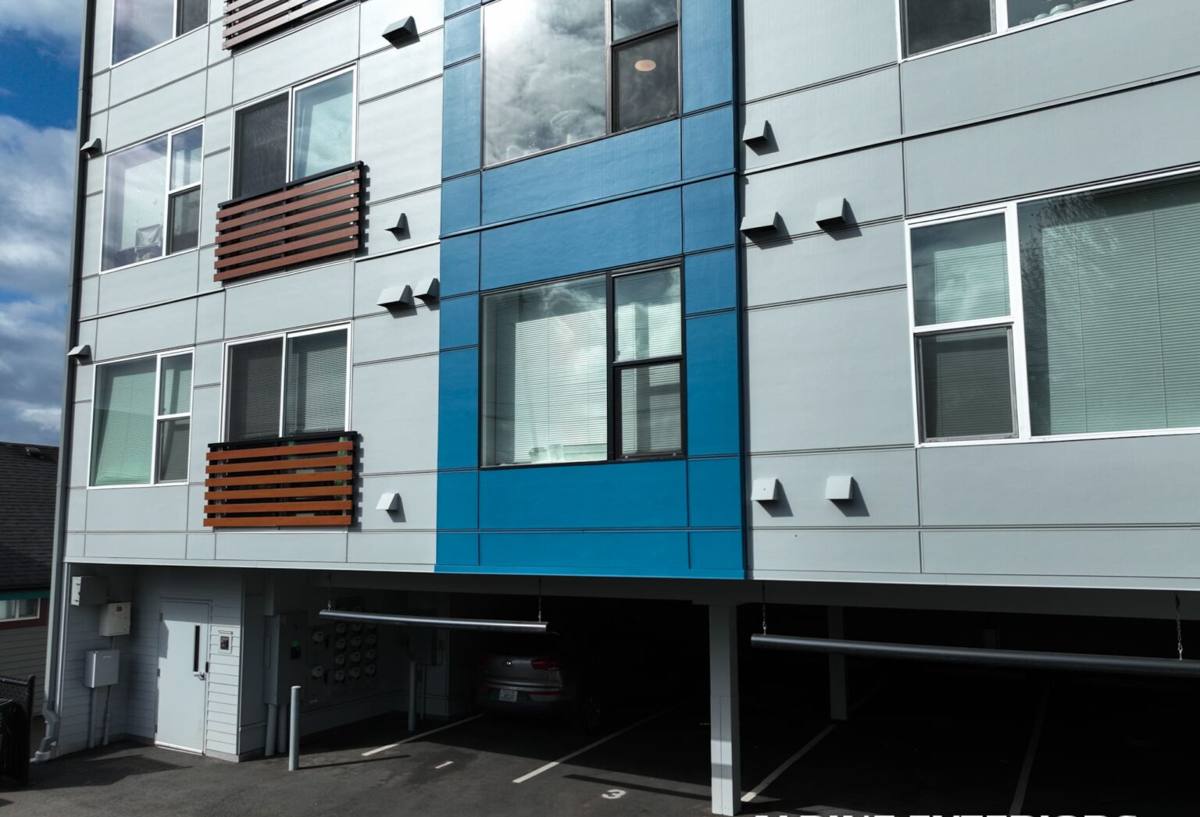
Why Lynden Siding Fails: The Local Climate Factors
Driving Rain and Wind-Driven Moisture
Whatcom County storms don't just fall straight down — wind pushes rain sideways into wall assemblies, especially on exposed gable ends and around window and door trim. Over years, this wind-driven rain finds every gap in flashing, caulking, and siding laps. Once moisture gets behind the siding instead of running off the face of it, the damage often starts on the inside of the wall before it's visible from the street.
The Long Moss Season
Lynden's tree cover, cloudy stretches, and general Pacific Northwest humidity add up to a moss season that runs much longer than most homeowners expect — often nine months or more in shaded spots. Moss holds moisture directly against the siding surface, and on organic materials like wood or wood-based composite siding, that constant dampness accelerates rot from the outside in.
Salt Air's Reach Inland
Lynden is farther from saltwater than Blaine or Birch Bay, but on windy days, salt-laden air still travels inland and settles on exterior surfaces across this part of the county. Salt residue draws in moisture and speeds up the breakdown of paint films, caulking, and fasteners — a slower effect here than right on the water, but a real one over the life of a home.
Freeze-Thaw Cycling
Lynden sees more cold snaps than the immediate coastline. Water that's worked its way into cracked caulking or compromised siding can freeze, expand, and widen the damage, then thaw and let more water in. It's a slow, repeating cycle that turns a small crack into a real problem over a couple of winters.
What a Correct Siding Repair Actually Involves
A lot of siding "repairs" amount to caulking over a crack or nailing a loose board back down. That might hide the symptom for a season, but it doesn't address what let moisture in to begin with. A repair worth paying for starts with figuring out why the siding failed in that specific spot.
- Diagnose the moisture path — trace where water is actually entering, not just where damage is visible. Damage often shows up several feet from the actual entry point as water runs down inside the wall.
- Check the water-resistive barrier and flashing — siding is the last line of defense, not the only one. If the barrier or flashing behind it failed, replacing siding alone won't fix the problem.
- Remove and replace damaged material fully — cutting out only the visibly rotted section and leaving compromised material adjacent to it is a common shortcut that fails early.
- Match or upgrade the replacement material — patching failure-prone siding with more of the same product just resets the clock on the same failure.
- Re-seal and re-flash correctly — proper lap sequencing, fastener placement, and sealant at penetrations (vents, hose bibs, light fixtures) so water sheds outward instead of pooling.
- Clean and treat surrounding moss and mildew — repairing siding next to an active moss colony without addressing the moss just invites the same problem back within a year or two.
What We Look For on a Lynden Siding Inspection
| Warning Sign | What It Usually Means |
|---|---|
| Soft or spongy siding when pressed | Moisture intrusion and possible rot underneath the surface |
| Peeling or bubbling paint, especially near seams | Moisture trapped behind the siding trying to escape |
| Persistent green or black streaking | Moss or mildew holding moisture against the surface long-term |
| Visible gaps at butt joints or trim | Failed caulking allowing wind-driven rain direct entry |
| Warped or bowed boards | Repeated wetting and drying cycles distorting the material |
| Musty smell near an exterior wall indoors | Moisture has likely reached the wall cavity, not just the siding face |
Repair, or Is It Time to Replace?
Not every damaged section needs a full re-side, and we won't tell you it does. A single water-damaged area on an otherwise sound wall is often a straightforward, contained repair. But there's a point where repeated patching costs more over time than doing the job right once, especially on older wood or composite siding that's reaching the end of its practical service life.
Signs It's Repair, Not Replace
- Damage is limited to one or two isolated areas
- The rest of the siding is sound when tested by hand
- The underlying wall sheathing and barrier are intact
- This is the first repair needed in that spot, not a repeat
Signs It's Time to Talk About Replacement
- You've repaired the same area, or nearby areas, more than once
- Damage shows up in multiple spots across different walls
- The siding material itself is original and past 20-25 years old
- Moss and moisture issues keep recurring despite cleaning and treatment
Why We Only Install James Hardie Fiber Cement
When a repair turns into a larger conversation about replacement, we point Lynden homeowners toward James Hardie fiber cement siding, and we don't install anything else. That's a deliberate standard, not a sales preference. Fiber cement doesn't rot, doesn't feed moss the way organic wood fiber can, and it holds up to wind-driven rain and freeze-thaw cycling far better than wood-based composite products that were never engineered for a climate like this one. Hardie's ColorPlus factory finish is baked on and warranted against fading and peeling, which matters in a region where UV and moisture both work against paint film. And Hardie backs it with a strong transferable warranty, which carries real value if you ever sell the home. We've seen too many repair calls trace back to siding products that looked fine on day one but weren't built for sustained Pacific Northwest moisture exposure — that's the trade-off we're not willing to install on a Lynden home.
Our Repair Process
- Free on-site inspection — we look at the damaged area and the surrounding siding, not just the spot you called about, since related issues often hide nearby.
- Honest diagnosis — we tell you what's actually happening, whether that's a simple repair, a moisture problem needing barrier work, or a case where replacement makes more financial sense long-term.
- Clear scope and estimate — no vague line items. You'll know what's being removed, replaced, and resealed before work starts.
- Correct repair execution — proper removal, barrier and flashing checks, matched or upgraded material, and correct sealing and lap sequencing.
- Walkthrough when finished — we show you the completed work and explain what to watch for going forward.
Simple Maintenance That Extends Siding Life in Lynden
- Trim back trees and shrubs touching the siding to cut down shade and moisture retention
- Rinse siding annually to clear pollen, dirt, and early moss growth before it takes hold
- Check and re-caulk around windows, doors, and penetrations every couple of years
- Walk the exterior after major windstorms and check for loose or displaced boards
- Address small soft spots or cracks as soon as you notice them, before winter freeze-thaw sets in
Local Knowledge, Not Guesswork
Because we're based in Blaine and work throughout Whatcom County, including Lynden, we're not learning this climate on your project. We know which wall orientations take the worst of the driving rain, how long moss takes to re-establish after treatment in this area, and what a repair actually needs to hold up through a full Whatcom County winter. That local pattern recognition is the difference between a repair that lasts and one that's back on your to-do list in two years.
If you've spotted damage on your Lynden home's siding, or you just want an honest opinion on whether it's a repair or something bigger, we'll come take a look. Reach out for a free, no-pressure estimate using the form below.