 Blaine
 Siding Installation in California Creek: A Coastal Whatcom County Challenge
California Creek sits close enough to the water and the tree line that homes here take on a specific kind of weather stress: salt-laden air drifting in off the Strait, long stretches of driving rain through fall and winter, and shaded, damp yards that stay green with moss well past the point where drier parts of Whatcom County have dried out. None of that is unusual for this corner of Blaine — it's just the baseline. But it means siding installation here isn't a generic job. It's a job that has to account for moisture cycling, wind-driven water intrusion, and organic growth from day one, not as an afterthought.
We install James Hardie fiber cement siding exclusively, and California Creek is exactly the kind of neighborhood that shows why that standard matters. This page walks through what local homes actually need from a siding job, what correct installation looks like, and how we run the process from first look to final walkthrough.
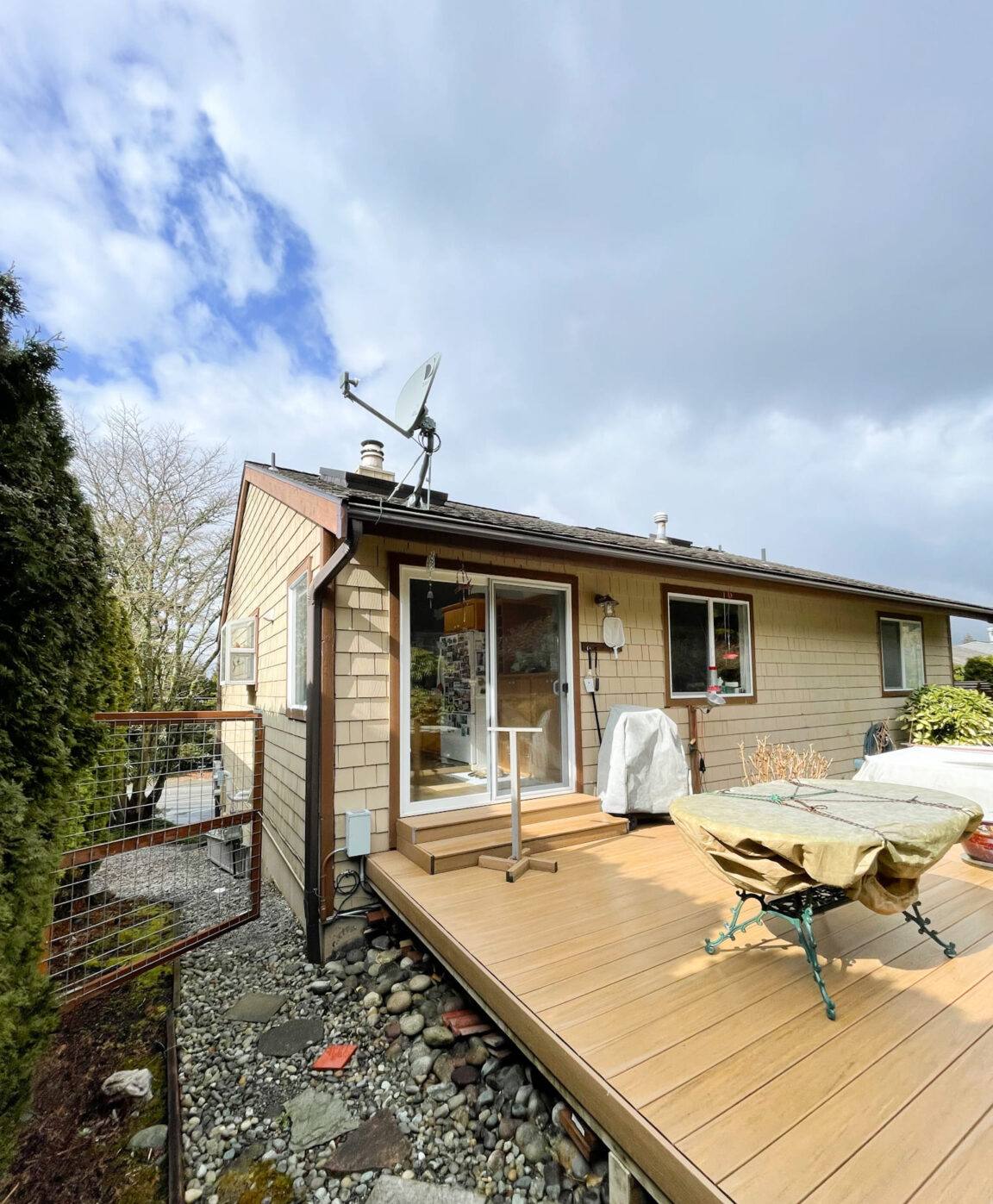
What California Creek's Climate Actually Does to Siding
Salt Air and Slow Corrosion
Proximity to Semiahmoo Bay and the Strait of Georgia means airborne salt is a constant, low-level presence. It doesn't damage siding material the way it damages bare metal, but it does accelerate wear on fasteners, flashing, and any exposed metal trim if those components aren't rated for a marine-influenced environment. It also settles into surface grime faster than it would further inland, which is part of why factory-applied finishes hold up so much better here than field-applied paint.
Driving Rain, Not Just Rain
Blaine's winter storms often come with real wind behind them, which pushes water sideways into wall assemblies rather than letting it simply run down the face of the house. That distinction matters enormously for siding installation. A product and installation method that handles vertical rainfall fine can still fail under wind-driven rain if laps, flashing, and water-resistive barrier details aren't done correctly.
The Long Moss Season
Shaded lots, tree cover, and consistent moisture give moss and algae a long runway in California Creek — often eight or nine months of active growing conditions in a typical year. Siding that stays damp longer, or has a porous surface for spores to grab onto, will show green and black staining faster and more persistently than a product engineered to shed water and resist organic growth.
Why This Combination Rules Out Some Common Siding Choices
We don't install vinyl, LP SmartSide, primed wood, or other fiber cement brands, and California Creek is a good illustration of why. Vinyl expands and contracts more with temperature swings and can distort or gap over time, giving moisture an easier path behind the panel. Wood-based products, including primed spruce and cedar, depend on an intact paint or sealant layer to resist moisture — and in a neighborhood with this much sustained dampness and moss pressure, any breach in that layer becomes an entry point for rot faster than it would in a drier part of the county. Engineered wood siding is dimensionally stable but still relies on field-sealed cut edges and seams staying watertight for the life of the product.
James Hardie fiber cement is non-combustible, dimensionally stable across temperature and humidity swings, and finished at the factory under controlled conditions with ColorPlus Technology — a baked-on finish that resists fading and holds up to UV and salt exposure far better than a field-applied coat. It won't rot, and it doesn't feed insects. That's the profile a marine-adjacent, high-moisture neighborhood like California Creek actually needs.
Product Comparison at a Glance
| Factor | Vinyl Siding | Primed Wood / Cedar | James Hardie Fiber Cement |
|---|---|---|---|
| Moisture/rot resistance | Doesn't rot, but seams can let water behind panel | Vulnerable once coating fails | Non-combustible, doesn't rot |
| Moss/algae resistance | Moderate; textured surface can trap growth | Low; porous surface holds moisture | Smooth factory finish sheds water, resists growth better |
| Finish durability in salt air | Can chalk/fade over time | Depends entirely on maintenance schedule | Factory-baked ColorPlus finish, engineered for UV/salt exposure |
| Dimensional stability | Expands/contracts noticeably with temperature | Swells and shrinks with moisture | Stable across Blaine's seasonal humidity swings |
| Maintenance burden | Low, but limited repair options if damaged | High — repainting/resealing on a recurring cycle | Low; periodic washing, no repainting cycle required |
What a Correct Siding Installation Involves
The siding itself is only part of the equation. Most siding failures we get called to inspect in coastal Whatcom County neighborhoods trace back to installation details, not the material. For a job to actually perform in California Creek's conditions, it needs to get these right:
- Water-resistive barrier: A continuous, properly lapped weather barrier behind the siding, installed shingle-style so water is directed outward and down, not trapped against the sheathing.
- Flashing at every penetration: Windows, doors, hose bibs, vents, and any other wall penetration need correctly integrated flashing — this is where wind-driven rain finds its way in if it's skipped or rushed.
- Rainscreen or drainage gap: A gap between the siding and the water-resistive barrier lets any moisture that does get past the surface drain and dry out instead of sitting against the wall assembly — especially valuable in a shaded, slow-drying neighborhood like this one.
- Correct fastener placement and type: Hardie panels need to be fastened per manufacturer spec — proper embedment, corrosion-resistant fasteners suited to a marine-influenced climate, and correct spacing so panels aren't over- or under-fastened.
- Proper clearances: Siding held to the manufacturer's minimum clearance above grade, roofing, and decks so it isn't sitting in standing water or constant splash-back.
- Caulking and sealant only where specified: Hardie's install guide is specific about where sealant is needed and where it isn't — oversealing can trap moisture just as easily as underdoing it.
How We Run the Job in California Creek
1. On-Site Assessment
We walk the property, check the current siding and sheathing condition, look at drainage patterns around the foundation, and note anything specific to the lot — tree cover, shade patterns, and exposure to prevailing wind and rain direction all factor into the plan.
2. Tear-Off and Sheathing Check
Once old siding comes off, we inspect the sheathing underneath. In a neighborhood with this much sustained moisture exposure, catching hidden rot or compromised sheathing before new siding goes up is one of the most valuable steps in the whole process — it's much cheaper to address now than after it's covered again.
3. Weather Barrier and Flashing Installation
This is the step that determines whether the house stays dry for the next several decades. We install the water-resistive barrier and integrate flashing at every window, door, and penetration before a single piece of siding goes up.
4. James Hardie Panel or Lap Installation
Panels or lap siding go up per Hardie's published installation specifications — correct fastener schedule, proper overlap, and attention to clearances at grade, roofline, and trim.
5. Trim, Caulking, and Paint Touch-Up
Trim details are finished, sealant is applied only where the manufacturer specifies, and any factory-finish touch-up is done with Hardie's matched touch-up product so the ColorPlus finish stays consistent.
6. Final Walkthrough
We walk the finished job with the homeowner, check clearances and details together, and make sure everything matches what was scoped.
Cost Factors for a California Creek Siding Job
Every home is different, but the variables that move price on a California Creek project tend to be the same handful of factors:
| Factor | Why It Matters Here |
|---|---|
| Sheathing condition | Homes with hidden moisture damage need repair before new siding goes on |
| Home size and wall complexity | More corners, penetrations, and trim details mean more flashing and labor time |
| Siding profile (lap vs. panel vs. shingle-style) | Different Hardie product lines carry different material and labor costs |
| Access and lot conditions | Tree cover, tight side yards, and slope can affect staging and time on site |
| Trim and detail work | Window/door surrounds, fascia, and corner detail add finish time |
Why Local Experience in This Neighborhood Matters
A crew that already understands California Creek's specific mix of salt exposure, wind-driven rain, and shaded, slow-drying lots plans differently than a crew treating it like any other job. That shows up in small decisions — how much drainage gap to build in, where extra flashing attention goes, which sides of the house get the most weather exposure and need the most careful detailing. It also means we're familiar with Whatcom County permitting expectations and the practical realities of working this stretch of Blaine, from access constraints on tighter lots to seasonal weather windows for tear-off work.
Signs Your California Creek Home May Need New Siding Soon
- Persistent moss or algae staining that returns quickly after cleaning
- Visible gaps, warping, or separation at seams and corners
- Soft spots or discoloration near the base of walls or below windows
- Paint that's chalking, peeling, or needing repainting more often than it used to
- Rising heating bills that suggest the wall assembly isn't performing as it should
- Visible rot at trim boards, corner boards, or siding butt joints
Get an Estimate
If you're seeing any of the signs above, or you're simply planning ahead for a California Creek property, we're happy to take a look and walk you through what correct James Hardie installation would involve for your specific home. There's no pressure and no obligation — just a straight assessment from a crew that knows this neighborhood's conditions. Use the form below to request a free estimate.