 Blaine
 Sandy Point Homes Face a Tougher Exterior Environment Than Most of Whatcom County
Sandy Point sits right up against the water, and that changes what a home's exterior has to survive year after year. Homes just a few miles inland in Blaine deal with a milder version of the same weather. Out on Sandy Point, the exposure is more direct: salt-laden air blowing off the strait, driving rain that hits siding sideways instead of straight down, and long, damp stretches of the year where moss and algae get a real foothold on anything that stays wet. Siding on a waterfront lot is doing more work than siding on a sheltered lot a mile away, and it needs to be chosen and installed with that in mind.
This page is about one thing specifically: fiber cement siding for Sandy Point properties, what the local climate demands from it, what a correct installation actually looks like, and why the crew doing the work matters as much as the product itself.
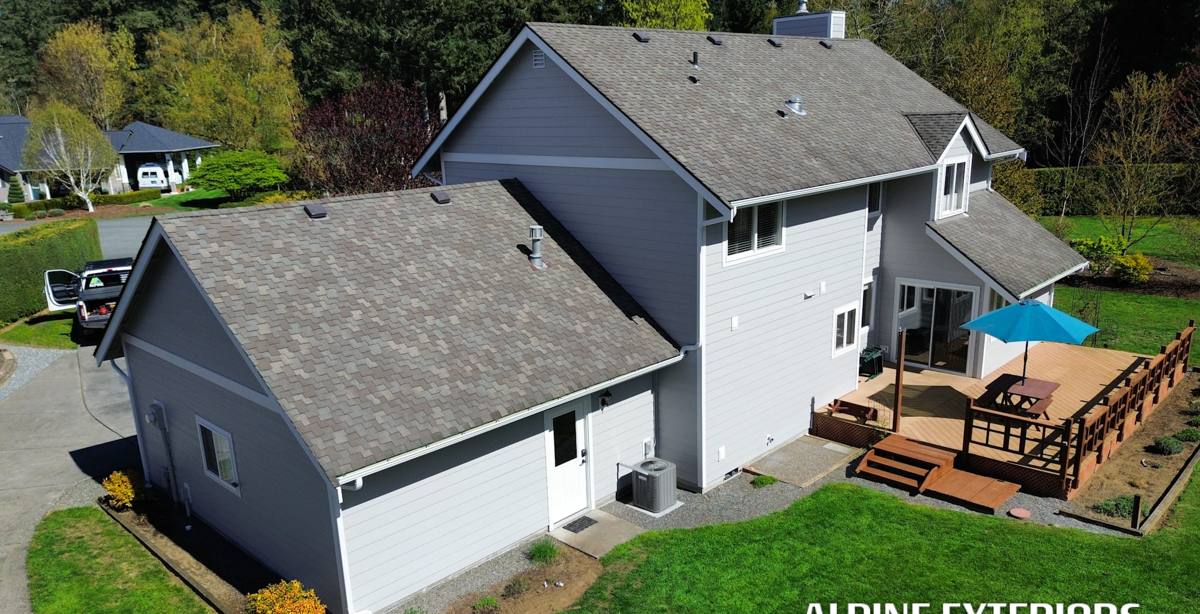
What Salt Air, Driving Rain, and Moss Season Actually Do to Siding
Salt Air
Airborne salt is corrosive to metal fasteners, flashing, and trim, and it accelerates the breakdown of coatings that aren't formulated to resist it. Siding paint jobs that would hold up fine a few miles inland can chalk, fade, and peel years earlier when they're exposed to constant salt spray. This isn't unique to Sandy Point, but a waterfront lot gets a more concentrated version of it than most of the county.
Driving Rain
Wind off the water doesn't just bring rain — it pushes it sideways into laps, joints, and butt seams that a calmer climate would never test. Siding systems that rely on caulk alone, or that don't manage water behind the cladding, tend to show their weaknesses first in exactly this kind of exposure.
Moss and Algae Season
Western Washington's long wet season, combined with shade from mature trees and reduced sun exposure on north- and west-facing walls, gives moss and algae months at a time to establish themselves on any siding surface that holds moisture. Once established, moss holds water against the substrate, which is a problem for wood-based products in particular.
Why Fiber Cement Holds Up Where Other Products Struggle
Fiber cement siding is made from cement, sand, and cellulose fiber, and it does not have the same failure points as wood-based or foam-backed siding products in a coastal environment. It doesn't rot, it isn't a food source for moss the way wood fiber can be, and it holds paint and factory finish far longer than most alternatives when it's properly installed and detailed. That's why it's the only siding product we install — not because it's trendy, but because it's the product that matches what a place like Sandy Point actually demands from an exterior.
Fiber cement on its own isn't magic, though. A fiber cement plank installed with the wrong flashing, the wrong fastener, or gaps left uncaulked at butt joints will still let water in behind it. The material only performs as well as the installation behind it, which is the next section.
What a Correct Fiber Cement Installation Involves
Weather-Resistive Barrier and Flashing First
Before any siding goes up, the wall needs a properly lapped weather-resistive barrier and correctly integrated flashing at every window, door, and penetration. This is the layer that actually keeps a wall assembly dry — the siding is the second line of defense, not the only one. On a wind-driven-rain site like Sandy Point, skipping or shortcutting this step is where most long-term water problems start.
Fastening and Clearances
James Hardie specifies fastener type, spacing, and embedment depth for a reason — under-driven or over-driven nails, or the wrong fastener for the substrate, create stress points where the plank can crack or work loose over time. Clearance from grade, roof lines, and decks also matters: siding installed too close to the ground or to a roof surface stays wet longer and invites the exact moss and mildew growth Sandy Point's climate already encourages.
Joints, Caulking, and Butt Seams
Every horizontal and vertical joint is a potential water entry point. Correct butt-joint treatment, proper caulk selection, and attention to inside and outside corners are what separate a installation that sheds wind-driven rain from one that eventually leaks behind the cladding.
Factory Finish Integrity
James Hardie's ColorPlus finish is baked on in a controlled factory environment, which gives it more consistent coverage and better fade resistance than field-applied paint. Protecting that finish during installation — avoiding scratches, using touch-up product correctly at cut edges, and not caulking or painting over factory finish where it isn't needed — preserves the warranty and the long-term look of the job.
- Weather-resistive barrier installed and lapped correctly before any siding goes up
- Flashing integrated at every window, door, and wall penetration
- Manufacturer-specified fasteners, spacing, and embedment depth followed exactly
- Proper clearance maintained from grade, roofline, and decking
- Butt joints, corners, and seams detailed to shed wind-driven rain
- Factory ColorPlus finish protected during handling and touched up correctly at cuts
- Final walk-through comparing the finished work against the manufacturer's installation spec
James Hardie Product Lines We Use for Waterfront Exposure
James Hardie engineers its siding for different climate zones, and that matters more on a lot like Sandy Point than on a sheltered inland lot. The HZ5 product line is engineered for cooler, wetter climates like the Pacific Northwest, with different moisture-management performance than the HZ10 line built for hot, humid regions. For Blaine and Whatcom County, HZ5 is the correct specification.
| Product | Typical Use | Why It Fits Sandy Point |
|---|---|---|
| HardiePlank Lap Siding (HZ5) | Primary wall cladding | Climate-engineered for Pacific Northwest moisture exposure; most common choice for full re-sides |
| HardiePanel Vertical Siding | Accent walls, gables, modern facades | Clean vertical lines with the same fiber cement durability |
| HardieTrim Boards | Corners, window and door trim, fascia | Matches the siding's resistance to moisture and salt air at high-exposure edges |
| HardieSoffit Panels | Eaves and overhangs | Non-combustible, moisture-resistant finish for the areas rain gets driven up into |
Our Process From Estimate to Finished Job
- On-site assessment: we look at the specific exposure of each wall — which sides take direct wind-driven rain, which stay shaded and damp, where moss has already established — before recommending a scope of work.
- Written estimate: product line, trim details, and a clear scope, with no pressure to sign on the spot.
- Prep and tear-off: removal of existing siding, inspection of the sheathing underneath for hidden moisture damage, and repair of any compromised framing or sheathing before new material goes on.
- Weather barrier and flashing: installed and inspected before a single piece of siding is hung.
- Siding installation: to manufacturer spec on fastening, clearance, and joint treatment.
- Trim, caulking, and touch-up: corners, trim boards, and factory-finish touch-up at cut edges.
- Final walk-through: reviewed with the homeowner before we consider the job done.
Cost Factors on a Waterfront Lot
Every job is priced on its own scope, but a few factors move the number more on a lot like Sandy Point than on a typical inland property:
| Factor | Why It Affects Cost |
|---|---|
| Sheathing condition under old siding | Waterfront exposure increases the odds of hidden moisture damage that needs repair before new siding goes on |
| Wall exposure and access | Wind-facing walls and homes close to the water sometimes need additional flashing detail or scaffolding for access |
| Trim and accent scope | Vertical panel accents, additional trim boards, and soffit work add material and labor beyond a basic lap-siding job |
| Tear-off vs. new construction | Removing and disposing of old siding, and repairing what's underneath, costs more than installing over new sheathing |
Living With Fiber Cement in a Salt Air, High-Moss Environment
Fiber cement is low-maintenance compared to wood or vinyl, but "low-maintenance" doesn't mean "no maintenance," especially this close to the water. A short annual routine keeps a correctly installed job performing the way it's supposed to:
- Rinse siding periodically to clear salt residue and airborne debris, especially on walls facing the water
- Keep gutters and downspouts clear so water isn't overflowing onto siding below the roofline
- Trim back vegetation and tree cover that shades walls and slows drying, since that's what gives moss its foothold
- Check caulked joints and trim intersections yearly for cracking or separation
- Address any moss or algae growth early with a gentle wash rather than letting it establish
- Have any impact damage or hairline cracking looked at promptly rather than waiting for it to worsen
Why Hire a Crew That Already Works This Neighborhood
Siding installation isn't one-size-fits-all, and a crew that hasn't worked waterfront properties in Whatcom County can miss the details that matter here — flashing details around window openings that take direct wind-driven rain, clearance decisions near grade on a lot with limited drainage, or which walls are going to see the worst of the moss season. A crew that already works Sandy Point and the surrounding Blaine area has seen how these homes actually perform through a full wet season and a full summer, not just how they look the day the job wraps up.
We install James Hardie fiber cement exclusively because it's the product that holds up to this specific combination of salt air, wind-driven rain, and moss pressure when it's installed correctly — and installing it correctly, to spec, on every job is the part we control.
If you're considering new siding for a Sandy Point home, we're happy to walk the property, look at your specific exposure, and put together a straightforward estimate — no pressure, no obligation. Use the form below to get started.