 Blaine
 Why Ferndale Roofs Wear Out Differently Than Roofs Inland
Ferndale sits close enough to the water that salt air is a real factor in how roofing materials age, and it gets the same steady, driving rain that defines this whole stretch of Whatcom County. Add in a moss season that runs long — often eight or nine months out of the year when temperatures stay mild and everything stays damp — and you have a climate that is genuinely harder on a roof than what you'd find on the other side of the Cascades. None of this means Ferndale roofs fail faster across the board. It means the failure patterns look different: granule loss and premature aging from constant moisture exposure, moss colonies that lift shingles from the edges in, and slow water intrusion at flashing points that goes unnoticed until there's a stain on a ceiling.
A roof replacement here has to account for all three of those factors from the start — not as an afterthought, but as part of how the job is planned and installed.
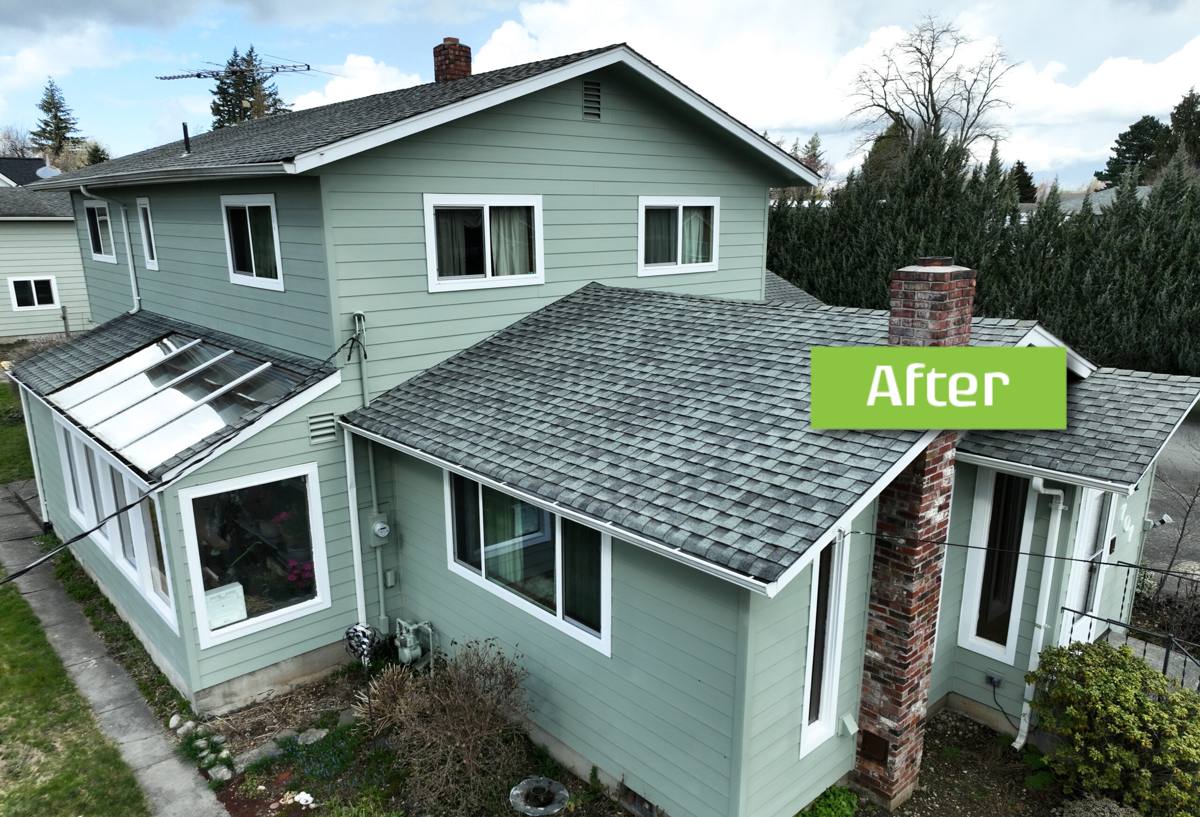
Signs a Ferndale Roof Needs Replacement, Not Another Patch
Not every roof problem calls for a full replacement, and a straight contractor will tell you when a repair is genuinely the better call. But there's a point where patching starts costing more than it saves. Common signs we look for on Ferndale homes:
- Moss growth that keeps coming back within a season or two of cleaning, especially in the shaded, north-facing sections common on wooded lots
- Granules collecting in gutters and downspouts in noticeable amounts, a sign the shingle surface is breaking down
- Soft spots or slight sagging in the decking, usually found when walking the roof or from inside the attic
- Shingles that are curling, cracking, or losing their seal at the tabs
- Multiple past repairs in different areas of the roof rather than one isolated issue
- Daylight or water staining visible in the attic around vents, chimneys, or valleys
If a roof is showing two or more of these at once, replacement is usually the more honest recommendation, since repeated repairs on an aging roof rarely hold up through another wet season.
What a Correct Roof Replacement Actually Involves
Full Tear-Off, Not a Layover
We remove the existing roofing down to the deck rather than installing new shingles over old ones. A layover traps moisture between layers and hides deck damage that needs to be addressed before new material goes down — a bigger risk in a climate where moisture is already working against the roof.
Deck Inspection and Repair
Once the old roofing is off, the decking gets inspected board by board. Any wood that's soft, delaminated, or water-damaged gets replaced before anything else happens. Skipping this step is one of the more common shortcuts in the trade, and it's also one of the most consequential — new shingles over a compromised deck don't last.
Underlayment Built for Wet Climates
We use synthetic or self-adhering underlayment at eaves, valleys, and other vulnerable areas rather than relying on minimum-code felt. In a region that sees the volume of rain Whatcom County does, this layer is doing real work, not just meeting an inspection checkbox.
Flashing Done Right
Flashing around chimneys, skylights, vent pipes, and roof-to-wall transitions is one of the most common places a roof actually leaks — not the field of the shingles themselves. We install new flashing rather than reusing old pieces, and we pay particular attention to valleys, since that's where water volume concentrates during heavy rain.
Ventilation That Matches the Home
Proper intake and exhaust ventilation keeps moisture from building up in the attic, which matters year-round here but especially in the damp winter months. Poor ventilation shortens the life of a new roof no matter how good the shingles are, and it's a step that's easy to underestimate if it isn't priced in from the start.
Material Options for Ferndale's Climate
Most Ferndale homes we work on land on asphalt composition shingles, but the grade and features matter more here than in a drier climate. Below is how the common options compare for this specific environment.
| Material | Moss/Algae Resistance | Typical Lifespan Here | Notes for This Climate |
|---|---|---|---|
| Standard 3-tab asphalt | Low unless treated | 15-20 years | Budget-friendly but shows moss and wear faster without algae-resistant granules |
| Architectural (laminate) asphalt | Moderate to high with algae-resistant granules | 25-30 years | Best balance of cost and durability for most homes in the area |
| Metal panel roofing | High — sheds moss growth | 40-50 years | Higher upfront cost, performs well in constant rain and salt air, less common locally |
| Cedar shake | Low — requires ongoing treatment | 20-25 years with maintenance | Attractive but maintenance-heavy in a damp climate; we're upfront about that tradeoff |
We generally steer homeowners toward algae-resistant architectural shingles unless there's a specific reason to go another direction. It's not that other materials don't work — it's that the maintenance and moisture behavior of that option matches this climate better than most alternatives, without asking a homeowner to take on upkeep that a busy household usually can't keep up with.
How Our Process Works
- On-site inspection: We walk the roof and attic, check the decking where accessible, and look at ventilation, flashing points, and drainage.
- Honest scope and estimate: You get a clear breakdown of what's being replaced and why, including any deck repair that's likely needed based on what we find.
- Material selection: We go over shingle grades and options suited to Ferndale's moisture and moss exposure, matched to your budget.
- Tear-off and deck repair: Full removal of old roofing, replacement of any damaged decking, and disposal handled as part of the job.
- Underlayment, flashing, and shingle installation: Installed in the sequence and to the specifications the material manufacturer requires, so warranties stay valid.
- Ventilation check: Intake and exhaust venting confirmed or corrected as part of the same job.
- Final walkthrough: We go over the finished roof with you before calling the job done.
Why a Crew That Already Works Ferndale Matters
A roof replacement isn't just about the materials — it's about knowing how those materials perform once they're actually exposed to local conditions. A crew that works Ferndale and the surrounding Blaine area regularly has already seen how moss establishes on shaded roof pitches here, how driving rain off the water finds weak points in flashing, and which ventilation setups actually keep attics dry through a Whatcom County winter. That's different from general roofing knowledge — it's pattern recognition built from doing this specific work in this specific climate, season after season.
It also matters for scheduling and weather judgment. Roofing in a region with a long wet season means timing tear-off and installation around dry windows, having a plan if weather turns mid-job, and not rushing a roof closed in a way that compromises the work. A local crew plans around that reality instead of being caught off guard by it.
What Affects the Cost of a Ferndale Roof Replacement
| Factor | How It Affects Cost |
|---|---|
| Roof size and pitch | Larger and steeper roofs take more material and labor time |
| Number of layers to remove | Tear-off of multiple existing layers adds labor and disposal cost |
| Deck condition | Rotted or soft decking found during tear-off adds material and labor to repair before new roofing goes down |
| Material grade chosen | Standard asphalt costs less upfront; architectural or metal costs more but lasts longer in this climate |
| Roof complexity | Valleys, dormers, chimneys, and skylights each add flashing work and time |
| Ventilation upgrades | Adding or correcting intake/exhaust venting is additional scope beyond a basic reroof |
We don't quote a number without seeing the roof, since deck condition alone can shift a project significantly once tear-off starts. What we do provide upfront is a clear explanation of what's driving the price, so there are no surprises mid-project.
After Your New Roof Goes On: What to Keep Up With
A new roof still needs basic upkeep in this climate to hit its full lifespan. A short checklist we give every homeowner after a replacement:
- Keep gutters clear so water isn't backing up under the eaves during heavy rain
- Have moss growth addressed early — a light treatment on a new roof is far easier than removal later
- Trim back overhanging branches to reduce shade and debris buildup on the roof surface
- Do a visual check after major windstorms for any lifted or missing shingles
- Schedule a periodic inspection every few years, even without an obvious problem, to catch small issues early
None of this is complicated, but skipping it is how a well-installed roof loses years off its lifespan in a climate that doesn't give a roof much of a break.
Ready to Talk About Your Roof?
If you're seeing moss buildup, granule loss, or signs of wear on a Ferndale roof, we're glad to come take a look and give you an honest read on whether you're looking at a repair or a full replacement. There's no pressure and no cost to get a straight answer — just fill out the form below and we'll set up a time to come out.