 Blaine
 Why Point Roberts Roofs Age on a Different Schedule
Point Roberts sits out on its own point of land at the tip of a peninsula surrounded on three sides by the Strait of Georgia, and that exposure changes how a roof ages here compared to a similar home a few miles inland in Whatcom County. Salt-laden air moves across these roofs constantly, driving rain comes in sideways off the water during winter storms, and the deep shade from mature evergreens on many lots keeps north-facing slopes damp for weeks at a stretch. None of that is unusual for the Pacific Northwest coastline, but the combination is more concentrated here than on a typical Blaine lot set back from the water.
The practical result is that fasteners, flashing, and roofing granules take more of a beating, and moss gets a longer growing season on shaded or north-facing planes. A roof that would get 25 solid years out of standard asphalt shingles in a drier, sunnier location may show real wear a decade sooner on an exposed Point Roberts lot. That doesn't mean every roof out here fails early — it means the choices made during installation matter more, and deferred maintenance shows up faster as active leaks rather than staying cosmetic.
What Salt Air Actually Does to a Roof
Salt air isn't just "coastal weather" in the abstract — it's airborne moisture carrying dissolved salts that settle on every exposed surface, including metal flashing, fasteners, and vent caps. Over years, that accelerates corrosion on anything that isn't rated for coastal exposure. Galvanized fasteners and standard flashing that would hold up fine 20 miles inland can start showing rust streaks and pinholing noticeably sooner right on the water. This is one of the biggest reasons material selection matters more here than it does on a typical build a few miles from the shoreline.
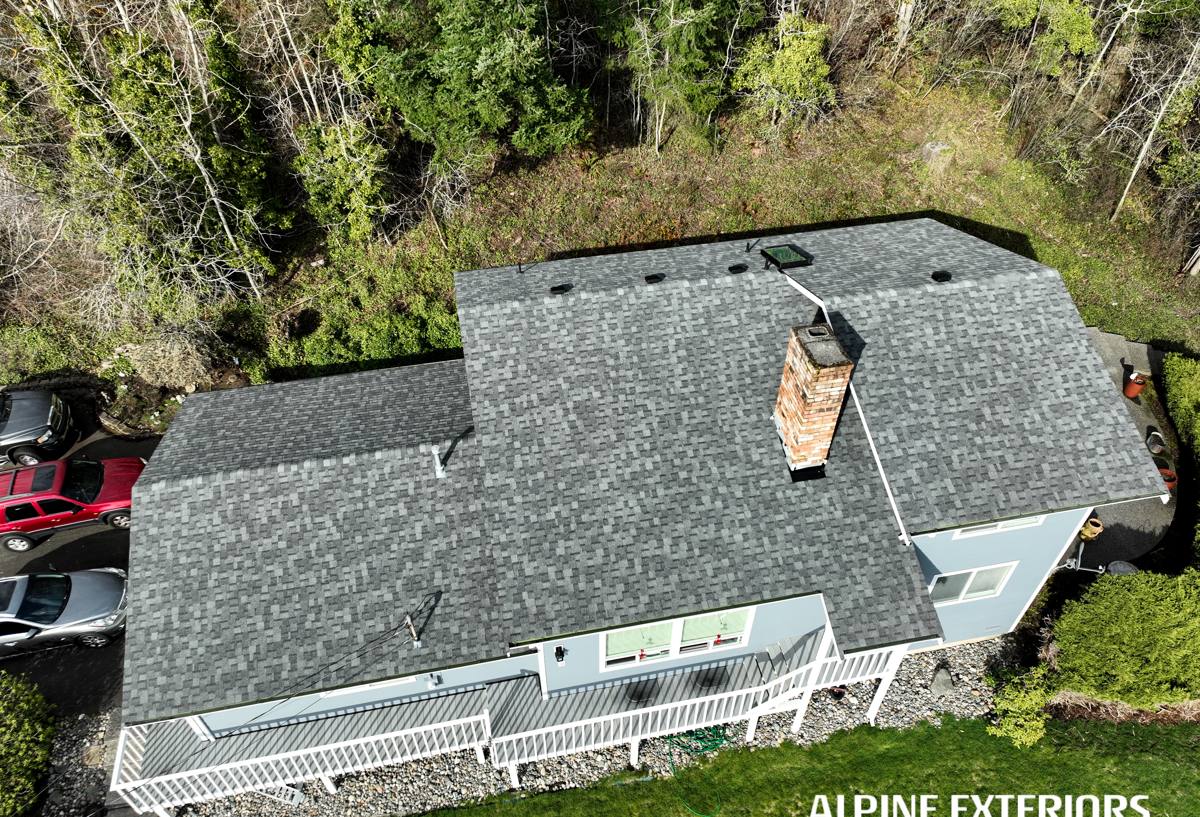
Signs a Point Roberts Roof Needs Replacement, Not Just Repair
Homeowners often call us after noticing one visible problem — a stain on a ceiling, a missing shingle after a windstorm — without realizing it's a symptom of broader wear. A few patterns we see often enough on this peninsula to call out specifically:
- Granule loss heavy enough that you can see bare asphalt in valleys or on south- and west-facing slopes exposed to wind-driven rain
- Moss mats thick enough to hold standing moisture against the shingle mat, especially on shaded north slopes under tree cover
- Rust bleeding from nail heads or flashing seams, a sign that fasteners weren't rated for salt exposure
- Soft or spongy decking felt underfoot near eaves, valleys, or chimney flashing — usually a sign moisture has been getting past the roofing system for a while
- Multiple past patch repairs in different spots, which usually means the underlying roof is past the point where more patching makes sense
Any one of these on its own might be a repair. Two or three together, especially on a roof already past 15-18 years, is usually a sign it's time to talk replacement instead of continuing to chase leaks one at a time.
What's Different About Working in Point Roberts
Point Roberts is a U.S. exclave — the only land route in and out crosses the Canadian border twice, since the community sits at the southern tip of a peninsula that's otherwise part of British Columbia. That geography is well known to anyone who lives there, and it has real, practical effects on a roofing project that a crew unfamiliar with the area won't plan for.
Scheduling and Material Logistics
Every truck, trailer, and material delivery for a Point Roberts job crosses an international border crossing, which means build days need to account for border wait times rather than treating the drive like any other Whatcom County job site. Material orders — shingles, underlayment, flashing, ventilation components — need to be staged and confirmed before crew and equipment head out, because a forgotten bundle isn't a quick round trip back to the yard. Crews who work Point Roberts regularly build this into the schedule from day one; crews who don't tend to lose days to it.
Permitting and Local Requirements
Point Roberts falls under Whatcom County jurisdiction for building permits, and a roof replacement typically requires a permit through the county rather than a city office. Knowing that process — and knowing it before the tear-off starts, not after an inspector flags it — keeps a project moving instead of stalling mid-job.
Weather Windows
Because the peninsula is exposed on multiple sides, weather can move in faster and less predictably than a forecast for "Blaine" or "Whatcom County" broadly might suggest. A crew that's used to reading conditions on this specific stretch of coastline plans tear-off days more conservatively, keeping the roof deck covered and dry rather than betting on a forecast that doesn't fully account for local exposure.
Choosing a Roofing System Built for This Exposure
There's no single "best" roofing material for every home — the right choice depends on the roof's slope, exposure, tree cover, and the homeowner's budget and maintenance appetite. What we do adjust for Point Roberts specifically is corrosion resistance on fasteners and flashing, and moss resistance on shaded slopes.
| Material | Salt/Moisture Resistance | Moss Resistance | Typical Lifespan Here | Maintenance |
|---|---|---|---|---|
| Standard asphalt composition shingle | Moderate — depends on fastener and flashing spec | Low without treatment | 15-22 years | Moss removal and gutter clearing recommended annually |
| Algae/moss-resistant composition shingle | Moderate to good | Improved — copper or zinc granules slow regrowth | 18-25 years | Still benefits from periodic inspection on shaded slopes |
| Standing seam metal | Good with coastal-rated coatings and fasteners | High — sheds moss buildup much better than shingle | 30-45 years | Low; occasional fastener and sealant check |
| Synthetic/composite shingle | Good | Moderate to high depending on product | 25-40 years | Low to moderate |
We're honest with homeowners that metal and synthetic systems cost more up front. For a lot with heavy tree cover and constant shade, that upfront cost often pencils out over time in reduced moss maintenance and fewer callback repairs. For a more exposed, sun-hit roof plane with less moss pressure, a quality algae-resistant asphalt shingle with corrosion-rated fasteners can be the more sensible choice. We'll walk your specific roof and tell you which situation you're in rather than defaulting to the most expensive option.
What a Correct Replacement Involves
A roof replacement is more than swapping old shingles for new ones on top of the same deck. Done right for a Point Roberts exposure, it includes:
Full Tear-Off and Deck Inspection
We remove the old roofing down to the deck rather than layering over it, because covering rotten or moisture-damaged sheathing just hides a problem under new shingles. Any soft or delaminated decking gets replaced before anything new goes down — this is usually where a "surprise" cost comes from on an older roof, and we flag it honestly rather than quoting around it.
Ice and Water Protection at Vulnerable Areas
Eaves, valleys, and roof penetrations get self-adhering waterproof underlayment, not just standard felt. On a roof exposed to driving rain off the water, this is one of the highest-value upgrades in the whole job — it's the layer that keeps wind-driven rain from working its way under the shingle mat at the edges.
Corrosion-Rated Flashing and Fasteners
Around chimneys, skylights, sidewalls, and valleys, we use flashing and fastener hardware rated for coastal/salt exposure rather than standard galvanized. It costs a little more in materials and is worth it on this peninsula specifically.
Ventilation That Actually Works
Balanced intake (soffit) and exhaust (ridge) ventilation keeps the underside of the roof deck dry and helps prevent the kind of trapped moisture that accelerates rot and gives moss an easier foothold from underneath. A lot of older Point Roberts homes we've assessed have ventilation that was adequate when built but doesn't match current roofing standards — we address this as part of the replacement, not as an upsell afterward.
Moss-Resistant Details on Shaded Slopes
On north-facing or heavily shaded planes, we'll talk through zinc or copper strip installation near the ridge, which releases trace metals with rain runoff to slow moss regrowth over the life of the roof.
Our Process, Start to Finish
- On-site assessment of the current roof, decking condition, ventilation, and exposure on each slope
- Written estimate covering material options, scope, and a realistic timeline that accounts for border-crossing logistics
- Permit pulled through Whatcom County before work begins
- Material staging and delivery confirmed ahead of the crew's arrival on-site
- Tear-off, deck inspection and repair, and installation of underlayment, flashing, and the new roofing system
- Final walkthrough with the homeowner covering what was done and what to expect for maintenance
We don't treat a Point Roberts job as an add-on to a Blaine schedule. It gets planned as its own trip with its own logistics, which is part of why timelines we give for this area tend to hold up.
Cost Factors for a Point Roberts Roof Replacement
Every roof is different, and we won't quote a number without seeing the actual roof, but the factors that move cost up or down here are fairly consistent:
| Factor | Effect on Cost |
|---|---|
| Roof size and number of slopes/valleys | More area and complexity means more labor and material |
| Extent of deck repair needed | Rotted sheathing found during tear-off adds material and labor |
| Material choice (asphalt vs. metal vs. synthetic) | Metal and synthetic cost more upfront, less over the roof's life |
| Corrosion-rated hardware and flashing | Modest increase over standard-grade materials, recommended for this exposure |
| Ventilation upgrades | Adds cost if current ventilation is inadequate for the new system |
| Access and staging logistics | Border-crossing scheduling and material staging factor into labor planning |
Living With Moss Season After Your New Roof
A correctly installed roof reduces moss problems significantly, but it doesn't make them disappear entirely in a climate like this one. A short annual maintenance routine keeps a new roof performing the way it's supposed to:
- Clear needles, leaves, and debris from valleys and gutters each fall before winter rains set in
- Trim back tree limbs that overhang the roof to reduce shade and debris buildup on north-facing slopes
- Do a visual check each spring for any moss regrowth, especially near the ridge and in shaded valleys
- Have flashing around chimneys and skylights checked periodically for the first signs of corrosion or sealant wear
- Address small issues — a lifted shingle tab, a loose fastener — promptly rather than waiting for the next storm season
Why It Matters to Hire a Crew That Already Works Point Roberts
A roofing crew that mostly works other parts of Whatcom County can absolutely do quality work, but a Point Roberts job has enough logistical and jurisdictional quirks that unfamiliarity costs real time and money. A crew that already knows the border-crossing routine, already has a working relationship with Whatcom County permitting for this specific location, and already understands how exposed this peninsula gets in a winter storm isn't guessing at any of that — they're planning around it from the first estimate. That's the difference between a project that runs on schedule and one that runs into avoidable delays.
If you're weighing repair versus replacement, or just want an honest read on where your roof stands, we're happy to come take a look. Reach out for a free, no-pressure estimate using the form below.