 Blaine
 Roof Repair Built for Nooksack's Weather
Nooksack sits inland from Blaine but still gets the full weather package that defines this corner of Whatcom County: long wet winters, moss that never really stops growing, and enough wind-driven rain to find every weak point in a roof system. Add in the salt-laden air that drifts in off the Strait of Georgia and settles across the county, and you've got a climate that's genuinely hard on roofing materials. A roof that would last decades in a dry inland climate can develop real problems here in half that time if it isn't maintained or repaired correctly.
We work on homes in and around Nooksack regularly, and the calls we get tend to follow a pattern: a stain on a ceiling that shows up after a hard rain, shingles that look fine from the ground but are soft or granule-bare up close, or moss mats that have been sitting on the north-facing slopes for a year or more. None of these are cosmetic issues. They're early signs of moisture getting into places it shouldn't, and in this climate that moisture doesn't dry out on its own between storms the way it might elsewhere.
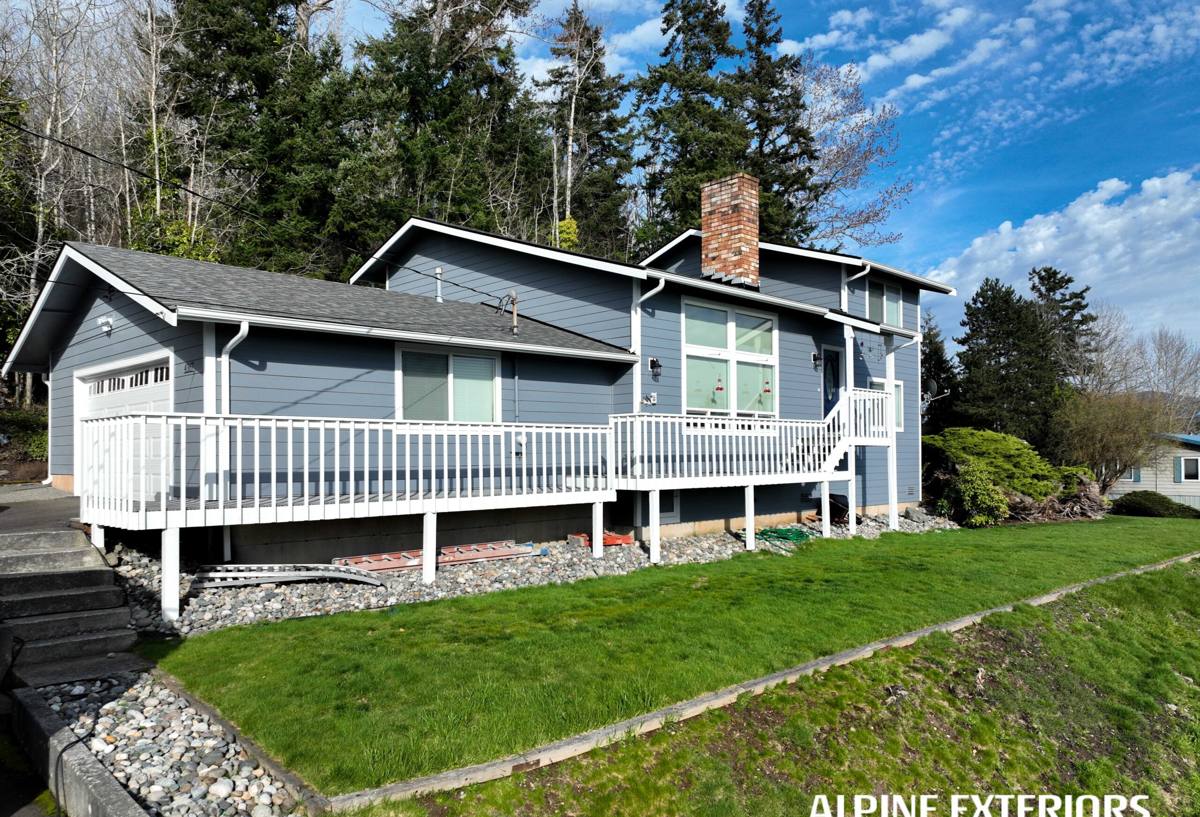
Why Local Climate Changes the Repair, Not Just the Roof
A lot of roofing companies treat repair as a generic task — patch the hole, replace the shingle, move on. That approach doesn't hold up well here. The specific combination of moisture, moss, and salt exposure common to Whatcom County changes what a correct repair actually looks like.
Salt Air and Fastener Corrosion
Metal fasteners, flashing, and drip edge are all vulnerable to the salt content in coastal air, even several miles inland. Corroded nails and screws lose their grip over time, which is a common hidden cause of lifted shingles and loosened flashing that otherwise looks intact. When we open up a repair area, we're checking fastener condition, not just the visible shingle or flashing above it.
Moss and Trapped Moisture
Moss doesn't just look bad — it holds water against the roof surface far longer than the surface would otherwise stay wet, and its root structure works into shingle granules and seams. On north-facing and shaded slopes, which are common on wooded Nooksack lots, moss growth can go unnoticed for a season or two before it starts contributing to granule loss and, eventually, leaks.
Driving Rain and Wind-Driven Water
Wind-driven rain doesn't behave like straight-down rain. It gets pushed sideways and upward under laps, around vents, and along valley edges — the exact spots where a rushed or generic repair tends to fail again within a season or two.
What a Correct Roof Repair Involves
An honest repair starts with figuring out where water is actually entering, which is not always where the stain shows up inside. Water can travel along rafters or sheathing for several feet before it drips through drywall, so a repair that only addresses the interior stain location often misses the real entry point.
- Trace the leak path from the interior sign back to the actual entry point on the roof surface
- Inspect flashing around chimneys, vents, skylights, and roof-to-wall transitions — these account for a large share of real leaks, more than field shingles do
- Check valleys and eave edges for granule loss, cracking, or moss buildup that traps water
- Assess fastener and flashing metal for corrosion, especially on older roofs
- Confirm underlayment and decking condition in the affected area before closing it back up
- Match repair materials to the existing roof as closely as possible so the patch doesn't stand out or perform differently in freeze-thaw and wet cycles
Skipping any of these steps is how a "repaired" roof ends up leaking again in the same spot a year later. It's also why we don't quote a repair sight-unseen — the right fix depends entirely on what's actually happening under the surface.
Common Roof Repair Situations We See in Nooksack
Moss-Related Granule Loss
Long-term moss coverage wears down the protective granule layer on asphalt shingles, leaving the underlying asphalt exposed to UV and moisture. Once granule loss is significant, the shingle's remaining lifespan drops quickly, and localized replacement is usually more cost-effective than waiting for a full failure.
Flashing Failure at Chimneys and Vents
Flashing seals are a common failure point, especially on older homes where the original flashing wasn't step-flashed correctly or has simply corroded over the years. This is one of the most frequent sources of "mystery leaks" that show up only during hard, wind-driven storms.
Valley and Eave Damage
Valleys carry more water volume than any other part of the roof, and eaves take the brunt of ice and standing water during cold snaps. Both areas show wear earlier than the rest of the roof and are worth checking even when there's no active leak yet.
Storm and Wind Damage
Occasional high wind events can lift or crack shingles without causing an immediate visible leak. These spots are worth addressing quickly, since an already-compromised shingle fails much faster under the next round of driving rain.
Repair or Replace: How We Help You Decide
Not every roof problem calls for a full replacement, and not every leak is fixable with a patch that will actually last. We look at the whole picture — age, remaining material life, extent of damage, and how many prior repairs the roof has had — before recommending either path.
| Factor | Leans Toward Repair | Leans Toward Replacement |
|---|---|---|
| Roof age | Under 12-15 years | Nearing or past expected lifespan |
| Damage extent | Localized to one area or slope | Widespread granule loss or multiple leak points |
| Repair history | First or second repair | Repeated repairs in the same areas |
| Decking condition | Solid, no rot found | Soft spots or rot present |
| Moss/moisture damage | Surface-level, recently addressed | Long-term, affecting multiple layers |
We'll always tell you honestly which side of that table your roof falls on, even if that means recommending a smaller repair job over a bigger sale.
Our Repair Process
We keep the process straightforward because homeowners shouldn't have to guess what's happening on their own roof.
- Inspection: We get on the roof (not just a ground-level look) and check the suspected problem area along with the rest of the roof surface for related issues.
- Diagnosis: We explain what we found in plain terms — where the water is getting in, why, and what caused it.
- Written estimate: You get a clear scope of work and cost before anything is scheduled, no vague verbal quotes.
- Repair: We complete the work to match your existing roofing system as closely as possible, focusing on the root cause, not just the visible symptom.
- Follow-up: We'll walk you through what we did and flag anything else worth watching so there are no surprises later.
Maintenance That Extends the Life of a Repair
A good repair lasts longer when it's paired with basic upkeep, especially in a moss- and moisture-heavy climate like this one.
- Keep gutters and downspouts clear so water doesn't back up under eaves and shingle edges
- Trim back overhanging branches that keep roof sections shaded and slow to dry
- Address moss early, before it spreads across a full slope or works into shingle seams
- Have flashing checked every few years, since corrosion and seal failure happen gradually and quietly
- Get a professional look after any major wind event, even if nothing looks obviously wrong from the ground
Why Hire a Crew That Already Works in Nooksack
Roofing crews that mostly work in drier climates sometimes underestimate how much moss, salt air, and sustained wet weather change the math on a repair. A shingle brand or flashing detail that holds up fine in a milder climate can underperform here if it's not installed with this region's conditions in mind. We make our material and technique choices around what actually holds up through a Whatcom County winter — not around what's fastest or cheapest to install.
Working regularly in this area also means we're not guessing at what local roofs are up against. We see the same moss patterns, the same flashing failure points, and the same storm exposure on a lot of homes in and around Nooksack, and that familiarity shows up in faster, more accurate diagnoses instead of trial-and-error repairs.
Get an Honest Look at Your Roof
If you've noticed a stain, a soft spot, visible moss, or you're just not sure whether that roof needs a repair or something bigger, we're happy to take a look. We'll give you a straight answer, a written estimate, and a repair built to hold up through Whatcom County's wet season — not just until the next one. Fill out the form below for a free, no-pressure estimate.