 Blaine
 Metal Roofing on the Semiahmoo Coastline
Semiahmoo sits right where Whatcom County's marine air meets open water, and that combination is tougher on a roof than most homeowners realize until they've lived with it a few winters. The salt-laden wind off the water, the near-constant wet season, and the shade from mature evergreens that keeps moss thriving longer than almost anywhere else in the county all add up to a roofing environment that punishes the wrong material and the wrong installation choices. Metal roofing, done correctly for this specific setting, holds up to all three better than most alternatives — but "done correctly" is doing a lot of work in that sentence.
This page is about what a metal roof needs to actually perform on a Semiahmoo home, not metal roofing in general. If you're comparing bids for a home near the spit, the marina, or anywhere in that stretch along Drayton Harbor and the Semiahmoo waterfront, the details below are the ones worth asking every contractor about.
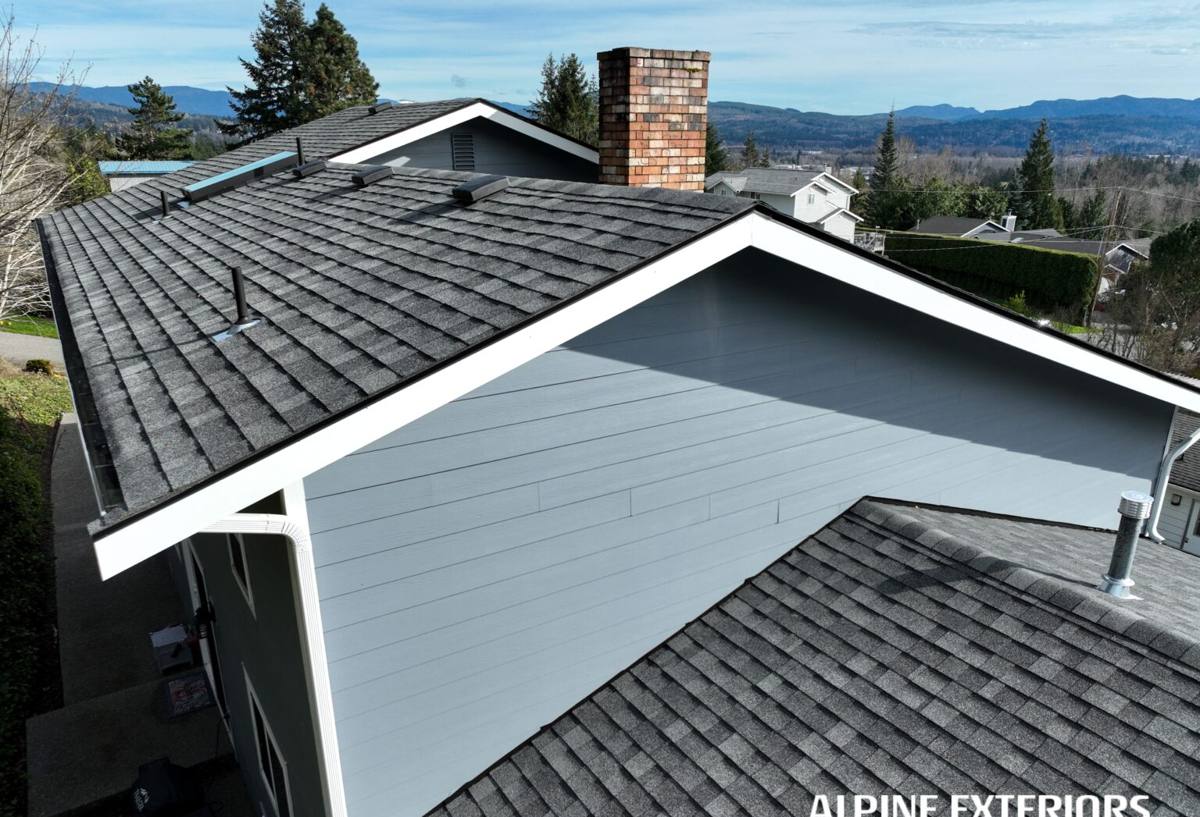
What Salt Air and Coastal Wind Do to a Roof
Homes close to saltwater deal with airborne salt that settles on every exterior surface, including the roof. Over time, salt residue accelerates corrosion on any metal that isn't properly coated or isn't the right alloy for a marine-adjacent environment. It also collects in fastener heads, panel seams, and flashing joints — exactly the places where a roof is most vulnerable if those details weren't sealed and specified correctly at installation.
Wind off the water adds a second layer of stress. Semiahmoo catches steady marine wind plus the gustier squalls that come through with winter storms. Wind doesn't just test how well panels are fastened — it drives rain sideways under laps, ridge caps, and trim that would stay dry in a calmer inland setting. A metal roof detailed for typical Whatcom County conditions but not for a directly exposed coastal lot can end up with moisture problems in the first few wet seasons.
Why This Matters More Here Than a Few Miles Inland
A home a mile or two inland, shielded by tree lines and hills, sees a fraction of the salt exposure and wind loading that a Semiahmoo property closer to open water experiences. That's not a reason to over-spec every roof in Blaine the same way — it's a reason to actually assess each property's exposure rather than installing the same coating and fastener package everywhere out of habit.
Moss, Shade, and the Long Wet Season
Whatcom County's rainy season runs long, and Semiahmoo's tree cover and marine humidity keep roofs damp well after a storm has passed elsewhere. That's the exact combination moss needs to establish. On asphalt shingles, moss roots into the granules and lifts them, which shortens the roof's life directly. Metal doesn't give moss the same foothold — there's no granule layer to root into — but moss and organic debris can still collect in panel seams, around penetrations, and in any area where water doesn't shed cleanly.
The practical upside of metal here is real: less moss-driven material degradation, and a much smoother surface for rain and debris to move off of. The catch is that a poorly designed roof — wrong panel profile for the pitch, inadequate slope in a valley, or trim that traps needles and leaves — can still hold enough moisture in isolated spots to grow moss and stain the finish, even though the underlying metal isn't being eaten away the way shingles would be.
- Trim and overhang design should account for how much debris the site's trees actually drop
- Low-slope sections and valleys need panel profiles rated for the pitch, not just whatever profile matches the rest of the roof
- Gutter and downspout capacity should be sized for driving PNW rain, not a fair-weather average
Panel and Coating Choices That Make Sense for This Location
Not every metal roofing product is a good fit for a marine-influenced site, and this is the area where we're most conservative with recommendations. Bare or lightly coated steel can perform fine inland but corrode faster than a homeowner expects when it's exposed to salt spray year-round. Aluminum resists salt corrosion inherently better than steel and is a common upgrade choice for waterfront and near-waterfront properties for that reason. Steel with a proper marine-grade coating system is also a legitimate option — the coating and fastener quality matter as much as the base metal.
Fasteners and Flashing — Where Corrosion Actually Starts
Most coastal metal roof problems we see don't start in the field of the panel — they start at fasteners, flashing, and cut edges where the protective coating has been compromised. Using fasteners and flashing rated for the same exposure as the panel itself, and sealing every cut edge, is not an upsell — it's the difference between a roof that looks fine for ten years and one that starts showing rust streaks in three.
| Factor | Standard Inland Spec | Semiahmoo Coastal Spec |
|---|---|---|
| Base metal | Standard steel | Aluminum or marine-coated steel |
| Fasteners | Standard coated screws | Corrosion-rated fasteners matched to panel metal |
| Cut edges | Field-cut, unsealed acceptable | All cut edges sealed or factory-finished where possible |
| Flashing detail | Standard lap and seal | Extra attention at wind-driven rain points (eaves, valleys, wall transitions) |
| Fastener spacing | Manufacturer minimum | Tightened per exposure category for wind uplift |
What a Correct Installation Actually Involves
A metal roof is only as good as the details underneath the visible panels. On a Semiahmoo home, we pay particular attention to a handful of steps that are easy to shortcut and hard to fix later without tearing panels back off.
Underlayment and Ventilation
A high-quality synthetic or self-adhered underlayment matters more here than in a drier climate, because it's the backup layer if wind-driven rain ever gets past the panel seams. Proper roof ventilation also keeps humid air from condensing on the underside of the metal deck — a real risk in a marine climate with high ambient humidity for much of the year.
Fastening and Panel Layout
Fastener spacing and panel layout should reflect the property's actual wind exposure, not a generic minimum. A roof facing open water or sitting on higher, more exposed ground needs tighter fastening than one tucked behind trees and other structures.
Penetrations and Transitions
Chimneys, vents, and wall-to-roof transitions are where roofs fail first, coastal or not. On a marine site we treat every penetration as a place worth extra time — correct flashing geometry, compatible sealants, and metal-to-metal contact points that won't set up a corrosion cell between dissimilar metals.
Our Process for a Semiahmoo Metal Roof Job
We walk every roof before quoting, and on a Semiahmoo property that walk includes a specific look at wind exposure, tree cover, and how close the home sits to open water — those three things drive most of the spec decisions above. From there:
- On-site assessment of exposure, existing roof condition, and any moisture or moss issues already present
- Panel, coating, and fastener recommendation matched to that specific exposure level, with the trade-offs explained plainly
- Tear-off or overlay evaluation — metal can sometimes go over an existing roof if the deck and code allow it, but we'll tell you honestly when tear-off is the better call
- Underlayment, ventilation, and flashing detailing built for wind-driven rain and long-term moisture management
- Final walkthrough covering maintenance basics — what to check after storm season, how to keep debris from building up in valleys and trim
Maintenance a Semiahmoo Homeowner Should Actually Do
Metal roofing is low-maintenance compared to shingles, but "low" isn't "none," especially this close to the water and under tree cover.
- Clear needles, leaves, and debris from valleys and trim at least once a year, more often under heavy tree cover
- Keep gutters and downspouts flowing freely through the wet season so water isn't backing up under roof edges
- Do a visual check after major windstorms for lifted trim, loose fasteners, or debris impact
- Watch for any streaking or discoloration near fasteners or cut edges — it's worth a look before it becomes a bigger repair
- Avoid pressure washing directly into seams or trim — it can drive water where it shouldn't go
Why a Crew That Already Works Semiahmoo Makes a Difference
A contractor who works this specific stretch of Whatcom County coastline regularly has already seen how different roofs on different lots here hold up over time — which trim details collect debris, which orientations catch the worst wind-driven rain, which coating choices were worth the extra cost and which weren't necessary for a given site. That's not something you get from a general spec sheet; it comes from doing the work locally and following up on it. It also means we're not guessing at exposure categories or making conservative assumptions to cover ourselves — we can look at a Semiahmoo property and tell you, specifically, what it needs.
If you're weighing a metal roof for a home in or near Semiahmoo, we're glad to walk the roof, talk through honest options for your exposure and budget, and give you a straightforward, no-pressure estimate. There's a form below to get that started.