 Blaine
 Building a Deck That Actually Belongs on the Grandview Coastline
Grandview sits close enough to Blaine's open water and prevailing weather that a deck built the way it would be built inland just doesn't hold up the same way. Salt-laden air corrodes hardware faster, driving rain finds its way into joints and ledger connections that would stay dry fifty miles east, and the long, damp moss season keeps horizontal surfaces wet for weeks at a stretch. None of that means a deck can't last — it means the build has to account for all three from the first footing to the final board.
We've built and repaired decks around Blaine long enough to know which shortcuts show up as callbacks two winters later. This page covers what a Grandview deck needs, what a correct build looks like, and how we approach the job.
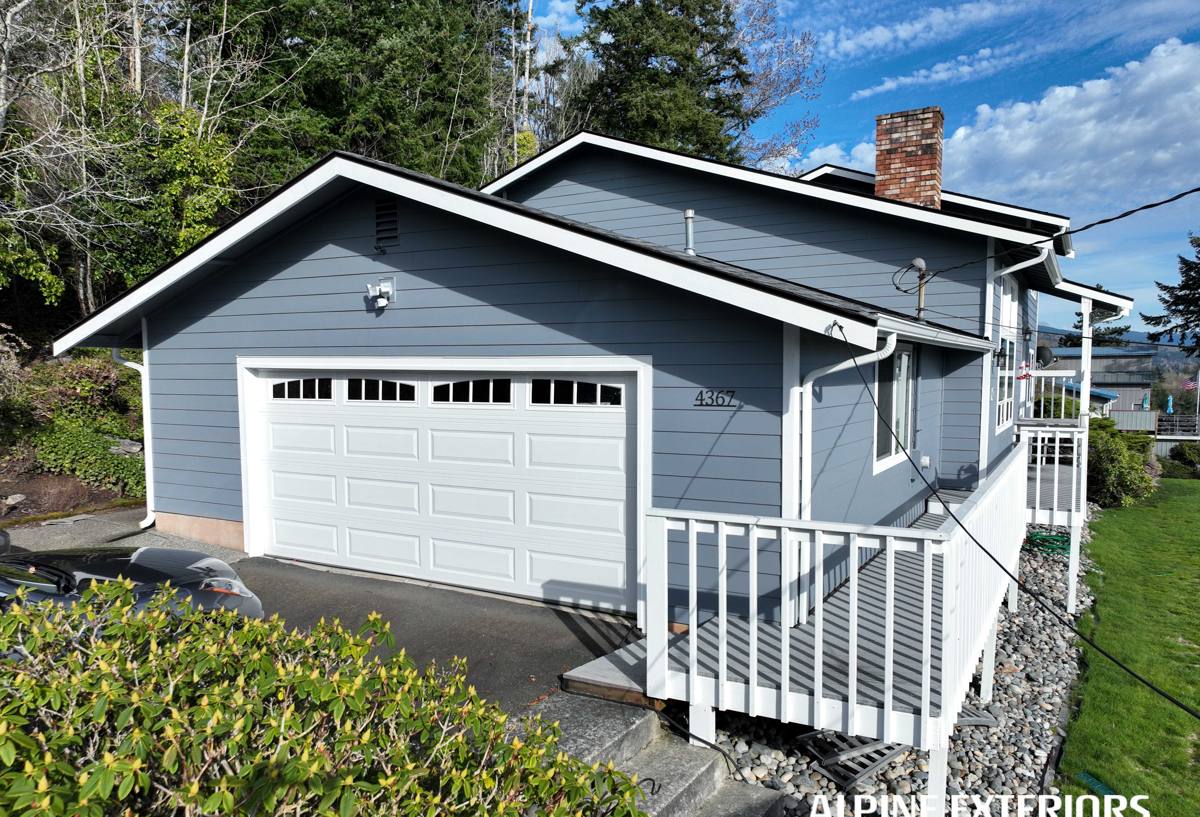
What Blaine's Climate Actually Does to a Deck
Salt Air and Corrosion
Even a few blocks off the water, airborne salt accelerates rust on anything less than fully corrosion-rated hardware. Cheap or mismatched fasteners — the kind that look fine in a big-box hardware aisle — can start streaking and weakening within a couple of seasons in a coastal microclimate like this one. Once a fastener corrodes, the wood around it stays wet longer, which compounds the problem.
Driving Rain
Whatcom County's weather doesn't just rain straight down — wind-driven rain gets pushed sideways into ledger boards, under railing posts, and into any gap that isn't properly flashed or sealed. A deck built without attention to water shedding will trap moisture in exactly the places you can't see until the damage is already structural.
The Long Moss Season
Shaded or north-facing decks in this part of Washington can stay damp for months at a time, and moss and algae take hold on any decking surface that doesn't drain and dry quickly. Beyond looking bad, a mossy deck surface gets slick and holds moisture against the boards, which shortens the life of wood decking and can stain composite surfaces if it's left unaddressed.
What a Correctly Built Deck Needs Here
A deck built for the Grandview area needs to handle all three of those conditions at once, not just one. That means:
- Corrosion-rated fasteners and hardware rated for coastal or treated-lumber exposure, not standard interior-grade hardware
- Proper ledger flashing and a gap or drainage plane between the ledger and the house to keep water from wicking into the wall framing
- Decking material and gaps chosen to shed water and dry quickly rather than trap it
- Footings and posts set below frost depth and sized for our soil conditions, not just code minimums
- A layout and board spacing that accounts for shade, drainage direction, and airflow underneath
Choosing Decking Material for a Coastal, Moss-Prone Site
There's no single "best" decking material for every yard in Grandview — the right call depends on how much sun and airflow the deck gets, your maintenance appetite, and budget. Here's how the common options actually perform under our conditions.
| Material | Moss/Algae Resistance | Maintenance | Typical Lifespan Here |
|---|---|---|---|
| Pressure-treated wood | Needs regular cleaning and sealing to resist growth | Annual cleaning, periodic staining/sealing | 10–15 years with upkeep |
| Cedar | Naturally more rot-resistant, still needs cleaning in shade | Sealing every 1–2 years to hold color and resist moisture | 15–20 years with upkeep |
| Composite decking | Good, but can stain if debris/moss sits too long | Periodic washing, no sealing or staining needed | 25+ years, varies by product warranty |
| PVC/capped polymer | Best resistance to staining and moisture absorption | Lowest maintenance; occasional washing | 25+ years, varies by product warranty |
We're honest with clients that wood decking costs less up front but asks more of you every year — cleaning, sealing, and periodic board replacement in a climate that keeps things damp for months. Composite and PVC cost more initially but shed moisture and resist staining far better in shaded, coastal yards, which is a real factor for a lot of Grandview lots that don't get full sun exposure year-round.
Why We're Careful About Fastener and Hardware Matching
One of the most common failure points we see on older decks in this area isn't the decking itself — it's mismatched metal. Galvanized joist hangers paired with the wrong fastener coating, or standard screws used on treated lumber, set up a slow corrosion reaction that weakens connections from the inside out. We match fastener and hardware coatings to both the lumber treatment and the coastal exposure, which costs a little more up front and saves a lot of grief later.
Substructure and Framing: Where Long-Term Failures Start
The parts of a deck nobody sees are the parts that determine whether it's still solid in fifteen years. Framing in a damp, coastal climate needs:
- Joists and beams sized appropriately for the span and load, not just minimum code
- Air gap and ventilation underneath the deck so framing can dry out between rain events
- Post bases that keep wood off standing water and concrete
- Ledger attachment with proper flashing, not just lag bolts driven into siding
A deck that looks great on the surface but was framed with standard hardware and no drainage consideration is the deck we get called to repair five to eight years in, once soft spots and rust stains start showing up around fastener heads.
Drainage and Moisture Management
Water management on a deck isn't one detail — it's a system. Board spacing needs to let water through rather than pool on the surface. Ledger flashing needs to direct water away from the house wall rather than behind it. Post and beam connections need to shed water rather than cup it. And any covered or partially shaded section of the deck needs enough airflow that it can actually dry between storms, because in a Whatcom County winter, "eventually dries out" can mean weeks apart.
Skipping any one of these doesn't show up as a problem on install day — it shows up two or three wet seasons later as rot, staining, or a soft board nobody expects until it gives.
Our Deck Building Process for Grandview Homes
1. On-Site Assessment
We look at sun exposure, shade patterns, drainage slope, and how close the site sits to salt air and prevailing wind, since those factors drive our material and hardware recommendations more than personal preference does.
2. Design and Material Selection
We walk through decking material trade-offs honestly — wood versus composite versus PVC — based on your maintenance preferences and how much shade the deck will see, plus railing, fastener, and hardware specs suited to coastal exposure.
3. Permitting
Most new decks and many significant deck replacements require a permit. We handle that process so the structure is inspected and sound, not just built to look right.
4. Framing and Substructure
Footings, posts, beams, and joists go in first, with corrosion-rated hardware and proper ledger flashing — the part of the job that determines how the deck holds up, not just how it looks on day one.
5. Decking, Railing, and Finish Work
Board installation, gapping for drainage, railing, and any finish detailing happen last, with attention to how water will move across and off the deck once it's in daily use.
6. Walkthrough
We go over care and maintenance specific to the material you chose, including what moss and algae prevention actually looks like for your deck's sun exposure.
Maintenance Checklist for a Grandview Deck
Whatever material you choose, a little seasonal attention goes a long way in this climate:
- Sweep debris off the deck regularly, especially in fall when leaves and needles trap moisture against the boards
- Wash the surface at least once or twice a year to remove early moss and algae growth before it takes hold
- Check railing posts and ledger areas for soft spots or rust staining around fasteners
- Keep gutters and downspouts clear so runoff isn't dumping extra water onto or near the deck
- Reseal or restain wood decking on the schedule the product calls for — don't wait until it looks dry and gray
- Confirm under-deck airflow isn't blocked by stored items or overgrown landscaping
Why a Crew That Already Works Grandview Matters
Deck building isn't one-size-fits-all, and a crew that mostly works inland or in drier climates won't default to the fastener grades, flashing details, and material trade-offs that matter here. Working in and around Blaine, including Grandview, means we already know which corners get shaded half the year, how driving rain tends to move across an open lot near the water, and how fast moss can take over a north-facing deck that isn't built to shed water. That local pattern recognition shows up in fewer surprises and a deck that's still solid well past the point a mismatched build would start failing.
If you're planning a new deck or replacing one that's showing its age, we're happy to take a look and walk you through honest options for your specific site. Use the form below to request a free, no-pressure estimate.