 Blaine
 Ferndale Roofs Take a Specific Kind of Beating
Ferndale sits close enough to Bellingham Bay and the Strait of Georgia that salt-laden air is a regular part of the weather, not an occasional visitor. Combine that with the long, wet winters typical of Whatcom County and you get a roofing environment that punishes shortcuts. Salt air accelerates corrosion on exposed metal fasteners, flashing, and vent caps. Driving rain off the water finds every gap in a roof's defenses, especially around penetrations and valleys. And the mild, damp shoulder seasons here give moss and algae months at a time to take hold before a hot, dry stretch ever shows up to slow them down.
None of that means Ferndale roofs fail faster than roofs anywhere else. It means they fail in particular, predictable places, and a repair that doesn't account for those places is a repair that comes back.
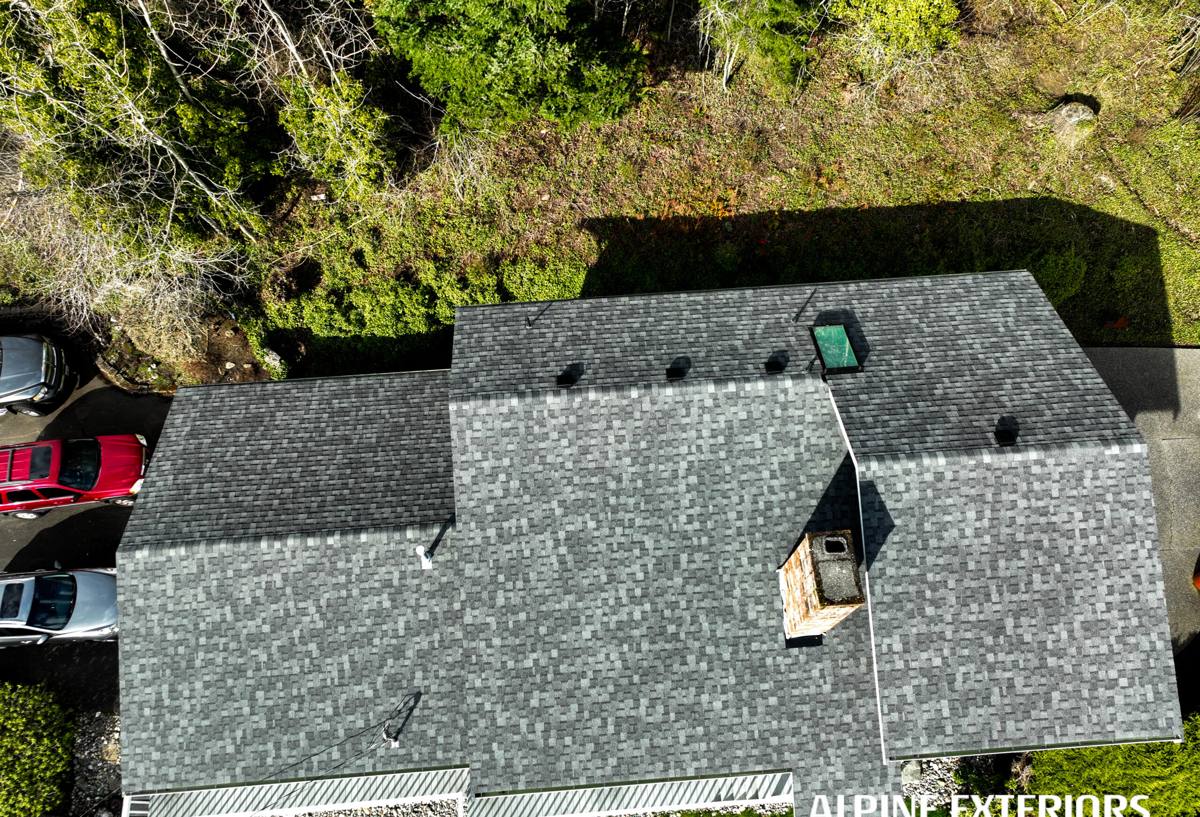
Signs a Ferndale Roof Needs Repair Now
Most roof problems in this area don't announce themselves with a dramatic leak on day one. They show up as small signals first. Homeowners who catch these early usually pay for a repair. Homeowners who wait usually pay for water damage, too.
- Dark streaking or a fuzzy green-black tint on north-facing slopes — early moss and algae growth
- Granules collecting in gutters or at downspout outlets — asphalt shingles losing their protective surface
- Soft or spongy spots when walking a roof deck (only a trained crew should be doing this)
- Rust staining around metal flashing, vents, or fastener heads
- Daylight visible through the attic at roof-to-wall or chimney intersections
- Interior ceiling stains that appear or grow after a heavy rain event
- Lifted, curled, or missing shingles after a windy system off the water
- Ice or heavy moss buildup at the eaves that keeps that edge of the roof wet longer than the rest
Any one of these on its own is usually a straightforward repair. Several at once, or any sign of active moisture inside the attic, means it's worth having someone look at the whole roof rather than just the one spot that's visibly bothering you.
What a Correct Repair Actually Involves
A repair that holds up in this climate is rarely just "replace the bad shingle." It has to account for the water path underneath, not just the surface layer people can see.
Diagnosing the actual source
Water travels. A stain on a ceiling six feet from an exterior wall can trace back to a flashing failure at a chimney or a plumbing vent much higher up the slope. Before any material gets replaced, the leak path needs to be traced — often from the attic side, checking sheathing, insulation, and framing for the true origin point, not just the spot where the damage became visible indoors.
Addressing the underlayment, not just the surface
In a climate with this much sustained rain, the underlayment matters as much as the visible roofing material. A shingle repair that leaves compromised felt or synthetic underlayment underneath is a repair that will leak again at the same spot within a season or two, just slightly hidden.
Flashing done right the first time
Most roof leaks in this region trace back to flashing, not field shingles — chimneys, skylights, sidewall intersections, and valleys. Flashing needs proper step-and-counter installation, correct laps, and compatible metal (mixing incompatible metals accelerates corrosion, which matters more here given the salt air). A repair that just caulks over old flashing instead of resetting it correctly is a temporary patch, not a fix.
Ventilation as part of the repair
A roof that traps moist air underneath it will grow moss and rot sheathing faster, even with perfect exterior work. Where a repair uncovers poor attic ventilation, that gets flagged and addressed — not ignored because it wasn't the original complaint.
Moss, Algae, and Salt Air: The Maintenance Reality
Whatcom County's combination of shade, moisture, and mild temperatures is close to ideal for moss growth on roofing. Left alone, moss holds water against the roof surface, works its way under shingle edges, and lifts them over time — turning a cosmetic issue into a structural one. Algae staining is mostly cosmetic but signals the same underlying moisture retention.
Salt air adds a second, quieter problem: metal fatigue. Fasteners, flashing, and vent components corrode faster near the coast than they do inland, even a relatively short distance inland. A repair that reuses corroded fasteners or unprotected metal is choosing a shorter lifespan for the fix. We spec fasteners and flashing metals with that exposure in mind rather than defaulting to whatever is cheapest.
Routine moss removal and gutter clearing between repairs isn't upselling — it's genuinely one of the cheapest ways to extend the life of a roof in this specific climate. A roof that sheds water and dries out between storms lasts meaningfully longer than one that stays damp for weeks at a stretch.
Common Roofing Materials in Ferndale and Repair Considerations
| Material | Typical Repair Considerations | Climate Notes |
|---|---|---|
| Asphalt composition shingle | Granule loss, curling, nail pop-through, sealant strip failure | Most common; moss and algae resistance varies significantly by product line |
| Wood shake/shingle | Splitting, moss intrusion between courses, rot at butt ends | Highest moss vulnerability in this climate without diligent upkeep |
| Metal roofing | Fastener backout, seam sealant aging, coating wear at cut edges | Corrosion resistance depends heavily on coating quality near salt air |
| Torch-down/flat membrane | Seam separation, ponding water, punctures at penetrations | Ponding is a bigger risk with sustained regional rainfall |
We repair each of these differently because the failure modes are different. A membrane roof leak is almost never fixed the same way as a shingle leak, even if the symptom inside the house looks identical.
How Our Repair Process Works
- Assessment. We inspect the roof surface and, where accessible, the attic side, to find the actual source of the problem rather than just the visible symptom.
- Honest scope. We tell you plainly whether this is a contained repair or whether the damage pattern suggests a larger issue worth knowing about before you commit to a fix.
- Written estimate. You get a clear breakdown of what's being repaired and why, before any work starts.
- The repair itself. Matched materials where possible, correct flashing technique, and attention to the underlayment and ventilation, not just the top layer.
- Cleanup and check. Debris, old material, and displaced granules get cleared — nothing left in gutters or on the ground to cause secondary problems.
Repair vs. Replacement: What Actually Drives the Decision
| Factor | Leans Toward Repair | Leans Toward Replacement |
|---|---|---|
| Age of roof | Well within expected material lifespan | At or beyond expected lifespan for the material |
| Extent of damage | Isolated to one area or penetration | Widespread across multiple slopes |
| Deck condition | Sheathing solid, no rot found | Soft or rotted decking found in multiple spots |
| History | First repair needed in this area | Repeated repairs to the same section over time |
| Underlayment condition | Still intact and functional | Brittle, failing, or original to a very old roof |
We'll never push a full replacement when a repair genuinely solves the problem, and we won't pretend a repair will hold when the roof's underlying condition says otherwise. Broad repair costs on a typical residential roof usually range from a few hundred dollars for a contained flashing or shingle fix up to a few thousand for larger sections with deck repair involved — actual pricing depends entirely on what the assessment finds.
Why a Crew That Already Works in Ferndale Matters
A roofer who works this area regularly already knows which flashing details tend to fail on the rooflines common here, which materials hold up against the moss pressure typical of shaded Whatcom County lots, and how to spec fasteners and metal that account for the salt air coming off the water. That's not something you get from a crew that's driving in from out of the area for a one-off job.
It also matters for accountability. A local crew has a reason to do the job right the first time, because they're the ones you'll call if it doesn't hold — and because their reputation in this community depends on repairs that actually last through the next wet season, not just through the invoice.
Simple Habits That Protect a Ferndale Roof Between Repairs
- Clear gutters and downspouts at least twice a year, more often under overhanging trees
- Remove moss buildup before it spreads across a full slope, not after
- Trim back branches that keep a section of roof shaded and slow to dry
- Check attic ventilation isn't blocked by insulation or debris
- Have flashing around chimneys and skylights inspected every couple of years, since these fail well before field shingles typically do
None of this replaces a professional inspection, but it meaningfully reduces how often you need one.
If you're dealing with a leak, staining, or moss buildup on a Ferndale roof, we're happy to take a look and give you a straight answer about what it needs. The estimate is free, there's no pressure attached to it, and you'll know exactly what you're dealing with before you decide anything.