 Blaine
 Why Dakota Creek Decks Wear Out Faster Than You'd Expect
If you own a home near Dakota Creek, you already know the deck doesn't age the same way it would twenty miles inland. Being this close to Semiahmoo Bay and the Strait of Georgia means salt-laden air settles on every exposed surface, and it doesn't take a storm to do it — a steady onshore breeze on an ordinary afternoon is enough. Add Whatcom County's long, wet fall-to-spring stretch of driving rain, and a deck here is under near-constant moisture load for a good chunk of the year.
Then there's moss. Blaine's moss season isn't a two-month nuisance — it's closer to seven or eight months when conditions stay damp and shaded, which describes a lot of yards along Dakota Creek where mature trees keep decks in partial shade most of the day. Moss doesn't just look bad on decking boards and stair treads; it holds water against the wood surface long after the rain has stopped, and it turns steps slick and genuinely dangerous underfoot.
Put those three things together — salt air corroding metal, rain driving into joints and end grain, and moss trapping moisture on the surface — and you get a specific failure pattern we see over and over on decks in this area. It's different from what we'd expect to find on a deck in a dry inland town, and it's why a generic repair approach often misses the actual problem.
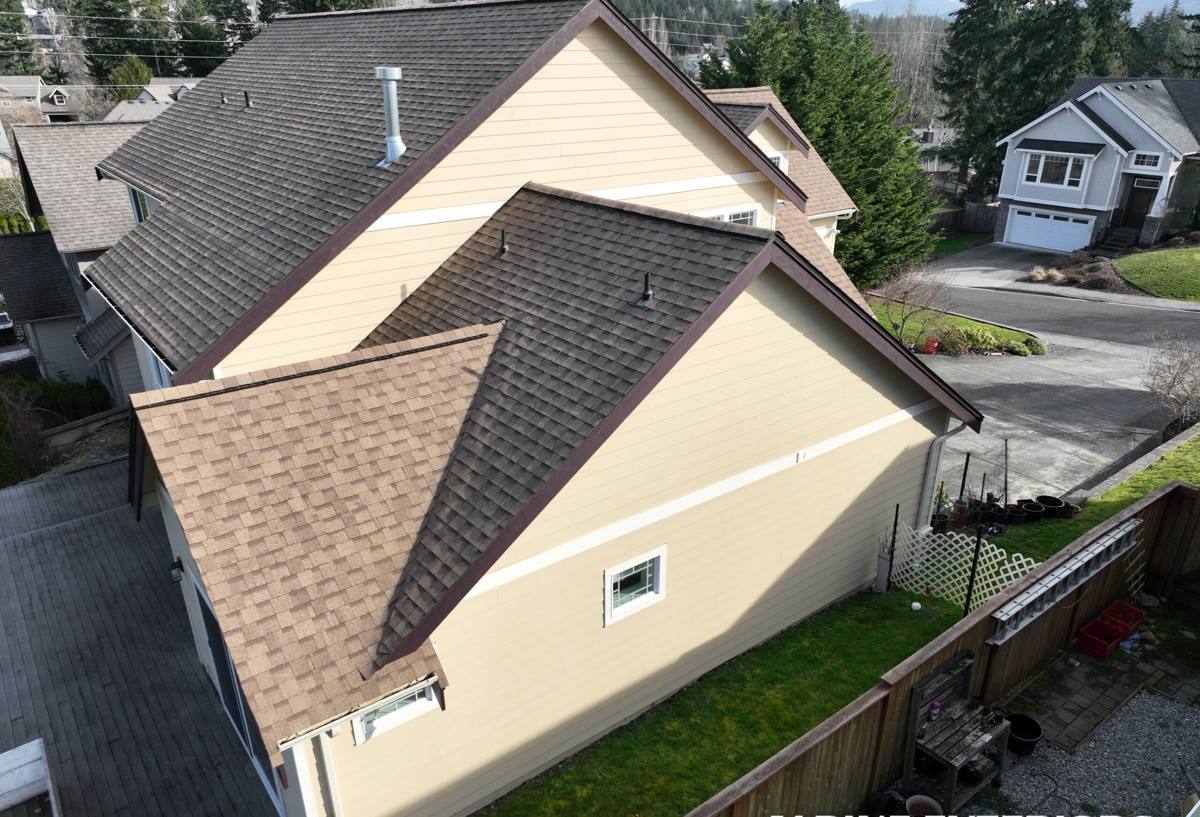
What Actually Fails First on a Coastal Deck
Fasteners and Hardware
Salt air is hard on metal. Nails, screws, joist hangers, and structural bolts that aren't rated for coastal exposure can start rusting years before the wood around them shows any obvious damage. A rusting fastener loses holding strength quietly — you often don't notice until a board starts to lift or a railing develops play.
Ledger Board Connections
The ledger board — where the deck attaches to the house — is the single most safety-critical part of any deck, and it's also the part most exposed to water intrusion if flashing was installed poorly or has failed over time. Constant rain finds its way into any gap here, and rot can develop between the ledger and the house framing where you can't see it without pulling boards or checking from underneath.
Decking Boards and Stair Treads
This is the damage you can see: cupping, splintering, soft spots, and moss buildup in the grain. Stair treads take the worst of it because they're walked on constantly and often sit in more shade and moisture than the main deck surface.
Framing Underneath
The joists, beams, and posts hidden under the decking boards are where the real structural questions live. A deck can look fine on top and still have compromised framing underneath from years of moisture cycling — wet, dry, wet again — especially near post bases that sit close to grade.
Signs It's Time for a Repair — and Signs It's More Than That
Most homeowners call us after noticing one obvious problem, but a proper inspection usually turns up a few related issues at the same time. Here's a general guide to what we look for:
- Boards that flex, bounce, or feel soft when you walk across them
- Visible rust streaks around fastener heads or hardware
- Railings or stair posts that wiggle when pushed
- Persistent moss or dark staining that comes back within weeks of cleaning
- Gaps or dark, damp-looking wood where the deck meets the house
- Cracking or splitting concentrated at board ends and near ground contact
- A noticeable musty smell coming from under the deck
One or two of these items on an otherwise sound deck is usually a straightforward repair. Several of them together — especially anything involving the ledger connection or the framing under the decking — is worth a full structural look before we talk about which boards to replace. Being honest about that distinction up front is part of doing this job right; it doesn't help anyone to patch a surface problem while a structural one keeps developing underneath.
What a Correct Deck Repair Actually Involves
A repair that holds up to another Whatcom County winter isn't just swapping out the boards that look bad. Our process on a typical repair covers:
- Full structural check — joists, beams, posts, and the ledger connection, including a look from underneath wherever access allows
- Fastener and hardware audit — identifying rusted or undersized hardware and replacing it with coastal-rated fasteners and connectors
- Flashing inspection at the ledger — this is the point most likely to leak, and it's often the least visible
- Targeted board replacement — matching existing decking where reasonable, replacing what's actually failed rather than the whole surface when it isn't necessary
- Railing and stair evaluation — these carry real safety weight and get checked for movement, not just appearance
- Surface treatment or sealing — appropriate to the material, aimed at slowing the moss and moisture cycle going forward
We try to repair rather than replace whenever the structure allows it. A full deck rebuild is sometimes genuinely the right call, but it's a bigger expense than most homeowners need if the framing is sound and the problems are isolated to hardware, surface boards, or a section of railing.
Repair Material Options: Honest Trade-Offs
When boards need replacing, the material choice matters more here than it would in a drier climate. Here's how the common options compare for a deck exposed to salt air and heavy seasonal rain:
| Material | How It Handles Coastal Moisture | Maintenance Load | Notes |
|---|---|---|---|
| Pressure-treated lumber | Good, if fasteners and cut ends are properly sealed | Needs re-staining/sealing every 1-2 years in this climate | Most economical; matches existing wood decks well for spot repairs |
| Cedar | Naturally rot-resistant but still needs upkeep near salt air | Regular cleaning and periodic oiling | Good appearance match for older decks; softer, so watch for wear on stairs |
| Composite decking | Very good — doesn't absorb moisture like wood | Low; mainly periodic washing to slow moss/algae film | Higher upfront cost; good option for a full board replacement, less practical for small patch repairs |
| Stainless or coated coastal-rated fasteners | Excellent — this is the piece most often skipped | None | Not optional in our view for anything near the water; standard hardware corrodes too fast here |
For a partial repair, we usually recommend matching the existing material so the fix blends in and behaves the same way the rest of the deck ages. For a section that's failed repeatedly — like stair treads that keep rotting — switching that section to composite can be worth the added cost even if the rest of the deck stays wood.
What Drives the Cost of a Deck Repair
| Factor | Why It Matters |
|---|---|
| Extent of framing damage | Hidden joist or beam rot found once boards come up adds labor and material |
| Ledger and flashing condition | Water intrusion at this point often means opening up more than just the surface |
| Material selected | Composite and cedar cost more per board than pressure-treated lumber |
| Deck height and access | Elevated decks or limited underneath access add time |
| Railing and stair scope | Structural railing work is priced separately from cosmetic board swaps |
We won't quote a firm number without seeing the deck — anyone who does is guessing, and on a coastal deck that guess is more likely to be wrong once boards actually come up. What we can tell you upfront is that a hardware-and-board spot repair on a sound structure is a modest, bounded job, while anything touching the ledger or framing is a bigger conversation. We'll walk you through which category your deck falls into before any work starts.
Our Process, Start to Finish
We keep this simple and don't ask you to make decisions before you have the information to make them:
- Free on-site inspection, including a look underneath the deck where access allows
- Clear explanation of what we found — separating "needs fixing now" from "worth watching"
- A written repair plan with material options, not just one default choice
- Scheduled work with cleanup at the end of each day
- A final walkthrough so you can see exactly what was done and why
Why Local Experience on Dakota Creek Decks Matters
A repair crew that mostly works inland doesn't automatically know to check ledger flashing first, or to expect rust on hardware that still looks new elsewhere. Decks near Dakota Creek and the rest of Blaine's shoreline fail in a specific pattern driven by salt air, sustained rain, and a moss season that runs most of the year. Knowing that pattern before we start pulling boards means we spend less of your money chasing symptoms and more of it fixing the actual cause. It also means we're not guessing at what "normal wear" looks like for a Whatcom County deck versus what's an early warning sign.
If your deck is showing any of the issues above, or it's just been a few years since anyone looked underneath it, we're happy to come take a look. The estimate is free, there's no pressure to book anything on the spot, and you'll walk away knowing exactly what condition your deck is actually in — use the form below to get started.