 Blaine
 Decking on the Water Side of Blaine
Cherry Point sits on the Strait of Georgia, a few minutes outside Blaine, and it takes weather most inland Whatcom County homes never see in the same combination. You get salt-laden air blowing straight off the water, long stretches of driving rain through fall and winter, and a moss and algae season that can run eight or nine months out of the year on anything that stays shaded and damp. A deck out here isn't just outdoor furniture — it's a structure that has to survive salt corrosion, standing moisture, and biological growth all at once, year after year.
That combination is exactly why composite decking has become the practical choice for homeowners in this area, and why an installation done right here looks different in a few specific ways than the same job done twenty miles inland. This page covers what Cherry Point conditions actually do to a deck, what a correct composite install accounts for, and how we handle the job from estimate to finished project.
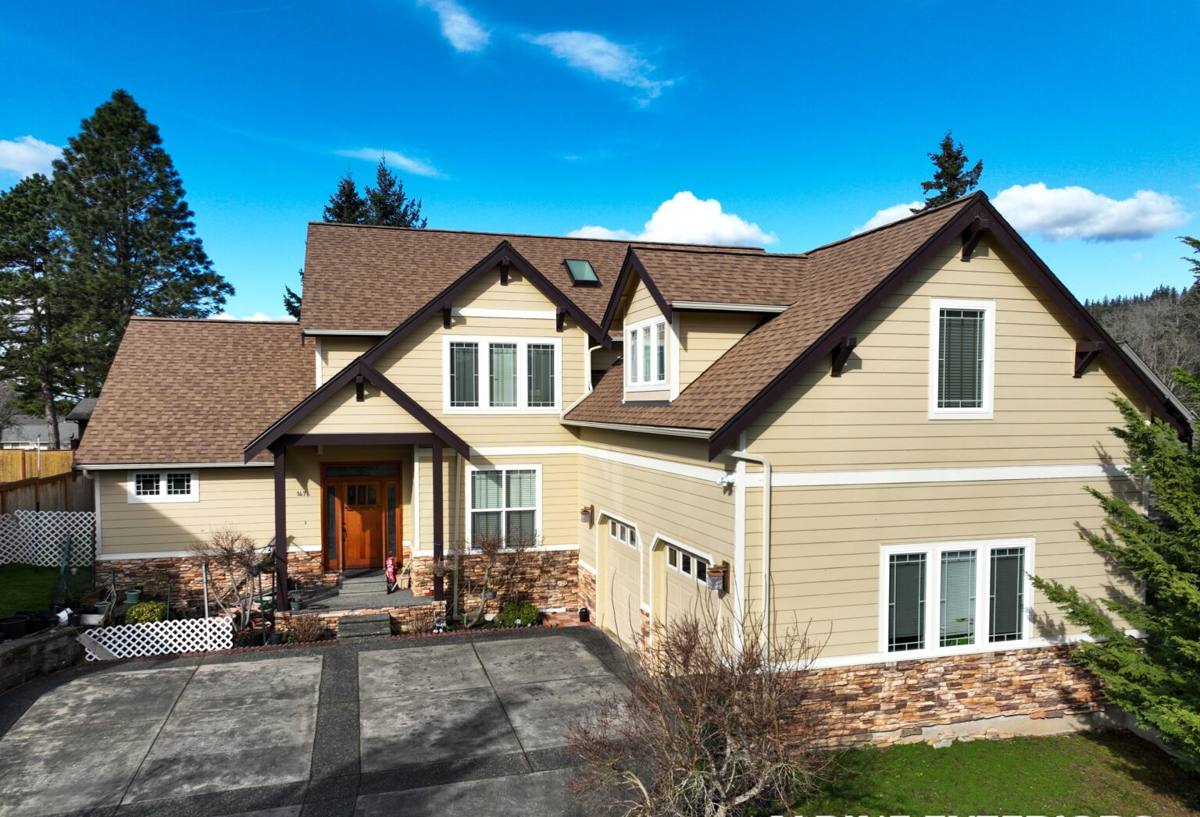
What Salt Air, Rain, and Moss Actually Do to a Deck
Each of these factors causes a different kind of damage, and a deck built without accounting for all three will fail in a different way depending on which one gets ignored.
Salt Air
Airborne salt doesn't just sit on the surface — it works into any exposed metal fastener, hinge, or bracket and accelerates corrosion well beyond what the same hardware would experience a few miles inland. Standard, non-coated fasteners and brackets are one of the most common failure points we see on decks built near the water, usually showing up as rust streaks and loosening hardware years before the decking itself would ever need replacing.
Driving Rain
Wind-driven rain off the Strait doesn't fall straight down — it gets pushed sideways and up under railings, around ledger boards, and into any gap that isn't properly flashed or sealed. Water that gets behind a ledger board or under a decking board and can't drain back out is the single biggest cause of hidden rot and structural damage in this region, regardless of what decking material sits on top.
Moss and Algae Season
Shaded, north-facing, or tree-covered decks in this area can stay damp for most of the year, which is exactly what moss and algae need to establish. Left alone, that growth holds moisture against the deck surface, makes boards slick and unsafe underfoot, and on wood decking, accelerates rot from the surface down.
Why Composite Fits Cherry Point Better Than Wood
We install both wood and composite decking, and we'll tell any homeowner honestly when wood is the right call for their project and budget. But for a deck exposed to this stretch of coastline, composite generally holds up with far less ongoing work, mainly because it doesn't absorb moisture the way wood fibers do, which removes the main food source that moss, algae, and rot need to take hold.
| Factor | Wood Decking | Composite Decking |
|---|---|---|
| Moisture absorption | Absorbs and releases moisture, driving swelling, cupping, and rot over time | Minimal absorption; core resists water intake |
| Moss and algae growth | Common on shaded, damp boards; feeds on wood fibers | Still needs cleaning, but nothing for growth to root into |
| Salt air exposure | Accelerates surface graying, splintering, and fastener corrosion | Shell resists salt-driven surface breakdown; fastener choice still matters |
| Annual maintenance | Sanding, sealing, or staining most homeowners fall behind on | Periodic washing; no sealing or staining required |
| Upfront cost | Lower material cost | Higher material cost, offset by lower long-term upkeep |
The trade-off is upfront cost — composite material runs more than pressure-treated lumber — and that's a real factor we'll walk through honestly during your estimate rather than gloss over. For a lot of Cherry Point homeowners, the math works out because the maintenance most wood decks actually need in this climate rarely gets done consistently, and that's when rot problems start.
What a Correct Composite Installation Involves Here
Composite boards themselves are only part of the system. Most of the failures we get called out to inspect on composite decks near the water trace back to the substructure and details underneath, not the decking material on top.
- Ledger flashing: Where the deck attaches to the house, proper flashing and a drainage gap keep wind-driven rain from tracking behind the ledger board and into the wall framing.
- Joist protection: Joist tape over the framing keeps water from soaking into the wood substructure through fastener holes and cut ends, which is where hidden rot most often starts under a composite deck.
- Corrosion-resistant fasteners and brackets: Given the salt air, we use fasteners and structural hardware rated for coastal exposure, not the standard-grade hardware that's fine further inland.
- Proper drainage slope and airflow: The deck surface needs a slight slope away from the house, and the space underneath needs airflow so moisture doesn't collect and sit — especially on decks with skirting or storage underneath.
- Hidden fastening systems: Where the composite product allows it, hidden fasteners reduce surface penetrations where water and salt residue could otherwise work into the board.
Skip any one of these and the composite boards can look fine on the surface for years while the framing underneath quietly deteriorates — which is a harder and more expensive repair than replacing decking alone.
Our Process, Start to Finish
We keep the process straightforward and give you a clear picture of what you're getting before any work starts.
1. On-Site Assessment
We walk the existing deck or build site in person, check the condition of any existing structure, note sun/shade exposure and drainage patterns specific to your property, and talk through what you actually want from the space.
2. Written Estimate
You get a clear, itemized estimate covering material selection, substructure work, hardware, and labor — no vague allowances that turn into surprise charges once the job starts.
3. Substructure First
Before a single composite board goes down, we address framing condition, flashing, joist protection, and drainage. This is the part of the job that determines whether the deck lasts fifteen years or thirty.
4. Installation
Composite boards go down with attention to expansion gaps, fastening pattern, and board orientation relative to sun and drainage — details that affect both appearance and long-term performance.
5. Walkthrough
We walk the finished deck with you, confirm everything meets what was agreed on, and go over the maintenance your specific product line needs going forward.
Maintenance That Actually Matters in This Climate
Composite decking is lower-maintenance than wood, not zero-maintenance. In a salt-air, high-moisture environment like Cherry Point, a few habits make a real difference in how the deck looks and performs over time.
- Rinse the deck surface periodically to clear salt residue, especially after windy weather off the water.
- Sweep or wash away leaves, needles, and debris before they trap moisture against the board surface, particularly in shaded corners.
- Clean visible moss or algae growth promptly rather than letting it establish — it's far easier to remove early than after it's taken hold.
- Keep gutters and downspouts near the deck clear so runoff isn't draining directly onto or under the deck surface.
- Check railing hardware and fasteners periodically for corrosion, since salt air affects metal components even when the decking itself is holding up fine.
- Trim back vegetation that's shading the deck and keeping it damp longer than necessary.
What Drives Cost on a Cherry Point Deck
Every deck project is different, but a few factors consistently move the price on jobs in this area more than they might elsewhere.
| Cost Factor | Why It Matters Here |
|---|---|
| Substructure condition | Existing decks near the water often need more framing repair due to hidden moisture damage, which affects total project cost |
| Fastener and hardware grade | Coastal-rated hardware costs more than standard hardware but avoids early corrosion failures |
| Deck height and access | Elevated decks or difficult site access add labor time for both structure and installation |
| Composite product tier | Product lines vary in shell technology and warranty terms, which affects both price and expected performance in salt air |
| Railing and fascia choices | Composite or aluminum railing systems add cost but reduce the maintenance burden compared to painted wood railing |
We'll walk through where your project falls on each of these during the estimate, so you know what's driving the number rather than getting a flat quote with no explanation behind it.
Why Hiring a Crew That Already Works This Area Matters
A lot of decking problems we get called to fix started with a crew that builds mostly inland and treated a Cherry Point deck like any other job. The framing choices, hardware grade, and drainage details that hold up fine twenty miles from the water aren't always sufficient right on the coastline. Working regularly in Blaine and the surrounding Whatcom County shoreline means we already know which details can't be skipped here — the flashing, the fastener grade, the drainage slope — because we've seen what happens when they are.
That local familiarity also means a faster, more accurate estimate. We're not guessing at how this stretch of coastline treats a deck over time — we've built and repaired enough of them to know where the real risks are and where a homeowner can reasonably save money without cutting a corner that matters.
Get a Straight Answer on Your Deck
If you're planning a new composite deck in Cherry Point or looking at replacing an aging one, we're happy to take a look and give you an honest read on what your project needs — no pressure, no upsell on things you don't need. Use the form below to request a free estimate, and we'll walk the site with you and talk through your options in plain terms.